Isaiah 64
Darby Translation · Tap a verse to see its cross-references.
A Prayer for God’s Power
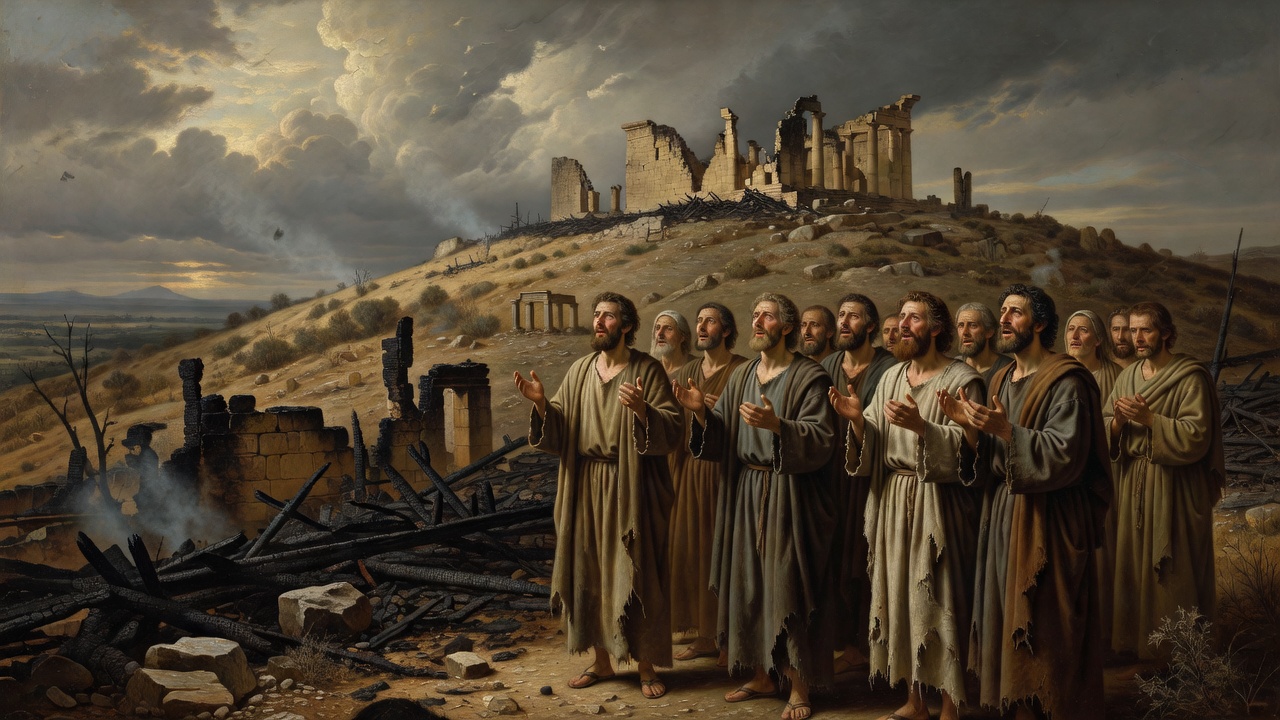
1Oh, that thou wouldest rend the heavens, that thou wouldest come down, — that the mountains might flow down at thy presence, 2— as fire kindleth brushwood, as the fire causeth water to boil, to make thy name known to thine adversaries, that the nations might tremble at thy presence! 3When thou didst terrible things [which] we looked not for, thou camest down, and the mountains flowed down at thy presence. 4Never have [men] heard, nor perceived by the ear, nor hath eye seen a God beside thee, who acteth for him that waiteth for him. 5Thou meetest him that rejoiceth to do righteousness, those that remember thee in thy ways: (behold, thou wast wroth, and we have sinned:) in those is perpetuity, and we shall be saved. 6And we are all become as an unclean [thing], and all our righteousnesses are as filthy rags; and we all fade as a leaf, and our iniquities, like the wind, have carried us away; 7and there is none that calleth upon thy name, that stirreth up himself to take hold of thee; for thou hast hidden thy face from us, and hast caused us to melt away through our iniquities. 8And now, Jehovah, thou art our Father; we are the clay, and thou our potter; and we all are the work of thy hand. 9Be not wroth very sore, O Jehovah, neither remember iniquity for ever. Behold, see, we beseech thee, we are all thy people. 10Thy holy cities are become a wilderness, Zion is a wilderness, Jerusalem a desolation. 11Our holy and our beautiful house, where our fathers praised thee, is burnt up with fire, and all our precious things are laid waste. 12Wilt thou restrain thyself in presence of these things, Jehovah? Wilt thou hold thy peace, and afflict us very sore?
Did you know?
A Prayer for Mercy Amid Ruin
- The passage opens with a plea for God to rend the heavens and descend with world-shaking power, like fire that kindles brushwood. Yet it contrasts this desire for divine presence with a confession of human unworthiness, comparing people to withering leaves swept away by their own iniquities.Sources: the Bible text itself
- In Isaiah 64, the community appeals to God as a Father and craftsman, declaring, "we are the clay, and You are the potter." This imagery emphasizes human frailty and total dependence on God, pleading for divine mercy despite their acknowledged guilt.Sources: the Bible text itself
- The chapter laments the destruction of sacred spaces, describing Zion and Jerusalem as desolate wastelands. It specifically mourns the burning and ruin of the holy temple where past generations had offered praise.Sources: the Bible text itself · Zion · Jerusalem
Notes written with AI assistance from open sources (Theographic Bible Metadata, CC BY-SA 4.0; Easton’s Bible Dictionary, public domain) and reviewed before publishing.
Places in this chapter
Only places identified with high confidence are shown (90% or more according to the scholarly sources compiled by OpenBible). Period map: DARE (Digital Atlas of the Roman Empire), CC BY 4.0; modern map: © OpenStreetMap contributors; places: OpenBible.info (CC BY 4.0).
Credits and license for this translation
Darby Translation
The Holy Scriptures, a New Translation from the Original Languages by J. N. Darby
Public Domain
Language: English
Dialect: archaic British
Translation by: J. N. Darby
2019-11-15
Section headings adapted from the Berean Standard Bible (public domain); they are not part of this translation’s text.
Source: http://ebible.org/engDBY/ · eBible.org