Levítico 1
World English Bible (Catholic) · Toque num versículo para ver as referências cruzadas.
Sobre este livro
Sobre Levítico
- O Dicionário Bíblico de Easton (1897) apresenta Levítico como o terceiro livro do Pentateuco e como o terceiro livro de Moisés. O nome, usado na Vulgata seguindo a LXX, reflete o assunto principal do livro: o serviço levítico.Fontes: Easton: Leviticus
- Easton afirma que todas as ordenanças do livro foram entregues no espaço de um mês, o primeiro mês do segundo ano depois do Êxodo. No verbete sobre o Sinai, também chamado Horebe, diz que os hebreus chegaram a essa região montanhosa no terceiro mês após o Êxodo e permaneceram acampados cerca de um ano inteiro, e que todo o Levítico registra o que ocorreu ali.Fontes: Easton: Leviticus · Mount Sinai
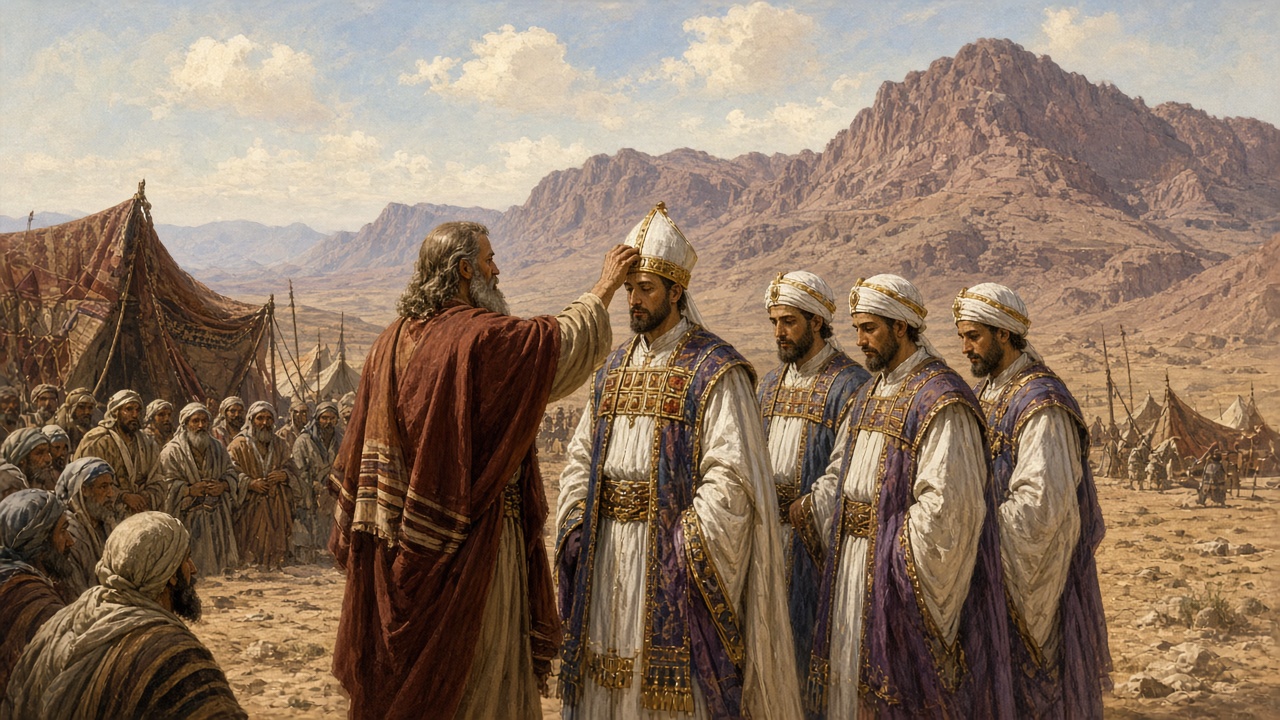
- Os capítulos 1 a 7 trazem leis sobre holocaustos, ofertas de manjares e ofertas de ação de graças, depois sobre ofertas pelo pecado e ofertas pela culpa, e sobre os deveres dos sacerdotes ao oferecer sacrifícios. Os capítulos 8 a 10 relatam a consagração de Arão e de seus filhos, a primeira oferta de Arão por si mesmo e pelo povo, e a morte de Nadabe e Abiú, feridos de morte e sepultados fora do acampamento depois de oferecerem fogo estranho, isto é, fogo comum não tomado do grande altar de bronze. Os capítulos 11 a 16 tratam da pureza e dos sacrifícios e ordenanças para afastar a impureza.Fontes: Easton: Leviticus · Nadab · Abihu
- Easton descreve os capítulos 17 a 20 como leis que marcam a separação entre Israel e os outros povos. Outras leis tratam da pureza pessoal dos sacerdotes e do consumo das coisas sagradas, das ofertas sem defeito e da devida celebração das grandes festas nos capítulos 23 e 25. Seguem-se promessas e advertências sobre a obediência, o livro termina com uma seção sobre votos, e Easton observa que Deus é quem fala diretamente em quase todo o livro.Fontes: Easton: Leviticus
- Nos ritos do capítulo 16, um bode está associado a Azazel, termo que a Authorized Version traduz por scapegoat e que a Revised Version mantém como Azazel. Easton relata que alguns intérpretes judeus o entendem como um lugar no deserto, cerca de doze milhas a leste de Jerusalém, enquanto outros o tomam como um espírito maligno ou até Satanás, e registra também o sentido de raiz: separação.Fontes: Azazel
Notas escritas com auxílio de IA a partir de fontes abertas (Theographic Bible Metadata, CC BY-SA 4.0; Easton’s Bible Dictionary, domínio público) e revisadas antes de publicar.
Laws for Burnt Offerings
1The LORD called to Moses, and spoke to him from the Tent of Meeting, saying, 2“Speak to the children of Israel, and tell them, ‘When anyone of you offers an offering to the LORD, you shall offer your offering of the livestock, from the herd and from the flock.
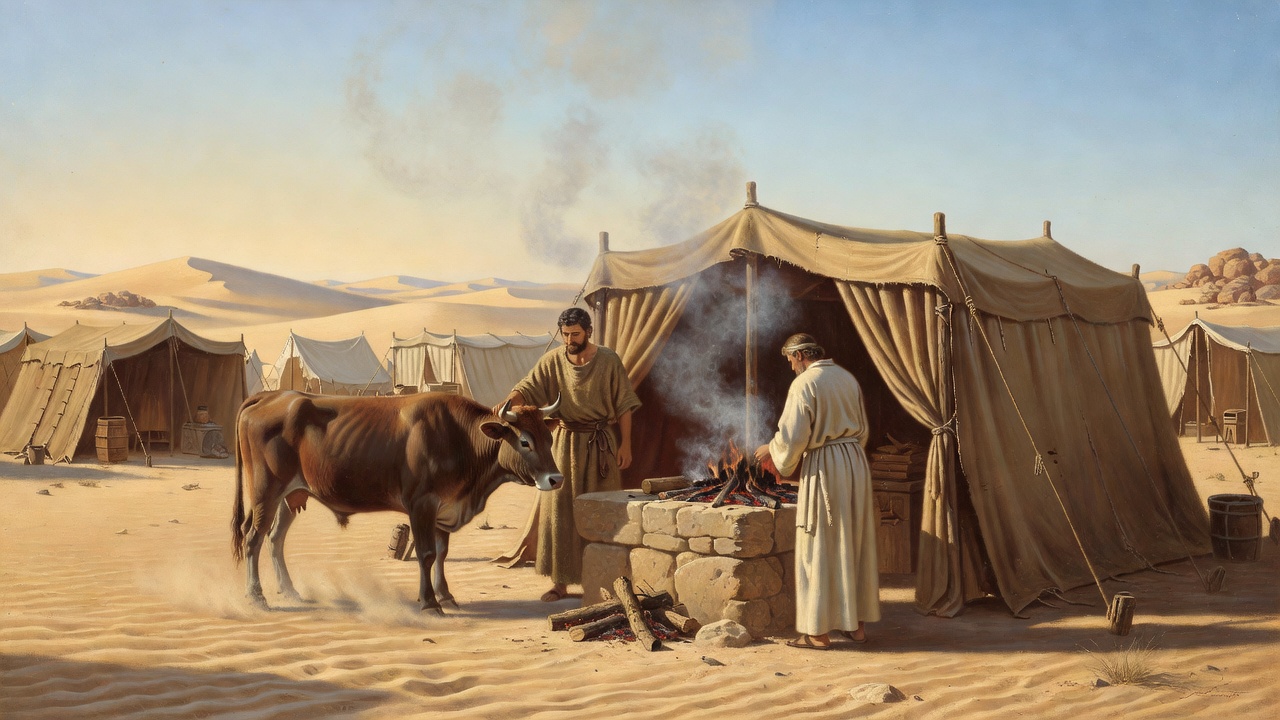
3“‘If his offering is a burnt offering from the herd, he shall offer a male without defect. He shall offer it at the door of the Tent of Meeting, that he may be accepted before the LORD. 4He shall lay his hand on the head of the burnt offering, and it shall be accepted for him to make atonement for him. 5He shall kill the bull before the LORD. Aaron’s sons, the priests, shall present the blood and sprinkle the blood around on the altar that is at the door of the Tent of Meeting. 6He shall skin the burnt offering and cut it into pieces. 7The sons of Aaron the priest shall put fire on the altar, and lay wood in order on the fire; 8and Aaron’s sons, the priests, shall lay the pieces, the head, and the fat in order on the wood that is on the fire which is on the altar; 9but he shall wash its innards and its legs with water. The priest shall burn all of it on the altar, for a burnt offering, an offering made by fire, of a pleasant aroma to the LORD.
10“‘If his offering is from the flock, from the sheep or from the goats, for a burnt offering, he shall offer a male without defect. 11He shall kill it on the north side of the altar before the LORD. Aaron’s sons, the priests, shall sprinkle its blood around on the altar. 12He shall cut it into its pieces, with its head and its fat. The priest shall lay them in order on the wood that is on the fire which is on the altar, 13but the innards and the legs he shall wash with water. The priest shall offer the whole, and burn it on the altar. It is a burnt offering, an offering made by fire, of a pleasant aroma to the LORD.
14“‘If his offering to the LORD is a burnt offering of birds, then he shall offer his offering from turtledoves or of young pigeons. 15The priest shall bring it to the altar, and wring off its head, and burn it on the altar; and its blood shall be drained out on the side of the altar; 16and he shall take away its crop and its feathers, and cast it beside the altar on the east part, in the place of the ashes. 17He shall tear it by its wings, but shall not divide it apart. The priest shall burn it on the altar, on the wood that is on the fire. It is a burnt offering, an offering made by fire, of a pleasant aroma to the LORD.
Você sabia?
O Holocausto
- As instruções para o holocausto previam diferentes condições materiais, permitindo ofertas do gado, do rebanho (ovelhas ou cabras) ou aves (rolinhas ou pombinhos). Para o gado e o rebanho, exigia-se um macho sem defeito.Fontes: o próprio texto bíblico
- O ritual estabelecia uma divisão clara de tarefas entre o adorador e os sacerdotes. O ofertante trazia o animal, colocava a mão sobre sua cabeça para expiação, abatia-o, esfolava-o e lavava suas partes internas, enquanto os filhos de Arão aspergiam o sangue e queimavam toda a oferta sobre o altar.Fontes: o próprio texto bíblico · Aaron
Notas escritas com auxílio de IA a partir de fontes abertas (Theographic Bible Metadata, CC BY-SA 4.0; Easton’s Bible Dictionary, domínio público) e revisadas antes de publicar.
Créditos e licença desta tradução
The World English Bible
Catholic Book Order
The World English Bible is in the Public Domain. That means that it is not copyrighted. However, "World English Bible" is a Trademark of eBible.org.
You may copy, publish, proclaim, distribute, redistribute, sell, give away, quote, memorize, read publicly, broadcast, transmit, share, back up, post on the Internet, print, reproduce, preach, teach from, and use
the World English Bible as much as you want, and others may also do so. All we ask is that if you CHANGE the actual text of the World English Bible in any way, you not call the result the World English Bible any more.
This is to avoid confusion, not to limit your freedom. The Holy Bible is God's Word. It belongs to God. He gave it to us freely, and we who have worked on this translation freely give it to you by dedicating it to the
Public Domain.
Donations to help with the expenses of this project and thus help others have free access to the Word of God may be made to us, but are not required. Please see
https://MLJohnson.org/partner/ for more about that.
Although we are done with the editing for language updates, we might choose to consider corrections of obvious typos or problems in the translation.
Any updates will be posted on https://eBible.org/web/ and at https://WorldEnglish.Bible .
2020 stable text edition
Títulos de seção adaptados da Berean Standard Bible (domínio público); não fazem parte do texto bíblico desta tradução.
Fonte: http://ebible.org/eng-web-c/ · eBible.org