Salmos 12
LXX2012: Septuagint in British/International English 2012 · Toque num versículo para ver as referências cruzadas.
(13) For the end, a Psalm of David.
The Godly Are No More
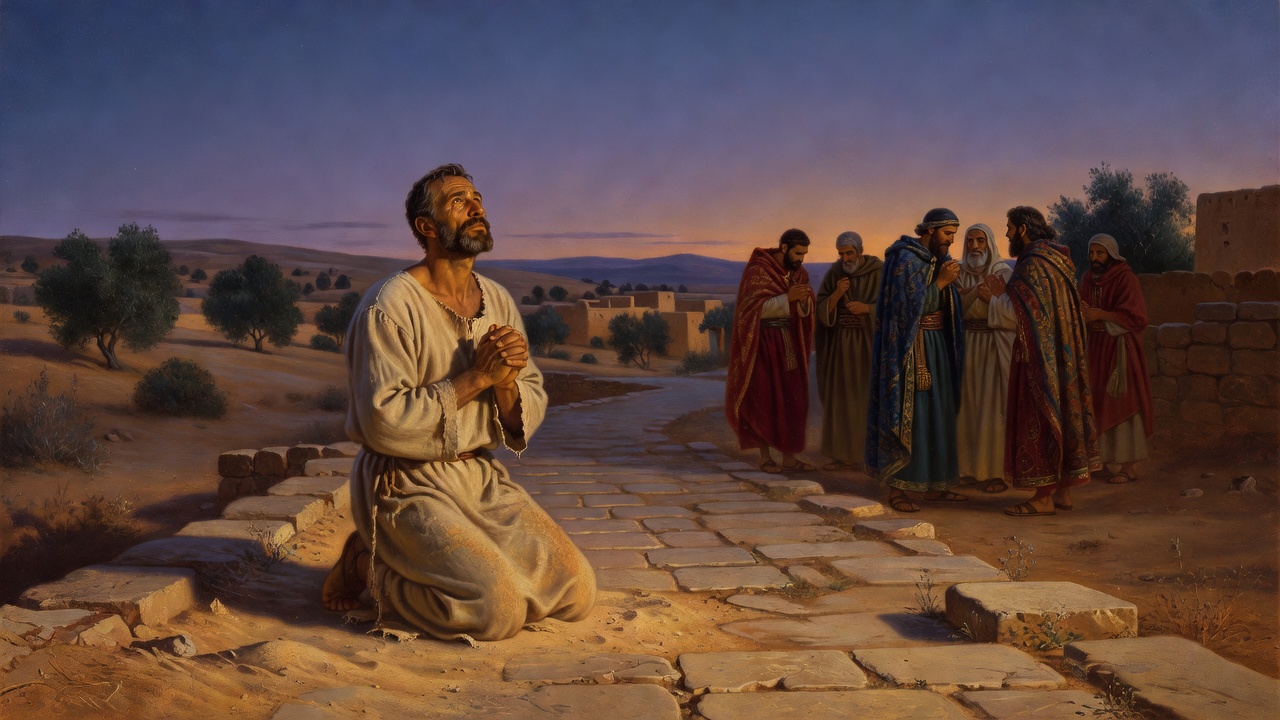
1How long, O Lord, will you forget me? for ever? how long will you turn away your face from me?
2How long shall I take counsel in my soul, having sorrows in my heart daily? how long shall my enemy be exalted over me?
3Look on me, listen to me, O Lord my God: lighten my eyes, lest I sleep in death;
4lest at any time my enemy say, I have prevailed against him: my persecutors will exult if ever I should be moved.
5But I have hoped in your mercy; my heart shall exult in your salvation.
6I will sing to the Lord who has dealt bountifully with me, and I will sing psalms to the name of the Lord most high.
Você sabia?
Palavras Puras e Proteção Divina
- O Salmo 12 contrasta de forma marcante o discurso humano enganoso com a pureza da palavra de Deus. Enquanto as pessoas falam com lábios bajuladores, coração fingido e arrogância, as palavras do Senhor são descritas como puras, semelhantes à prata refinada sete vezes em uma fornalha.Fontes: o próprio texto bíblico
- O salmo apresenta a intervenção do Senhor como resposta à opressão e aos gemidos dos necessitados. Diante do sofrimento deles e da perversidade difundida nessa geração, Deus promete se levantar para trazer segurança.Fontes: o próprio texto bíblico
Notas escritas com auxílio de IA a partir de fontes abertas (Theographic Bible Metadata, CC BY-SA 4.0; Easton’s Bible Dictionary, domínio público) e revisadas antes de publicar.
Créditos e licença desta tradução
LXX2012: Septuagint in British/International English 2012
The Septuagint with Apocrypha, translated from Greek to English by Sir Lancelot C. L. Brenton and published in 1885, with some language updates (British/International English)
Public Domain
Language: English
Dialect (if applicable): British
Language in English: English
Translation by: Sir Lancelot Charles Lee Breton
LXX2012: Septuagint in English 2012, British/International English Edition
This is a translation of the Old Testament and Apocrypha/Deuterocanon from Hebrew to Greek to 19th Century British English, with some updates of spelling and word usage to contemporary British/International English. The original English translation was done by Sir Lancelot Charles Lee Brenton and published by Samuel Bagster & Sons, Ltd., in London in 1851. It has entered the Public Domain due to the passage of sufficient time. In the process of scanning and typing the text, the original poetry and prose formatting, as well as peripheral material like introductions and notes, have been omitted.
This edition of the Septuagint has some language updates. Brenton's word order and punctuation has been mostly retained, meaning that quotation marks are not used, and sentences within quotes may not start with capital letters, as was standard usage in 1851. Names transliterated from Greek to those transliterated from Hebrew in the common English Bibles often differ. These language updates are dedicated to the Public Domain by the author of those edits, Michael Paul Johnson. Therefore this edition may be freely copied, published, etc.
Before considering making changes to the text of this work, I recommend that you consult with God, because this is really His Book.
If you find errors in the text, please report them so that we can correct them.
Donations to help with the expenses of operating this web site and thus help others have free access to the Word of God may be made to us, but are not required. Please see http://MLJohnson.org/partner/ for more about that.
Títulos de seção adaptados da Berean Standard Bible (domínio público); não fazem parte do texto bíblico desta tradução.
Fonte: http://ebible.org/eng-uk-lxx2012/ · eBible.org