Salmos 12
LXX2012: Septuagint in British/International English 2012 · Toca un versículo para ver sus referencias cruzadas.
(13) For the end, a Psalm of David.
The Godly Are No More
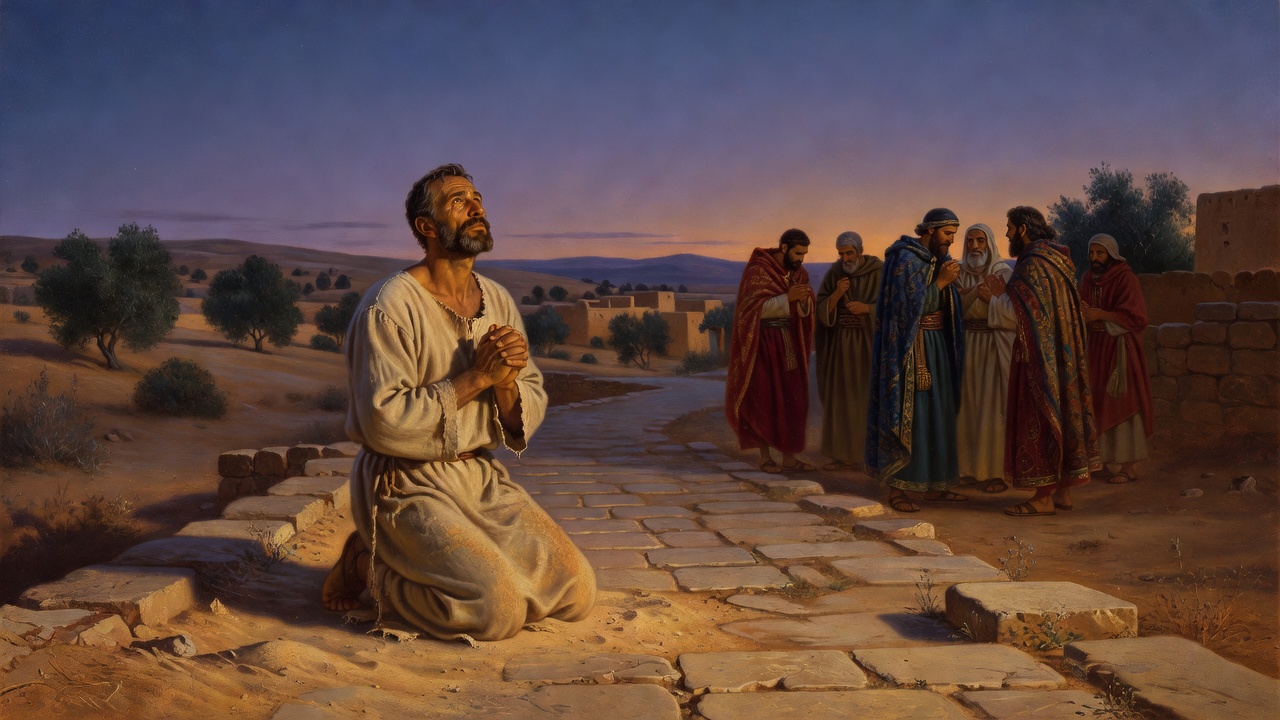
1How long, O Lord, will you forget me? for ever? how long will you turn away your face from me?
2How long shall I take counsel in my soul, having sorrows in my heart daily? how long shall my enemy be exalted over me?
3Look on me, listen to me, O Lord my God: lighten my eyes, lest I sleep in death;
4lest at any time my enemy say, I have prevailed against him: my persecutors will exult if ever I should be moved.
5But I have hoped in your mercy; my heart shall exult in your salvation.
6I will sing to the Lord who has dealt bountifully with me, and I will sing psalms to the name of the Lord most high.
¿Sabías que…?
Palabras Puras y Protección Divina
- El Salmo 12 contrasta de manera notable el hablar humano engañoso con la pureza de la palabra de Dios. Mientras las personas hablan con labios lisonjeros, doblez de corazón y jactancia, las palabras del Señor se describen como puras, semejantes a la plata refinada siete veces en un horno.Fuentes: el propio texto bíblico
- El salmo presenta la intervención del Señor como una respuesta a la opresión y a los gemidos de los necesitados. Frente a su sufrimiento y a la perversidad generalizada en esa generación, Dios promete levantarse para otorgar protección.Fuentes: el propio texto bíblico
Notas escritas con ayuda de IA a partir de fuentes abiertas (Theographic Bible Metadata, CC BY-SA 4.0; Easton’s Bible Dictionary, dominio público) y revisadas antes de publicarse.
Créditos y licencia de esta traducción
LXX2012: Septuagint in British/International English 2012
The Septuagint with Apocrypha, translated from Greek to English by Sir Lancelot C. L. Brenton and published in 1885, with some language updates (British/International English)
Public Domain
Language: English
Dialect (if applicable): British
Language in English: English
Translation by: Sir Lancelot Charles Lee Breton
LXX2012: Septuagint in English 2012, British/International English Edition
This is a translation of the Old Testament and Apocrypha/Deuterocanon from Hebrew to Greek to 19th Century British English, with some updates of spelling and word usage to contemporary British/International English. The original English translation was done by Sir Lancelot Charles Lee Brenton and published by Samuel Bagster & Sons, Ltd., in London in 1851. It has entered the Public Domain due to the passage of sufficient time. In the process of scanning and typing the text, the original poetry and prose formatting, as well as peripheral material like introductions and notes, have been omitted.
This edition of the Septuagint has some language updates. Brenton's word order and punctuation has been mostly retained, meaning that quotation marks are not used, and sentences within quotes may not start with capital letters, as was standard usage in 1851. Names transliterated from Greek to those transliterated from Hebrew in the common English Bibles often differ. These language updates are dedicated to the Public Domain by the author of those edits, Michael Paul Johnson. Therefore this edition may be freely copied, published, etc.
Before considering making changes to the text of this work, I recommend that you consult with God, because this is really His Book.
If you find errors in the text, please report them so that we can correct them.
Donations to help with the expenses of operating this web site and thus help others have free access to the Word of God may be made to us, but are not required. Please see http://MLJohnson.org/partner/ for more about that.
Títulos de sección adaptados de la Berean Standard Bible (dominio público); no forman parte del texto bíblico de esta traducción.
Fuente: http://ebible.org/eng-uk-lxx2012/ · eBible.org