Ester 10
LXX2012: Septuagint in British/International English 2012 · Toque num versículo para ver as referências cruzadas.
Tribute to Xerxes and Mordecai
1And the king levied a tax upon his kingdom both by land and sea. 2And as for his strength and valour, and the wealth and glory of his kingdom, behold, they are written in the book of the Persians and Medes, for a memorial. 3And Mardochaeus was viceroy to king Artaxerxes, and was a great man in the kingdom, and honoured by the Jews, and passed his life beloved of all his nation. [And Mardocheus said, These things have been done of God. For I remember the dream which I had concerning these matters: for not one particular of them has failed. There was the little fountain which became a river, and there was light, and the sun and much water. The river is Esther, whom the king married, and made queen. And the two serpents are I and Aman. And the nations are those nations that combined to destroy the name of the Jews. But as for my nation, this is Israel, even they that cried to God and were delivered: for the Lord delivered his people. And the Lord rescued us out of all these calamities; and God wrought such signs and great wonders as have not been done amongst the nations. Therefore did he ordain two lots. One for the people of God, and one for all the other nations. And these two lots came for an appointed season, and for a day of judgement, before God, and for all the nations. And God remembered his people, and vindicated his inheritance. And they shall observe these days in the month Adar, on the fourteenth and on the fifteenth day of the month, with an assembly, and joy and gladness before God, throughout the generations for ever amongst his people Israel. In the fourth year of the reign of Ptolemeus and Cleopatra, Dositheus, who said he was a priest and Levite, and Ptolemeus his son, brought this epistle of Phurim, which they said was the same, and that Lysimachus the son of Ptolemeus, that was in Jerusalem, had interpreted.]
Você sabia?
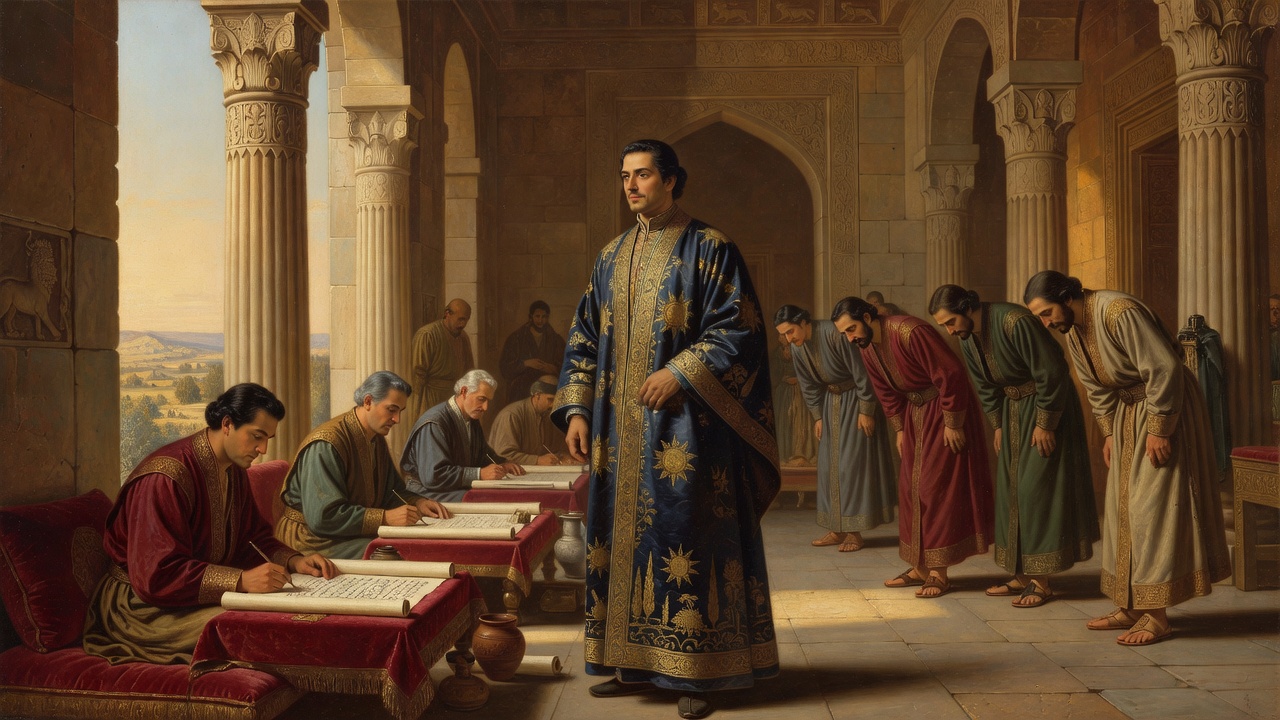
A Grandeza de Mardoqueu e do Rei
- O texto remete os leitores ao Livro das Crônicas dos Reis da Média e da Pérsia para um registro mais completo dos feitos reais. Média e Pérsia formavam o reino imperial conjunto cujos anais da corte documentavam tanto os decretos monárquicos quanto os atos de altos oficiais.Fontes: o próprio texto bíblico · Media · Persia
- Mardoqueu alcançou uma posição subordinada apenas ao rei Assuero (Xerxes), governante de um império que abrangia a Pérsia, a Média e a Babilônia. Residindo na capital Susã, Mardoqueu utilizou sua autoridade para promover o bem-estar e a paz do povo judeu em todo o império.Fontes: o próprio texto bíblico · Ahasuerus · Mordecai
Notas escritas com auxílio de IA a partir de fontes abertas (Theographic Bible Metadata, CC BY-SA 4.0; Easton’s Bible Dictionary, domínio público) e revisadas antes de publicar.
Lugares deste capítulo
Só aparecem lugares com identificação de alta confiança (90% ou mais segundo as fontes acadêmicas reunidas pelo OpenBible). Mapa da época: DARE (Digital Atlas of the Roman Empire), CC BY 4.0; mapa atual: © colaboradores do OpenStreetMap; lugares: OpenBible.info (CC BY 4.0).
Créditos e licença desta tradução
LXX2012: Septuagint in British/International English 2012
The Septuagint with Apocrypha, translated from Greek to English by Sir Lancelot C. L. Brenton and published in 1885, with some language updates (British/International English)
Public Domain
Language: English
Dialect (if applicable): British
Language in English: English
Translation by: Sir Lancelot Charles Lee Breton
LXX2012: Septuagint in English 2012, British/International English Edition
This is a translation of the Old Testament and Apocrypha/Deuterocanon from Hebrew to Greek to 19th Century British English, with some updates of spelling and word usage to contemporary British/International English. The original English translation was done by Sir Lancelot Charles Lee Brenton and published by Samuel Bagster & Sons, Ltd., in London in 1851. It has entered the Public Domain due to the passage of sufficient time. In the process of scanning and typing the text, the original poetry and prose formatting, as well as peripheral material like introductions and notes, have been omitted.
This edition of the Septuagint has some language updates. Brenton's word order and punctuation has been mostly retained, meaning that quotation marks are not used, and sentences within quotes may not start with capital letters, as was standard usage in 1851. Names transliterated from Greek to those transliterated from Hebrew in the common English Bibles often differ. These language updates are dedicated to the Public Domain by the author of those edits, Michael Paul Johnson. Therefore this edition may be freely copied, published, etc.
Before considering making changes to the text of this work, I recommend that you consult with God, because this is really His Book.
If you find errors in the text, please report them so that we can correct them.
Donations to help with the expenses of operating this web site and thus help others have free access to the Word of God may be made to us, but are not required. Please see http://MLJohnson.org/partner/ for more about that.
Títulos de seção adaptados da Berean Standard Bible (domínio público); não fazem parte do texto bíblico desta tradução.
Fonte: http://ebible.org/eng-uk-lxx2012/ · eBible.org