Esther 10
LXX2012: Septuagint in British/International English 2012 · Tap a verse to see its cross-references.
Tribute to Xerxes and Mordecai
1And the king levied a tax upon his kingdom both by land and sea. 2And as for his strength and valour, and the wealth and glory of his kingdom, behold, they are written in the book of the Persians and Medes, for a memorial. 3And Mardochaeus was viceroy to king Artaxerxes, and was a great man in the kingdom, and honoured by the Jews, and passed his life beloved of all his nation. [And Mardocheus said, These things have been done of God. For I remember the dream which I had concerning these matters: for not one particular of them has failed. There was the little fountain which became a river, and there was light, and the sun and much water. The river is Esther, whom the king married, and made queen. And the two serpents are I and Aman. And the nations are those nations that combined to destroy the name of the Jews. But as for my nation, this is Israel, even they that cried to God and were delivered: for the Lord delivered his people. And the Lord rescued us out of all these calamities; and God wrought such signs and great wonders as have not been done amongst the nations. Therefore did he ordain two lots. One for the people of God, and one for all the other nations. And these two lots came for an appointed season, and for a day of judgement, before God, and for all the nations. And God remembered his people, and vindicated his inheritance. And they shall observe these days in the month Adar, on the fourteenth and on the fifteenth day of the month, with an assembly, and joy and gladness before God, throughout the generations for ever amongst his people Israel. In the fourth year of the reign of Ptolemeus and Cleopatra, Dositheus, who said he was a priest and Levite, and Ptolemeus his son, brought this epistle of Phurim, which they said was the same, and that Lysimachus the son of Ptolemeus, that was in Jerusalem, had interpreted.]
Did you know?
The Greatness of Mordecai and the King
- The text directs readers to the Book of the Chronicles of the Kings of Media and Persia for a fuller account of royal accomplishments. Media and Persia formed the combined imperial realm whose court records documented monarchic decrees alongside the appointments and deeds of high officials.Sources: the Bible text itself · Media · Persia
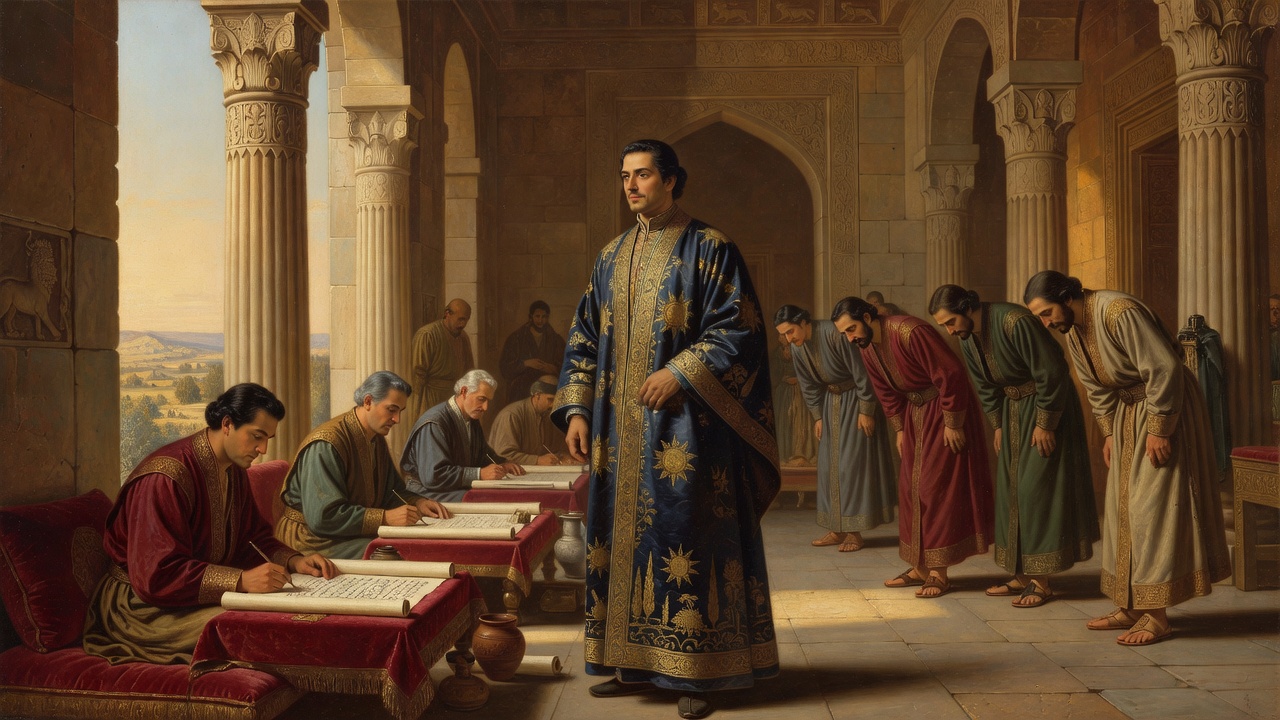
- Mordecai attained the rank of second only to King Ahasuerus (Xerxes), who ruled an empire extending across Persia, Media, and Babylonia. Residing in the capital of Susa, Mordecai used his elevated status to seek the welfare and peace of the Jewish people throughout the empire.Sources: the Bible text itself · Ahasuerus · Mordecai
Notes written with AI assistance from open sources (Theographic Bible Metadata, CC BY-SA 4.0; Easton’s Bible Dictionary, public domain) and reviewed before publishing.
Places in this chapter
Only places identified with high confidence are shown (90% or more according to the scholarly sources compiled by OpenBible). Period map: DARE (Digital Atlas of the Roman Empire), CC BY 4.0; modern map: © OpenStreetMap contributors; places: OpenBible.info (CC BY 4.0).
Credits and license for this translation
LXX2012: Septuagint in British/International English 2012
The Septuagint with Apocrypha, translated from Greek to English by Sir Lancelot C. L. Brenton and published in 1885, with some language updates (British/International English)
Public Domain
Language: English
Dialect (if applicable): British
Language in English: English
Translation by: Sir Lancelot Charles Lee Breton
LXX2012: Septuagint in English 2012, British/International English Edition
This is a translation of the Old Testament and Apocrypha/Deuterocanon from Hebrew to Greek to 19th Century British English, with some updates of spelling and word usage to contemporary British/International English. The original English translation was done by Sir Lancelot Charles Lee Brenton and published by Samuel Bagster & Sons, Ltd., in London in 1851. It has entered the Public Domain due to the passage of sufficient time. In the process of scanning and typing the text, the original poetry and prose formatting, as well as peripheral material like introductions and notes, have been omitted.
This edition of the Septuagint has some language updates. Brenton's word order and punctuation has been mostly retained, meaning that quotation marks are not used, and sentences within quotes may not start with capital letters, as was standard usage in 1851. Names transliterated from Greek to those transliterated from Hebrew in the common English Bibles often differ. These language updates are dedicated to the Public Domain by the author of those edits, Michael Paul Johnson. Therefore this edition may be freely copied, published, etc.
Before considering making changes to the text of this work, I recommend that you consult with God, because this is really His Book.
If you find errors in the text, please report them so that we can correct them.
Donations to help with the expenses of operating this web site and thus help others have free access to the Word of God may be made to us, but are not required. Please see http://MLJohnson.org/partner/ for more about that.
Section headings adapted from the Berean Standard Bible (public domain); they are not part of this translation’s text.
Source: http://ebible.org/eng-uk-lxx2012/ · eBible.org