Salmos 42
Revised Version with Apocrypha (1895) · Toque num versículo para ver as referências cruzadas.
BOOK II.
For the Chief Musician; Maschil of the sons of Korah.
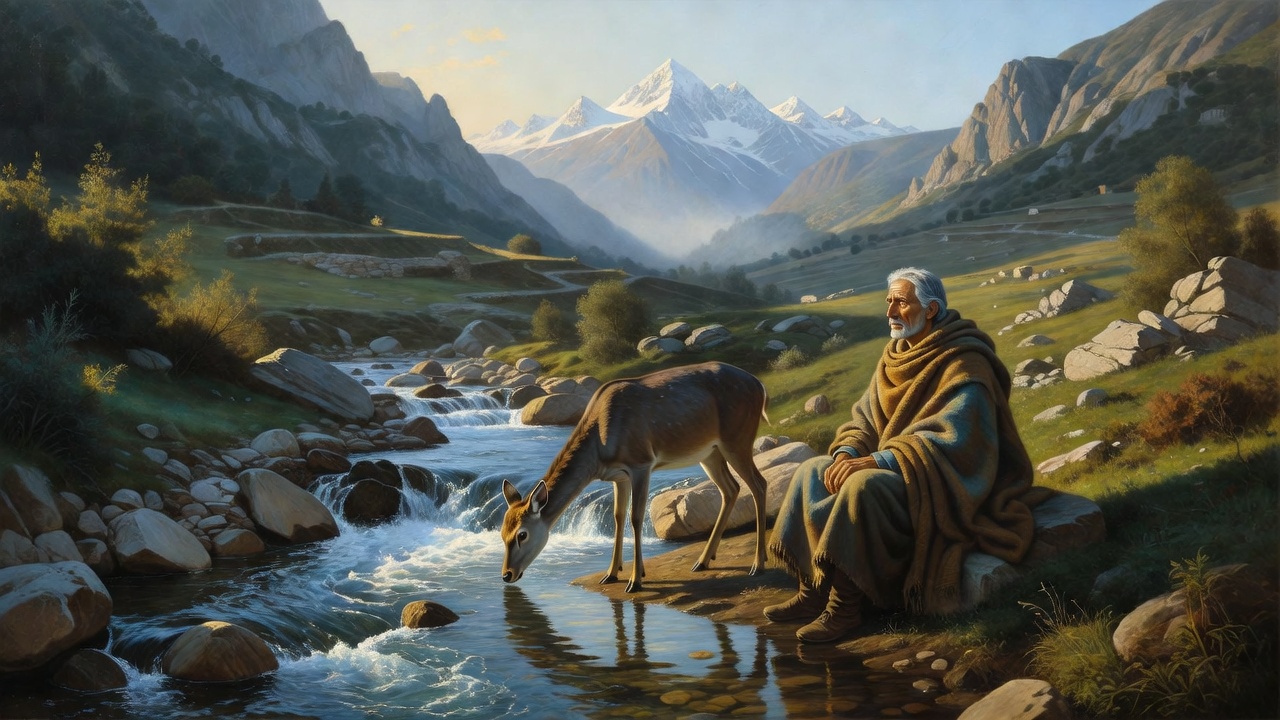
1As the hart panteth after the water brooks, so panteth my soul after thee, O God.
2My soul thirsteth for God, for the living God: when shall I come and appear before God?
3My tears have been my meat day and night, while they continually say unto me, Where is thy God?
4These things I remember, and pour out my soul within me, how I went with the throng, and led them to the house of God, with the voice of joy and praise, a multitude keeping holyday.
5Why art thou cast down, O my soul? and why art thou disquieted within me? hope thou in God: for I shall yet praise him for the health of his countenance.
6O my God, my soul is cast down within me: therefore do I remember thee from the land of Jordan, and the Hermons, from the hill Mizar.
7Deep calleth unto deep at the noise of thy waterspouts: all thy waves and thy billows are gone over me.
8Yet the LORD will command his lovingkindness in the day-time, and in the night his song shall be with me, even a prayer unto the God of my life.
9I will say unto God my rock, Why hast thou forgotten me? why go I mourning because of the oppression of the enemy?
10As with a sword in my bones, mine adversaries reproach me; while they continually say unto me, Where is thy God?
11Why art thou cast down, O my soul? and why art thou disquieted within me? hope thou in God: for I shall yet praise him, who is the health of my countenance, and my God.
Você sabia?
A Sede de Deus Longe de Casa
- O salmo é apresentado como um cântico dos filhos de Coré, uma família levítica descendente do levita Coré que participava da música e do culto no templo.Fontes: o próprio texto bíblico · Korah (Levite)
- O autor expressa sua saudade de Deus a partir das terras do norte, mencionando a região do Jordão, o monte Hermom e o monte Mizar. O Hermom é uma cadeia imponente com múltiplos cumes que chegam a cerca de 2.800 metros de altitude, enquanto Mizar (que significa 'pequenez') designa uma colina menor nas proximidades.Fontes: o próprio texto bíblico · Hermon · Hill Mizar
- O poema utiliza metáforas vívidas de água, partindo de uma corça sedenta que anseia por correntes até cascatas estrondosas e ondas impetuosas que simbolizam uma profunda aflição emocional.Fontes: o próprio texto bíblico
Notas escritas com auxílio de IA a partir de fontes abertas (Theographic Bible Metadata, CC BY-SA 4.0; Easton’s Bible Dictionary, domínio público) e revisadas antes de publicar.
Lugares deste capítulo
- Jordan · Hoje: Jordan River · 31.761, 35.558 · versículo 6
- Mount Hermon · 33.400, 35.850 · versículo 6
Só aparecem lugares com identificação de alta confiança (90% ou mais segundo as fontes acadêmicas reunidas pelo OpenBible). Mapa da época: DARE (Digital Atlas of the Roman Empire), CC BY 4.0; mapa atual: © colaboradores do OpenStreetMap; lugares: OpenBible.info (CC BY 4.0).
Créditos e licença desta tradução
Revised Version with Apocrypha (1895)
The Revised Version of the Holy Bible (1895) with Apocrypha
Public Domain
Language: English
Dialect: archaic British
This work is in the Public Domain. You may copy and use it freely.
2026-10-02
Fonte: http://ebible.org/eng-rv/ · eBible.org