Psalms 42
Revised Version with Apocrypha (1895) · Tap a verse to see its cross-references.
BOOK II.
For the Chief Musician; Maschil of the sons of Korah.
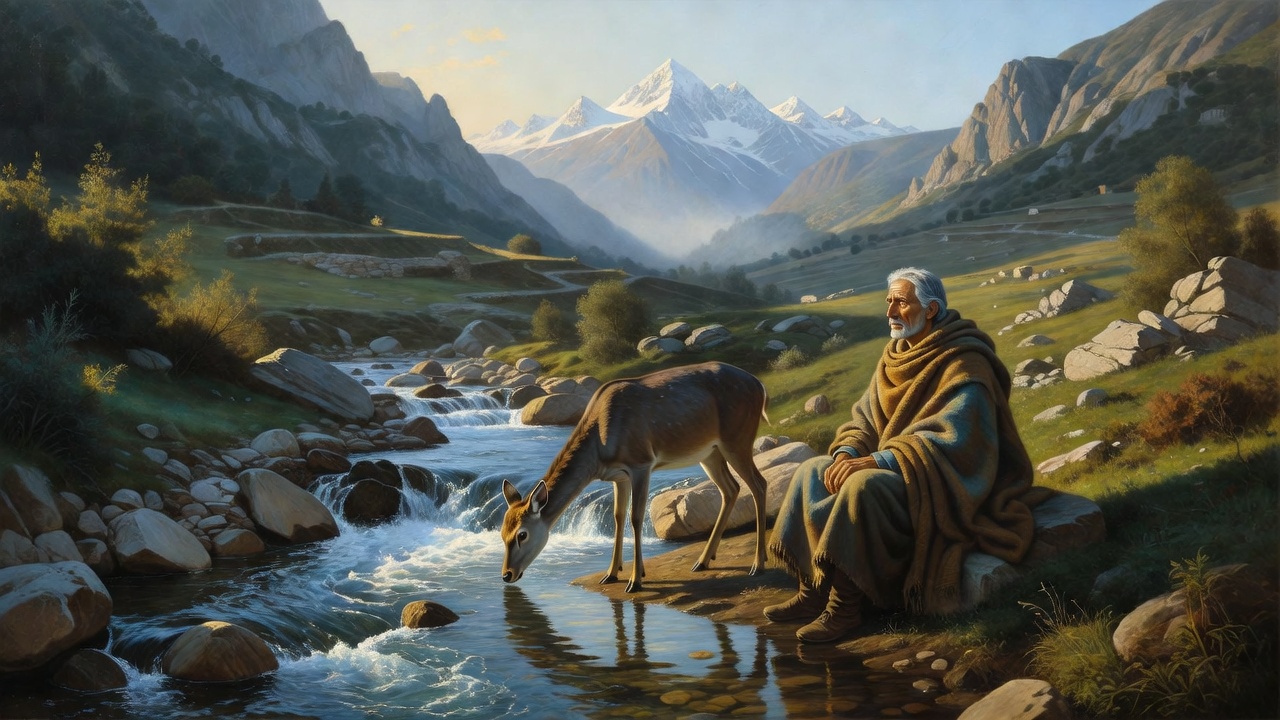
1As the hart panteth after the water brooks, so panteth my soul after thee, O God.
2My soul thirsteth for God, for the living God: when shall I come and appear before God?
3My tears have been my meat day and night, while they continually say unto me, Where is thy God?
4These things I remember, and pour out my soul within me, how I went with the throng, and led them to the house of God, with the voice of joy and praise, a multitude keeping holyday.
5Why art thou cast down, O my soul? and why art thou disquieted within me? hope thou in God: for I shall yet praise him for the health of his countenance.
6O my God, my soul is cast down within me: therefore do I remember thee from the land of Jordan, and the Hermons, from the hill Mizar.
7Deep calleth unto deep at the noise of thy waterspouts: all thy waves and thy billows are gone over me.
8Yet the LORD will command his lovingkindness in the day-time, and in the night his song shall be with me, even a prayer unto the God of my life.
9I will say unto God my rock, Why hast thou forgotten me? why go I mourning because of the oppression of the enemy?
10As with a sword in my bones, mine adversaries reproach me; while they continually say unto me, Where is thy God?
11Why art thou cast down, O my soul? and why art thou disquieted within me? hope thou in God: for I shall yet praise him, who is the health of my countenance, and my God.
Did you know?
Thirsting for God Far from Home
- The psalm is introduced as a song of the sons of Korah, a Levitical family descended from the Levite Korah who took part in temple music and worship.Sources: the Bible text itself · Korah (Levite)
- The speaker longs for God from the northern borderlands, mentioning the Jordan, Mount Hermon, and Mount Mizar. Hermon is a towering range with multiple peaks reaching over 9,000 feet, while Mizar (meaning 'smallness') represents a lesser neighboring summit.Sources: the Bible text itself · Hermon · Hill Mizar
- The poem uses vivid water metaphors, moving from a thirsty deer longing for mountain streams to roaring waterfalls and crashing waves that symbolize overwhelming emotional distress.Sources: the Bible text itself
Notes written with AI assistance from open sources (Theographic Bible Metadata, CC BY-SA 4.0; Easton’s Bible Dictionary, public domain) and reviewed before publishing.
Places in this chapter
Only places identified with high confidence are shown (90% or more according to the scholarly sources compiled by OpenBible). Period map: DARE (Digital Atlas of the Roman Empire), CC BY 4.0; modern map: © OpenStreetMap contributors; places: OpenBible.info (CC BY 4.0).
Credits and license for this translation
Revised Version with Apocrypha (1895)
The Revised Version of the Holy Bible (1895) with Apocrypha
Public Domain
Language: English
Dialect: archaic British
This work is in the Public Domain. You may copy and use it freely.
2026-10-02
Source: http://ebible.org/eng-rv/ · eBible.org