Jó 35
Revised Version with Apocrypha (1895) · Toque num versículo para ver as referências cruzadas.
Elihu Recalls God’s Justice
1Moreover Elihu answered and said, 2Thinkest thou this to be thy right, or sayest thou, My righteousness is more than God’s, 3That thou sayest, What advantage will it be unto thee? and, What profit shall I have, more than if I had sinned? 4I will answer thee, and thy companions with thee. 5Look unto the heavens, and see; and behold the skies, which are higher than thou. 6If thou hast sinned, what doest thou against him? and if thy transgressions be multiplied, what doest thou unto him. 7If thou be righteous, what givest thou him? or what receiveth he of thine hand? 8Thy wickedness may hurt a man as thou art; and thy righteousness may profit a son of man. 9By reason of the multitude of oppressions they cry out; they cry for help by reason of the arm of the mighty. 10But none saith, Where is God my Maker, who giveth songs in the night; 11Who teacheth us more than the beasts of the earth, and maketh us wiser than the fowls of heaven? 12There they cry, but none giveth answer, because of the pride of evil men. 13Surely God will not hear vanity, neither will the Almighty regard it. 14How much less when thou sayest thou beholdest him not, the cause is before him, and thou waitest for him! 15But now, because he hath not visited in his anger, neither doth he greatly regard arrogance; 16Therefore doth Job open his mouth in vanity; he multiplieth words without knowledge.
Você sabia?
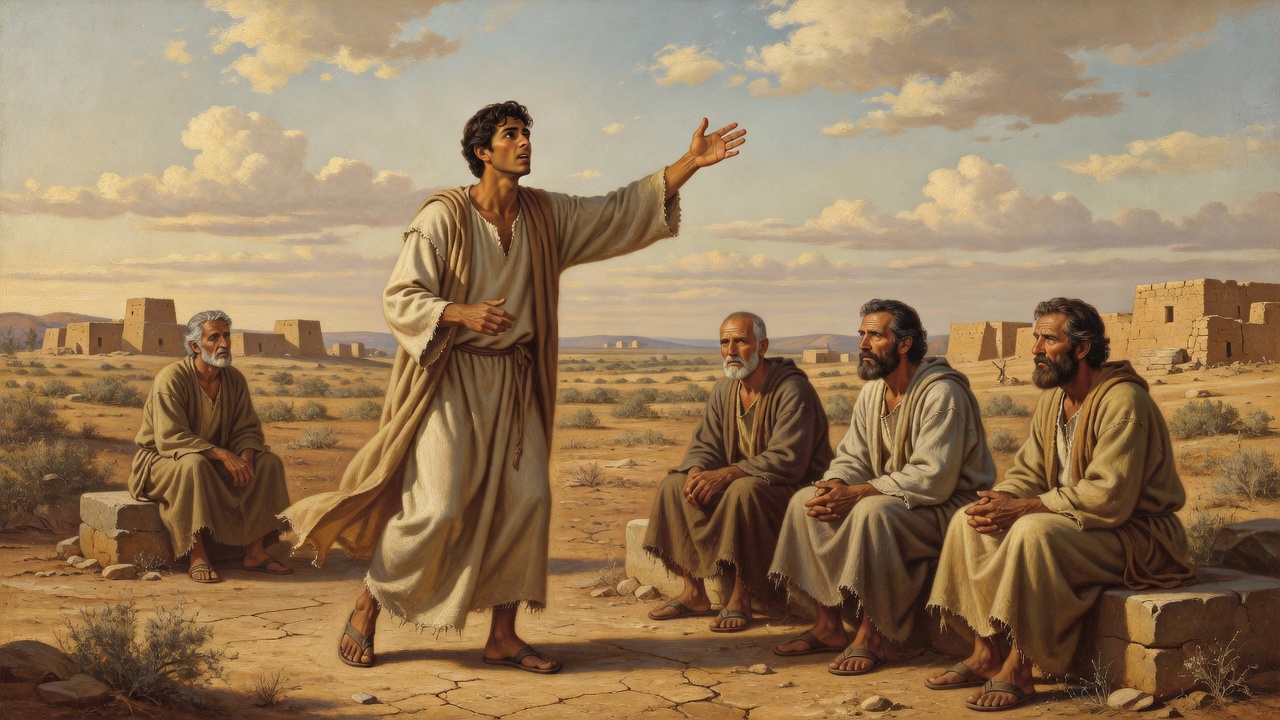
Eliú sobre a Independência de Deus e o Clamor Humano
- Eliú intervém após o encerramento do debate entre Jó e seus três companheiros, apresentando uma série de discursos que vai dos capítulos 32 a 37.Fontes: Elihu · o próprio texto bíblico
- Neste capítulo, Eliú defende a transcendência de Deus ao convidar Jó a observar os céus e as nuvens, argumentando que o pecado humano não prejudica a Deus e a justiça humana não O enriquece.Fontes: o próprio texto bíblico
- Eliú também aborda por que os clamores de socorro sob opressão às vezes não recebem resposta, afirmando que as pessoas frequentemente clamam apenas por alívio da dor em vez de buscar a Deus, seu Criador, com verdadeira humildade.Fontes: o próprio texto bíblico
Notas escritas com auxílio de IA a partir de fontes abertas (Theographic Bible Metadata, CC BY-SA 4.0; Easton’s Bible Dictionary, domínio público) e revisadas antes de publicar.
Créditos e licença desta tradução
Revised Version with Apocrypha (1895)
The Revised Version of the Holy Bible (1895) with Apocrypha
Public Domain
Language: English
Dialect: archaic British
This work is in the Public Domain. You may copy and use it freely.
2026-10-02
Títulos de seção adaptados da Berean Standard Bible (domínio público); não fazem parte do texto bíblico desta tradução.
Fonte: http://ebible.org/eng-rv/ · eBible.org