Salmos 11
LXX2012: Septuagint in American English 2012 · Toque num versículo para ver as referências cruzadas.
(12) For the end, A Psalm of David, upon the eighth.
In the LORD I Take Refuge
1Save me, O Lord; for the godly man has failed; for truth is diminished from among the children of men.
2Every one has spoken vanity to his neighbor: their lips are deceitful, they have spoken with a double heart.
3Let the Lord destroy all the deceitful lips, and the tongue that speaks great words:
4who have said, We will magnify our tongue; our lips are our own: who is Lord of us?
5Because of the misery of the poor, and because of the sighing of the needy, now will I arise, says the Lord, I will set them in safety; I will speak to them thereof openly.
6The oracles of the Lord are pure oracles; as silver tried in the fire, proved in a furnace of earth, purified seven times.
7You, O Lord, shall keep us, and shall preserve us, from this generation, and for ever.
8The ungodly walk around: according to your greatness you have greatly exalted the sons of men.
Você sabia?
Refúgio no SENHOR e a Justiça Divina
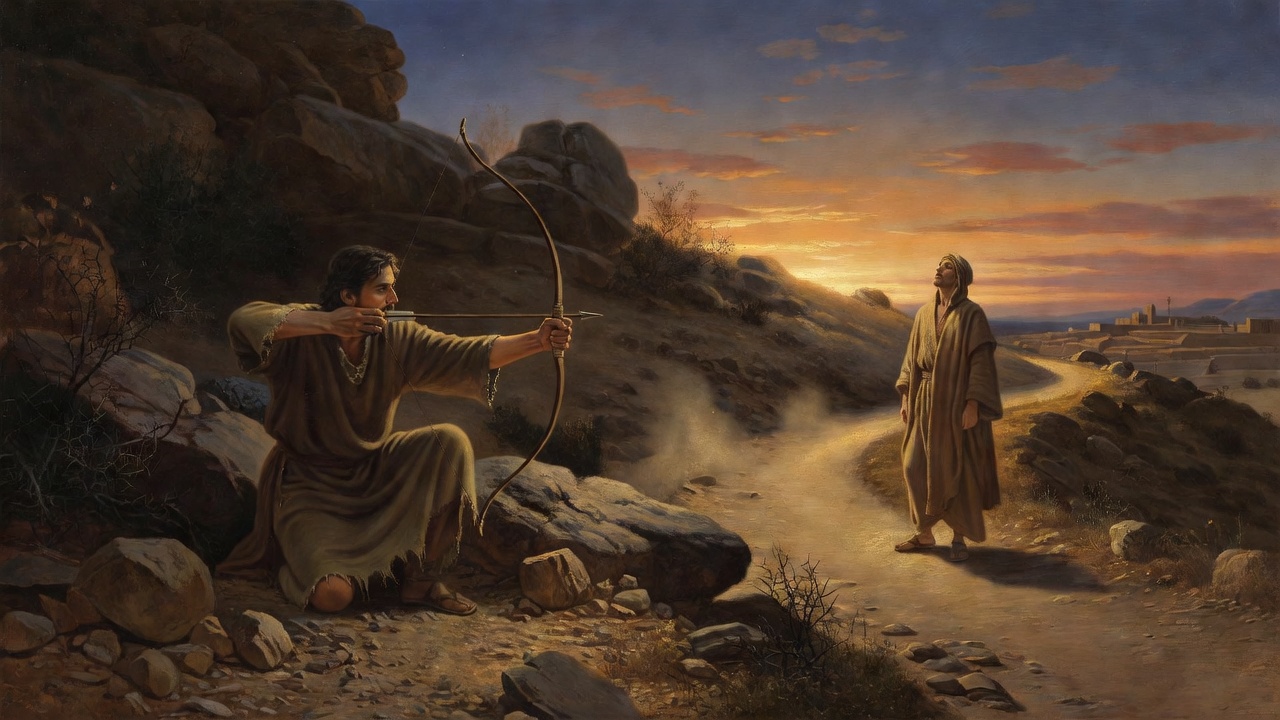
- O salmo começa com o narrador rejeitando o conselho de fugir como um pássaro para as montanhas diante do perigo. Apesar da ameaça de arqueiros que miram das sombras e da aparente destruição dos fundamentos, o salmista escolhe se refugiar no SENHOR.Fontes: o próprio texto bíblico
- O texto contrasta a malícia oculta dos ímpios, que atiram das sombras, com o olhar vigilante do SENHOR a partir de Seu santo templo e trono celestial. Declara-se que Deus examina todas as pessoas, reservando brasas de fogo, enxofre e vento abrasador para aqueles que praticam a violência.Fontes: o próprio texto bíblico
Notas escritas com auxílio de IA a partir de fontes abertas (Theographic Bible Metadata, CC BY-SA 4.0; Easton’s Bible Dictionary, domínio público) e revisadas antes de publicar.
Créditos e licença desta tradução
LXX2012: Septuagint in American English 2012
The Septuagint with Apocrypha, translated from Greek to English by Sir Lancelot C. L. Brenton and published in 1885, with some language updates (American English)
Public Domain
Language: English
Dialect (if applicable): American
Language in English: English
Translation by:
Sir Lancelot Charles Lee Brenton
Michael Paul Johnson
LXX2012: Septuagint in English 2012
This is a translation of the Old Testament and Apocrypha/Deuterocanon from Hebrew to Greek to 19th Century British English, with some updates of spelling and word usage to contemporary American English. The original English translation was done by Sir Lancelot Charles Lee Brenton and published by Samuel Bagster & Sons, Ltd., in London in 1851. It has entered the Public Domain due to the passage of sufficient time. In the process of scanning and typing the text, the original poetry and prose formatting, as well as peripheral material like introductions and notes, have been omitted.
This edition of the Septuagint has some language updates. Brenton's word order and punctuation has been mostly retained, meaning that quotation marks are not used, and sentences within quotes may not start with capital letters, as was standard usage in 1851. Names transliterated from Greek to those transliterated from Hebrew in the common English Bibles often differ. These language updates are dedicated to the Public Domain by the author of those edits, Michael Paul Johnson. Therefore this edition may be freely copied, published, etc.
Before considering making changes to the text of this work, I recommend that you consult with God, because this is really His Book.
If you find errors in the text, please report them so that we can correct them.
Donations to help with the expenses of operating this web site and thus help others have free access to the Word of God may be made to us, but are not required. Please see http://MLJohnson.org/partner/ for more about that.
Títulos de seção adaptados da Berean Standard Bible (domínio público); não fazem parte do texto bíblico desta tradução.
Fonte: http://ebible.org/eng-lxx2012/ · eBible.org