Salmos 10
LXX2012: Septuagint in American English 2012 · Toque num versículo para ver as referências cruzadas.
(11 in KJV) For the end, a Psalm of David.
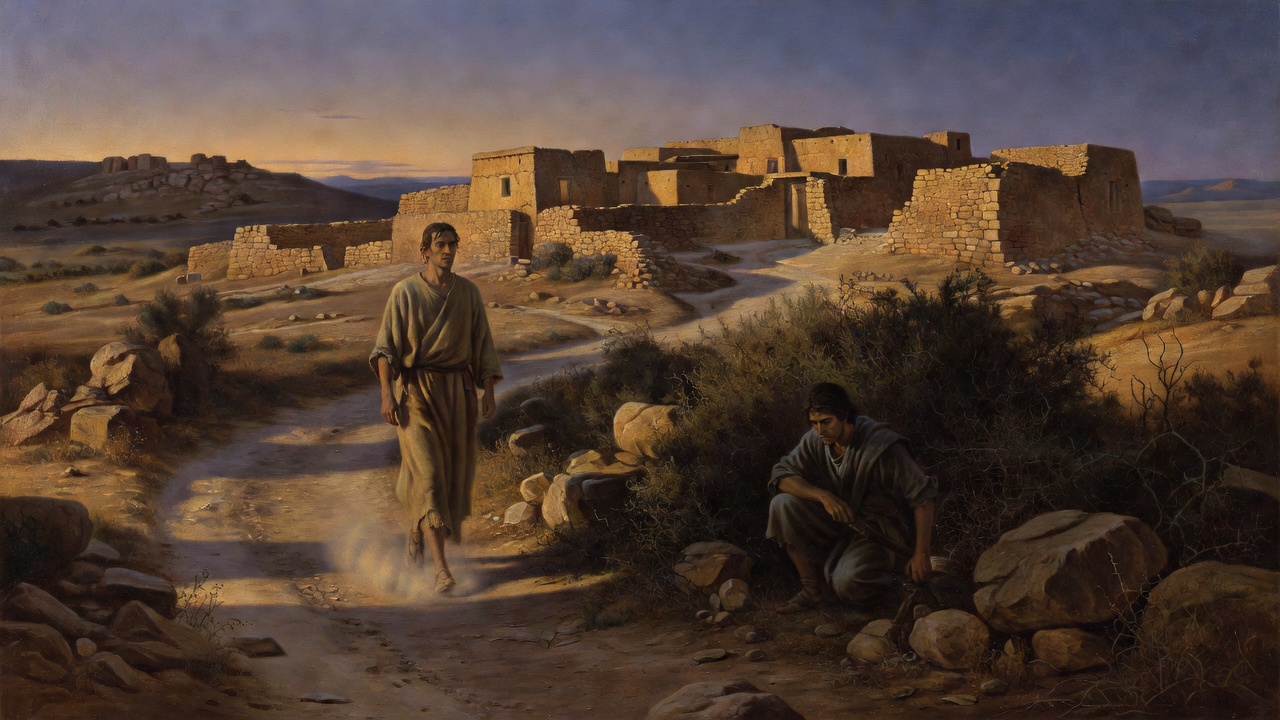
The Perils of the Pilgrim
1In the Lord I have put my trust: how will you⌃ say to my soul,
2Flee to the mountains as a sparrow?
3For behold the sinners have bent their bow, they have prepared their arrows for the quiver, to shoot privily at the upright in heart.
4For they have pulled down what you did frame, but what has the righteous done?
5The Lord is in his holy temple, as for the Lord, his throne is in heaven: his eyes look upon the poor, his eyelids try the sons of men.
6The Lord tries the righteous and the ungodly: and he that loves unrighteousness hates his own soul.
7He shall rain upon sinners snares, fire, and brimstone, and a stormy blast shall be the portion of their cup.
8For the Lord is righteous, and loves righteousness; his face beholds uprightness.
Você sabia?
Um clamor por justiça contra os arrogantes
- O Salmo 10 retrata os opressores por meio de imagens vívidas de caçadores e predadores selvagens, comparando-os a um leão à espreita no matagal ou a alguém que arma emboscadas perto de povoados para apanhar os indefesos em uma rede.Fontes: o próprio texto bíblico
- Os ímpios neste salmo são caracterizados pela crença na total impunidade, supondo falsamente que Deus esconde o rosto, se esquece e jamais lhes pedirá contas por sua violência.Fontes: o próprio texto bíblico
- Em resposta à injustiça social, o salmista apela a Deus especificamente como o ajudador dos órfãos e o defensor dos oprimidos, pedindo-Lhe que quebre o poder do malfeitor.Fontes: o próprio texto bíblico
Notas escritas com auxílio de IA a partir de fontes abertas (Theographic Bible Metadata, CC BY-SA 4.0; Easton’s Bible Dictionary, domínio público) e revisadas antes de publicar.
Créditos e licença desta tradução
LXX2012: Septuagint in American English 2012
The Septuagint with Apocrypha, translated from Greek to English by Sir Lancelot C. L. Brenton and published in 1885, with some language updates (American English)
Public Domain
Language: English
Dialect (if applicable): American
Language in English: English
Translation by:
Sir Lancelot Charles Lee Brenton
Michael Paul Johnson
LXX2012: Septuagint in English 2012
This is a translation of the Old Testament and Apocrypha/Deuterocanon from Hebrew to Greek to 19th Century British English, with some updates of spelling and word usage to contemporary American English. The original English translation was done by Sir Lancelot Charles Lee Brenton and published by Samuel Bagster & Sons, Ltd., in London in 1851. It has entered the Public Domain due to the passage of sufficient time. In the process of scanning and typing the text, the original poetry and prose formatting, as well as peripheral material like introductions and notes, have been omitted.
This edition of the Septuagint has some language updates. Brenton's word order and punctuation has been mostly retained, meaning that quotation marks are not used, and sentences within quotes may not start with capital letters, as was standard usage in 1851. Names transliterated from Greek to those transliterated from Hebrew in the common English Bibles often differ. These language updates are dedicated to the Public Domain by the author of those edits, Michael Paul Johnson. Therefore this edition may be freely copied, published, etc.
Before considering making changes to the text of this work, I recommend that you consult with God, because this is really His Book.
If you find errors in the text, please report them so that we can correct them.
Donations to help with the expenses of operating this web site and thus help others have free access to the Word of God may be made to us, but are not required. Please see http://MLJohnson.org/partner/ for more about that.
Títulos de seção adaptados da Berean Standard Bible (domínio público); não fazem parte do texto bíblico desta tradução.
Fonte: http://ebible.org/eng-lxx2012/ · eBible.org