Êxodo 11
Brenton Septuagint Translation · Toque num versículo para ver as referências cruzadas.
The Plague on the Firstborn Foretold
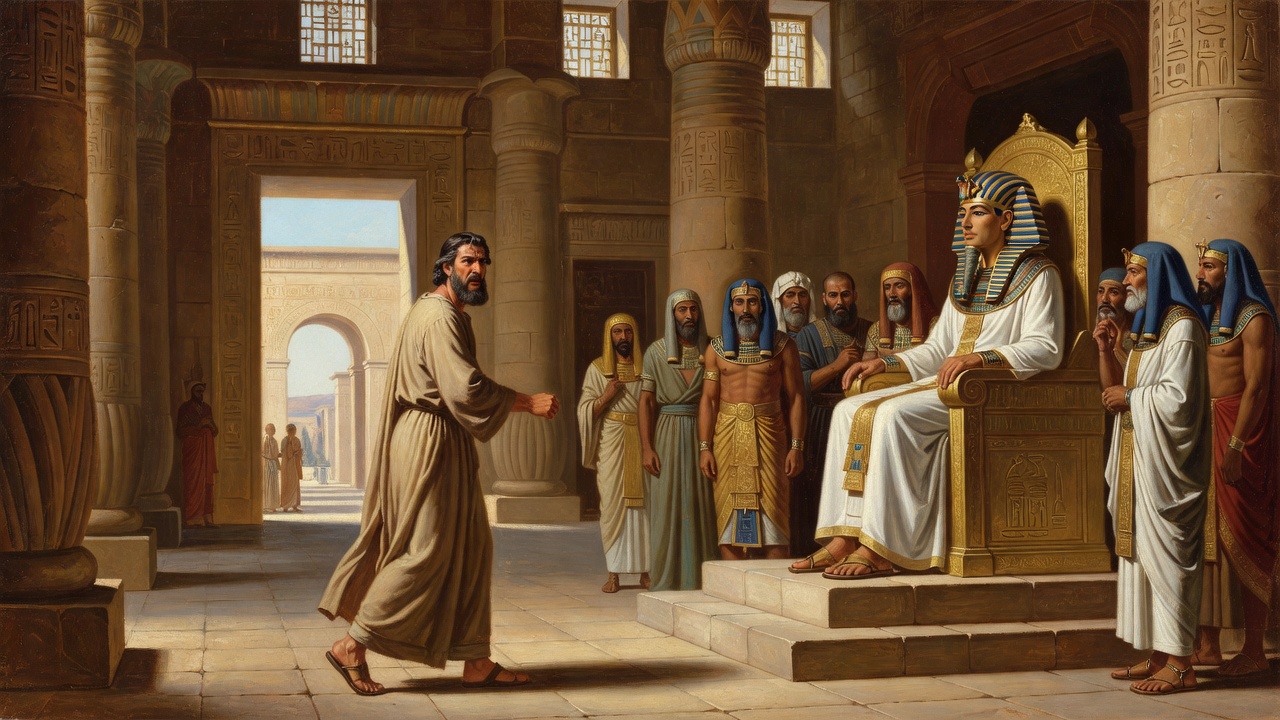
1And the Lord said to Moses, I will yet bring one plague upon Pharao and upon Egypt, and after that he will send you forth thence; and whenever he sends you forth with every thing, he will indeed drive you out. 2Speak therefore secretly in the ears of the people, and let every one ask of his neighbour jewels of silver and gold, and raiment. 3And the Lord gave his people favour in the sight of the Egyptians, and they lent to them; and the man Moses was very great before the Egyptians, and before Pharao, and before his servants. 4And Moses said, These things saith the Lord, About midnight I go forth into the midst of Egypt. 5And every first-born in the land of Egypt shall die, from the first-born of Pharao that sits on the throne, even to the first-born of the woman-servant that is by the mill, and to the first-born of all cattle. 6And there shall be a great cry through all the land of Egypt, such as has not been, and such shall not be repeated any more. 7But among all the children of Israel shall not a dog snarl with his tongue, either at man or beast; that thou mayest know how wide a distinction the Lord will make between the Egyptians and Israel. 8And all these thy servants shall come down to me, and do me reverence, saying, Go forth, thou and all the people over whom thou presidest, and afterwards I will go forth. 9And Moses went forth from Pharao with wrath. And the Lord said to Moses, Pharao will not hearken to you, that I may greatly multiply my signs and wonders in the land of Egypt. 10And Moses and Aaron wrought all these signs and wonders in the land of Egypt before Pharao; and the Lord hardened the heart of Pharao, and he did not hearken to send forth the children of Israel out of the land of Egypt.
Você sabia?
Mais uma praga antes do Êxodo
- O Easton's Bible Dictionary (1897) diz que o faraó do Êxodo foi provavelmente Menephtah I, o décimo quarto filho de Rameses II e o mais velho dos filhos que sobreviveram, mas também afirma que ainda é uma questão se ele ou Seti II foi esse rei; alguns favorecem Seti II. O mesmo verbete diz que esse faraó residia em Zoã, onde ocorreram suas entrevistas com Moisés e Arão. Este capítulo termina com Moisés, ardendo de ira, saindo da presença do faraó.Fontes: Pharaoh (of the Exodus) · o próprio texto bíblico
- O Easton's Bible Dictionary (1897) afirma que Jacó e seus filhos desceram ao Egito provavelmente cerca de 350 anos antes do nascimento de Moisés, e que o rei lhes deu o melhor da terra, Gósen, para habitar. Neste capítulo, homens e mulheres de Israel devem pedir aos vizinhos objetos de prata e de ouro, e o relato diz que o SENHOR concedeu ao povo favor diante dos egípcios.Fontes: Moses · o próprio texto bíblico
- Um registro de eventos data o início do Êxodo do Egito em 1490 a.C. Neste capítulo, o SENHOR diz a Moisés que, depois de mais uma praga, o faraó deixará o povo partir e o expulsará por completo.Fontes: Exodus from Egypt · o próprio texto bíblico
Notas escritas com auxílio de IA a partir de fontes abertas (Theographic Bible Metadata, CC BY-SA 4.0; Easton’s Bible Dictionary, domínio público) e revisadas antes de publicar.
Lugares deste capítulo
Só aparecem lugares com identificação de alta confiança (90% ou mais segundo as fontes acadêmicas reunidas pelo OpenBible). Mapa da época: DARE (Digital Atlas of the Roman Empire), CC BY 4.0; mapa atual: © colaboradores do OpenStreetMap; lugares: OpenBible.info (CC BY 4.0).
Créditos e licença desta tradução
Translation of the Greek Septuagint into English by Sir Lancelot Charles Lee Brenton
Published in 1851, and now in the Public Domain.
If you find errors in the text, please report them so that we can correct them.
Títulos de seção adaptados da Berean Standard Bible (domínio público); não fazem parte do texto bíblico desta tradução.
Fonte: http://ebible.org/eng-Brenton/ · eBible.org