Gênesis 26
Ekajuk Scriptures Bible Portions · Toque num versículo para ver as referências cruzadas.
Aisik abola Abimelek
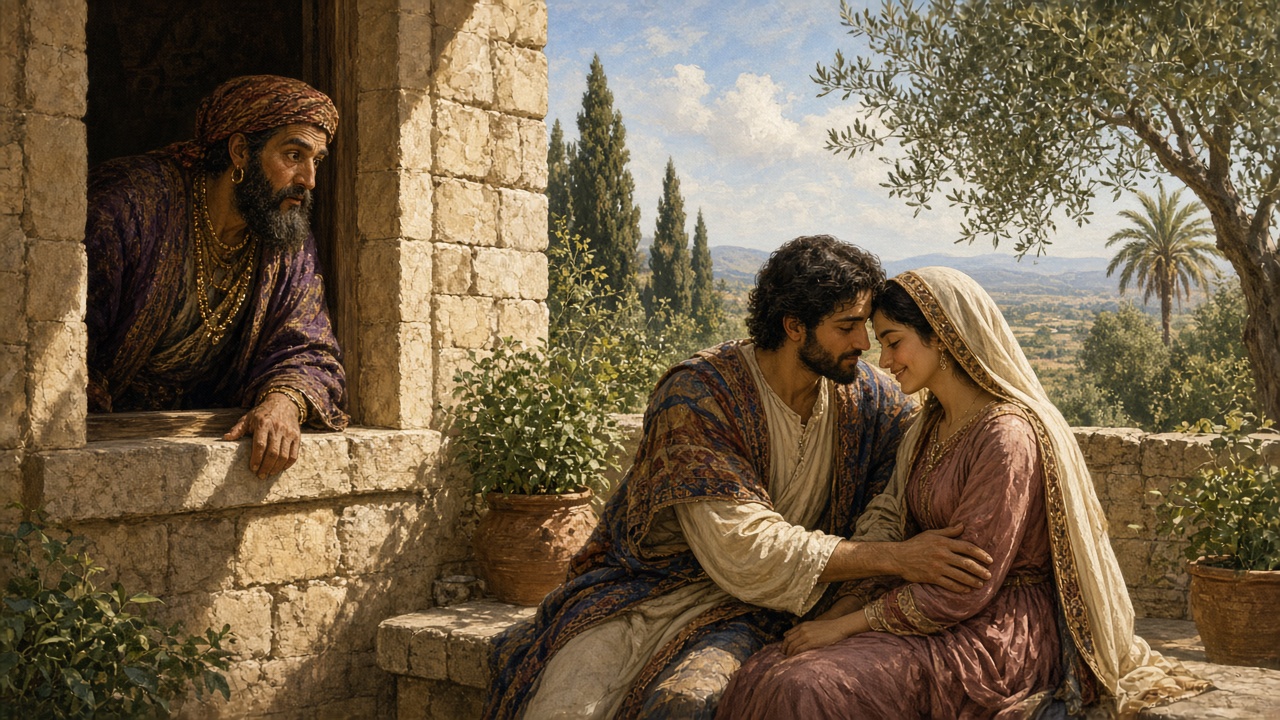
1Njal jolo go ndi nyia, njal nyi jolo ngare nyi Ebraham jolo eje eje. Owo Aisik kehm tahme goji Abimelek ntul no Filista gona Gera, 2Owo Jehova kehm ba kpiri Aisik, kehm-e tongo re, <<Ka je go Ijib, lene go ndi nyi n tong-a no re wo lene. 3Jol go ndi nyia mongare ntiil. M bahke jolo a na, fere fuul-a. Wo wo m bahk-a kake ndi nyia a etˈtohngo eja, m bahke lohko lim enyam bi n nyame no, eji n tiri ka Ebraham nso. 4M bahke limi etˈtohngo eja bahke ruru ana alonlo nya li go elbung, m bahke fere ka bo ndi nyia kpee. Ajahbe njini kpee bahke bele elfuulu, sehng goji etˈtohngo eja. 5Tibre Ebraham kpun-m kpunu, fere lim nsol nyi n tong-e re á lim, fere bum atahm enyame, a ajehke enyame, go nle enyame.>> 6Aisik sa lene o Gerar. 7Eji aneblum ba ejahbe jio bahb-e no bada nkal ewe, á kehm faange re, <<Ye mmonannee wo.>> Tibre á jo fˈfahl re á bung re, <<Ye nkal ewame wo.>> Á tiri go ege eltim re, <<Aneblum ba li edi jia bahk-m wulu tib go esi Rebeka, tib eji á li nne ano.>> 8Eji Aisik ma kang afung gbalee edi jio, owo Abimelek ntula Filista kehm seenge sehng go ewindu, kehm soro nyehn Aisik kpi elkoro lim a Rebeka nkal ewe. 9Owo Abimelek kehm tumu bo lung Aisik, kehm-e tongo re, <<Nkal ewa wo, go etingitingi! Nˈnan wahnge a tongo re, <Ye mmonannee wo?>>> Aisik kehm faange re, <<Tibre n tiri re m bahke tane elkpin ename tib esi eje.>> 10Owo Abimelek kehm bungu re, <<A elkohn ejum ajii a ma-r lim ana. Nnenlum awohng awohng noongo noongo a nkal ewa, kehn wob ko na ko ebi jia ba kun-r mbol mbol.>> 11Owo Abimelek kehm jehke ntahm ka ane kpee re, <<Nne awohng awohng no lˈgbiingi nnenlum noa, afi fere jolo nkal ewe, bo bahk-e tiki wulu na.>> 12Aisik bahme nsol go ndi nyia, kehm kpake mbuda nkunu go elya nˈnehm o, tibre Jehova fuul-e fuulu. 13Aisik kehm gboko afang, afang enye soro asi jo gbal na tete á sahb fˈfang. 14Á bele ejoro, a ebul gbalee, a adahmagbudu adahmagbudu. Á tob bele alokeltum gbalee, toono o, á jo teele anebe Filista ala. 15Abing alahb kpee nya alokeltum nde rahme no ngare nyi Ebraham nde kpeka li go elkpin, anebe Filista song kpu ndi sahd. 16Owo Abimelek kehm bungu tong Aisik re, <<Mehl wo song ka-r eyake, tibre wob bel atahne sehng-r.>> 17Owo Aisik kehm mehle o, song rehng go edamme ji Gerar, song kak elsi o. 18Aisik kehm kpe lennge abing alahb nya bo rahme no ngare nyi Ebraham nde kpeka li, nya anebe Filista sahde no eji Ebraham ma kpo. Á tik kpe gungu abing alahb nyao abing nyanehm nya Ebraham nde ka no. 19Alokeltum ba Aisik rahme elbing elahb go edamme, kehm song nyehn mbˈbehl alahb o. 20Abaabebul ba anebe Gerar kehm kehme eltaange a abaabebul ba Aisik. Bo jo bungu re, <<Alahb ma mahre ma!>> Wahng ka á lungu elbing elahb nio re, Esek tibre bo taange a ne o. 21Owo bo kehm kpe rahm elbing nehko. Anebe Filista kpe ba yiimi ntaange o; owo á lungu elbing alahb nio re Sitna. 22Á kehm mehle tahm edi jio sa, kpe song rahm nehko, nio nnene taangem a ne. Á kehm lungu nio re Rehobod, ji lohngo re, <<Anv Jehova ma-r ka edi, e bahke tebe a ndi nyia.>> 23Á kehm mehle o tahm go Beerseba. 24Atv mao, Jehova kehm ba kpiri Aisik, kehm-e tongo re, <<Me wo li Esowo bi Ebraham nso. Ka fahl tibre me n li a na. M bahk-a fuulu, fere lim etˈtohngo eja rur, tib go esi Ebraham nlokeltum ewame. 25Owo Aisik kehm limi egudu njom o, jo kak Jehova. Á si mobkpatahk o, alokeltum ebe tob rahme elbing alahb o. 26Ngare nyˈnehm o, Abimelek eblohng go Gerar ba go ege, a Ahusa ntubelle ewe, a Fikol ji jolo ntubesia nsoja enye. 27Aisik kehm bahbe bo re, <<Ḿ ba jen ga egame, wahn sang jo bib aname fere kam-m yake goa? 28Bo kehm-e faange re, <<Wahr ebnyehn gbuul re Jehova li a na, owo wahnge e bungu re, fuumu re wahr koon nwongo tir atemtem, wahr anebe Filista a na, nong wahr koon nwongo a na, 29re wahn nehm lim-r ebi ajehng ajehng, ana wahr ki-n gbiingi go mbang anyehng anyehng, e jo gbaam-n na, fere yak-n re wahn song go elkoono. Anv Jehova ma-a fuulu.>> 30Owo Aisik kehm limi eyiiki ka bo, bo li, fere wˈwo. 31Efungfu behre behre, etoono efung, bo kehm koko nwongo tir atemtem. Aisik kehm song bo re bo song, bo soro tahm-e sa asongo go elkoono. 32Efung bio alokeltum Aisik kehnge ba tong-e bade elbing alahb ni bo ma rahm. Bo bungu re, <<Wahr ebnyehn alahb.>> 33Aisik lungu elbing alahb nio re Siba, tete sik lela, bo kpo lung mbing ejahbe jio re Beerseba. 34Eji Eso ma kang nnya atahl abal, á baange Judid, ye ji jolo mmona Beeri ji nnea Hid, á tob ko Basemad mmon no Elon ji nnea Hid fvfo. 35Bo jo ka Aisik a Rebeka erakatahng.
Você sabia?
Isaque em Gerar
- Durante uma fome, Isaque buscou refúgio junto a Abimeleque, rei de Gerar, antiga cidade e distrito na fronteira sul da Palestina. O Easton's Bible Dictionary (1897) observa que Isaque agiu com sua esposa Rebeca de modo muito parecido com o de seu pai Abraão em relação a Sara naquele lugar: disse que ela era sua irmã. Abimeleque depois o repreendeu, quando o engano foi descoberto.Fontes: Abimelech (King of Gerar) · Gerar · o próprio texto bíblico
- Os nomes dos poços no vale de Gerar recordam as disputas por eles. Eseque significa “contenda”, porque os pastores de Gerar reivindicaram a água, e Sitna significa “conflito”. Isaque também reabriu poços que os servos de seu pai Abraão haviam cavado e que os filisteus tinham tampado, e deu-lhes os mesmos nomes que seu pai lhes dera.Fontes: Esek · Sitnah · o próprio texto bíblico
- Berseba significa “poço do juramento” ou “poço dos sete”. Segundo o Easton's Bible Dictionary (1897), Abraão cavou ali um poço e lhe deu esse nome após um acordo com Abimeleque, e Isaque lhe deu o mesmo nome ao reabri-lo. O dicionário também identifica Ficol — “grande” — como capitão-chefe do exército de Abimeleque e diz que ele participou da aliança de Abraão acerca desse poço.Fontes: Beersheba · Phichol · o próprio texto bíblico
Notas escritas com auxílio de IA a partir de fontes abertas (Theographic Bible Metadata, CC BY-SA 4.0; Easton’s Bible Dictionary, domínio público) e revisadas antes de publicar.
Lugares deste capítulo
- Egypt · 30.129, 31.308 · versículo 2
- Valley of Gerar · Hoje: about 3 km around Tel Haror · 31.382, 34.606 · versículos 17, 19
Só aparecem lugares com identificação de alta confiança (90% ou mais segundo as fontes acadêmicas reunidas pelo OpenBible). Mapa da época: DARE (Digital Atlas of the Roman Empire), CC BY 4.0; mapa atual: © colaboradores do OpenStreetMap; lugares: OpenBible.info (CC BY 4.0).
Créditos e licença desta tradução
Ekajuk Scriptures Bible Portions
Ekajuk: Ekajuk Scriptures Bible Portions (Bible)
copyright © 2024 Luke Initiative for Scripture Translation and The Seed Company
Language: Ekajuk
Contributor: Luke Initiative for Scripture Translation
This translation is made available to you under the terms of the
Creative Commons Attribution Share-Alike license 4.0.
You have permission to share and redistribute this Bible translation in any format and to make reasonable revisions and adaptations of this translation, provided that:
You include the above copyright and source information.
If you make any changes to the text, you must indicate that you did so in a way that makes it clear that the original licensor is not necessarily endorsing your changes.
If you redistribute this text, you must distribute your contributions under the same license as the original.
Pictures included with Scriptures and other documents on this site are licensed just for use with those Scriptures and documents.
For other uses, please contact the respective copyright owners.
Note that in addition to the rules above, revising and adapting God's Word involves a great responsibility to be true to God's Word. See Revelation 22:18-19.
2025-07-02
Fonte: http://ebible.org/eka/ · eBible.org