Genesis 26
Ekajuk Scriptures Bible Portions · Tap a verse to see its cross-references.
Aisik abola Abimelek
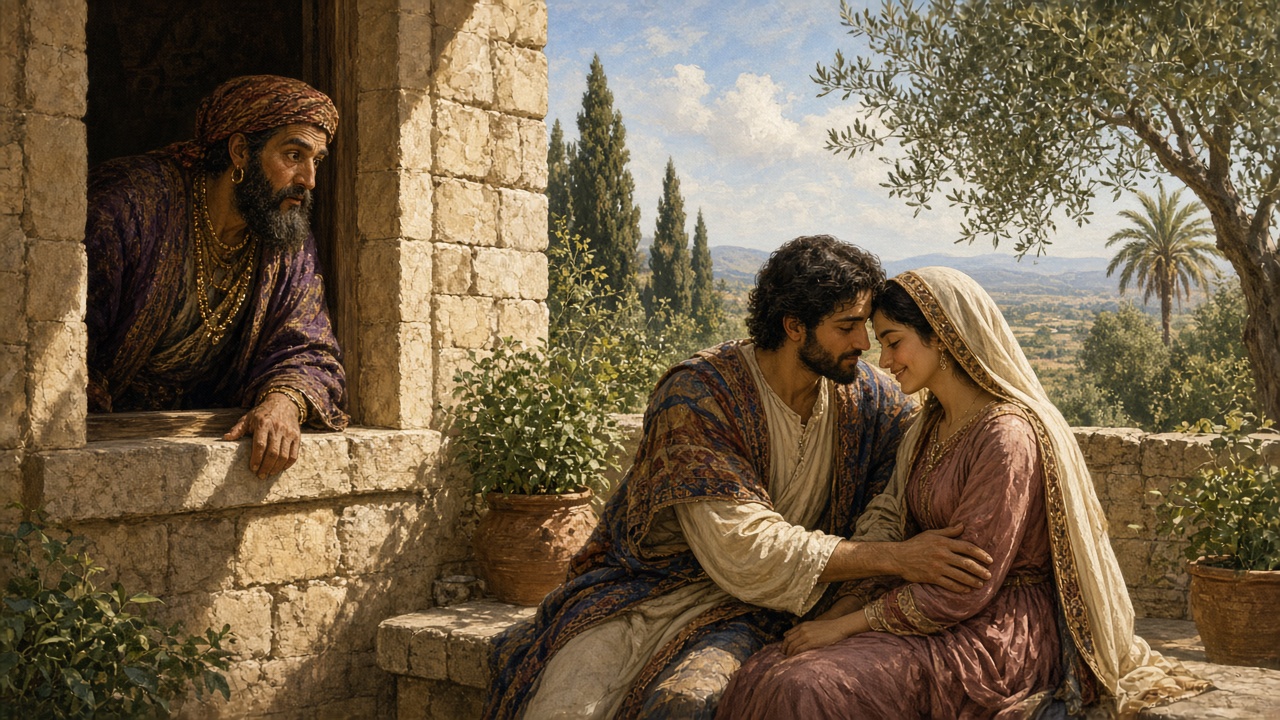
1Njal jolo go ndi nyia, njal nyi jolo ngare nyi Ebraham jolo eje eje. Owo Aisik kehm tahme goji Abimelek ntul no Filista gona Gera, 2Owo Jehova kehm ba kpiri Aisik, kehm-e tongo re, <<Ka je go Ijib, lene go ndi nyi n tong-a no re wo lene. 3Jol go ndi nyia mongare ntiil. M bahke jolo a na, fere fuul-a. Wo wo m bahk-a kake ndi nyia a etˈtohngo eja, m bahke lohko lim enyam bi n nyame no, eji n tiri ka Ebraham nso. 4M bahke limi etˈtohngo eja bahke ruru ana alonlo nya li go elbung, m bahke fere ka bo ndi nyia kpee. Ajahbe njini kpee bahke bele elfuulu, sehng goji etˈtohngo eja. 5Tibre Ebraham kpun-m kpunu, fere lim nsol nyi n tong-e re á lim, fere bum atahm enyame, a ajehke enyame, go nle enyame.>> 6Aisik sa lene o Gerar. 7Eji aneblum ba ejahbe jio bahb-e no bada nkal ewe, á kehm faange re, <<Ye mmonannee wo.>> Tibre á jo fˈfahl re á bung re, <<Ye nkal ewame wo.>> Á tiri go ege eltim re, <<Aneblum ba li edi jia bahk-m wulu tib go esi Rebeka, tib eji á li nne ano.>> 8Eji Aisik ma kang afung gbalee edi jio, owo Abimelek ntula Filista kehm seenge sehng go ewindu, kehm soro nyehn Aisik kpi elkoro lim a Rebeka nkal ewe. 9Owo Abimelek kehm tumu bo lung Aisik, kehm-e tongo re, <<Nkal ewa wo, go etingitingi! Nˈnan wahnge a tongo re, <Ye mmonannee wo?>>> Aisik kehm faange re, <<Tibre n tiri re m bahke tane elkpin ename tib esi eje.>> 10Owo Abimelek kehm bungu re, <<A elkohn ejum ajii a ma-r lim ana. Nnenlum awohng awohng noongo noongo a nkal ewa, kehn wob ko na ko ebi jia ba kun-r mbol mbol.>> 11Owo Abimelek kehm jehke ntahm ka ane kpee re, <<Nne awohng awohng no lˈgbiingi nnenlum noa, afi fere jolo nkal ewe, bo bahk-e tiki wulu na.>> 12Aisik bahme nsol go ndi nyia, kehm kpake mbuda nkunu go elya nˈnehm o, tibre Jehova fuul-e fuulu. 13Aisik kehm gboko afang, afang enye soro asi jo gbal na tete á sahb fˈfang. 14Á bele ejoro, a ebul gbalee, a adahmagbudu adahmagbudu. Á tob bele alokeltum gbalee, toono o, á jo teele anebe Filista ala. 15Abing alahb kpee nya alokeltum nde rahme no ngare nyi Ebraham nde kpeka li go elkpin, anebe Filista song kpu ndi sahd. 16Owo Abimelek kehm bungu tong Aisik re, <<Mehl wo song ka-r eyake, tibre wob bel atahne sehng-r.>> 17Owo Aisik kehm mehle o, song rehng go edamme ji Gerar, song kak elsi o. 18Aisik kehm kpe lennge abing alahb nya bo rahme no ngare nyi Ebraham nde kpeka li, nya anebe Filista sahde no eji Ebraham ma kpo. Á tik kpe gungu abing alahb nyao abing nyanehm nya Ebraham nde ka no. 19Alokeltum ba Aisik rahme elbing elahb go edamme, kehm song nyehn mbˈbehl alahb o. 20Abaabebul ba anebe Gerar kehm kehme eltaange a abaabebul ba Aisik. Bo jo bungu re, <<Alahb ma mahre ma!>> Wahng ka á lungu elbing elahb nio re, Esek tibre bo taange a ne o. 21Owo bo kehm kpe rahm elbing nehko. Anebe Filista kpe ba yiimi ntaange o; owo á lungu elbing alahb nio re Sitna. 22Á kehm mehle tahm edi jio sa, kpe song rahm nehko, nio nnene taangem a ne. Á kehm lungu nio re Rehobod, ji lohngo re, <<Anv Jehova ma-r ka edi, e bahke tebe a ndi nyia.>> 23Á kehm mehle o tahm go Beerseba. 24Atv mao, Jehova kehm ba kpiri Aisik, kehm-e tongo re, <<Me wo li Esowo bi Ebraham nso. Ka fahl tibre me n li a na. M bahk-a fuulu, fere lim etˈtohngo eja rur, tib go esi Ebraham nlokeltum ewame. 25Owo Aisik kehm limi egudu njom o, jo kak Jehova. Á si mobkpatahk o, alokeltum ebe tob rahme elbing alahb o. 26Ngare nyˈnehm o, Abimelek eblohng go Gerar ba go ege, a Ahusa ntubelle ewe, a Fikol ji jolo ntubesia nsoja enye. 27Aisik kehm bahbe bo re, <<Ḿ ba jen ga egame, wahn sang jo bib aname fere kam-m yake goa? 28Bo kehm-e faange re, <<Wahr ebnyehn gbuul re Jehova li a na, owo wahnge e bungu re, fuumu re wahr koon nwongo tir atemtem, wahr anebe Filista a na, nong wahr koon nwongo a na, 29re wahn nehm lim-r ebi ajehng ajehng, ana wahr ki-n gbiingi go mbang anyehng anyehng, e jo gbaam-n na, fere yak-n re wahn song go elkoono. Anv Jehova ma-a fuulu.>> 30Owo Aisik kehm limi eyiiki ka bo, bo li, fere wˈwo. 31Efungfu behre behre, etoono efung, bo kehm koko nwongo tir atemtem. Aisik kehm song bo re bo song, bo soro tahm-e sa asongo go elkoono. 32Efung bio alokeltum Aisik kehnge ba tong-e bade elbing alahb ni bo ma rahm. Bo bungu re, <<Wahr ebnyehn alahb.>> 33Aisik lungu elbing alahb nio re Siba, tete sik lela, bo kpo lung mbing ejahbe jio re Beerseba. 34Eji Eso ma kang nnya atahl abal, á baange Judid, ye ji jolo mmona Beeri ji nnea Hid, á tob ko Basemad mmon no Elon ji nnea Hid fvfo. 35Bo jo ka Aisik a Rebeka erakatahng.
Did you know?
Isaac in Gerar
- During a famine, Isaac sought refuge with Abimelech, king of Gerar, an ancient town and district on the southern border of Palestine. Easton's Bible Dictionary (1897) notes that Isaac acted toward his wife Rebekah much as his father Abraham had acted toward Sarah there: he said she was his sister. Abimelech later rebuked him when the deception was discovered.Sources: Abimelech (King of Gerar) · Gerar · the Bible text itself
- The names of wells in the Valley of Gerar recall the disputes over them. Esek means “quarrel,” because the herdsmen of Gerar claimed the water, and Sitnah means “strife.” Isaac also reopened wells that his father Abraham’s servants had dug and that the Philistines had stopped up, and he gave them the same names his father had given them.Sources: Esek · Sitnah · the Bible text itself
- Beersheba means “well of the oath” or “well of seven.” According to Easton's Bible Dictionary (1897), Abraham dug a well there and named it after a compact with Abimelech, and Isaac gave it the same name when he reopened it. The dictionary also identifies Phicol—“great”—as chief captain of Abimelech’s army, and says he took part in Abraham’s alliance over that well.Sources: Beersheba · Phichol · the Bible text itself
Notes written with AI assistance from open sources (Theographic Bible Metadata, CC BY-SA 4.0; Easton’s Bible Dictionary, public domain) and reviewed before publishing.
Places in this chapter
- Egypt · 30.129, 31.308 · verse 2
- Valley of Gerar · Today: about 3 km around Tel Haror · 31.382, 34.606 · verses 17, 19
Only places identified with high confidence are shown (90% or more according to the scholarly sources compiled by OpenBible). Period map: DARE (Digital Atlas of the Roman Empire), CC BY 4.0; modern map: © OpenStreetMap contributors; places: OpenBible.info (CC BY 4.0).
Credits and license for this translation
Ekajuk Scriptures Bible Portions
Ekajuk: Ekajuk Scriptures Bible Portions (Bible)
copyright © 2024 Luke Initiative for Scripture Translation and The Seed Company
Language: Ekajuk
Contributor: Luke Initiative for Scripture Translation
This translation is made available to you under the terms of the
Creative Commons Attribution Share-Alike license 4.0.
You have permission to share and redistribute this Bible translation in any format and to make reasonable revisions and adaptations of this translation, provided that:
You include the above copyright and source information.
If you make any changes to the text, you must indicate that you did so in a way that makes it clear that the original licensor is not necessarily endorsing your changes.
If you redistribute this text, you must distribute your contributions under the same license as the original.
Pictures included with Scriptures and other documents on this site are licensed just for use with those Scriptures and documents.
For other uses, please contact the respective copyright owners.
Note that in addition to the rules above, revising and adapting God's Word involves a great responsibility to be true to God's Word. See Revelation 22:18-19.
2025-07-02
Source: http://ebible.org/eka/ · eBible.org