Apocalipse 3
Beibel: okanisi tongo · Toque num versículo para ver as referências cruzadas.
A bosikopu gi Saadesi
1“Sikiifi gi a Engel*f7* fu a keliki a Saadesi taki, mi di e taki ya, na mi abi den seibin jeje fu Masaa Gadu anga den seibin sitali:
Mi sabi den wooko fu u. Mi sabi taki u e tyai a nen taki u e libi. Ma a ná tuu! U dede! 2A dati meke u mu de na ain, da u gi den taawan di kon swaki a ini a biibi kaakiti. Bika mi si taki ná wan fu den wooko fu u di u e du bun sai gi mi Gadu. 3We, u pakisei luku, fa u be kisi a wowtu fu Masaa Gadu, anga fa u be yee en. Da u daai libi, fu libi enke fa a wowtu fu Masaa Gadu e leli u. Ma efu u á de na ain, da mi o kon, te u á fuuwakiti mi. U pakisei fa wan fufuuman e kon sondee fi i fuuwakiti en. Na so mi o kon, a wan ten, te u á fuuwakiti mi. Da u ná o sabi na on yuu mi o kon a u.
4Ma wantu sama de a Saadesi de, di á tyobo den koosi. Den o waka anga mi anga weti koosi makandii. Bika den waiti fu dati. 5Sama di wini a feti, o fende weti koosi fu wei. Da noiti mi o kaabu en nen puu a ini a buku fu libi. Mi ná o sen fu taki a fesi fu mi Tata anga den Engel taki mi sabi en. 6Sama di abi yesi, meke a yee san a Jeje fu Masaa Gadu e taigi den keliki.
A bosikopu gi Filadelfiya
7“Sikiifi gi a Engel fu a keliki a Filadelfiya taki, mi di e taki ya, na mi de apaiti gi Masaa Gadu, sondee koli. Mi di abi a sooto fu Dafeti. Te mi opo ná wan sama poi sooto, te mi sooto, ná wan sama poi opo:
8Mi sabi den wooko fu u. We, luku! Mi opo wan doo gi u, di ná wan sama poi sooto. Na sama ain u á de ná wan sani. Bika u abi pikin kaakiti, ma toku u oli mi wowtu naamo. Ná wan dei di u sen fu kai mi nen a sama fesi. 9Da luku! Mi o meke wantu sama di de na a kulu fu saatan kon saka kini a doti a u fesi. Da anga den eigi mofu den musu taki, mi lobi u tuu. Bika den e kai denseefi Dyu, ma den e lei. Na soso ogii ati didibii sama den de. 10Da fu di u oli doo a san mi be taigi u, a dati meke mi o kibii u gi a gaan tesi di o kon a goontapu fu tesi den sama di e tan a goontapu.
11Mi e kon dyonson! U oli san u abi taanga! U á mu meke sama koli u, fu lasi a paiman di de fu u kisi. 12Sama di wini a feti, mi sa teke en poti enke wan ponsu na a osu fu Masaa Gadu. Da noti moo a o komoto de. Da mi o sikiifi a nen fu mi Gadu anga a nyun nen fu mi anga a nen fu a foto fu mi Gadu, a Nyun Jelusalem, di o saka komoto a Masaa Gadu ne en, tapu. 13Sama di abi yesi, meke a yee san a Jeje fu Masaa Gadu e taigi den keliki.
A bosikopu gi Laodiseya
14“Sikiifi gi a Engel fu a keliki a Laodiseya taki, mi di e taki ya, na a Amen! A taki A Kaba! A tuutuu Kotoigi di nái lei. A Fitoow Wan. A Bigin fu ala sani di Masaa Gadu meke:
15Mi sabi den wooko fu u. Mi sabi taki u á koo a den sani fu Masaa Gadu. Ma u á faya tu. A be moo bun efu u be de kookoo efu u be de faya faya. 16Ma fu di u booko koo, meke mi o fula u puu a ini mi mofu ini. Bika u á koo, ma u á faya tu. 17Bika u e taki fu u seefi taki u gudu, te u abi ala sani. Ná wan sani e mankei u. Ma u á sabi taki u na mofina sani, di de fu tyali gi. U pooti! U beendi! U de soso sikin! 18A dati meke mi e gi u a lai taki, u kon a mi kon bai tuutuu gowtu di boon puu ala tyobo, fu u gudu. U kon bai weti koosi a mi, wei tapu u piipii sikin. U kon bai deesi a mi fu poti gi u ain, fu u sa si sani kiin. 19Den sama di mi lobi, na den mi e kaasi, te den á du wan sani bun. Ma soseefi, efu den du wan sani bun mi e taigi den tu. Da mi e kiya den e leli den fa den mu libi. A dati meke, u daai u libi tuutuu, fika ala sipowtu a wanse. 20U aliki! Mi taampu a doo mofu e koko a doo! Efu wan sama yee mi tongo, ne a opo a doo gi mi, da mi sa kon a ini. Da wi sa nyan makandii.
21Sama di wini a feti, mi o gi en pasi fu tii sani anga mi a mi kownu sutuu. Leti enke fa mi wini, ne mi e tii sani makandii anga mi Tata. 22Sama di abi yesi, da meke a yee san a Jeje fu Masaa Gadu e taigi den keliki.”
Você sabia?
Cartas a Sardes, Filadélfia e Laodiceia
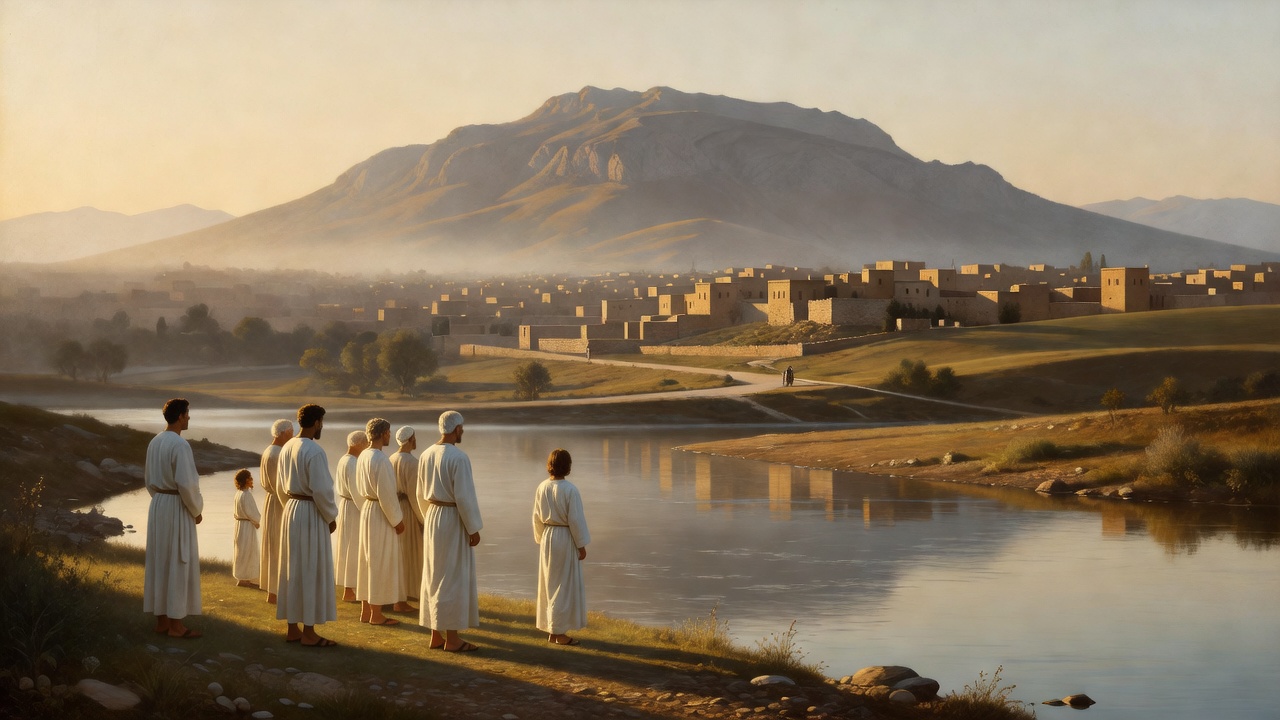
- O capítulo 3 do Apocalipse reúne cartas a igrejas de três cidades da Ásia Menor. Sardes, a metrópole da Lídia, ficava à beira do rio Pactolo, ao pé do monte Tmolo. Filadélfia, nome que significa “amor fraternal”, ficava a cerca de vinte e cinco milhas a sudeste de Sardes; Laodiceia ficava junto ao Lico, onde a Frígia e a Lídia se encontram, a cerca de quarenta milhas a leste de Éfeso.Fontes: Sardis · Philadelphia · Laodicea · o próprio texto bíblico
- Laodiceia chamou-se primeiro Dióspolis e depois Roas. Mais tarde recebeu o nome de Laodiceia por causa de Laódice, esposa de Antíoco II, rei da Síria, que a reconstruiu. O Easton's Bible Dictionary (1897) a apresenta como uma das cidades mais importantes e prósperas da Ásia Menor e como um antigo centro de destaque do cristianismo; na carta, diz-se que essa igreja afirma ser rica, ter enriquecido e não precisar de nada.Fontes: Laodicea · o próprio texto bíblico
- A carta a Filadélfia fala de uma “sinagoga de Satanás” e de pessoas que se dizem judias, mas a quem ela chama de mentirosas. Satanás significa “adversário” ou “acusador”, e no Novo Testamento o nome é usado de modo intercambiável com o diabo.Fontes: Satan · o próprio texto bíblico
Notas escritas com auxílio de IA a partir de fontes abertas (Theographic Bible Metadata, CC BY-SA 4.0; Easton’s Bible Dictionary, domínio público) e revisadas antes de publicar.
Lugares deste capítulo
- Sardis · 38.488, 28.040 · versículos 1, 4
- Philadelphia · Hoje: Alaşehir · 38.350, 28.517 · versículo 7
- Jerusalem · 31.777, 35.234 · versículo 12
- Laodicea · Hoje: Laodicea on the Lycus · 37.836, 29.108 · versículo 14
Só aparecem lugares com identificação de alta confiança (90% ou mais segundo as fontes acadêmicas reunidas pelo OpenBible). Mapa da época: DARE (Digital Atlas of the Roman Empire), CC BY 4.0; mapa atual: © colaboradores do OpenStreetMap; lugares: OpenBible.info (CC BY 4.0).
Créditos e licença desta tradução
Beibel: okanisi tongo
New Testament in Eastern Maroon Creole (NS:djk:Eastern Maroon Creole)
copyright © 2009 Wycliffe Bible Translators, Inc.
Language: Eastern Maroon Creole
Translation by: Wycliffe Bible Translators, Inc.
Eastern Maroon Creole
djk
Suriname
Copyright Information
© 2009, Wycliffe Bible Translators, Inc. All rights reserved.
This translation text is made available to you under the
terms of the Creative Commons License: Attribution-Noncommercial-No Derivative Works.
( http://creativecommons.org/licenses/by-nc-nd/3.0/ )
In addition, you have permission to port the text to different file formats, as long as you
do not change any of the text or punctuation of the Bible.
You may share, copy, distribute, transmit, and extract portions
or quotations from this work, provided that you include the above copyright
information:
You must give Attribution to the work.
You do not sell this work for a profit.
You do not make any derivative works that change any of the actual words or punctuation of the Scriptures.
Permissions beyond the scope of this license may be
available if you contact
us with your request.
The New Testament
in Eastern Maroon Creole
© 2009, Wycliffe Bible Translators, Inc. All rights reserved.
This translation is made available to you under the terms of the
Creative Commons Attribution-Noncommercial-No Derivatives license 4.0.
You may share and redistribute this Bible translation or extracts from it in any format, provided that:
You include the above copyright and source information.
You do not sell this work for a profit.
You do not change any of the words or punctuation of the Scriptures.
Pictures included with Scriptures and other documents on this site are licensed just for use with those Scriptures and documents.
For other uses, please contact the respective copyright owners.
2014-04-22
Fonte: http://ebible.org/djkNT/ · eBible.org