Revelation 3
Beibel: okanisi tongo · Tap a verse to see its cross-references.
A bosikopu gi Saadesi
1“Sikiifi gi a Engel*f7* fu a keliki a Saadesi taki, mi di e taki ya, na mi abi den seibin jeje fu Masaa Gadu anga den seibin sitali:
Mi sabi den wooko fu u. Mi sabi taki u e tyai a nen taki u e libi. Ma a ná tuu! U dede! 2A dati meke u mu de na ain, da u gi den taawan di kon swaki a ini a biibi kaakiti. Bika mi si taki ná wan fu den wooko fu u di u e du bun sai gi mi Gadu. 3We, u pakisei luku, fa u be kisi a wowtu fu Masaa Gadu, anga fa u be yee en. Da u daai libi, fu libi enke fa a wowtu fu Masaa Gadu e leli u. Ma efu u á de na ain, da mi o kon, te u á fuuwakiti mi. U pakisei fa wan fufuuman e kon sondee fi i fuuwakiti en. Na so mi o kon, a wan ten, te u á fuuwakiti mi. Da u ná o sabi na on yuu mi o kon a u.
4Ma wantu sama de a Saadesi de, di á tyobo den koosi. Den o waka anga mi anga weti koosi makandii. Bika den waiti fu dati. 5Sama di wini a feti, o fende weti koosi fu wei. Da noiti mi o kaabu en nen puu a ini a buku fu libi. Mi ná o sen fu taki a fesi fu mi Tata anga den Engel taki mi sabi en. 6Sama di abi yesi, meke a yee san a Jeje fu Masaa Gadu e taigi den keliki.
A bosikopu gi Filadelfiya
7“Sikiifi gi a Engel fu a keliki a Filadelfiya taki, mi di e taki ya, na mi de apaiti gi Masaa Gadu, sondee koli. Mi di abi a sooto fu Dafeti. Te mi opo ná wan sama poi sooto, te mi sooto, ná wan sama poi opo:
8Mi sabi den wooko fu u. We, luku! Mi opo wan doo gi u, di ná wan sama poi sooto. Na sama ain u á de ná wan sani. Bika u abi pikin kaakiti, ma toku u oli mi wowtu naamo. Ná wan dei di u sen fu kai mi nen a sama fesi. 9Da luku! Mi o meke wantu sama di de na a kulu fu saatan kon saka kini a doti a u fesi. Da anga den eigi mofu den musu taki, mi lobi u tuu. Bika den e kai denseefi Dyu, ma den e lei. Na soso ogii ati didibii sama den de. 10Da fu di u oli doo a san mi be taigi u, a dati meke mi o kibii u gi a gaan tesi di o kon a goontapu fu tesi den sama di e tan a goontapu.
11Mi e kon dyonson! U oli san u abi taanga! U á mu meke sama koli u, fu lasi a paiman di de fu u kisi. 12Sama di wini a feti, mi sa teke en poti enke wan ponsu na a osu fu Masaa Gadu. Da noti moo a o komoto de. Da mi o sikiifi a nen fu mi Gadu anga a nyun nen fu mi anga a nen fu a foto fu mi Gadu, a Nyun Jelusalem, di o saka komoto a Masaa Gadu ne en, tapu. 13Sama di abi yesi, meke a yee san a Jeje fu Masaa Gadu e taigi den keliki.
A bosikopu gi Laodiseya
14“Sikiifi gi a Engel fu a keliki a Laodiseya taki, mi di e taki ya, na a Amen! A taki A Kaba! A tuutuu Kotoigi di nái lei. A Fitoow Wan. A Bigin fu ala sani di Masaa Gadu meke:
15Mi sabi den wooko fu u. Mi sabi taki u á koo a den sani fu Masaa Gadu. Ma u á faya tu. A be moo bun efu u be de kookoo efu u be de faya faya. 16Ma fu di u booko koo, meke mi o fula u puu a ini mi mofu ini. Bika u á koo, ma u á faya tu. 17Bika u e taki fu u seefi taki u gudu, te u abi ala sani. Ná wan sani e mankei u. Ma u á sabi taki u na mofina sani, di de fu tyali gi. U pooti! U beendi! U de soso sikin! 18A dati meke mi e gi u a lai taki, u kon a mi kon bai tuutuu gowtu di boon puu ala tyobo, fu u gudu. U kon bai weti koosi a mi, wei tapu u piipii sikin. U kon bai deesi a mi fu poti gi u ain, fu u sa si sani kiin. 19Den sama di mi lobi, na den mi e kaasi, te den á du wan sani bun. Ma soseefi, efu den du wan sani bun mi e taigi den tu. Da mi e kiya den e leli den fa den mu libi. A dati meke, u daai u libi tuutuu, fika ala sipowtu a wanse. 20U aliki! Mi taampu a doo mofu e koko a doo! Efu wan sama yee mi tongo, ne a opo a doo gi mi, da mi sa kon a ini. Da wi sa nyan makandii.
21Sama di wini a feti, mi o gi en pasi fu tii sani anga mi a mi kownu sutuu. Leti enke fa mi wini, ne mi e tii sani makandii anga mi Tata. 22Sama di abi yesi, da meke a yee san a Jeje fu Masaa Gadu e taigi den keliki.”
Did you know?
Letters to Sardis, Philadelphia, and Laodicea
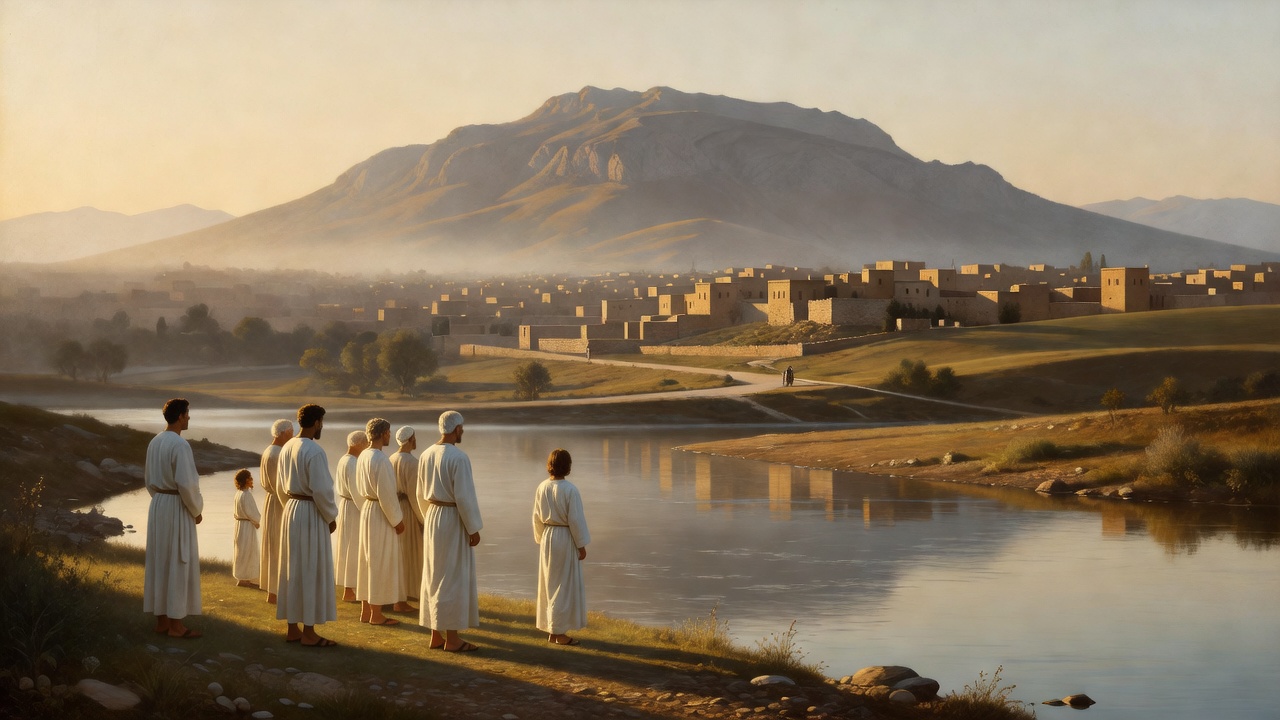
- Revelation 3 is a set of letters to churches in three cities of Asia Minor. Sardis, the metropolis of Lydia, stood on the river Pactolus at the foot of Mount Tmolus. Philadelphia, a name that means “brotherly love,” lay about twenty-five miles southeast of Sardis, while Laodicea stood on the Lycus, where Phrygia and Lydia meet, about forty miles east of Ephesus.Sources: Sardis · Philadelphia · Laodicea · the Bible text itself
- Laodicea was first called Diospolis and then Rhoas. It was later named Laodicea after Laodice, the wife of Antiochus II, king of Syria, who rebuilt it. Easton's Bible Dictionary (1897) calls it one of the most important and flourishing cities of Asia Minor and an early leading center of Christianity; in the letter, that church is said to claim that it is rich, has grown wealthy, and needs nothing.Sources: Laodicea · the Bible text itself
- The letter to Philadelphia speaks of a “synagogue of Satan” and of people who claim to be Jews but whom it calls liars. Satan means “adversary” or “accuser,” and in the New Testament the name is used interchangeably with the devil.Sources: Satan · the Bible text itself
Notes written with AI assistance from open sources (Theographic Bible Metadata, CC BY-SA 4.0; Easton’s Bible Dictionary, public domain) and reviewed before publishing.
Places in this chapter
- Sardis · 38.488, 28.040 · verses 1, 4
- Philadelphia · Today: Alaşehir · 38.350, 28.517 · verse 7
- Jerusalem · 31.777, 35.234 · verse 12
- Laodicea · Today: Laodicea on the Lycus · 37.836, 29.108 · verse 14
Only places identified with high confidence are shown (90% or more according to the scholarly sources compiled by OpenBible). Period map: DARE (Digital Atlas of the Roman Empire), CC BY 4.0; modern map: © OpenStreetMap contributors; places: OpenBible.info (CC BY 4.0).
Credits and license for this translation
Beibel: okanisi tongo
New Testament in Eastern Maroon Creole (NS:djk:Eastern Maroon Creole)
copyright © 2009 Wycliffe Bible Translators, Inc.
Language: Eastern Maroon Creole
Translation by: Wycliffe Bible Translators, Inc.
Eastern Maroon Creole
djk
Suriname
Copyright Information
© 2009, Wycliffe Bible Translators, Inc. All rights reserved.
This translation text is made available to you under the
terms of the Creative Commons License: Attribution-Noncommercial-No Derivative Works.
( http://creativecommons.org/licenses/by-nc-nd/3.0/ )
In addition, you have permission to port the text to different file formats, as long as you
do not change any of the text or punctuation of the Bible.
You may share, copy, distribute, transmit, and extract portions
or quotations from this work, provided that you include the above copyright
information:
You must give Attribution to the work.
You do not sell this work for a profit.
You do not make any derivative works that change any of the actual words or punctuation of the Scriptures.
Permissions beyond the scope of this license may be
available if you contact
us with your request.
The New Testament
in Eastern Maroon Creole
© 2009, Wycliffe Bible Translators, Inc. All rights reserved.
This translation is made available to you under the terms of the
Creative Commons Attribution-Noncommercial-No Derivatives license 4.0.
You may share and redistribute this Bible translation or extracts from it in any format, provided that:
You include the above copyright and source information.
You do not sell this work for a profit.
You do not change any of the words or punctuation of the Scriptures.
Pictures included with Scriptures and other documents on this site are licensed just for use with those Scriptures and documents.
For other uses, please contact the respective copyright owners.
2014-04-22
Source: http://ebible.org/djkNT/ · eBible.org