Lucas 12
Nǫ̀htsı̨̨ Nı̨̨htł'è · Toque num versículo para ver as referências cruzadas.
Nǫ̀htsı̨ denahk'e wek'èaht'e
1Ekìıyeè k'e dǫ łǫ-lemì laàtłǫǫ ełèwhede t'à dǫ ełek'e aget'ı̨. Zezì edecheekeè ts'ǫ̀ t'akwe xàyaı̨htı, hagòhdı, “Pharısee gı̨ı̨lı̨ı̨ sìı gıxèahɂı̨ ch'à kexoahdı. Degaı edegeetsı̨ kò gık'ę̀ę̀ eda-le. 2T'asìı hazǫǫ̀ wègaat'ı̨-le sìı wègaat'ı̨į̀ adle ha, eyıts'ǫ t'asìı deɂı̨į̀ whelaa sìı wek'èhoedzǫǫ̀ adle ha. 3Eyıts'ǫ togoòtł'òo ayìı dàahdıı sìı dzęh nı̨dè weghǫ ts'ıìkw'o ha eyıts'ǫ enìı̨tǫ weɂı̨į̀ dǫ dzıìhkw'ǫ yìı ayìı dàahdıı sìı dahmò ka gots'ǫ dǫ hazǫǫ̀ ts'ǫ̀ hòtł'ò hahodı ha.
4“Seàgı̨ą, dıı hanaxèehsı̨ ha, dǫ naxızhį̀į̀ ełaàgıìhwhıı sìı gıts'àahjı̨-le, eyı tł'axǫǫ̀ nı̨dè t'asanaxegele ha dìì hǫt'e. 5Hanìkò amìı wets'àahjı̨ ha sìı naxıdaehsı̨ ha: dǫ ełaàgòı̨hdè tł'axǫǫ̀ wehłı̨kǫ̀ goyagoehdè ha wegha dìì-le sìı eyı wets'àahjı̨ ha hǫt'e. 6Chı̨ą sı̨làı sìı nàke satsǫ̀ą zǫ elı̨ hǫt'e, hanìkò ı̨łàet'ee wı̨ı̨zìı Nǫ̀htsı̨ yenadì-le nıìle. 7Hęɂę, naxıkwìghà hazǫǫ̀ kò Nǫ̀htsı̨ yııhtà hǫt'e. Dahjı̨-le, chı̨ą łǫ nahk'e aahłı̨ hǫt'e.
8“Ehkw'ı anaxèehsı̨, amìı dǫ nadąą̀ sek'èezǫ hadıı sìı Dǫ-wet'àaɂàa-deè, Nǫ̀htsı̨ weyak'eet'ı̨į̀ gınadąą̀ yek'èezǫ hadı ha. 9Hanìkò amìı dǫ nadąą̀ sek'èezǫ-le hadıı sìı Nǫ̀htsı̨ weyak'eet'ı̨į̀ gınadąą̀ wek'èhoedzǫ ha-le. 10Eyıts'ǫ amìı Dǫ-wet'àaɂàa-deè k'èch'a godee sìı weghǫ nahoezhe ha, hanìkò amìı Yedàyeh Nezı̨ı̨ k'èch'a godee sìı weghǫ nahoezhe ha-le.
11“Eyıts'ǫ ełègehdèe-kǫ̀ goyìı dǫ nadąą̀, k'aodèe eyıts'ǫ dǫ-sınìyaehtıı-dǫǫ̀ gınadąą̀ nàahza naxegį̀į̀là nı̨dè, dànì edek'edaahdı ha eyıts'ǫ ayìı dàahdı ha sìı weghǫ nànıahdè-le. 12Ekìıyeè k'e nı̨dè ayìı dàahdı ha sìı Yedàyeh Nezı̨ı̨ hoghànaxeehtǫ ha,” Zezì gòhdı.
Dǫ ahxee gǫǫzǫ-le wegodıì
13Dǫ ı̨łè dǫnı nàwo Zezì ts'ǫ̀ hadı, “K'àowo, setà ełaı̨wo ı̨lè; wets'ǫ t'asìı whelaa sìı sı̨ı̨de sexè łats'ıyııwa wìı̨dı,” yèhdı.
14Eyıt'à Zezì yets'ǫ̀ hadı, “Amìı naxıgha dǫ-sınìyaehtıı-dǫǫ̀ sèhtsı̨?” yèhdı. 15Zezì dǫ hazǫǫ̀ ts'ǫ̀ hadı, “Edexoahdı, ets'edì-le hazǫǫ̀ xàɂaa ch'à edexoahdı! Dǫ t'asìı łǫ wets'ǫ t'à zǫ eda nıìle,” gòhdı.
16Eyı tł'axǫǫ̀ dıı godı t'à goxè godo: “Įłàà dǫ ahxee wedèè k'e t'asìı łǫ dèhshǫ. 17Dǫ edets'ǫ̀ hadı, ‘Ayìı dàhłà lì? Edı̨į̀ t'asìı whıhła ha gòɂǫ-le,’ hadı.
18“Eyıt'à hadı, ‘Dıı hahłe ha: sets'ǫ xehkǫ̀ gòlaa sìı hazǫǫ̀ nagoehwha ha, eyı gà xehkǫ̀ denahk'e gǫchàa gohtsı̨ ha. Sets'ǫ t'asìı hazǫǫ̀ dèhshǫǫ sìı ekǫ goyìı whıhła ha. 19Eyı tł'axǫǫ̀-ı̨dè dıı haehsı̨ ha, “Įdaà łǫ xo gha t'asìı łǫ whıhła. Eyıt'à k'èhoèhɂa ha, shèhtı̨ı̨, ehdǫǫ, eyıts'ǫ sìgoèt'ı̨ı̨ zǫ k'alahwho ha,” ’ edets'ǫ̀ hanì nànıwo.
20“Hanìkò Nǫ̀htsı̨ yets'ǫ̀ hadı, ‘Gonezǫ-le dìì! Dıı toò nedą̀ązhį̀ı̨ neghǫ ìchı ha. T'asìı łǫ edegha ts'atà wheęhłaa sìı hot'eè amìı weghaelı̨į̀ ade ha?’ yèhdı.
21“Dǫ t'asìı łǫ wets'ǫ nǫǫ̀ kò Nǫ̀htsı̨ ts'ǫ̀ dǫ ahxee elı̨-le nı̨dè wexè hagǫ̀ht'e ha,” Zezì gòhdı.
T'asìı ghǫ nànıahdè-le
22Eyıts'ǫ Zezì edecheekeè ts'ǫ̀ hadı, “Eyıt'à ayìı t'à aahda ha, ayìı ghǫ shèahzhe ha, eyıts'ǫ ayìı goht'ǫǫ̀ t'à-aaht'ı̨ ha sìı ghǫ nànıahdè-le. 23Ts'eedaa sìı bò nahk'e wet'àaɂà hǫt'e, eyıts'ǫ gozhį̀į̀ goht'ǫ nahk'e wet'àaɂà hǫt'e. 24Tatsǫ̀gaà hoòlà gıdaànıahdè: dèè k'e t'asìı geehshe-le, eyıts'ǫ xehkǫ̀ t'asìı gehła-le, hanìkò Nǫ̀htsı̨ gowàedı. Tatsǫ̀gaà nahk'e aahłı̨ hǫt'e! 25Ayìıha t'asìı ghǫ nànıahdè? Dǫ wı̨ı̨zìı nànıwo t'à ı̨łè sadzeè deɂǫ̀ǫ̀ edaà adele ha nıìle. 26Eyı haı̨htsòa haahłe ha dìì nı̨dè ayìıha t'asìı ghǫ nànıahdè?
27“Dèè k'e ı̨t'ǫ̀chàa dehshee sìı wedaànıahdè. Eghàlaeda-le kò wèdaat'ı̨ hǫt'e. Ehkw'ı anaxèehsı̨, k'àowocho Solomon wèdaat'ı̨ nàhtł'ı̨ ts'ı̨ı̨wǫ kò eyı ı̨t'ǫ̀chàa yenahk'e wèdaat'ı̨ hǫt'e. 28Hanì Nǫ̀htsı̨ tł'oh wèdaat'ı̨ı̨ whehtsı̨ı̨ sìı dıı dzęę̀ k'e dehshe hanìkò satsǫ kwıìgeehdè hǫt'e. Eyı wenahk'e nezı̨į̀ naxık'èdì xè goht'ǫ nezı̨ı̨ naxıghàle ha hǫt'e. Hanìkò naxınì nàtso-le dìì. 29Ayìı ghǫ shèahzhe ha, ayìı aahts'è ha, eyı hanıı ghǫ nànıahdè-le. 30Dıı nèk'e dǫ hazǫǫ̀ Nǫ̀htsı̨ k'èezǫ-le sìı eyı hanıı zǫ k'alagedè. Nǫ̀htsı̨ naxıtà eyı hazǫǫ̀ wet'à aahda yek'èezǫ hǫt'e. 31Ekò naxı̨ sìı, Nǫ̀htsı̨ Wenàowoò k'ę̀ę̀ hòɂǫǫ wehak'eaht'į̀, eyı haahłà nı̨dè t'asìı hazǫǫ̀ wet'à ts'eedaa eyı sı naxıghàyele ha hǫt'e.
32“Secheekeè, łǫ-lea aaht'e kò dahjı̨-le. Nǫ̀htsı̨ naxıtà, Nǫ̀htsı̨ Wenàowoò k'ę̀ę̀ hòɂǫǫ naxıghàɂà ha wegha nezı̨ hǫt'e. 33T'asìı hazǫǫ̀ naxıts'ǫ sìı naxıghǫ nàedì gà eyı sǫǫ̀mba dǫ-teèt'ı̨ı̨ ghàahłe. Sǫǫ̀mbawò nàzà-le sìı edegha aahtsı̨. Yak'e t'asìı nezı̨ı̨ wheahła nı̨dè wek'ehowı ha-le, eeɂį̀ı̨-dǫǫ̀ geeɂį̀ ha-le, eyıts'ǫ yììda yedè ha-le. 34Edı̨į̀ t'asìı deɂǫ̀ǫ̀ naxıgha nezı̨į̀ wheahłaa sìı ekǫ ts'ǫ̀ naxıdzeè wheɂǫ ha,” Zezì gòhdı.
T'aats'ǫǫ̀ kexoahdı welè
35Zezì edecheekeè ts'ǫ̀ hadı, “Naxıts'ǫ̀ K'àowo gha ts'atà dahkw'e xè naxık'aàk'ǫ t'aats'ǫǫ̀ dèk'ǫ̀ aahwhǫ. 36K'àowo nàsı̨deè gots'ǫ nǫ̀ǫtła gots'ǫ̀ wecheekeè gıdanaèhɂı̨ laaht'e. K'àowo nǫ̀ǫtła xè enìı̨tǫ ts'aht'ı nı̨dè ekòet'ıì gıts'ǫ̀ enìxàechı ha. Eyı wecheekeè lanì weda ts'atà dahkw'e. 37Eyı wecheekeè edets'ǫ k'àowo daà ts'atà geèhkw'e t'à gıgha sìghà ha hǫt'e. Ehkw'ı anaxèehsı̨, k'àowo ededı̨ sınìtła gà edecheekeè ladà k'e shègezheè agole ha, eyıts'ǫ goghàhodì ha. 38K'àowo to whaà nììtła kò wecheekeè gıda ts'atà gogèhɂǫ nı̨dè gıgha sìghà hòɂǫ ha hǫt'e. 39Eyıt'à dıı wedaànıahdè: Edahxǫ dǫ wekǫ̀ enìxàgı̨ı̨zhì ts'ııdì. Dǫ wekǫ̀ gòɂǫǫ sìı ayìı sadzeè k'e eeɂį̀ı̨-dǫǫ̀ yekǫ̀ enìxàezhì ha yek'èezǫ nı̨dè wekǫ̀ enìxàgeezhì ch'à kexoehdı ha ı̨lè. 40Naxı̨ sı, Dǫ-wet'àaɂàa-deè ayìı sadzeè k'e wexaahłı-le sìı k'e nììtła ha ne t'à, wegha ts'atà dahkw'e,” Zezì gòhdı.
41Peter Zezì ts'ǫ̀ hadı, “K'àowo, eyı godı wet'à goxı̨ zǫ hoghàgoı̨htǫ nì, hanì-le-ı̨dè dǫ hazǫǫ̀ gha nìı̨t'e?” yèhdı.
42Zezì yets'ǫ̀ hadı, “Dǫ nezı̨ı̨ aahłı̨ xè goahsǫǫ̀ k'ehoahɂa. Eyı hanıı dǫ sìı wets'ǫ̀ k'àowo edecheekeè hazǫǫ̀ ts'ǫ̀ k'àowoò ayele ha. Weghǫ shèts'ezhee gı̨ı̨wǫ nı̨dè goghàɂeedı ha. 43Wets'ǫ k'àowo nǫ̀ǫtła nı̨dè wecheekeè hanì yegha eghàlaeda yaɂı̨ nı̨dè, eyı dǫ wexè sìghà ha hǫt'e. 44Ehkw'ı anaxèehsı̨, eyı k'àowo sìı t'asìı hazǫǫ̀ wets'ǫ sìı yets'ǫ̀ k'àowoò ayele ha. 45Ekò edahxǫ eyı dǫ edets'ǫ̀ dıı hadı, ‘Sets'ǫ̀ k'àowo whaà nı̨dè jǫ nǫ̀ǫtła ha ne,’ hadı t'à k'àowo wecheekeè dagǫ̀ǫhɂa eyıts'ǫ shètı̨ xè yedǫ zǫ k'alawo. 46Wets'ǫ k'àowo dàht'e nǫ̀ǫtła ha yexaelı-le dzęę̀ k'e hǫtsaa nììtła ha. K'àowo hòtł'ò nàyeehkwa ha eyıts'ǫ dǫ gıgha ehkw'ı-ahodı-le sìı goxè whedaà ayele ha.
47“Eyı dǫ, wets'ǫ k'àowo dànıwǫ yek'èezǫ kò yınì k'ę̀ę̀ eghàlaeda-le xè yegha ts'atà wheda-le nı̨dè hòtł'ò nàweekwa ha hǫt'e. 48Ekò dǫ k'àowo dànıwǫ yek'èezǫ-le t'à ekǫ-le eghàlaı̨dà nı̨dè hòtł'ò-lea zǫ nàweekwa ha. Gots'ǫ̀ K'àowo t'asìı łǫ goghàı̨la nı̨dè wegha t'asìı łǫ hots'ehtsı̨ goı̨hwhǫ ha. Gots'ǫ̀ K'àowo deɂǫ̀ǫ̀ t'asìı łǫ gotł'aà whela agǫ̀ǫ̀là nı̨dè deɂǫ̀ǫ̀ wegha eghàlats'eeda goı̨hwhǫ ha hǫt'e,” Zezì gòhdı.
Dǫ ełek'èch'a geeda ha
49Zezì edecheekeè ts'ǫ̀ hadı, “Dıı nèk'e kǫ̀ dèk'ǫ̀ǫ agohłe gha jǫ ts'ǫ̀ ahjà. Hòt'a kǫ̀ dìtła nı̨dè dehwhǫ! 50Hanìkò hoìla setehoewı ha hǫt'e. Eyı wetehoewı gots'ǫ̀ sıì segha dìì. 51Dıı nèk'e ts'èwhı̨į̀ agohłe gha jǫ ts'ǫ̀ ahjà dahwhǫ nì? Į̀le ne, dǫ ełek'èch'a geeda gha jǫ ts'ǫ̀ ahjà hǫt'e. 52Jǫ gots'ǫ ı̨daà ełèot'ı̨ gı̨ı̨lı̨ı̨ sìı, ełek'èch'a geeda ha. Įłèhkǫ̀ goyìı dǫ sı̨làı nàdè nı̨dè dǫ taı, dǫ nàke k'èch'a geeda ha. Hanì-le-ı̨dè dǫ nàke sìı dǫ taı k'èch'a geeda ha. 53Gotà gı̨ı̨lı̨ı̨ sìı edeza k'èch'a geeda ha, eyıts'ǫ gıza edetà k'èch'a geeda ha. Gomǫ gı̨ı̨lı̨ı̨ sìı edetì k'èch'a geeda ha, eyıts'ǫ gıtì edemǫ k'èch'a geeda ha. Eyıts'ǫ ts'èko edeza ts'èkeè k'èch'a geeda ha, eyıts'ǫ dǫ ts'èkeè gı̨ı̨lı̨ı̨ sìı edetsı̨ k'èch'a geeda ha,” Zezì gòhdı.
Dàgode ha sìı wek'èahsǫ ha ı̨lè
54Zezì dǫ hazǫǫ̀ ts'ǫ̀ hadı, “Dą̀ą gots'ǫ k'oh hawe nı̨dè ekòet'ıì ‘Chǫh agode ha,’ dahdı, hòt'a wek'ę̀ę̀ agot'į̀. 55Sazı̨ gots'ǫ nawhets'ı nı̨dè, ‘Edı ha,’ dahdı, hòt'a wek'ę̀ę̀ agot'į̀. 56T'asìı k'èahsǫ daahtsı̨! Dèè eyıts'ǫ k'oh dànì wègaat'ı̨ı̨ sìı wek'ayaahtı ha dìì-le. Hanìkò dıì naxıdaà dàgot'ı̨ı̨ sìı dànìghǫ wek'ayaahtı ha dìì?
57“Ayìı ehkw'ı ne sìı dànìghǫ edegha wedaànıahdè-le xè weghǫ goahde-le? 58Dǫ gık'èch'a eghàlaahda t'à naxıghǫ nàyaetı kwe-t'ıì gıxè sıìgoahłe ha hoahdzà. Gıxè nàyaetıı-kǫ̀ ts'ǫ̀ łaahtłe et'ıì gıxè sıìgoahłe. Haahłà-le nı̨dè dǫ-sınìyaehtıı-dǫǫ̀ ts'ǫ̀ anaxegele ha. Eyı dǫ-sınìyaehtıı-dǫǫ̀ sìı kw'ahtı ghànaxèehtè ha eyıts'ǫ dǫ-danìı̨laa-kǫ̀ goyanaxegeehxà ha. 59Ehkw'ı anaxèehsı̨, satsǫ̀ą nǫǫde ts'ǫ̀ naxını̨htł'è naahła-le nı̨dè, dǫ-danìı̨laa-kǫ̀ gots'ǫ kǫahdè ha nıìle,” Zezì gòhdı.
Você sabia?
Hipocrisia, confiança e vigilância
- Jesus diz aos discípulos que nem Salomão, em toda a sua glória, estava adornado como um dos lírios. Salomão, cujo nome hebraico Shelomoh significa “pacífico”, era filho de Davi com Bate-Seba e é descrito como o primeiro rei de Israel nascido na púrpura; sua história está registrada em 1 Reis 1-11 e 2 Crônicas 1-9.Fontes: o próprio texto bíblico · Solomon
- O homem que pergunta se a parábola é para os discípulos ou também para os demais é Simão Pedro. Chamava-se originalmente Simão, ou Simeão, um nome judaico muito comum que significa “audição”; era filho de Jonas e foi preparado para o ofício de pescador em sua cidade natal, Betsaida, na costa ocidental do mar da Galileia.Fontes: o próprio texto bíblico · Simon Peter
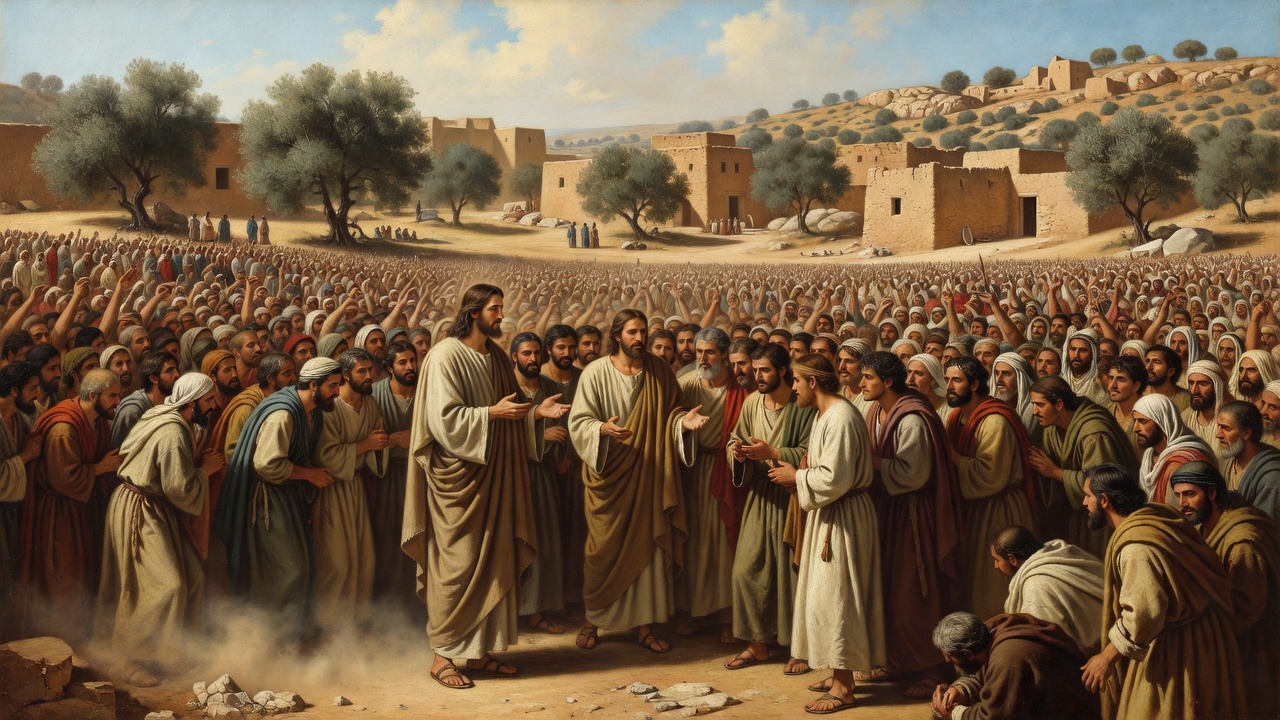
- O capítulo começa com muitos milhares pisoteando uns aos outros, enquanto Jesus adverte os discípulos sobre a hipocrisia dos fariseus e em seguida conta parábolas. Uma lista de acontecimentos data os ais e as parábolas com os fariseus em 29 d.C. e lhes atribui a duração de um dia.Fontes: o próprio texto bíblico · Woes and Parables with Pharisees
Notas escritas com auxílio de IA a partir de fontes abertas (Theographic Bible Metadata, CC BY-SA 4.0; Easton’s Bible Dictionary, domínio público) e revisadas antes de publicar.
Créditos e licença desta tradução
Nǫ̀htsı̨̨ Nı̨̨htł'è
Dogrib: Dogrib Genesis & New Testament New Testament & Portions of Old Testament
copyright © 2009 Canadian Bible Society
Language: Dogrib
Translation by: Canadian Bible Society
Tłı̨chǫ Genesis and New Testament
About Tłı̨chǫ
Tłı̨chǫ (Dogrib) is a Na-Dene (Athabaskan) language. It is spoken by the First Nations Tłı̨chǫ people in the Northwest Territories in Canada. It has the largest number of speakers of any of the Aboriginal language communities in the NWT, and is one of the official languages of the Northwest Territories.
About This Translation
This translation includes the book of Genesis and the New Testament in Tłı̨chǫ. The first edition of the Tłı̨chǫ New Testament was published in 2003. It was a historic event, as it was the first time in more than a hundred years that a complete New Testament was published for one of the Dene First Nations in the Territories. The first edition was well received and quickly sold out. In the meantime the book of Genesis had been completed. Consequently, the 2008 reprint of the Tłı̨chǫ New Testament included Genesis.
Though this translation of the New Testament and Genesis took a total of ten years, the people who worked on it built on years of labor invested by the Tłı̨chǫ people, elders, priests and missionaries, translators, educators, and linguists. The material contained in this book was checked and approved by consultants from Wycliffe Bible Translators and the Canadian Bible Society.
If you are interested in obtaining a printed copy of this Bible, please contact the Canadian Bible Society at http://www.biblescanada.com .
Copyright Information
Dogrib Genesis and New Testament © 2003, 2008 Canadian Bible Society
The text of the Bible in Tłı̨chǫ that appears in this electronic format or website is for personal use only.
Up to five hundred (500) verses of the Bible text in any form (written, visual, electronic or audio) may be quoted without permission. The quoted verses may not be more than 50% of a complete book of the Bible, or more than 25% of the total text of the work in which they are quoted. Prior written permission must be obtained for any other use of the text. Copyright acknowledgement must in all cases appear on the title or copyright page.
For more information on copyright conditions or to apply, visit http://www.biblesociety.ca/copyright .
This translation is made available to you under the terms of the
Creative Commons Attribution-Noncommercial-No Derivatives license 4.0.
You may share and redistribute this Bible translation or extracts from it in any format, provided that:
You include the above copyright and source information.
You do not sell this work for a profit.
You do not change any of the words or punctuation of the Scriptures.
Pictures included with Scriptures and other documents on this site are licensed just for use with those Scriptures and documents.
For other uses, please contact the respective copyright owners.
2014-04-22
Fonte: http://ebible.org/dgrDOGNT/ · eBible.org