Efésios 5
Nǫ̀htsı̨̨ Nı̨̨htł'è · Toque num versículo para ver as referências cruzadas.
1Nǫ̀htsı̨ weza aaht'e xè naxıghǫneètǫ t'à dànì eghàlaedaa sìı wexèahɂı̨. 2Zezì dànì goghǫneètǫ xè gogha ełaı̨wo k'ę̀ę̀, t'aats'ǫǫ̀ ełeghǫnıahtǫ k'ę̀ę̀ aahda. Zezì gogha ełaàwı gha Nǫ̀htsı̨ ghàdìtı̨ t'à yınì k'ę̀ę̀ eghàlaı̨dà.
3Naxı̨ sìı hołı̨ı̨ k'ę̀ę̀ ełek'alaahdè ha honàedı nıìle, hołı̨ı̨ nàowoò k'ę̀ę̀ k'ehoahɂa ha-le, eyıts'ǫ dǫ t'asìı wets'ǫ sìı gha aahdì ha-le. Nǫ̀htsı̨ wets'ǫ dǫ degaı hanì geeda ha sìı ehkw'ı nıìle. 4Naxıta dǫ wı̨ı̨zìı whàdagoetsǫ̀ǫ gode ha-le, ezhı̨ne yatıì hanì-le-ı̨dè yatı nezı̨-le t'à dlòahtsı ha-le, eyı hazǫǫ̀ sìı Nǫ̀htsı̨ wets'ǫ dǫ gıgha ehkw'ı nıìle. Hanìkò gowà t'à Nǫ̀htsı̨ ts'ǫ̀ masì ts'edı welì. 5Dıı sìı hotıì wek'èahsǫ welì: Dǫ hołı̨ı̨ nàowoò k'ę̀ę̀ edaa, hołı̨ı̨ k'ehoɂaa, hanì-le-ı̨dè t'asìı gha edì-le sìı Zezì-Krı eyıts'ǫ Nǫ̀htsı̨ gınàowoò k'ę̀ę̀ hòɂǫǫ sìı weghǫ̀t'à ha nıìle. (Dǫ dıı nèk'e ts'ǫ t'asìı gha edì-le sìı wegha nǫ̀htsı̨ lanì at'į̀ hǫt'e.) 6Hots'ets'ìı yatıì t'à dǫ naxıghǫyagııɂà sǫ̀ǫ̀. Dǫ hanì eghàlageeda t'à Nǫ̀htsı̨ k'èagı̨ı̨t'e-le sìı Nǫ̀htsı̨ nàgoehkwa ha hǫt'e. 7Eyıt'à hanıı dǫ xè aaht'ı̨-le.
8Įnę̀ę sìı naxı̨ sı naxıxè togoòtł'ò ı̨lè, hanìkò dıì sìı gots'ǫ̀ K'àowo wets'ıhɂǫ̀ naxıxè dzęh agòjà. Eyıt'à dǫ gıxè dzęh agǫ̀ht'e lanì aahda. 9(Dzęh ts'eeda nı̨dè t'asìı nezı̨ı̨ zǫ eghàlats'eeda, ehkw'ı k'ehots'eɂa eyıts'ǫ nàowo ehkw'ıı xè ts'eeda.) 10Eyıt'à gots'ǫ̀ K'àowo ayìı wegha sìghà sìı wegòahɂà. 11Togoòtł'òo k'ę̀ę̀ k'ehots'eɂaa sìı wedę aahłe, eyıts'ǫ eyı k'èch'a xàyaahtı. 12Dǫ Nǫ̀htsı̨ k'èagı̨ı̨t'e-le sìı deɂı̨į̀ dànì k'ehogeɂaa sìı weghǫ gots'edee sìı weghǫ į̀į̀zhats'ı̨ı̨lı̨ ha hǫt'e. 13Hanìkò t'asìı hazǫǫ̀ dzęh wek'e nı̨ı̨dı̨ı̨ sìı dǫ ts'ǫ̀ nezı̨į̀ wègaat'ı̨ hǫt'e. 14Eyı dzęę̀ sìı wet'à t'asìı hazǫǫ̀ wègaat'ı̨ at'į̀ hǫt'e. Eyıt'à dıı hanì dek'eèhtł'è,
“Nı̨ wheętı̨ı̨ sìı ts'enewı, naìdà anede, hanì-ı̨dè Zezì-Krı dzęh nek'e nı̨ı̨dı̨į̀ ayele ha,” dek'eèhtł'è.
15Eyıt'à dànì aahdaa sìı ghǫ hotıì edexoahdı. Dǫ gogı̨ı̨zǫ-le lanì aahda-le, hanìkò dǫ gogı̨ı̨zǫ k'ę̀ę̀ aahda. 16Dıı dzęę̀ k'e nàowołı̨ı̨ łǫ t'à, t'asìı nezı̨ı̨ ghàlaahda ha naxıgha hòɂǫ taàt'eè weghàlaahda. 17Eyıt'à goahsǫ-le k'ę̀ę̀ aahda-le, hanìkò Nǫ̀htsı̨ ayìı dàahłe ha naxı̨ı̨hwhǫǫ sìı wenıahdì. 18Jìetì t'à deàhde-le, eyı sìı wet'à tsį̀daahwhı hǫt'e. Hanìkò Yedàyeh Nezı̨ı̨ hotıì naxıdzeè yìı nàdèe aweahłe. 19Nǫ̀htsı̨ Nı̨htł'è gots'ǫ shı̨ eyıts'ǫ Nǫ̀htsı̨ ts'ǫ̀ ts'ejı̨ı̨ xàɂaa t'à ełets'ǫ̀ goahde. Naxıdzeè t'à gots'ǫ̀ K'àowo wets'ǫ̀ aahjı̨. 20T'aats'ǫǫ̀ Zezì-Krı wıızì t'à Nǫ̀htsı̨-Gotà t'asìı hazǫǫ̀ gha masì weahwhǫ.
21Ełek'èaht'e, hanì-ı̨dè Zezì-Krı wets'ǫ̀ nezı̨į̀ naahɂa hǫt'e.
Dǫzhìı eyıts'ǫ gıts'èkeè dànì ełexè geeda ha
22Dǫ ts'èkeè yàahłı̨ı̨ sìı gots'ǫ̀ K'àowo k'èaht'e lanì naxıdǫǫ̀ k'èaht'e. 23Zezì-Krı edets'ǫ dǫ gha nakweè wheda lanì dǫzhìı hoet'ı̨ı̨ sìı edets'èkeè gha nakweè whedaa elı̨ hǫt'e. Zezì wecheekeè sìı wezhį̀į̀ agı̨ı̨t'e, eyıts'ǫ ededı̨ Edaxàgolee elı̨ hǫt'e. 24Wecheekeè sìı Zezì-Krı k'èagı̨ı̨t'e lanì ts'èko sı t'asìı hazǫǫ̀ t'à ededǫǫ̀ k'èagı̨ı̨t'e ha hǫt'e.
25Dǫzhìı yàahłı̨ı̨ sìı naxıts'èkeè ghǫnıahtǫ, Zezì-Krı edecheekeè goghǫneètǫ lanì eyıts'ǫ gogha ełaı̨wo lanì. 26Hanì-ı̨dè edecheekeè degaı lanì Nǫ̀htsı̨ ghàgole ha nıwǫ. Wegodıì nezı̨ı̨ t'à degaı agole ha eyıts'ǫ tı t'à gok'enaehtse ha. 27Gìdaat'ı̨ xè edets'ǫ̀ agole ha nıwǫ. Tsǫ̀ wı̨ı̨zìı gık'e wheɂǫ-le xè t'asìı wı̨ı̨zìı t'à gıxoeɂa ha-le. Degaı gı̨ı̨lı̨ı̨ xè t'asìı wı̨ı̨zìı t'à dǫ gok'e nìdahoeɂà ha-le. 28Zezì edets'ǫ dǫǫ̀ ghǫneètǫ xèht'eè dǫzhìı hoet'ı̨ı̨ sìı edezhį̀į̀ ghǫneètǫ lanì edets'èkeè ghǫneètǫ ha hǫt'e. Dǫ edets'èkeè ghǫneètǫ sìı edeghǫneètǫ hǫt'e. 29Dǫ wı̨ı̨zìı edezhį̀į̀ ghǫneètǫ-le gǫ̀hłı̨ nıìle, hanìkò edezhį̀į̀ wàɂeedı xè nezı̨į̀ yek'èdì hǫt'e, Zezì-Krı edets'ǫ dǫ nezı̨į̀ gok'èdì lanì. 30Goxı̨ wets'ǫ dǫ ats'ı̨ı̨t'ee sìı wezhį̀į̀ ts'ǫ ats'ı̨ı̨t'e hǫt'e. 31“Hanì ts'ıhɂǫ̀ dǫzhìı sìı edetà eyıts'ǫ edemǫ gots'ǫǫ̀ xàetła ha, eyıts'ǫ edets'èkeè xè dǫ ı̨łè lade ha, eyı dǫ nàke sìı dǫ ı̨łè zǫ lagede ha,” dek'eèhtł'è. 32Dıı sìı gogha enıìyah dìì eyıts'ǫ wenıts'eedì ha dìì. Eyı sìı Zezì-Krı eyıts'ǫ wets'ǫ dǫ ghǫ gohde aehsı̨. 33Eyıt'à naxı̨ dǫzhìı yàahłı̨ı̨ sìı edeghǫnıahtǫ lanı naxıts'èkeè gıghǫnıahtǫ ha hǫt'e, eyıts'ǫ ts'èko hazǫǫ̀ nezı̨į̀ ededǫǫ̀ ts'ǫ̀ nageɂa ha hǫt'e.
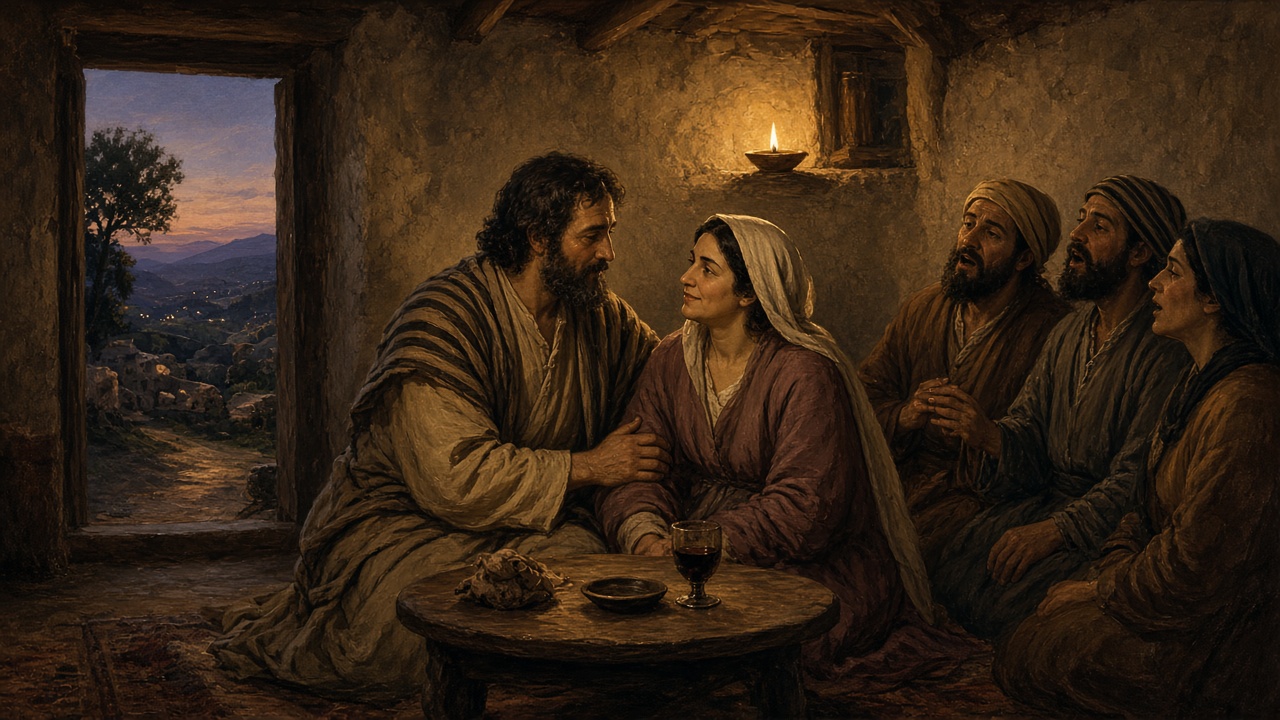
Você sabia?
Amor, luz e o lar
- Efésios 5 começa chamando os leitores a imitar a Deus como filhos amados e a andar em amor, assim como Cristo os amou e se entregou por eles como oferta sacrificial de aroma agradável a Deus.Fontes: o próprio texto bíblico
- O capítulo diz que os leitores antes eram trevas, mas agora são luz no Senhor, e que o fruto da luz consiste em toda bondade, justiça e verdade. Cita também um dito que chama quem dorme a despertar e a levantar-se dentre os mortos, prometendo que Cristo brilhará sobre essa pessoa.Fontes: o próprio texto bíblico
- Um chamado a que uns se submetam aos outros por reverência a Cristo introduz as instruções para esposas e maridos. Diz-se aos maridos que amem suas esposas como Cristo amou a igreja e se entregou por ela, e o capítulo chama a união de marido e mulher de mistério profundo que diz respeito a Cristo e à igreja.Fontes: o próprio texto bíblico
Notas escritas com auxílio de IA a partir de fontes abertas (Theographic Bible Metadata, CC BY-SA 4.0; Easton’s Bible Dictionary, domínio público) e revisadas antes de publicar.
Créditos e licença desta tradução
Nǫ̀htsı̨̨ Nı̨̨htł'è
Dogrib: Dogrib Genesis & New Testament New Testament & Portions of Old Testament
copyright © 2009 Canadian Bible Society
Language: Dogrib
Translation by: Canadian Bible Society
Tłı̨chǫ Genesis and New Testament
About Tłı̨chǫ
Tłı̨chǫ (Dogrib) is a Na-Dene (Athabaskan) language. It is spoken by the First Nations Tłı̨chǫ people in the Northwest Territories in Canada. It has the largest number of speakers of any of the Aboriginal language communities in the NWT, and is one of the official languages of the Northwest Territories.
About This Translation
This translation includes the book of Genesis and the New Testament in Tłı̨chǫ. The first edition of the Tłı̨chǫ New Testament was published in 2003. It was a historic event, as it was the first time in more than a hundred years that a complete New Testament was published for one of the Dene First Nations in the Territories. The first edition was well received and quickly sold out. In the meantime the book of Genesis had been completed. Consequently, the 2008 reprint of the Tłı̨chǫ New Testament included Genesis.
Though this translation of the New Testament and Genesis took a total of ten years, the people who worked on it built on years of labor invested by the Tłı̨chǫ people, elders, priests and missionaries, translators, educators, and linguists. The material contained in this book was checked and approved by consultants from Wycliffe Bible Translators and the Canadian Bible Society.
If you are interested in obtaining a printed copy of this Bible, please contact the Canadian Bible Society at http://www.biblescanada.com .
Copyright Information
Dogrib Genesis and New Testament © 2003, 2008 Canadian Bible Society
The text of the Bible in Tłı̨chǫ that appears in this electronic format or website is for personal use only.
Up to five hundred (500) verses of the Bible text in any form (written, visual, electronic or audio) may be quoted without permission. The quoted verses may not be more than 50% of a complete book of the Bible, or more than 25% of the total text of the work in which they are quoted. Prior written permission must be obtained for any other use of the text. Copyright acknowledgement must in all cases appear on the title or copyright page.
For more information on copyright conditions or to apply, visit http://www.biblesociety.ca/copyright .
This translation is made available to you under the terms of the
Creative Commons Attribution-Noncommercial-No Derivatives license 4.0.
You may share and redistribute this Bible translation or extracts from it in any format, provided that:
You include the above copyright and source information.
You do not sell this work for a profit.
You do not change any of the words or punctuation of the Scriptures.
Pictures included with Scriptures and other documents on this site are licensed just for use with those Scriptures and documents.
For other uses, please contact the respective copyright owners.
2014-04-22
Fonte: http://ebible.org/dgrDOGNT/ · eBible.org