Salmos 1
Hellig Bibel · Toque num versículo para ver as referências cruzadas.
Sobre este livro
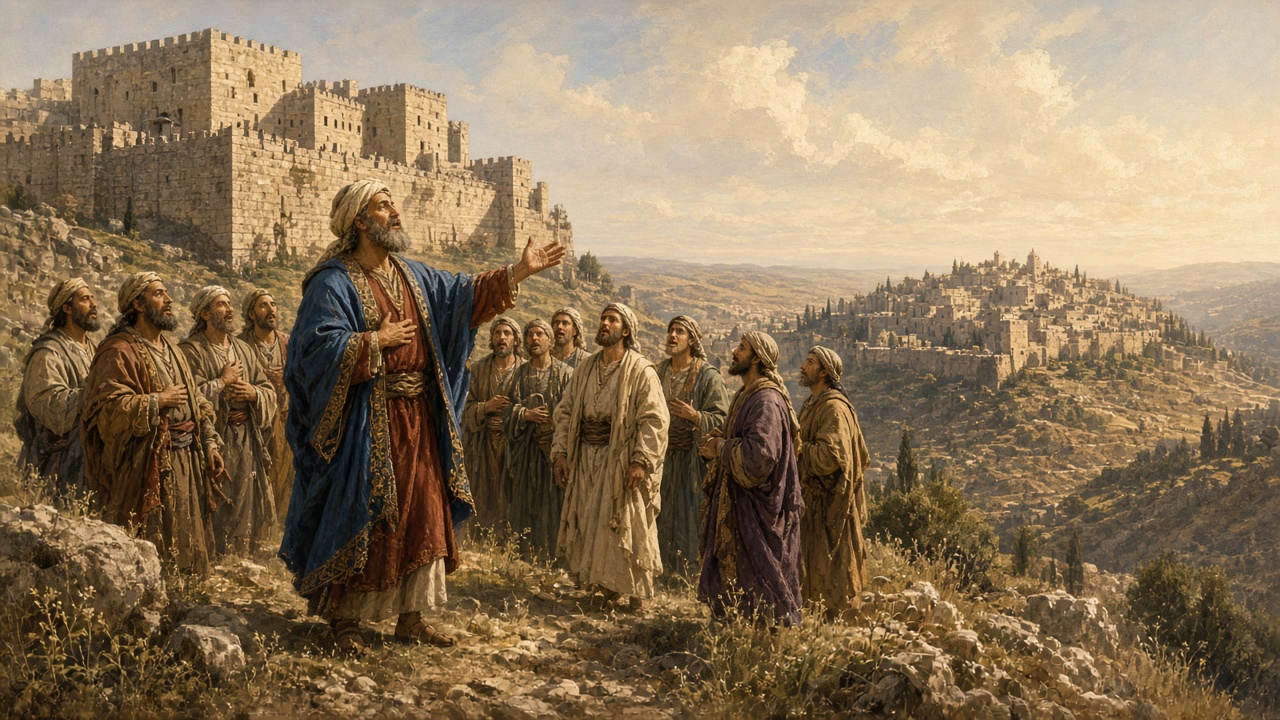
Sobre os Salmos
- O Dicionário Bíblico de Easton (1897) apresenta os Salmos como obra de vários autores, devida sobretudo a Davi e a seus contemporâneos, enquanto poetas de gerações posteriores acrescentaram outros cânticos. Easton observa que, por isso, a coleção reflete de modo mais completo cada fase da emoção e das circunstâncias humanas do que refletiria de outro modo. Os títulos atribuem 73 salmos a Davi; Easton também nota que Pedro e João (Atos 4:25) atribuem a ele o Salmo 2, que é anônimo, e que cerca de dois terços da coleção têm sido atribuídos a Davi.Fontes: Easton: Psalms
- O Dicionário Bíblico de Easton (1897) sustenta que nenhum salmo pode ser provado como posterior ao tempo de Esdras e Neemias, de modo que a coleção abrange cerca de mil anos. Ele registra a presunção de que as cinco coleções menores foram reunidas em tempos de elevada vida religiosa: a primeira perto do fim da vida de Davi, a segunda nos dias de Salomão, a terceira pelos cantores de Josafá, a quarta pelos homens de Ezequias e a quinta nos dias de Esdras.Fontes: Easton: Psalms
- À semelhança do Pentateuco, o Saltério divide-se em cinco livros, cada um encerrado com uma doxologia ou bênção: Salmos 1-41, 42-72, 73-89, 90-106 e os 44 restantes. Easton registra muitas atribuições a Davi, a Salomão nos Salmos 72 e 127, a Moisés no Salmo 90, a Hemã, o ezraíta, no Salmo 88, e a Etã, o ezraíta, no Salmo 89, enquanto muitos outros salmos são anônimos.Fontes: Easton: Psalms
- Alguns títulos ligam salmos aos cantores do culto. Os Salmos 50 e 73-83 são dirigidos a Asafe, um levita e um dos líderes do coro de Davi, hábil na música e chamado vidente; o verbete sobre Asafe diz que os filhos de Asafe eram seus descendentes ou, mais provavelmente, uma classe de poetas ou cantores que o reconheciam como mestre. Os filhos de Corá, parte de destaque entre os cantores coatitas, foram encarregados de arranjar e cantar os Salmos 42, 44-49, 84, 85, 87 e 88, e os Salmos 39, 62 e 77 são dirigidos a Jedutum, para serem cantados segundo o seu modo ou no seu coro.Fontes: Easton: Psalms · Asaph (Levite)
- O Salmo 136 é em geral chamado o grande hallel, embora o Talmude inclua também os Salmos 120-135. Os Salmos 113-118 formam o hallel recitado nas três grandes festas, na lua nova e nos oito dias da festa da dedicação. Easton conta 116 citações diretas do Saltério no Novo Testamento e observa que, em Lucas 24:44, a palavra salmos designa os Hagiógrafos, os escritos sagrados, uma das seções em que os judeus dividiam o Antigo Testamento.Fontes: Easton: Psalms
Notas escritas com auxílio de IA a partir de fontes abertas (Theographic Bible Metadata, CC BY-SA 4.0; Easton’s Bible Dictionary, domínio público) e revisadas antes de publicar.
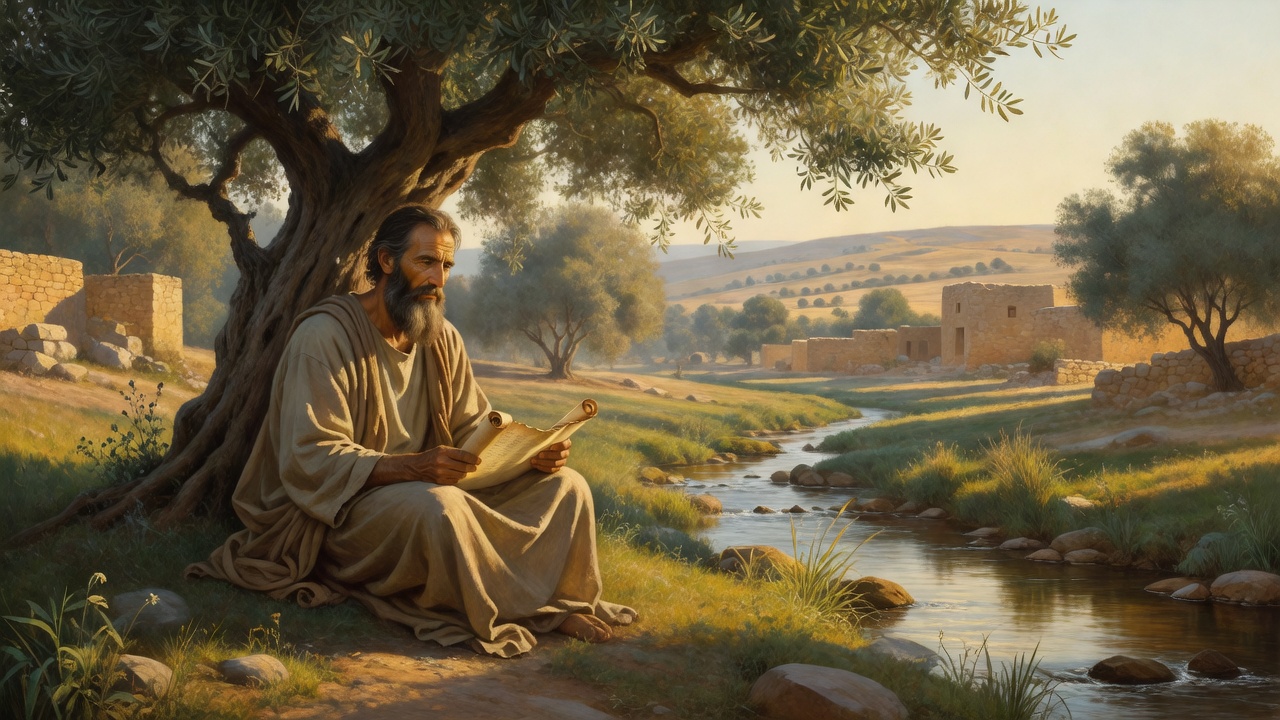
1Salig den Mand, som ikke går efter gudløses Råd, står på Synderes Vej eller sidder i Spotteres Lag, 2men har Lyst til HERRENS Lov, og som grunder på hans Lov både Dag og Nat. 3Han er som et Træ, der, plantet ved Bække, bærer sin Frugt til rette Tid, og Bladene visner ikke: Alt, hvad han gør, får han Lykke til. 4De gudløse derimod er som Avner, Vinden bortvejrer. 5Derfor består de gudløse ikke i Dommen og Syndere ej i retfærdiges Menighed. 6Thi HERREN kender retfærdiges Vej, men gudløses Vej brydes af.
Você sabia?
Os dois caminhos
- O Salmo 1 contrasta dois modos de vida por meio de imagens da agricultura: a pessoa justa é comparada a uma árvore frutífera nutrida junto a correntes de água, enquanto os ímpios são comparados à palha leve facilmente dispersada pelo vento.Fontes: o próprio texto bíblico
- Os versículos iniciais descrevem uma clara postura de afastamento do mal — recusando andar no conselho dos ímpios, parar no caminho dos pecadores ou sentar-se com os zombadores —, voltando-se para a meditação contínua na Lei do SENHOR.Fontes: o próprio texto bíblico
Notas escritas com auxílio de IA a partir de fontes abertas (Theographic Bible Metadata, CC BY-SA 4.0; Easton’s Bible Dictionary, domínio público) e revisadas antes de publicar.
Créditos e licença desta tradução
Hellig Bibel
The Holy Bible in Danish (OT 1931, NT 1907)
Copyright © 1907, 1931 Det Danske Bibelselskab
Language: Dansk (Danish)
Translation by: Danish Bible Society
The New Testament is in the Public Domain.
The Old Testament is © 1931
Det Danske Bibelselskab 1931.
[The Danish Bible Society]
This etext is distributed by Professor Michael S. Hart through
the Project Gutenberg Association at Carnegie-Mellon University
(the "Project") under the Project's "Project Gutenberg" trademark
and with the permission of the etext's copyright owner.
LICENSE
You can (and are encouraged!) to copy and distribute this
Project Gutenberg-tm etext. Since, unlike many other of the
Project's etexts, it is copyright protected, and since the
materials and methods you use will effect the Project's
reputation,
your right to copy and distribute it is limited by the copyright
laws and by the conditions of this "Small Print!" statement.
[A] ALL COPIES: The Project permits you to distribute
copies of this etext electronically or on any machine readable
medium now known or hereafter discovered so long as you:
(1) Honor the refund and replacement provisions of this
"Small Print!" statement; and
(2) Pay a royalty to the Project of 20% of the net
profits you derive calculated using the method you already use
to calculate your applicable taxes. If you don't derive
profits, no royalty is due. Royalties are payable to "Project
Gutenberg Association/Carnegie Mellon-University" within
the 60 days following each date you prepare (or were legally
required to prepare) your annual (or equivalent periodic) tax
return.
[B] EXACT AND MODIFIED COPIES: The copies you distribute
must either be exact copies of this etext, including this
Small Print statement, or can be in binary, compressed, mark-
up, or proprietary form (including any form resulting from
word processing or hypertext software), so long as *EITHER*:
(1) The etext, when displayed, is clearly readable, and
does *not* contain characters other than those intended by the
author of the work, although tilde (~), asterisk (*) and
underline (_) characters may be used to convey punctuation
intended by the author, and additional characters may be used
to indicate hypertext links; OR
(2) The etext is readily convertible by the reader at no
expense into plain ASCII, EBCDIC or equivalent form by the
program that displays the etext (as is the case, for instance,
with most word processors); OR
(3) You provide or agree to provide on request at no
additional cost, fee or expense, a copy of the etext in plain
ASCII.
LIMITED WARRANTY; DISCLAIMER OF DAMAGES
This etext may contain a "Defect" in the form of incomplete,
inaccurate or corrupt data, transcription errors, a copyright
or other infringement, a defective or damaged disk, computer
virus, or codes that damage or cannot be read by your
equipment. But for the "Right of Replacement or Refund"
described below, the Project (and any other party you may
receive this etext from as a PROJECT GUTENBERG-tm etext)
disclaims all liability to you for damages, costs and
expenses, including legal fees, and YOU HAVE NO REMEDIES FOR
NEGLIGENCE OR UNDER STRICT LIABILITY, OR FOR BREACH OF
WARRANTY OR CONTRACT, INCLUDING BUT NOT LIMITED TO INDIRECT,
CONSEQUENTIAL, PUNITIVE OR INCIDENTAL DAMAGES, EVEN IF YOU
GIVE NOTICE OF THE POSSIBILITY OF SUCH DAMAGES.
If you discover a Defect in this etext within 90 days of
receiving it, you can receive a refund of the money (if any)
you paid for it by sending an explanatory note within that
time to the person you received it from. If you received it
on a physical medium, you must return it with your note, and
such person may choose to alternatively give you a replacement
copy. If you received it electronically, such person may
choose to alternatively give you a second opportunity to
receive it electronically.
THIS ETEXT IS OTHERWISE PROVIDED TO YOU "AS-IS". NO OTHER
WARRANTIES OF ANY KIND, EXPRESS OR IMPLIED, ARE MADE TO YOU AS
TO THE ETEXT OR ANY MEDIUM IT MAY BE ON, INCLUDING BUT NOT
LIMITED TO WARRANTIES OF MERCHANTABILITY OR FITNESS FOR A
PARTICULAR PURPOSE. Some states do not allow disclaimers of
implied warranties or the exclusion or limitation of
consequential damages, so the above disclaimers and exclusions
may not apply to you, and you may have other legal rights.
INDEMNITY
You will indemnify and hold the Project, its directors,
officers, members and agents harmless from all liability, cost
and expense, including legal fees, that arise directly or
indirectly from any of the following that you do or cause:
[1] distribution of this etext, [2] alteration, modification,
or addition to the etext, or [3] any Defect.
WHAT IF YOU *WANT* TO SEND MONEY EVEN IF YOU DON'T HAVE TO?
Project Gutenberg is dedicated to increasing the number of
public domain and licensed works that can be freely distributed
in machine readable form. The Project gratefully accepts
contributions in money, time, scanning machines, OCR software,
public domain etexts, royalty free copyright licenses,
and whatever else you can think of. Money should be paid to
"Project Gutenberg Association/Carnegie-Mellon University".
2021-07-19
Fonte: http://ebible.org/dan1931/ · eBible.org