Psalms 1
Hellig Bibel · Tap a verse to see its cross-references.
About this book
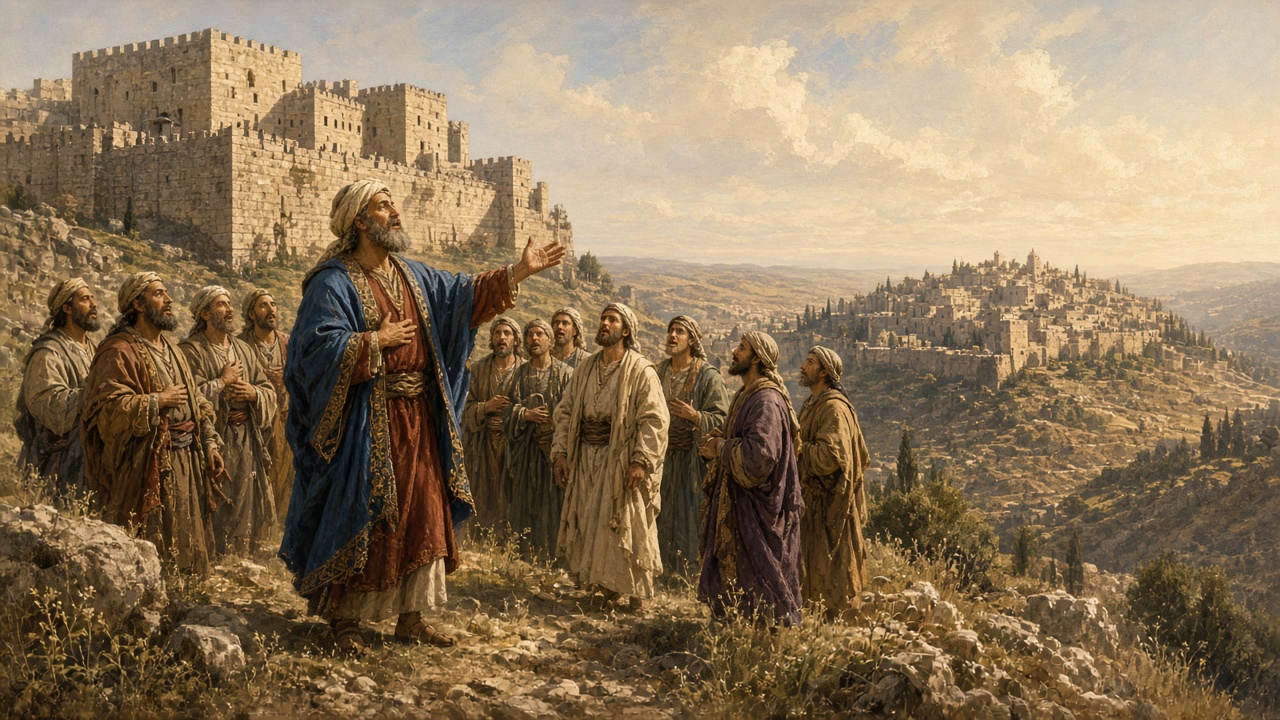
About Psalms
- Easton's Bible Dictionary (1897) presents the Psalms as the work of various authors, owed especially to David and his contemporaries, while poets of later generations added further songs. Easton remarks that, for this reason, the collection more completely reflects every phase of human emotion and circumstance than it otherwise could. The titles ascribe 73 psalms to David; Easton also notes that Peter and John (Acts 4:25) attribute the anonymous Psalm 2 to him, and that about two-thirds of the collection have been ascribed to David.Sources: Easton: Psalms
- Easton's Bible Dictionary (1897) holds that no psalm can be proved later than the time of Ezra and Nehemiah, so the collection spans about a thousand years. It records the presumption that the five smaller collections were made at times of high religious life: the first near the close of David's life, the second in the days of Solomon, the third by the singers of Jehoshaphat, the fourth by the men of Hezekiah, and the fifth in the days of Ezra.Sources: Easton: Psalms
- Like the Pentateuch, the Psalter is divided into five books, each closing with a doxology or benediction: Psalms 1-41, 42-72, 73-89, 90-106, and the remaining 44. Easton reports many ascriptions to David, to Solomon in Psalms 72 and 127, to Moses in Psalm 90, to Heman the Ezrahite in Psalm 88, and to Ethan the Ezrahite in Psalm 89, while many other psalms are anonymous.Sources: Easton: Psalms
- Some titles connect psalms with singers of worship. Psalms 50 and 73-83 are addressed to Asaph, a Levite and one of the leaders of David's choir, skilled in music and called a seer; the Asaph entry says the sons of Asaph were his descendants or, more probably, a class of poets or singers who recognized him as their master. The sons of Korah, a leading part of the Kohathite singers, were entrusted with arranging and singing Psalms 42, 44-49, 84, 85, 87, and 88, and Psalms 39, 62, and 77 are addressed to Jeduthun, to be sung after his manner or in his choir.Sources: Easton: Psalms · Asaph (Levite)
- Psalm 136 is generally called the great hallel, though the Talmud also includes Psalms 120-135. Psalms 113-118 form the hallel recited at the three great feasts, at the new moon, and on the eight days of the feast of dedication. Easton counts 116 direct quotations from the Psalter in the New Testament, and notes that in Luke 24:44 the word psalms means the Hagiographa, the holy writings, one of the sections into which the Jews divided the Old Testament.Sources: Easton: Psalms
Notes written with AI assistance from open sources (Theographic Bible Metadata, CC BY-SA 4.0; Easton’s Bible Dictionary, public domain) and reviewed before publishing.
1Salig den Mand, som ikke går efter gudløses Råd, står på Synderes Vej eller sidder i Spotteres Lag, 2men har Lyst til HERRENS Lov, og som grunder på hans Lov både Dag og Nat. 3Han er som et Træ, der, plantet ved Bække, bærer sin Frugt til rette Tid, og Bladene visner ikke: Alt, hvad han gør, får han Lykke til. 4De gudløse derimod er som Avner, Vinden bortvejrer. 5Derfor består de gudløse ikke i Dommen og Syndere ej i retfærdiges Menighed. 6Thi HERREN kender retfærdiges Vej, men gudløses Vej brydes af.
Did you know?
The Two Paths
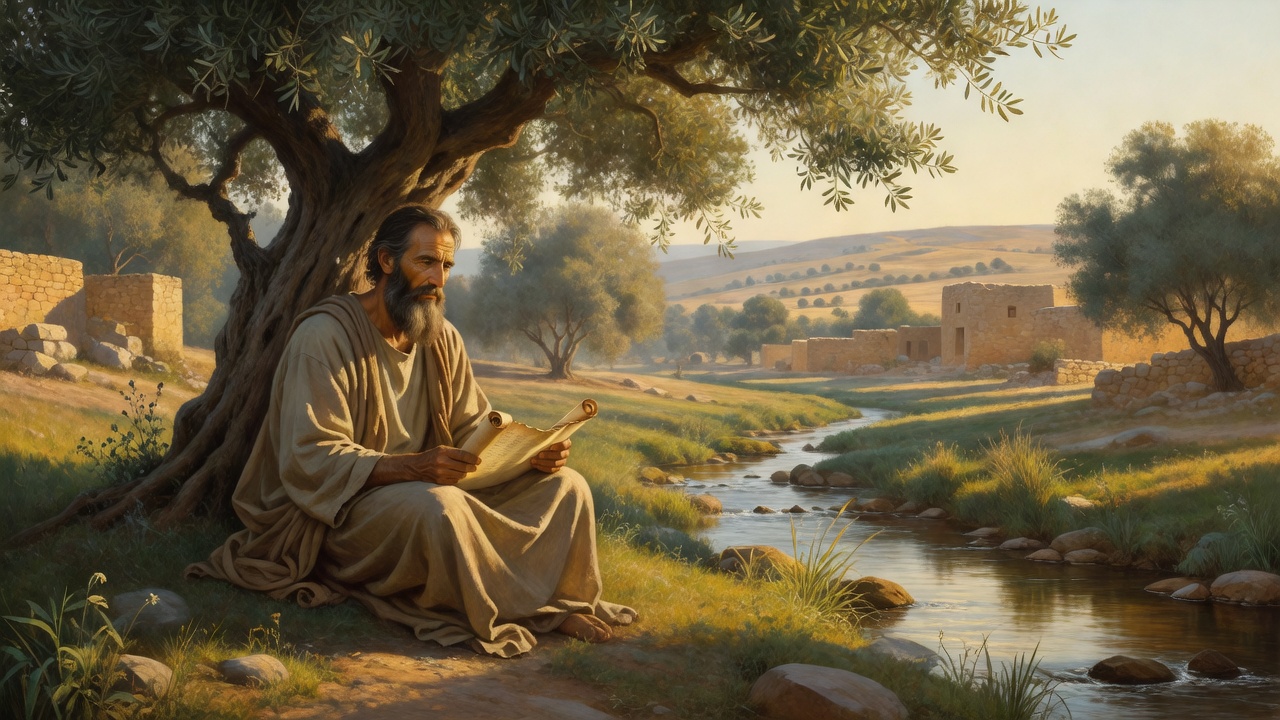
- Psalm 1 contrasts two ways of living through vivid agricultural imagery: the righteous person is compared to a fruitful tree nourished beside streams of water, while the wicked are likened to light chaff easily blown away by the wind.Sources: the Bible text itself
- The opening verses describe a clear progression away from evil—refusing to walk in the counsel of the wicked, stand in the path of sinners, or sit among mockers—and turning instead to constant meditation on the Law of the LORD.Sources: the Bible text itself
Notes written with AI assistance from open sources (Theographic Bible Metadata, CC BY-SA 4.0; Easton’s Bible Dictionary, public domain) and reviewed before publishing.
Credits and license for this translation
Hellig Bibel
The Holy Bible in Danish (OT 1931, NT 1907)
Copyright © 1907, 1931 Det Danske Bibelselskab
Language: Dansk (Danish)
Translation by: Danish Bible Society
The New Testament is in the Public Domain.
The Old Testament is © 1931
Det Danske Bibelselskab 1931.
[The Danish Bible Society]
This etext is distributed by Professor Michael S. Hart through
the Project Gutenberg Association at Carnegie-Mellon University
(the "Project") under the Project's "Project Gutenberg" trademark
and with the permission of the etext's copyright owner.
LICENSE
You can (and are encouraged!) to copy and distribute this
Project Gutenberg-tm etext. Since, unlike many other of the
Project's etexts, it is copyright protected, and since the
materials and methods you use will effect the Project's
reputation,
your right to copy and distribute it is limited by the copyright
laws and by the conditions of this "Small Print!" statement.
[A] ALL COPIES: The Project permits you to distribute
copies of this etext electronically or on any machine readable
medium now known or hereafter discovered so long as you:
(1) Honor the refund and replacement provisions of this
"Small Print!" statement; and
(2) Pay a royalty to the Project of 20% of the net
profits you derive calculated using the method you already use
to calculate your applicable taxes. If you don't derive
profits, no royalty is due. Royalties are payable to "Project
Gutenberg Association/Carnegie Mellon-University" within
the 60 days following each date you prepare (or were legally
required to prepare) your annual (or equivalent periodic) tax
return.
[B] EXACT AND MODIFIED COPIES: The copies you distribute
must either be exact copies of this etext, including this
Small Print statement, or can be in binary, compressed, mark-
up, or proprietary form (including any form resulting from
word processing or hypertext software), so long as *EITHER*:
(1) The etext, when displayed, is clearly readable, and
does *not* contain characters other than those intended by the
author of the work, although tilde (~), asterisk (*) and
underline (_) characters may be used to convey punctuation
intended by the author, and additional characters may be used
to indicate hypertext links; OR
(2) The etext is readily convertible by the reader at no
expense into plain ASCII, EBCDIC or equivalent form by the
program that displays the etext (as is the case, for instance,
with most word processors); OR
(3) You provide or agree to provide on request at no
additional cost, fee or expense, a copy of the etext in plain
ASCII.
LIMITED WARRANTY; DISCLAIMER OF DAMAGES
This etext may contain a "Defect" in the form of incomplete,
inaccurate or corrupt data, transcription errors, a copyright
or other infringement, a defective or damaged disk, computer
virus, or codes that damage or cannot be read by your
equipment. But for the "Right of Replacement or Refund"
described below, the Project (and any other party you may
receive this etext from as a PROJECT GUTENBERG-tm etext)
disclaims all liability to you for damages, costs and
expenses, including legal fees, and YOU HAVE NO REMEDIES FOR
NEGLIGENCE OR UNDER STRICT LIABILITY, OR FOR BREACH OF
WARRANTY OR CONTRACT, INCLUDING BUT NOT LIMITED TO INDIRECT,
CONSEQUENTIAL, PUNITIVE OR INCIDENTAL DAMAGES, EVEN IF YOU
GIVE NOTICE OF THE POSSIBILITY OF SUCH DAMAGES.
If you discover a Defect in this etext within 90 days of
receiving it, you can receive a refund of the money (if any)
you paid for it by sending an explanatory note within that
time to the person you received it from. If you received it
on a physical medium, you must return it with your note, and
such person may choose to alternatively give you a replacement
copy. If you received it electronically, such person may
choose to alternatively give you a second opportunity to
receive it electronically.
THIS ETEXT IS OTHERWISE PROVIDED TO YOU "AS-IS". NO OTHER
WARRANTIES OF ANY KIND, EXPRESS OR IMPLIED, ARE MADE TO YOU AS
TO THE ETEXT OR ANY MEDIUM IT MAY BE ON, INCLUDING BUT NOT
LIMITED TO WARRANTIES OF MERCHANTABILITY OR FITNESS FOR A
PARTICULAR PURPOSE. Some states do not allow disclaimers of
implied warranties or the exclusion or limitation of
consequential damages, so the above disclaimers and exclusions
may not apply to you, and you may have other legal rights.
INDEMNITY
You will indemnify and hold the Project, its directors,
officers, members and agents harmless from all liability, cost
and expense, including legal fees, that arise directly or
indirectly from any of the following that you do or cause:
[1] distribution of this etext, [2] alteration, modification,
or addition to the etext, or [3] any Defect.
WHAT IF YOU *WANT* TO SEND MONEY EVEN IF YOU DON'T HAVE TO?
Project Gutenberg is dedicated to increasing the number of
public domain and licensed works that can be freely distributed
in machine readable form. The Project gratefully accepts
contributions in money, time, scanning machines, OCR software,
public domain etexts, royalty free copyright licenses,
and whatever else you can think of. Money should be paid to
"Project Gutenberg Association/Carnegie-Mellon University".
2021-07-19
Source: http://ebible.org/dan1931/ · eBible.org