Atos 20
Sahidica - طبعة جديدة من العهد الجديد باللغة القبطية الصعيدية · Toque num versículo para ver as referências cruzadas.
1ⲘⲚⲚⲤⲀ ⲦⲢⲈ ⲠⲈϢⲦⲞⲢⲦⲢ ⲆⲈ ⲖⲞ ⲀⲠⲀⲨⲖⲞⲤ ϪⲞⲞⲨ ⲚⲤⲀ ⲘⲘⲀⲐⲎⲦⲎⲤ ⲀϤⲤⲈⲠⲤⲰⲠⲞⲨ. ⲀⲨⲰ ⲀϤⲀⲤⲠⲀⲌⲈ ⲘⲘⲞⲞⲨ. ⲀϤⲈⲒ ⲈⲂⲞⲖ ⲈⲂⲰⲔ ⲈⲦⲘⲀⲔⲈⲆⲞⲚⲒⲀ. 2ⲚⲦⲈⲢⲈϤⲘⲞⲨϢⲦ ⲆⲈ ⲚⲚⲤⲀ ⲈⲦⲘⲘⲀⲨ ⲀⲨⲰ ⲀϤⲤⲈⲠⲤⲰⲠⲞⲨ ϨⲚ ⲞⲨϢⲀϪⲈ ⲈⲚⲀϢⲰϤ ⲀϤⲈⲒ ⲈⲐⲈⲖⲖⲀⲤ. 3ⲀⲨⲰ ⲚⲦⲈⲢⲈϤⲢ ϢⲞⲘⲚⲦ ⲚⲈⲂⲞⲦ ⲘⲘⲀⲨ. ⲀⲚⲒⲞⲨⲆⲀⲒ ⲢⲞⲨⲔⲢⲞϤ ⲈⲢⲞϤ ⲈϤⲚⲀⲤϬⲎⲢ ⲈⲦⲤⲨⲢⲒⲀ. ⲀϤϪⲒ ϢⲞϪⲚⲈ ⲈⲔⲦⲞϤ ⲈⲦⲘⲀⲔⲈⲆⲞⲚⲒⲀ. 4ⲚⲈϤⲞⲨⲎϨ ⲆⲈ ⲚⲤⲰϤ ⲚϬⲒ ⲤⲰⲤⲒⲠⲀⲦⲢⲞⲤ ⲠϢⲎⲢⲈ ⲚⲠⲨⲢⲢⲞⲤ ⲠⲈⲂⲞⲖ ϨⲚ ⲂⲈⲢⲞⲒⲀ ⲈⲂⲞⲖ ⲆⲈ ϨⲚ ⲐⲈⲤⲤⲀⲖⲞⲚⲒⲔⲎ ⲀⲢⲒⲤⲦⲀⲢⲬⲞⲤ ⲘⲚ ⲤⲈⲔⲞⲨⲚⲦⲞⲤ ⲀⲨⲰ ⲔⲀⲒⲞⲤ ⲦⲈⲢⲂⲈⲞⲤ ⲘⲚ ⲦⲒⲘⲞⲐⲈⲞⲤ ⲈⲂⲞⲖ ⲆⲈ ϨⲚ ⲦⲈⲪⲈⲤⲞⲤ ⲦⲨⲬⲒⲔⲞⲤ ⲀⲨⲰ ⲦⲢⲞⲪⲒⲘⲞⲤ. 5ⲚⲀⲒ ⲘⲈⲚ ⲀⲨⲢϢⲞⲢⲠ ⲀⲨϬⲰ ⲈⲢⲞⲚ ϨⲚ ⲦⲢⲰⲀⲤ. 6ⲀⲚⲞⲚ ⲆⲈ ⲀⲚⲤϬⲎⲢ ⲈⲂⲞⲖ ϨⲚ ⲈⲪⲒⲖⲒⲠⲠⲞⲤ ⲘⲚⲚⲤⲀ ⲚⲈϨⲞⲞⲨ ⲚⲀⲐⲀⲂ. ⲀⲚⲈⲒ ϢⲀⲢⲞⲞⲨ ⲪⲞⲨⲚ ⲚϮⲞⲨ ⲚϨⲞⲞⲨ ⲈⲦⲢⲰⲀⲤ. ⲀⲨⲰ ⲀⲚⲢ ⲤⲀϢϤ ⲚϨⲞⲞⲨ ⲘⲘⲀⲨ. 7ⲠⲞⲨⲀ ⲆⲈ ⲚⲚⲤⲀⲂⲂⲀⲦⲞⲚ ⲈⲚⲤⲞⲞⲨϨ ⲈⲠⲠⲰϢ ⲘⲠⲞⲒⲔ. ⲠⲀⲨⲖⲞⲤ ⲆⲈ ⲚⲈϤϢⲀϪⲈ ⲚⲘⲘⲀⲨ ⲠⲈ ⲈϤⲚⲎⲨ ⲈⲂⲞⲖ ⲘⲠⲈϤⲢⲀⲤⲦⲈ. ⲚⲈϤⲤⲰⲔ ⲆⲈ ⲠⲈ ⲘⲠϢⲀϪⲈ ϢⲀ ⲦⲠⲀϢⲈ ⲚⲦⲈⲨϢⲎ. 8ⲚⲈⲨⲚ ϨⲈⲚⲖⲀⲘⲠⲀⲤ ⲆⲈ ⲈⲚⲀϢⲰⲞⲨ ϪⲈⲢⲞ ϨⲚ ⲞⲨⲘⲀ ⲚⲦⲠⲈ ⲈⲚⲤⲞⲞⲨϨ ⲚϨⲎⲦϤ. 9ⲀⲨⲰ ⲚⲈⲨⲚ ⲞⲨϨⲢϢⲒⲢⲈ ϨⲘⲞⲞⲤ ϨⲒϪⲘ ⲠϢⲞⲨϢⲦ ⲈⲠⲈϤⲢⲀⲚ ⲠⲈ ⲈⲨⲦⲨⲬⲞⲤ ⲈⲢⲈ ⲞⲨⲚⲞϬ ⲚϨⲒⲚⲎⲂ ⲤⲰⲔ ⲘⲘⲞϤ ⲈⲢⲈ ⲠⲀⲨⲖⲞⲤ ϢⲀϪⲈ ⲀⲠϨⲒⲚⲎⲂ ϨⲢⲞϢ ⲈϨⲢⲀⲒ ⲈϪⲰϤ ⲈⲠⲈϨⲞⲨⲞ ⲀⲨⲰ ⲀϤϨⲈ ⲈⲂⲞⲖ ϨⲒϪⲚ ⲦⲘⲈϨϢⲞⲘⲦⲈ ⲚϨⲈ ⲈⲠⲈⲤⲎⲦ ⲀⲨⲰ ⲀⲨϤⲒⲦϤ ⲈϤⲘⲞⲞⲨⲦ. 10ⲀⲠⲀⲨⲖⲞⲤ ⲆⲈ ⲈⲒ ⲈⲠⲈⲤⲎⲦ ⲀϤⲠⲀϨⲦϤ ⲈϨⲢⲀⲒ ⲈϪⲰϤ. ⲀⲨⲰ ⲚⲦⲈⲢⲈϤϨⲰⲖϬ ⲈⲢⲞϤ. ⲠⲈϪⲀϤ ⲚⲀⲨ ϪⲈ ⲘⲠⲢϢⲦⲞⲢⲦⲢ ⲦⲈϤⲮⲨⲬⲎ ⲄⲀⲢ ϢⲞⲞⲠ ⲚϨⲎⲦϤ. 11ⲚⲦⲈⲢⲈϤⲂⲰⲔ ⲆⲈ ⲈϨⲢⲀⲒ ⲀϤⲠⲰϢ ⲘⲠⲞⲈⲒⲔ ⲀϤϪⲒ ⲀⲨⲰ ⲀϤⲰⲤⲔ ⲈϤϢⲀϪⲈ ⲚⲘⲘⲀⲨ ϢⲀⲚⲦⲈ ⲠⲞⲨⲞⲈⲒⲚ ϨⲈ. ⲀⲨⲰ ⲚⲦⲈⲒϨⲈ ⲀϤⲈⲒ ⲈⲂⲞⲖ. 12ⲀⲨⲈⲒⲚⲈ ⲆⲈ ⲘⲠϢⲎⲢⲈ ϢⲎⲘ ⲈϤⲞⲚϨ. ⲀⲨⲰ ⲀϤⲤⲈⲠⲤⲰⲠⲞⲨ ⲈⲘⲀⲦⲈ. 13ⲀⲚⲞⲚ ⲆⲈ ⲀⲚⲢϢⲞⲢⲠ ⲈⲂⲞⲖ ⲈⲠϪⲞⲒ ⲀⲚⲤϬⲎⲢ ⲈϨⲢⲀⲒ ⲈⲐⲀⲢⲤⲞⲤ ϪⲈ ⲈⲚⲈⲦⲀⲖⲈ ⲠⲀⲨⲖⲞⲤ ⲘⲘⲀⲨ ⲦⲀⲒ ⲄⲀⲢ ⲦⲈ ⲐⲈ ⲚⲦⲀϤⲦⲞϢⲤ ⲚⲘⲘⲀⲚ ⲈϤⲚⲀⲘⲞⲞϢⲈ ⲚⲦⲞϤ ⲚⲢⲀⲦϤ. 14ⲚⲦⲈⲢⲈϤⲦⲰⲘⲚⲦ ⲆⲈ ⲈⲢⲞⲚ ϨⲚ ⲐⲀⲢⲤⲞⲤ. ⲀⲚⲦⲀⲖⲞϤ ⲀⲚⲈⲒ ⲈⲘⲒⲦⲨⲖⲎⲚⲎ. 15ⲘⲠⲈϤⲢⲀⲤⲦⲈ ⲆⲈ ⲀⲚⲤϬⲎⲢ ⲈⲂⲞⲖ ϨⲘ ⲠⲘⲀ ⲈⲦⲘⲘⲀⲨ ⲀⲚⲈⲒ ⲘⲠⲈⲘⲦⲞ ⲈⲂⲞⲖ ⲚⲬⲒⲞⲤ ⲘⲠⲈϤⲢⲀⲤⲦⲈ ⲆⲈ ⲀⲚⲘⲞⲞⲚⲈ ⲈⲤⲀⲘⲞⲤ ⲀⲨⲰ ⲚⲦⲈⲢⲚϢⲰⲠⲈ ϨⲚ ⲦⲢⲞⲄⲨⲖⲖⲒⲞⲤ ⲘⲠⲈϤⲢⲀⲤⲦⲈ ⲆⲈ ⲀⲚⲈⲒ ⲈⲘⲒⲖⲎⲦⲞⲤ. 16ⲚⲈⲀ ⲠⲀⲨⲖⲞⲤ ⲄⲀⲢ ⲔⲢⲒⲚⲈ ⲈⲦⲘⲘⲞⲞⲚⲈ ⲈⲦⲈⲪⲈⲤⲞⲤ. ϪⲈⲔⲀⲀⲤ ⲚⲚⲈϤⲰⲤⲔ ϨⲚ ⲦⲀⲤⲒⲀ. ⲚⲈϤϬⲈⲠⲎ ⲄⲀⲢ ⲈϢⲰⲠⲈ ⲈϤⲚⲀϢϬⲘϬⲞⲘ ⲈⲢⲠⲈϨⲞⲞⲨ ⲚⲦⲠⲈⲚⲦⲎⲔⲞⲤⲦⲎ ϨⲚ ⲐⲒⲈⲢⲞⲤⲞⲖⲨⲘⲀ. 17ⲈⲂⲞⲖ ⲆⲈ ϨⲚ ⲘⲒⲖⲎⲦⲞⲤ ⲀϤϪⲞⲞⲨ ⲈⲈⲪⲈⲤⲞⲤ ⲀϤⲘⲞⲨⲦⲈ ⲈⲚⲈⲠⲢⲈⲤⲂⲨⲦⲈⲢⲞⲤ ⲚⲦⲈⲔⲔⲖⲎⲤⲒⲀ. 18ⲚⲦⲈⲢⲞⲨⲈⲒ ⲆⲈ ϢⲀⲢⲞϤ ⲠⲈϪⲀϤ ⲚⲀⲨ ϪⲈ ⲚⲦⲰⲦⲚ ⲦⲈⲦⲚⲤⲞⲞⲨⲚ ⲚⲈⲤⲚⲎⲨ ϪⲈ ϪⲒⲚ ⲠϢⲞⲢⲠ ⲚϨⲞⲞⲨ ⲚⲦⲀⲒⲞⲨⲈϨ ⲢⲀⲦ ϨⲚ ⲦⲀⲤⲒⲀ. ⲚⲐⲈ ⲚⲦⲀⲒⲢ ⲠⲈⲒⲞⲨⲞⲈⲒϢ ⲦⲎⲢϤ ⲚⲘⲘⲎⲦⲚ. 19ⲈⲒⲞ ⲚϨⲘϨⲀⲖ ⲘⲠϪⲞⲈⲒⲤ ϨⲚ ⲐⲂⲂⲒⲞ ⲚⲒⲘ ⲘⲚ ϨⲈⲚⲢⲘⲈⲒⲞⲞⲨⲈ. ⲀⲨⲰ ⲘⲠⲈⲒⲢⲀⲤⲘⲞⲤ ⲚⲦⲀⲨϢⲰⲠⲈ ⲘⲘⲞⲒ ϨⲚ ⲚⲈⲠⲒⲂⲞⲨⲖⲎ ⲚⲚⲒⲞⲨⲆⲀⲒ. 20ϪⲈ ⲘⲠⲒϨⲈⲠ ⲖⲀⲀⲨ ⲚⲚⲈⲦⲢⲚⲞϤⲢⲈ ⲚⲎⲦⲚ ⲈⲦⲘⲦⲀⲘⲰⲦⲚ ⲈⲢⲞⲞⲨ. ⲀⲨⲰ ⲈⲦⲘϮⲤⲂⲰ ⲚⲎⲦⲚ ⲦⲨⲘⲞⲤⲒⲀ. ⲀⲨⲰ ϨⲚ ⲚⲎⲒ. 21ⲈⲒⲢⲘⲚⲦⲢⲈ ⲚⲚⲒⲞⲨⲆⲀⲒ ⲘⲚ ⲚϨⲈⲖⲖⲎⲚ ⲚⲦⲘⲈⲦⲀⲚⲞⲒⲀ ⲈϨⲞⲨⲚ ⲈⲠⲚⲞⲨⲦⲈ ⲀⲨⲰ ⲦⲠⲒⲤⲦⲒⲤ ⲈϨⲞⲨⲚ ⲈⲠⲈⲚϪⲞⲈⲒⲤ ⲒⲎⲤⲞⲨⲤ. 22ⲦⲈⲚⲞⲨ ϬⲈ ⲈⲒⲤ ϨⲎⲎⲦⲈ ⲀⲚⲞⲔ ϮⲘⲎⲢ ϨⲘ ⲠⲈⲠⲚⲈⲨⲘⲀ ⲈⲒⲚⲀⲂⲰⲔ ⲈϨⲢⲀⲒ ⲈⲐⲒⲈⲢⲞⲤⲞⲖⲨⲘⲀ. ⲚϮⲤⲞⲞⲨⲚ ⲀⲚ ⲚⲚⲈⲦⲚⲀⲦⲰⲘⲚⲦ ⲈⲢⲞⲒ ⲘⲘⲀⲨ. 23ⲠⲖⲎⲚ ⲠⲈⲠⲚⲈⲨⲘⲀ ⲈⲦⲞⲨⲀⲀⲂ ⲢⲘⲚⲦⲢⲈ ⲚⲀⲒ ⲔⲀⲦⲀ ⲠⲞⲖⲒⲤ ⲈϤϪⲰ ⲘⲘⲞⲤ ϪⲈ ⲞⲨⲚ ϨⲈⲚⲘⲢⲢⲈ ⲘⲚ ϨⲈⲚⲐⲖⲒⲮⲒⲤ ϬⲈⲈⲦ ⲈⲢⲞⲔ ϨⲚ ⲐⲒⲈⲢⲞⲤⲞⲖⲨⲘⲀ. 24ⲀⲖⲖⲀ ⲚϮⲦⲀⲒⲞ ⲀⲚ ⲚⲦⲀⲮⲨⲬⲎ ϨⲀ ⲖⲀⲀⲨ ⲚϢⲀϪⲈ ⲚⲐⲈ ⲚϪⲰⲔ ⲈⲂⲞⲖ ⲘⲠⲀⲆⲢⲞⲘⲞⲤ. ⲀⲨⲰ ⲦⲆⲒⲀⲔⲞⲚⲒⲀ ⲚⲦⲀⲒϪⲒⲦⲤ ⲈⲂⲞⲖ ϨⲒⲦⲘ ⲠϪⲞⲈⲒⲤ ⲒⲎⲤⲞⲨⲤ ⲈⲦⲢⲀⲢⲘⲚⲦⲢⲈ ⲚⲚⲒⲞⲨⲆⲀⲒ ⲘⲚ ⲚⲞⲨⲈⲈⲒⲈⲚⲒⲚ ⲘⲠⲈⲨⲀⲄⲄⲈⲖⲒⲞⲚ ⲚⲦⲈⲬⲀⲢⲒⲤ ⲘⲠⲚⲞⲨⲦⲈ. 25ⲦⲈⲚⲞⲨ ϬⲈ ⲈⲒⲤ ϨⲎⲎⲦⲈ ⲀⲚⲞⲔ ϮⲤⲞⲞⲨⲚ ϪⲈ ⲚⲦⲈⲦⲚ ⲀⲚⲀⲨ ϬⲈ ⲀⲚ ⲈⲠⲀϨⲞ ϪⲒⲚ ⲦⲈⲚⲞⲨ. ⲚⲦⲰⲦⲚ ⲦⲎⲢⲦⲚ. ⲚⲈⲚⲦⲀⲒⲈⲒ ⲈⲂⲞⲖ ϨⲒⲦⲞⲞⲦⲞⲨ ⲈⲒⲔⲎⲢⲨⲤⲤⲈ ⲚⲦⲘⲚⲦⲢⲢⲞ ⲚⲒⲎⲤⲞⲨⲤ. 26ⲈⲦⲂⲈ ⲠⲀⲒ ϮⲢⲘⲚⲦⲢⲈ ⲚⲎⲦⲚ ⲘⲠⲞⲞⲨ ⲚϨⲞⲞⲨ. ϪⲈ ϮⲞⲨⲀⲀⲂ ⲈⲂⲞⲖ ϨⲘ ⲠⲈⲤⲚⲞϤ ⲚⲞⲨⲞⲚ ⲚⲒⲘ. 27ⲘⲠⲒϨⲞⲠⲦ ⲄⲀⲢ ⲈⲦⲘⲦⲀⲘⲰⲦⲚ ⲈⲠϢⲞϪⲚⲈ ⲦⲎⲢϤ ⲘⲠⲚⲞⲨⲦⲈ. 28ⲠⲢⲞⲤⲈⲬⲈ ϬⲈ ⲈⲢⲰⲦⲚ ⲘⲚ ⲠⲞϨⲈ ⲦⲎⲢϤ ⲠⲀⲒ ⲚⲦⲀ ⲠⲈⲠⲚⲈⲨⲘⲀ ⲈⲦⲞⲨⲀⲀⲂ ⲔⲀⲦⲎⲨⲦⲚ ⲚⲈⲠⲒⲤⲔⲞⲠⲞⲤ ⲈϨⲢⲀⲒ ⲈϪⲰϤ ⲈⲘⲞⲞⲚⲈ ⲚⲦⲈⲔⲔⲖⲎⲤⲒⲀ ⲘⲠϪⲞⲈⲒⲤ ⲦⲚⲦⲀϤϪⲠⲞⲤ ⲚⲀϤ ⲈⲂⲞⲖ ϨⲒⲦⲘ ⲠⲈϤⲤⲚⲞϤ ⲘⲘⲒⲚ ⲘⲘⲞϤ. 29ϮⲤⲞⲞⲨⲚ ⲀⲚⲞⲔ ϪⲈ ⲘⲚⲚⲤⲀ ⲦⲢⲀⲂⲰⲔ ⲤⲈⲚⲎⲨ ⲈϨⲞⲨⲚ ⲈⲢⲰⲦⲚ ⲚϬⲒ ϨⲈⲚⲞⲨⲰⲚϢ ⲈⲨϨⲞⲢϢ ⲚⲤⲈϮⲤⲞ ⲀⲚ ⲈⲠⲞϨⲈ. 30ⲀⲨⲰ ⲤⲈⲚⲀⲦⲰⲞⲨⲚ ⲈⲂⲞⲖ ⲚϨⲎⲦ ⲦⲎⲨⲦⲚ ⲚϬⲒ ϨⲈⲚⲢⲰⲘⲈ ⲈⲨϪⲰ ⲚϨⲈⲚϢⲀϪⲈ ⲈⲨϬⲞⲞⲘⲈ ⲈⲦⲢⲈⲨⲠⲰϬⲤ ⲚⲘⲘⲀⲐⲎⲦⲎⲤ ϨⲒⲠⲀϨⲞⲨ ⲘⲘⲞⲞⲨ. 31ⲈⲦⲂⲈ ⲠⲀⲒ ϬⲈ ⲢⲞⲈⲒⲤ ⲈⲦⲈⲦⲚⲈⲒⲢⲈ ⲘⲠⲘⲈⲈⲨⲈ ϪⲈ ⲈⲒⲤ ϢⲞⲘⲦⲈ ⲚⲢⲞⲘⲠⲈ ⲚⲦⲈⲨϢⲎ ⲘⲚ ⲠⲈϨⲞⲞⲨ ⲘⲠⲒⲖⲞ ⲈⲒϮⲤⲂⲰ ⲘⲠⲞⲨⲀ ⲠⲞⲨⲀ ⲘⲘⲰⲦⲚ ϨⲚ ϨⲈⲚⲢⲘⲈⲒⲞⲞⲨⲈ. 32ⲦⲈⲚⲞⲨ ϬⲈ ϮϮ ⲘⲘⲰⲦⲚ ⲈⲦⲞⲞⲦϤ ⲘⲠⲚⲞⲨⲦⲈ ⲘⲚ ⲠϢⲀϪⲈ ⲚⲦⲈϤⲬⲀⲢⲒⲤ. ⲠⲈⲦⲈⲨⲚϬⲞⲘ ⲘⲘⲞϤ ⲈⲔⲰⲦ ⲘⲘⲰⲦⲚ. ⲀⲨⲰ ⲈϮ ⲚⲎⲦⲚ ⲚⲦⲈⲔⲔⲖⲎⲢⲞⲚⲞⲘⲒⲀ ϨⲚ ⲚⲈⲦⲞⲨⲀⲀⲂ ⲦⲎⲢⲞⲨ. 33ⲘⲠⲒⲈⲠⲒⲐⲨⲘⲒ ⲈⲖⲀⲀⲨ ⲚϨⲀⲦ ⲎⲚⲞⲨⲂ. ⲎϨⲞⲒⲦⲈ. 34ⲚⲦⲰⲦⲚ ⲦⲈⲦⲚⲤⲞⲞⲨⲚ ϪⲈ ⲀⲚⲈⲒϬⲒϪ ϢⲘϢⲈ ⲚⲚⲀⲬⲢⲒⲀ ⲘⲚ ⲚⲈⲦⲚⲘⲘⲀⲒ. 35ⲈⲒⲦⲀⲘⲞ ⲘⲘⲰⲦⲚ ⲈϨⲰⲂ ⲚⲒⲘ ϪⲈ ⲦⲀⲒ ⲦⲈ ⲐⲈ ⲈⲦⲈϢϢⲈ ⲈⲢⲰⲦⲚ ⲈϢⲠϨⲒⲤⲈ ⲚⲦⲈⲦⲚϤⲒ ϨⲀ ⲚⲈⲦⲚϢⲰⲚⲈ ⲚⲦⲈⲦⲚ ⲢⲠⲘⲈⲈⲨⲈ ⲚⲚϢⲀϪⲈ ⲘⲠϪⲞⲈⲒⲤ ⲒⲎⲤⲞⲨⲤ ϪⲈ ⲚⲦⲞϤ ⲠⲈⲚⲦⲀϤϪⲞⲞⲤ ϪⲈ ⲞⲨⲘⲚⲦⲘⲀⲔⲀⲢⲒⲞⲤ ⲠⲈ ϮⲈϨⲞⲨ ⲈϪⲒ. 36ⲚⲦⲈⲢⲈϤϪⲈ ⲚⲀⲒ ⲆⲈ ⲚϬⲒ ⲠⲀⲨⲖⲞⲤ ⲀϤⲔⲰⲖϪ ⲚⲚⲈϤⲠⲀⲦ ⲚⲘⲘⲀⲨ ⲦⲎⲢⲞⲨ ⲀϤϢⲖⲎⲖ. 37ⲀⲨⲚⲞϬ ⲆⲈ ⲚⲢⲒⲘⲈ ⲦⲀϨⲈ ⲞⲨⲞⲚ ⲚⲒⲘ. ⲀⲨⲰ ⲀⲨⲠⲀϨⲦⲞⲨ ⲈϨⲢⲀⲒ ⲈϪⲘ ⲠⲘⲀⲔϨ ⲘⲠⲀⲨⲖⲞⲤ ⲀⲨϮⲠⲒ ⲈⲢⲰϤ 38ⲈⲨⲘⲞⲔϨ ⲚϨⲎⲦ ⲚϨⲞⲨⲞ ⲈϪⲘ ⲠϢⲀϪⲈ ⲚⲦⲀϤϪⲞⲞϤ ϪⲈ ⲚⲦⲈⲦⲚⲀⲔⲦⲈ ⲦⲎⲨⲦⲚ ⲀⲚ ⲈⲚⲀⲨ ⲈⲠⲀϨⲞ. ⲚⲈⲨⲐⲠⲞ ⲆⲈ ⲘⲘⲞϤ ⲈⲂⲞⲖ ⲈⲠϪⲞⲒ.
Você sabia?
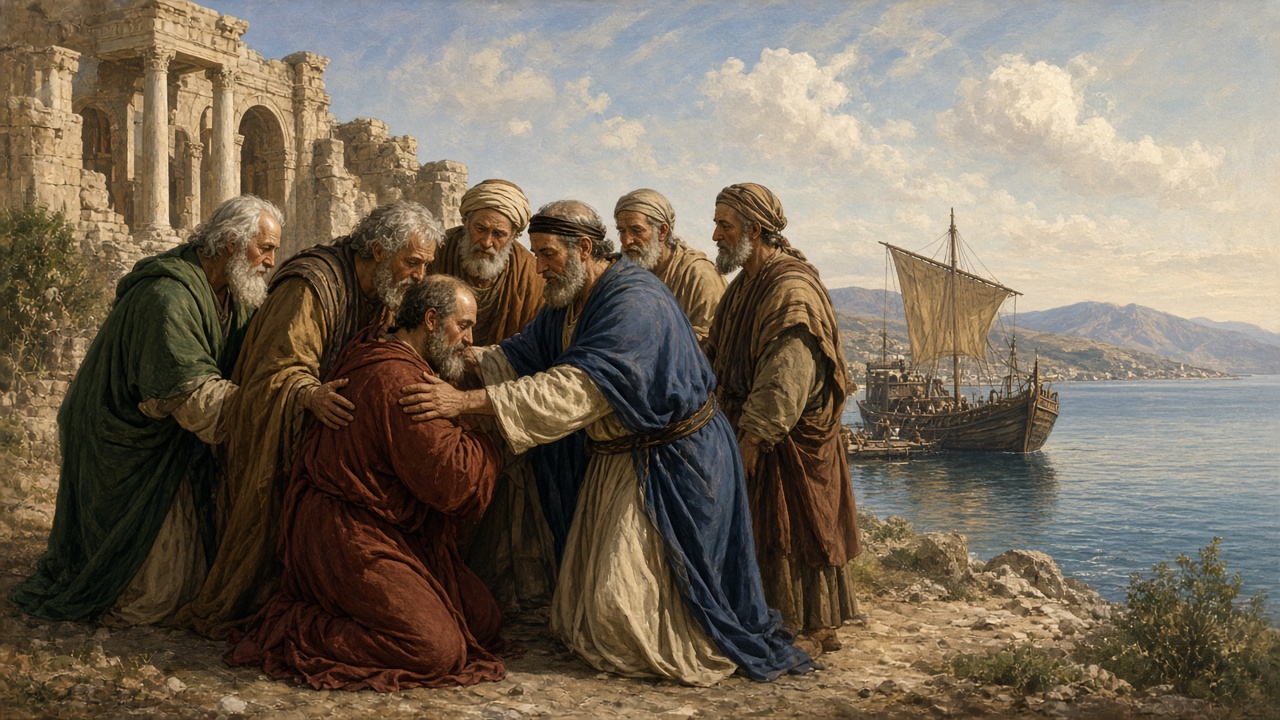
Despedida a caminho de Jerusalém
- Ao deixar Trôade, Paulo enviou os companheiros à frente no navio e foi a pé até Assos, pela estrada romana. Assos era um porto da Ásia proconsular, na Mísia, na margem norte do golfo de Adramítio; a caminhada tinha cerca de 20 milhas, o trajeto por mar cerca de 30, e a ilha de Lesbos ficava a cerca de 7 milhas da costa.Fontes: o próprio texto bíblico · Assos
- Paulo passou de navio ao largo de Éfeso para não perder tempo na província da Ásia — a província romana do oeste da Ásia Menor, cuja capital era Éfeso —, porque esperava, se possível, chegar a Jerusalém no dia de Pentecostes. Parou em Mileto, porto e antiga capital da Jônia, cerca de 36 milhas ao sul de Éfeso, e mandou chamar os anciãos da igreja de Éfeso.Fontes: o próprio texto bíblico · Asia · Miletus
- Sete homens viajavam com ele: Sópatro, de Bereia; Aristarco e Segundo, de Tessalônica; Gaio, de Derbe; Timóteo; e Tíquico e Trófimo, da Ásia. Aristarco, de Tessalônica, mais tarde compartilhou a prisão de Paulo em Roma, e Trófimo, efésio, acompanhou-o nessa parte da viagem e esteve com ele em Jerusalém.Fontes: o próprio texto bíblico · Aristarchus · Trophimus
Notas escritas com auxílio de IA a partir de fontes abertas (Theographic Bible Metadata, CC BY-SA 4.0; Easton’s Bible Dictionary, domínio público) e revisadas antes de publicar.
Lugares deste capítulo
- Macedonia · 41.600, 22.540 · versículos 1, 3, 6
- Greece · 37.972, 23.727 · versículo 2
- Syria · Hoje: Syria 2 · 33.511, 36.306 · versículo 3
- Asia · 38.400, 28.300 · versículos 4, 16, 18
- Berea · Hoje: Veria · 40.518, 22.200 · versículo 4
- Thessalonica · Hoje: Thessaloniki · 40.638, 22.946 · versículo 4
- Troas · Hoje: Alexandria Troas · 39.752, 26.159 · versículos 5, 6
- Philippi · 41.012, 24.285 · versículo 6
- Assos · 39.491, 26.337 · versículos 13, 14
- Mitylene · Hoje: ancient theater at Mitylene · 39.110, 26.547 · versículo 14
- Chios · 38.373, 26.137 · versículo 15
- Miletus · 37.531, 27.276 · versículos 15, 17
- Samos · 37.750, 26.833 · versículo 15
- Trogyllium · Hoje: Cape Mycale · 37.659, 27.003 · versículo 15
- Ephesus · 37.939, 27.341 · versículos 16, 17
- Jerusalem · 31.777, 35.234 · versículos 16, 22
Só aparecem lugares com identificação de alta confiança (90% ou mais segundo as fontes acadêmicas reunidas pelo OpenBible). Mapa da época: DARE (Digital Atlas of the Roman Empire), CC BY 4.0; mapa atual: © colaboradores do OpenStreetMap; lugares: OpenBible.info (CC BY 4.0).
Créditos e licença desta tradução
Sahidica - طبعة جديدة من العهد الجديد باللغة القبطية الصعيدية
Sahidica - A New Edition of the New Testament in Sahidic Coptic
copyright © 2000-2006 J Warren Wells
Language: ⲘⲉⲧⲢⲉⲙ̀ⲛⲭⲏⲙⲓ (Coptic)
Dialect: Sahidic
Translation by: J Warren Wells
Coptic: Sahidic NT "Sahidica - A New Edition of the New Testament in Sahidic Coptic"
Copyright (c)2000-2006 by J Warren Wells. All rights reserved.
For more information visit www.sahidica.org .
This edition is available free of charge for use in free electronic
editions of the New Testament as long as the full title and copyright
information are included and credited. For written permission to use
all or any part of this document in print editions, contact the editor
at www.sahidica.org .
This edition is primarily meant for use by teachers and students of
Sahidic Coptic, and to a lesser degree by Coptologists involved in
scholarly research, textual criticism, or New Testament translation.
PURPOSE
Please note: This text is a work in progress. As such, there
is an ongoing effort to standardize the spelling of words in
the text. Be aware that version updates periodically appear.
The primary purpose is to produce a standardized edition of
the Sahidic NT similar to standard Greek editions.
An additional purpose of this text is to allow side-by-side
comparison with the Greek New Testament. To facilitate this
effort, a new version of the Greek text has been developed,
which is meant to better represent the Greek text upon which
the Sahidic was based. This text is entitled "The New Testament
According to the Egyptian Greek Text" [NTAEG]
This text does not include representation of either accents or
supralinear strokes, since these are used inconsistently in the
original texts. There is also a higher degree of standardization
in spelling and punctuation; like today's standard Greek master
texts, but unlike both the original Sahidic texts, and the PHI
and Coptic Society texts. Moreover, as in standard Greek texts,
instances of the Nomina Sacra have been expanded to their full
forms. This is again a departure from earlier versions of the
Sahidic, including the PHI and Coptic Society texts, which are
Both inconsistent in their usage.
Special thanks to David Brakke of Indiana University Bloomington,
Brigitte Comparini of the Packard Humanities Institute, and
Michael Heiser, Academic Editor, at Logos Research Systems; for
their assistance in making this edition possible.
BASIS
Sahidica was initially based (by permission) on the Coptic New Testament,
which is an electronic publication, which was edited by David Brakke.
(PHI-CD 5.3 dated 7/2/91. Los Altos. Packard Humanities Institute. 1991).
During later development, Sahidica was electronically collated against
the Coptic CD I by the St. Shenouda The Archmandrite Coptic Society.
Los Angeles, CA dated April, 1998.
These two editions were reduced to a raw electronic form, which allowed both
to be compared electronically letter by letter with Sahidica in order to
accurately detect and report every single variation and input error in any
of the texts. Though errors are inevitable, the collators of three seperate
editions are highly unlikely to make the same errors. Therefore, this method
helps to insure the integrity of the Sahidica edition.
Throughout the project, Sahidica was also collated against printed editions
of the following coptic manuscripts, which manuscripts date from the third
century and later.
Matt: Pierpont Morgan Library M-569 collated against Bodmer XIX papyrus
Mark:* PPalau Rib. Inv.Nr.182 collated against Pierpont Morgan Library M-569
Luke: PPalau Rib. Inv.Nr.181 collated against Pierpont Morgan Library M-569
John: PPalau Rib. Inv.Nr.183 collated against Pierpont Morgan Library M-569
Acts: Chester Beatty B (Copt.Ms.814) collated against Berlin P.15926 and British Museum MS Or.7594
Paul: Chester Beatty A (Copt.Ms.813) collated against Pierpont Morgan Library M-570 and M-571
James-Jude:** Pierpont Morgan Library M-572 collated against the Pierpont Morgan Library M-573 and M-601***
Revelation: Berlin MS Or.408 ( British Museum Ms Or.3518) collated against British Museum MS Or.6803
* Note: The longer and shorter endings of Mark are based on Horner; cf Kahle (JTS.1951.p49-57)
** Note: 1st Peter was also collated against the Crosby-Schøyen Ms.193.
*** Note: Portions of James and Jude were reconstructed from M-573, M-601, and four other mss.
Note on Interpolations
The short and long endings of Mark are ommited from the PPalau ms 182, but they do appear in most mss.
To better represent the overall Sahidic tradition, both endings are included, but in double brackets.
The pericope of the adultress (John 7:53-8:11) does not appear in any Sahidic ms. Herein it is omitted.
2014-09-16
Fonte: http://ebible.org/copshc/ · eBible.org