Naum 3
Paipel · Toque num versículo para ver as referências cruzadas.
1Feiengauen ewe telinimw mi chofana o niela aramas,
ewe telinimw mi ur ren wöü, pokiten chon ra chök solä o angei pisekin aramas fän pöchökül.
2Oupwe rongorong chöröüngüün ewe selin wichiwich,
ngüngün willen ekewe woken,
chopuchopun pechen ekewe oris
me akürangen ekewe wokenin maun.
3Ekewe chon wawa oris ra che
fän ketilas mi molupolup me siles mi meriweriw.
Chomong ra ninnila,
ekewe somä ra chukuchukutä.
Chokewe mi mäla resap lea,
aramas ra chepetek wor.
4Ei a fis ngeni Ninifa pokiten chomongun an föförün lisowu.
A liemung o föri angangen roong mi afeiengau,
a atupu chon ekewe mwü ren an föförün lisowu me an angangen roong.
5Iei alon ewe Samol mi Unusen Manaman,
“Ngang üa ü ngonuk, Ninifa.
Üpwe pwiliti senuk üfom
o mwüt ngeni chon ekewe mwü
pwe repwe küna om selela me äsäwum.
6Üpwe pwölü ngonuk limengau,
üpwe aitengauok
o äsäwok fän mesen aramas.
7Meinisin mi künok repwe kul senuk
o apasa: Ninifa a tala.
Iö epwe kechüeiti?
Iö epwe mochen achipa?”
8Ifa usun en, Ninifa, ka mürina seni ewe telinimw Tepes lon Isip mi nom arun ewe chanpupu Nil? Koluk a pwelifeili Tepes, ewe chanpupu epetin seni feiengau, nge ekewe koluk ina tittin. 9A nemeni Itiopia me Isip, esap wor aükükün an pöchökül, chon Put me chon Lipia ir pelian.
10Nge ekewe chon Tepes ra oola, ra feila lon fanüen chon liapeniir. Chon maun ngeniir ra atatakisi ekewe semiritin Tepes lepwokukun ekewe al meinisin, ra föti ekewe aramas tekia ngeni sein o uwerela, ra aineti lefiler ekewe mwän mi iteföüla. 11Nge en Ninifa, kopwe pwal ün seni ewe kapen feiengau o mwäliel ren. Kopwe kütta eu lenien op pwe kopwe op seni chon oputom. 12Om kewe leni mi pöchökül meinisin ra wewe ngeni ekewe irä fiik mi wor uar mi nup. Are eman a wichikiir, uar repwe morotiu lon awen ewe chon ochoch. 13Noum kewe sounfiu ra usun chök fefin. Fanüom a suk ngeni chon oputom, nge ekkei epwe kenala amwöchün asamen telinimwom. 14Kopwe üfüf koluk o amolokotä, pun chon oputom repwe pwelifeiliik, kopwe apöchöküla om kewe leni mi pöchökül. Kopwe alölü ewe pwülüpar pwe kopwe föri pilak, kopwe amolätä sekiitaan. 15Inamwo ika ka amolokotä, nge ewe ekkei epwe chök kenukula ika kopwe mäla lon maun, kopwe kärila usun lifichimas ra ärala ekewe irä.
Ka achomongokola usun lifichimas, ka achomongokola usun lifichimas mi mwetemwet. 16En ka achomongala noum kewe chon amömö, pwe ra chomong seni ekewe fün läng. Nge iei ra ässila usun ekewe lifichimas mi ameresala pöür o ässila. 17Noum kewe samol ra usun lifichimas mi mwetemwet, noum kewe aramas tekia ra usun chök pwiin lifichimas mi sotiu won ekewe tit lon fansoun patapat. Nge lupwen akkar a tötä, ra ässila, esap wor eman a silei ia ra ässila ie.
18En kingen Asiria, noum kewe samol ra mäla, noum kewe aramas tekia ra anutufoch. Noum kewe aramas ra toropasfeil won ekewe chuk, nge esap wor eman a achufengeniir. 19Esap wor och epwe tongeni aükala om feiengau, kinasom esap tongeni mola. Meinisin mi rongorong pworausen om feiengau ra alopolop fän pwapwa. Pun iö esap nom fän om angangen ariaföü lon fansoun langatam?
Você sabia?
A inevitável queda de Nínive
- Naum adverte Nínive lembrando a queda de Tebas, uma grande cidade protegida pelas águas do Nilo e aliada a Cuxe, ao Egito e a Pute. Apesar de suas formidáveis defesas naturais e alianças regionais, Tebas foi conquistada e seus nobres foram levados cativos.Fontes: o próprio texto bíblico · Thebes · Cush · Put
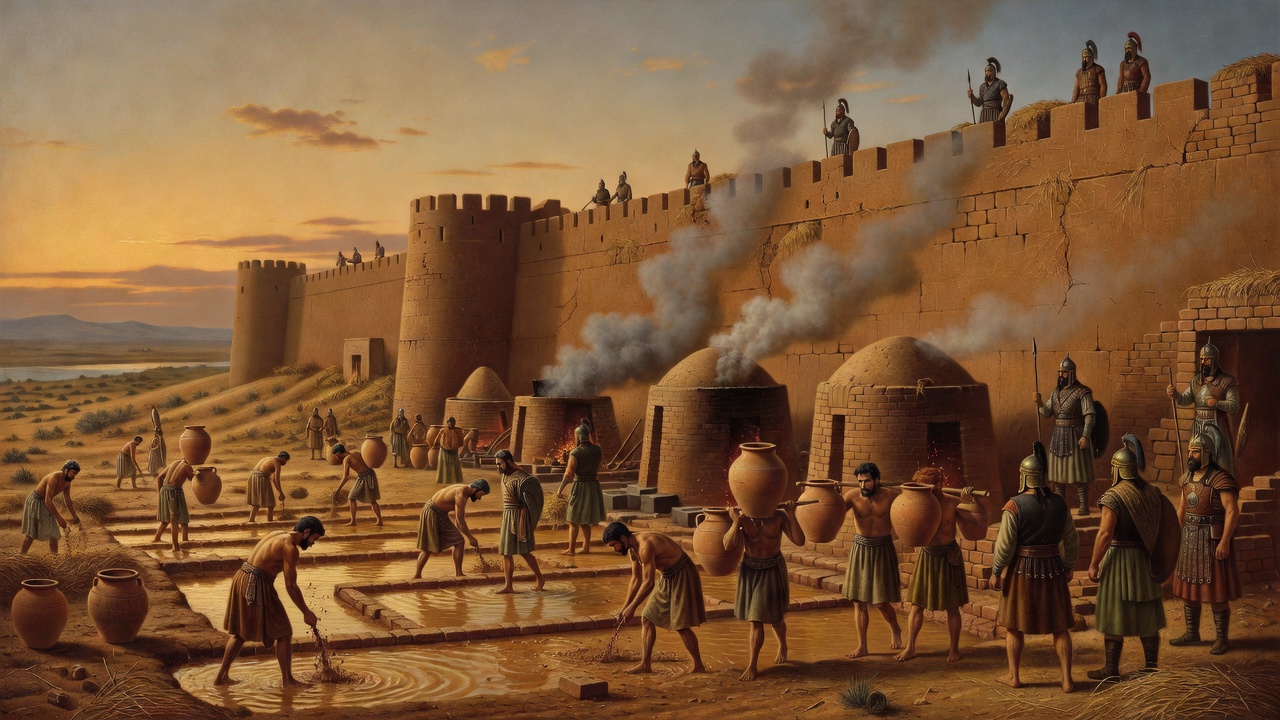
- O profeta ordena ironicamente que Nínive se prepare para o cerco tirando água, amassando o barro e pisando a argamassa para reforçar suas muralhas de tijolos. Mesmo com essas medidas defensivas, o texto declara que o fogo e a espada consumiriam a cidade.Fontes: o próprio texto bíblico
- Naum compara os guardas e oficiais de Nínive a gafanhotos que se amontoam sobre os muros em dias frios. Assim que o sol nasce, eles levantam voo e desaparecem, ilustrando a rapidez com que a liderança e os defensores da Assíria se dispersariam.Fontes: o próprio texto bíblico
Notas escritas com auxílio de IA a partir de fontes abertas (Theographic Bible Metadata, CC BY-SA 4.0; Easton’s Bible Dictionary, domínio público) e revisadas antes de publicar.
Lugares deste capítulo
- Nineveh · 36.359, 43.153 · versículos 1, 4, 7, 11
- Nile · Hoje: Nile River · 31.465, 30.367 · versículo 8
- Thebes · 25.721, 32.610 · versículos 8, 10
- Cush · Hoje: Cush 1 · 16.935, 33.751 · versículo 9
- Egypt · 30.129, 31.308 · versículo 9
- Libya · 32.821, 21.851 · versículo 9
- Assyria · 36.359, 43.153 · versículo 18
Só aparecem lugares com identificação de alta confiança (90% ou mais segundo as fontes acadêmicas reunidas pelo OpenBible). Mapa da época: DARE (Digital Atlas of the Roman Empire), CC BY 4.0; mapa atual: © colaboradores do OpenStreetMap; lugares: OpenBible.info (CC BY 4.0).
Créditos e licença desta tradução
Paipel
The Holy Bible in the Chuukese language of the Federated States of Micronesia
copyright © 1984, 1989, 1991, 2001 Liebenzel Mission
Language: Chuukese
Translation by: Liebenzell Mission
Old Testament © 1989, 2001 Liebenzel Mission
New Testament © 1984, 1991 Liebenzel Mission
This translation is made available to you under the terms of the
Creative Commons Attribution-No Derivatives license 4.0.
You may share and redistribute this Bible translation or extracts from it in any format, provided that:
You include the above copyright and source information.
You do not make any derivative works that change any of the actual words or punctuation of the Scriptures.
Pictures included with Scriptures and other documents on this site are licensed just for use with those Scriptures and documents.
For other uses, please contact the respective copyright owners.
2024-01-24
Fonte: http://ebible.org/chk/ · eBible.org