Nahum 3
Paipel · Tap a verse to see its cross-references.
1Feiengauen ewe telinimw mi chofana o niela aramas,
ewe telinimw mi ur ren wöü, pokiten chon ra chök solä o angei pisekin aramas fän pöchökül.
2Oupwe rongorong chöröüngüün ewe selin wichiwich,
ngüngün willen ekewe woken,
chopuchopun pechen ekewe oris
me akürangen ekewe wokenin maun.
3Ekewe chon wawa oris ra che
fän ketilas mi molupolup me siles mi meriweriw.
Chomong ra ninnila,
ekewe somä ra chukuchukutä.
Chokewe mi mäla resap lea,
aramas ra chepetek wor.
4Ei a fis ngeni Ninifa pokiten chomongun an föförün lisowu.
A liemung o föri angangen roong mi afeiengau,
a atupu chon ekewe mwü ren an föförün lisowu me an angangen roong.
5Iei alon ewe Samol mi Unusen Manaman,
“Ngang üa ü ngonuk, Ninifa.
Üpwe pwiliti senuk üfom
o mwüt ngeni chon ekewe mwü
pwe repwe küna om selela me äsäwum.
6Üpwe pwölü ngonuk limengau,
üpwe aitengauok
o äsäwok fän mesen aramas.
7Meinisin mi künok repwe kul senuk
o apasa: Ninifa a tala.
Iö epwe kechüeiti?
Iö epwe mochen achipa?”
8Ifa usun en, Ninifa, ka mürina seni ewe telinimw Tepes lon Isip mi nom arun ewe chanpupu Nil? Koluk a pwelifeili Tepes, ewe chanpupu epetin seni feiengau, nge ekewe koluk ina tittin. 9A nemeni Itiopia me Isip, esap wor aükükün an pöchökül, chon Put me chon Lipia ir pelian.
10Nge ekewe chon Tepes ra oola, ra feila lon fanüen chon liapeniir. Chon maun ngeniir ra atatakisi ekewe semiritin Tepes lepwokukun ekewe al meinisin, ra föti ekewe aramas tekia ngeni sein o uwerela, ra aineti lefiler ekewe mwän mi iteföüla. 11Nge en Ninifa, kopwe pwal ün seni ewe kapen feiengau o mwäliel ren. Kopwe kütta eu lenien op pwe kopwe op seni chon oputom. 12Om kewe leni mi pöchökül meinisin ra wewe ngeni ekewe irä fiik mi wor uar mi nup. Are eman a wichikiir, uar repwe morotiu lon awen ewe chon ochoch. 13Noum kewe sounfiu ra usun chök fefin. Fanüom a suk ngeni chon oputom, nge ekkei epwe kenala amwöchün asamen telinimwom. 14Kopwe üfüf koluk o amolokotä, pun chon oputom repwe pwelifeiliik, kopwe apöchöküla om kewe leni mi pöchökül. Kopwe alölü ewe pwülüpar pwe kopwe föri pilak, kopwe amolätä sekiitaan. 15Inamwo ika ka amolokotä, nge ewe ekkei epwe chök kenukula ika kopwe mäla lon maun, kopwe kärila usun lifichimas ra ärala ekewe irä.
Ka achomongokola usun lifichimas, ka achomongokola usun lifichimas mi mwetemwet. 16En ka achomongala noum kewe chon amömö, pwe ra chomong seni ekewe fün läng. Nge iei ra ässila usun ekewe lifichimas mi ameresala pöür o ässila. 17Noum kewe samol ra usun lifichimas mi mwetemwet, noum kewe aramas tekia ra usun chök pwiin lifichimas mi sotiu won ekewe tit lon fansoun patapat. Nge lupwen akkar a tötä, ra ässila, esap wor eman a silei ia ra ässila ie.
18En kingen Asiria, noum kewe samol ra mäla, noum kewe aramas tekia ra anutufoch. Noum kewe aramas ra toropasfeil won ekewe chuk, nge esap wor eman a achufengeniir. 19Esap wor och epwe tongeni aükala om feiengau, kinasom esap tongeni mola. Meinisin mi rongorong pworausen om feiengau ra alopolop fän pwapwa. Pun iö esap nom fän om angangen ariaföü lon fansoun langatam?
Did you know?
The Inevitable Fall of Nineveh
- Nahum warns Nineveh by pointing to the fall of Thebes, a great city protected by the waters of the Nile and allied with Cush, Egypt, and Put. Despite its formidable natural water defenses and regional alliances, Thebes was conquered and its nobles were carried into captivity.Sources: the Bible text itself · Thebes · Cush · Put
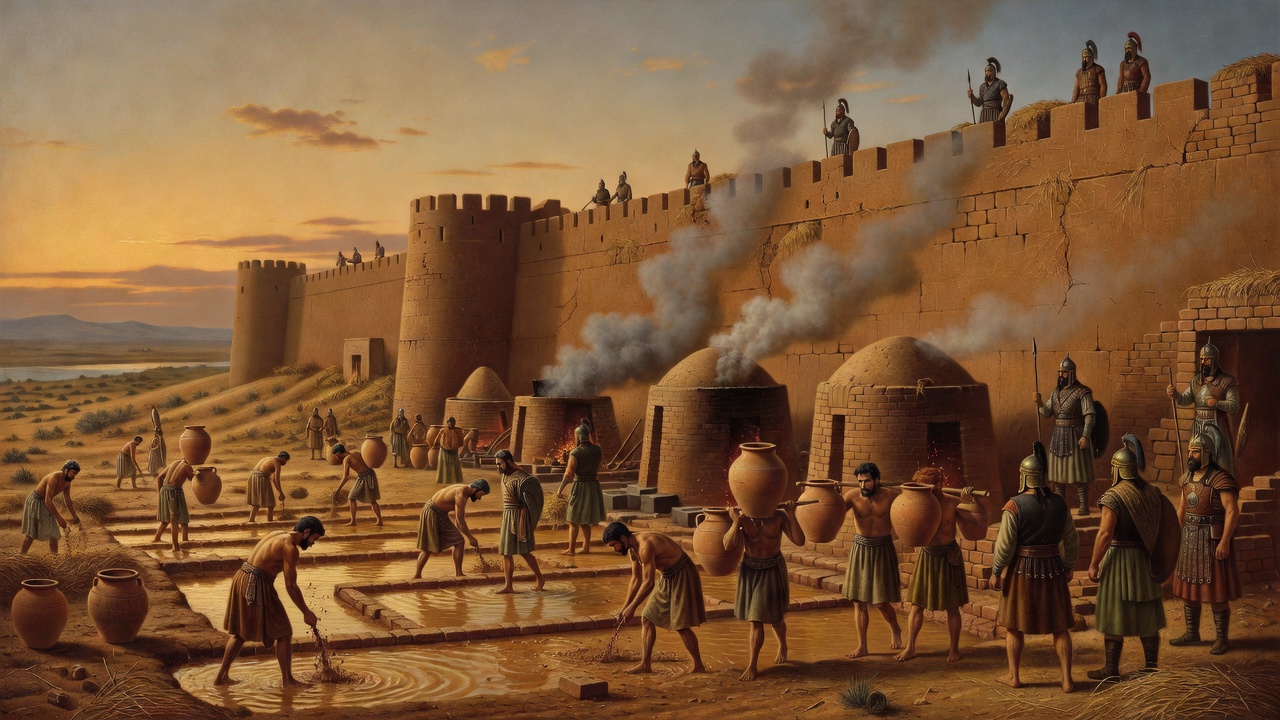
- The prophet mockingly commands Nineveh to prepare for siege by drawing water, working clay, and treading mortar to reinforce its mud-brick fortifications. Even with these extensive preparations, the text proclaims that fire and the sword would consume the city.Sources: the Bible text itself
- Nahum compares Nineveh's guards and officials to swarming locusts that cluster on stone walls on a cold day. As soon as the sun rises, the swarms fly away and vanish, illustrating how quickly Assyria's leadership and defenders would scatter and disappear.Sources: the Bible text itself
Notes written with AI assistance from open sources (Theographic Bible Metadata, CC BY-SA 4.0; Easton’s Bible Dictionary, public domain) and reviewed before publishing.
Places in this chapter
- Nineveh · 36.359, 43.153 · verses 1, 4, 7, 11
- Nile · Today: Nile River · 31.465, 30.367 · verse 8
- Thebes · 25.721, 32.610 · verses 8, 10
- Cush · Today: Cush 1 · 16.935, 33.751 · verse 9
- Egypt · 30.129, 31.308 · verse 9
- Libya · 32.821, 21.851 · verse 9
- Assyria · 36.359, 43.153 · verse 18
Only places identified with high confidence are shown (90% or more according to the scholarly sources compiled by OpenBible). Period map: DARE (Digital Atlas of the Roman Empire), CC BY 4.0; modern map: © OpenStreetMap contributors; places: OpenBible.info (CC BY 4.0).
Credits and license for this translation
Paipel
The Holy Bible in the Chuukese language of the Federated States of Micronesia
copyright © 1984, 1989, 1991, 2001 Liebenzel Mission
Language: Chuukese
Translation by: Liebenzell Mission
Old Testament © 1989, 2001 Liebenzel Mission
New Testament © 1984, 1991 Liebenzel Mission
This translation is made available to you under the terms of the
Creative Commons Attribution-No Derivatives license 4.0.
You may share and redistribute this Bible translation or extracts from it in any format, provided that:
You include the above copyright and source information.
You do not make any derivative works that change any of the actual words or punctuation of the Scriptures.
Pictures included with Scriptures and other documents on this site are licensed just for use with those Scriptures and documents.
For other uses, please contact the respective copyright owners.
2024-01-24
Source: http://ebible.org/chk/ · eBible.org