1 Tessalonicenses 3
Dios ã jáap naáwát tólih · Toque num versículo para ver as referências cruzadas.
Timoteodih ã wahat
1Pánihna, yeebdíh bʉ́dí náhni dahwanit, yeebdíh ã enat pínah niijná, Timoteodih ñi pebhna jwĩ wah bojop be. Caán jwĩ ʉ́ʉd panihni, weemdíh pej jʉmni, Cristoíh tʉ́ini doonádih ãpĩ́ naáwáp jĩ. Diosjeh caandíh ã wahachah, weemdíh bʉ́dí ã teo wáacap jĩ. Pánihna, yeebdíh ã bohéát pínah niijná, ñi pebhna caandíh wahniji, Atenas tʉ́tchiboó biícjeh wã páñap jĩ. 3Jesúsdih ñi jepahatji jíib bita yeebdíh yeejép ĩ chãjachah yʉhna, Diosdih ñi cádahcat pínah niijná, yeebdíh wã bohéát tʉ́ʉtʉp jĩ. “Jesucristodih jwĩ jepahachah, jwĩ tʉ́ʉt nʉʉmátdih íijnit, ã́ihwã nihcannitboó jwiítdih yeejép ĩ chãjbipna caá”, jwĩ niíj jéihna caá. 4Ñijeéh jʉmna, páant jwĩ yapat pínahdih dawá láa yeebdíh jwĩ naáwáp jĩ. Bʉʉ jwĩ naáwátji pah ã yapatdih ñi jéihna caá. 5Pánihna, ded pah ñi jʉmatdih bʉ́dí jéihíhna, Timoteodih wã wahap jĩ. “Nemépwã ĩ maáh queétdih ã yee naáwáchah, ¿queétboó caandíh yehna ĩ niijná niít? Yehna ĩ niijcáh, nihat conboó jwĩ bohéát bʉ́dí jwĩ tewatji bʉʉdní ã jʉmbipna caá”, wã niíj jenah joyóp jĩ.
6Bʉʉ Timoteo, ñi pebhboó jʉibíniji, ã jwʉ́ʉb jʉyʉ́p jĩ. Jwʉ́ʉb jʉinít, “Nihat Tesalónica tʉ́tchidih moón meemdíh bʉ́dí ĩ tʉ́yat tʉ́ʉtʉp be. Queét Dios naáwátdih tʉ́i joiná beé ĩ chãjap be. Tʉ́i joinít, Diosdih bʉ́dí oinit, ĩ míic tʉ́i oina beé. Yeebdíh náhninit, bʉ́dí wẽinit, yeebdíh ĩ bidna beé. Yeéb queétdih bidnit, bʉ́dí enedih ñi bejíhat pah mʉntih, queétbʉt yeebdíh ĩ bidna caá”, weemdíh ã niíj naáwáp jĩ. 7Páant ã niíj naáwáchah, yeebdíh jwĩ náhni dahwaat ã yayáh bejep jĩ. Yeéb Dios naáwátdih jepahnit, ñi tʉ́i jʉmat doonádih joinít, bita jwiítdih yeejép ĩ chãjachah yʉhna, bʉ́dí jwĩ wẽina caá. 8Yeéb jwĩ Maáh Jesúsdih ñi tʉ́i péenachah, jwĩ́ih caolih bʉ́dí ã wẽina caá. 9Pánihna, “Paá, ma teo wáacatjĩh queét Jesúsdih ĩ tʉ́i péeatdih jéihna, bʉ́dí wã wẽina caá. Páant weemdíh ma weñaat ã tʉ́ina caá”, Diosdih wã niijná caá. 10Pánih wẽinit, yeó jáap, cheibʉt Diosdih bʉ́dí jwĩ ʉʉ́bhna caá, yeebdíh enat tʉ́ʉtna, jwiítdih ã wahat pínah niijná. Yeéb Jesúíhwã ded pah ñi tʉ́i chãjat pínahdih beh joyát yeebdíh páantjeh ã jʉdhdʉchah, ñi pebhna jwʉ́ʉb bohénadih jwĩ bejíhna caá.
11Yeebdíh jwʉ́ʉb enedih jwĩ bejat pínah niijná, Satanás ã jãhat panihatdih ĩ yohat pínahdih jwĩ íip Diosdih, jwĩ Maáh Jesucristodihbʉt bʉ́dí jwĩ ʉʉ́bhna caá. 12Pánih ʉʉ́bhna, jwĩ Maáh yeebdíh ã teo wáacat pínahdih jwĩ ʉʉ́bhna caá, chah míic oinit, nihatdihbʉt ñi oyat pínah niijná. Pánihna, yeebdíh bʉ́dí jwĩ oyat pah mʉntih, yeebbʉ́t biíc yoobó ñi oyat pínahdih wã náah yacna caá. 13“Paá, queétdih ma tʉ́i teo wáacá, ma weñat pínahdihjeh ĩ chãjat pínah niijná”, jwĩ niíj ʉʉ́bhna caá. Páant ã teo wáacachah, jwĩ Maáh Jesucristo nihat ã́ihwãjeéh jwʉ́ʉb dei jʉ̃óhnit, Jesús jwĩ íip Diosdih nin pah ã niíj naóhbipna caá: “Queét tʉ́init ĩ jʉmʉchah, queétdih dedé peéh chãjat pínah ã wihcan caá”, ã niijbípna caá.
Você sabia?
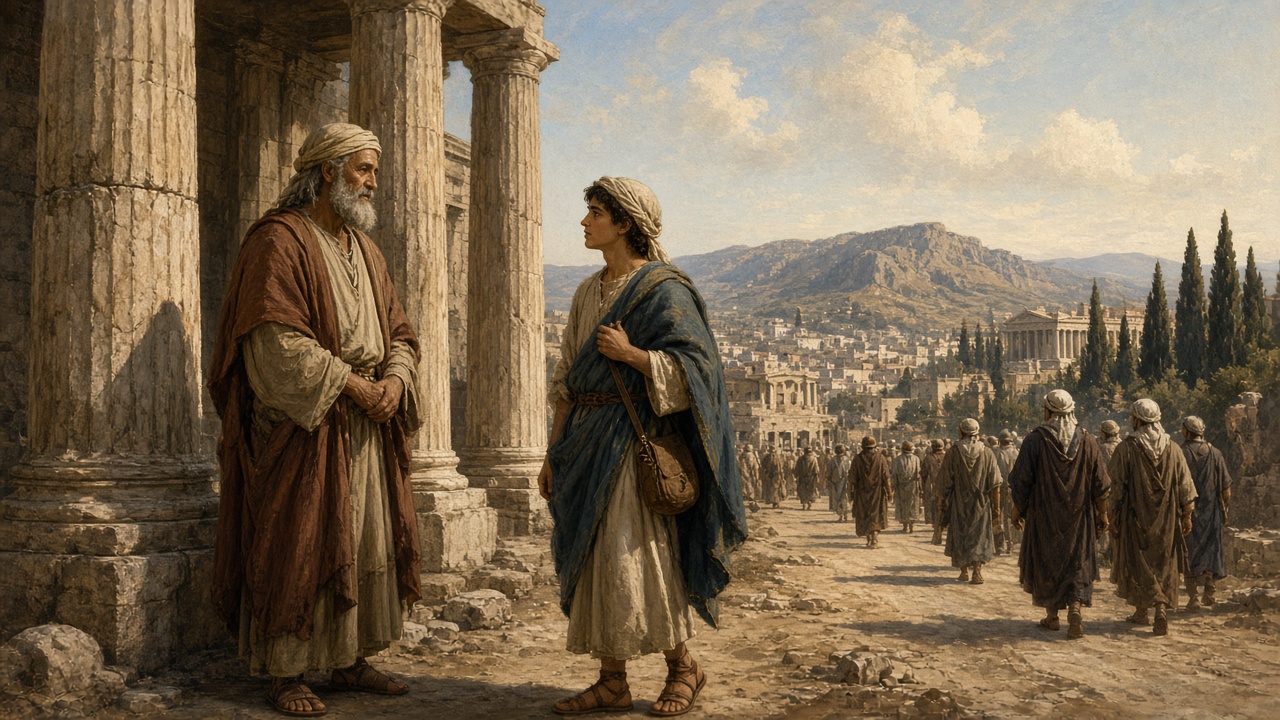
Enviado desde Atenas para fortalecer a fé
- Eles estavam dispostos a ficar sozinhos em Atenas para que Timóteo fosse enviado a fim de fortalecer os tessalonicenses. Atenas, capital da Ática, era a cidade mais célebre do mundo antigo e um centro da literatura e da arte gregas; Paulo a visitou em sua segunda viagem missionária.Fontes: o próprio texto bíblico · Athens
- Timóteo, cujo nome significa "honrar a Deus", era um jovem discípulo e companheiro de Paulo em muitas viagens. Aqui ele é chamado de irmão e cooperador de Deus no evangelho de Cristo, enviado para encorajá-los na fé, a fim de que as provações não os abalassem, e depois voltou com boas notícias da fé e do amor deles.Fontes: o próprio texto bíblico · Timotheus
Notas escritas com auxílio de IA a partir de fontes abertas (Theographic Bible Metadata, CC BY-SA 4.0; Easton’s Bible Dictionary, domínio público) e revisadas antes de publicar.
Lugares deste capítulo
- Athens · 37.972, 23.727 · versículo 1
Só aparecem lugares com identificação de alta confiança (90% ou mais segundo as fontes acadêmicas reunidas pelo OpenBible). Mapa da época: DARE (Digital Atlas of the Roman Empire), CC BY 4.0; mapa atual: © colaboradores do OpenStreetMap; lugares: OpenBible.info (CC BY 4.0).
Créditos e licença desta tradução
Dios ã jáap naáwát tólih
New Testament in Cacua
copyright © 2008 Wycliffe Bible Translators, Inc.
Language: Cacua
Translation by: Wycliffe Bible Translators, Inc.
Copyright Information
© 2008, Wycliffe Bible Translators, Inc. All rights reserved.
This translation text is made available to you under the
terms of the Creative Commons License: Attribution-Noncommercial-No Derivative Works.
( http://creativecommons.org/licenses/by-nc-nd/3.0/ )
In addition, you have permission to port the text to different file formats, as long as you
do not change any of the text or punctuation of the Bible.
You may share, copy, distribute, transmit, and extract portions
or quotations from this work, provided that you include the above copyright
information:
You must give Attribution to the work.
You do not sell this work for a profit.
You do not make any derivative works that change any of the actual words or punctuation of the Scriptures.
Permissions beyond the scope of this license may be
available if you contact
us with your request.
The New Testament
in Cacua
© 2008, Wycliffe Bible Translators, Inc. All rights reserved.
This translation is made available to you under the terms of the
Creative Commons Attribution-Noncommercial-No Derivatives license 4.0.
You may share and redistribute this Bible translation or extracts from it in any format, provided that:
You include the above copyright and source information.
You do not sell this work for a profit.
You do not change any of the words or punctuation of the Scriptures.
Pictures included with Scriptures and other documents on this site are licensed just for use with those Scriptures and documents.
For other uses, please contact the respective copyright owners.
2014-08-06
Fonte: http://ebible.org/cbv/ · eBible.org