Lucas 6
Handr Taara · Toque num versículo para ver as referências cruzadas.
Sanbati jango aatets aato
1Sanbati aawon Iyesus taari taalon b́beshefere b́ danifwots sndyi motso k'ut'dek't bokishon shik'dek't moo dek' botuwi, 2Ferisawino eteefwotsitse ik ikuwots b́danifwotssh, «Sanbati aawon k'alosh geyiraw keewo it k'alir eegoshe?» bo eti.
3Iyesuswere hank'o ett boosh bí aaniy, «Bínat bínton fa'a ashuwotsn bo k'ak'or Dawit b́k'altsok'o nababeratsteya? 4Kahniwotsiyere okoon konwor b́marawok'owa ett baziyetso, bí Ik'i moots kinddek't Ik'osh t'ints misho k'a'ú dek't b́ máá, bínton fa'uwotssho bí ími.»
5Manats dab́t Iyesus, «Ash na'o sanbatushor b doonziye,» bí eti.
Ash kish duro Iyesus b́kashitsok'o
6Sanbati aaw k'oshots Iyesus ayhudiyots Ik' k'oni moots kind dek't b́ danifera b́ tesh, manokno b́ kish dúr ash iko fa'e b́ tesh. 7Muse nemo danifwotsnat ferisawino etefwotsen Iyesusi bín bos'aamit k'uur keewo bo geyefera botesh, «Sanbati aawon ashaan kashitwek'úna aab s'iilone» ett bín kot bodek'i. 8Iyesusmó bo gawirwo dank'rat kish durosh «Tuur taalots ned'de'e!» bí et. Duronwere tuut taalots need' b́dek'. 9Manór Iyesus ashuwotssh, «Aab́ itn aatuna, arikon aab sanbati aawots finore eteetso gond finemo doo fine? ash kash úd'emó ash kash oriyee,» bí eti. 10Iyesus bín gúúr dek't beyiru ash jamwots maants b́s'ili hakon kish durosh «N kisho jargwe!» bíet. Bíwere b́kisho b́jargtsok'on kashutsat b́ kish k'oshokok'o jeen wotb́wtsi.
11Muse nemo daniyfwotsnat ferisawiwotsmó ayidek' nibok'únt, Iyesusi bo k'alitwok'o shiye bowtsi.
Tatse git woshetswotsi Iyesus gal b́ dek'tsoko
12Ik aaw Iyesus Ik' k'onosh guri abaats kesh b́dek'i, manoknowere t'ú jamo Ik'omand k'onron b́ gatsi 13Datso b́gatstsok'ono b́ danifwotsi b́ maants b́ seeg, boyitsnowere tatse gitwotsi galdek't «Woshetswotsi.» ett boshútso b́ kishi, 14Boshútsonwere, P'et'rosi ett b́ s'eegetso Sm'onnat bíeshu Indriyasi, Yak'obnat Yohansn, Flip'osnat Bertelemyosi, 15Matiyosnat Tomasn, Ilfyos naay Yak'bnat «Okooretska» ett s'eegefo Sm'oni, 16Yak'ob naay Yhudnat Iyesusi beshidek't imtso Ask'rottso Yhudne.
Iyesus ay asho b́ danitsok'onat b́kashitsokon
17Iyesus bík woshetsnton guri abaatse oot't juwanots ned'b́dek', b́ danifwotsitse aywotswere manoke fa'ano botesh, anynwere b́ keewirwo k'eboshat boshodotse kasho geeyat wááts ay dek't ayts ash ashuwotswere fa'ano botesh. Bowere bowóóko Yhud datsatse, Iyerusalem kitotse, aatsk'ari ganoke fa'uwots T'irosnat Sidon kitwotsitsikno botesh. 18Kim shayiron detseyat kic'efetst teshts ash ashuwotswere waat kashefno. 19Kashiyi angonwere bí atsotse kesht bo únetsi b́kashiyiruwotse kakuwets ash jamo Iyesus atsats bodosh bo geefoni.
Geneeúwonat shiyani jango
20Iyesus dambaan kááwdek't b́ danifwots maants s'iilfetst hank'o b́ et,
«Ik'i mengstu itk bwottsotse, It t'owwots derek itne!
21It and k'ak'irwots, ayts it mishetwotse derek itne!
And epiruwots it, ayts it mis'etwotse derek itne,
22T jangatse, ash na'o atse tuutson ash ashuwots iti bo shit'or,
Bogalor, bo aatsniyononat it shútso bo t'afiyor derek itne!
23«Darotse it daatsit k'awntso een b́wottsotse jaman itats b́ bodor derek itne! manór gene'on t'olar k'afore, shin shin bo nihotswor Ik'i ashuwotsats hank'o gond fina finat boteshi.
24«Gaaletswots itmó it beyi sheengosh wotitwo andon it datstsotse
Indowe itsha!
25And wortswots it,
Ayits it k'ak'itwotse indowe itna
It and mis'irwots,
Ayits it shiyanituwonat it eepetwotse
Indowe itnsha!
26Ash ashuwots it jangosh sheengo bokeewor indowe itsha!
Bonihotswor kootets nebiyiwotssh mank'o k'altniye boteshi.»
Balangaro shunere
27«T keew k'ebirwotssh itshmó hank'o etirwe, it balangarwotsi shunere, iti shit'irwotssh sheeng keewo finore, 28Iti c'ashirwotsi deerwore, itn p'ek'irwotsish Ik'o k'onuwere, 29N malal iko jabitwosh, dabr ikmandtso aani de'er ime, n shemi nat'alo dek'irwosh n kitonor dabde'er ime, 30Niyatse k'oniru jamosh ime, n detstso niatse dek'iru asho bí aanitwok'o aatk'aye. 31Ashuwots itsh bok'alitwok'o itgeyirwo itwoor mank'o boosh k'alwore.
32«Iti shunirwots mec'ro it shunal, deero it dek'et aawushe? Morretswotswor boon shunirwotsi shunfneree, 33Itsh sheeng fintswots mec'rosh itwere sheengo it finiyal eegoshe bogo daatso it faliti! morretswotswor mank'ó k'alfnosha, 34‹Noosh aniyitune› etaat it gawiru ashuwotssh it gushiyal awuneya bogo it datsiti? Bogushitsman aani dek'osh morretswotswor morretswotssh gushifnee. 35Itmó it balangarwotsi shunere! sheeng keewonowere boosh finore, No gusho aniytune it erawon gushiwere, mank'o itk'liyal it k'awntso eena b́wotiti, jamoniyere damb bogts Ik'o nana'uwotsno wotitute, bí werigondetswotsnat úderaw gondwotsshor dowe. 36It nih dartso maac' k'ewetsi b́ wottsok'o itwoor bíkok'o maac' k'eewtswotsi wotoore.
K'oshwotsats angsho b́geyrawok'o
37«Itats angsherawok'o konatsor angshk'ayere, itats angshratse, ash k'oshwotsi k'efk'ayere, itnowere k'eferatse, orowe erere, itwere orowe eto daatsitute, 38Imere, itshowere imetuwe, it tatsit tatsi k'ac'ots itsho tatsetwe, dab sheeng tatsi k'ac'otse mirde'er tuc'etso s'eenr kud' kud' ettso itsh imetwe.» 39Manats dabt Iyesus aridek't han boosh b́keewi, «Dogo dogo jishosh falitwá? Mank'o k'alitwe bíetalmó bo gitetswor desheyar gohots dihni bowtsiti. 40Daniru na'o bín daniyrwoniyere bowatse, ernmó daniru na'o sheengeshde'er danbdek'al bín danyrwok'o wotituwe. 41N ááwotsi gindo nbe'aawo eegoshe n eshu aawitsi kimúwu n s'iliri? 42Ando ni'ááwotse fa'a gindo nbe'aawo nieshush ‹Ti eshuwo, n aawitsi fiishani aab neesh kishuna› eto aawuk'oneya nfaliti? Nee git alberetsono, shin shino ni'aawitsi gindo kishuwe, maniyere il nieshu aawotse fa'a fiisho s'ayintsde'er s'iilo falitune.»
Mito b́shuwatse b́daneefok'o
43«Miti sheengo gond shuwo shuurake, ando mank'o miti gondo shwi sheengo shuurake. 44Mit jamo b́shuwona b́ danefo, angitsotse belesiya eteef miti shuwo mec'eraka, mank'o angitsi atatse woyiniya eteef miti shuwo mec'eraka. 45Ash sheengo b́ nibi s'aynotse sheeng keewo kishitwe, gond ashonwere b́ god nibotse gond keewo kishituwe. Ashoniye b́ maac'otse s'eentsoniye b́nonon b́ keewfoni.»
S'alats wee shíyats ageets moowwots eeg bo artsok'o
46«Taa t keewirwono fineratstere, eshe eegoshe, ‹t doonzo! t doonzo! etaat taan it s'eegiri?› 47T maants waar t aap'tso k'ew de'er finats jitsitwo koni bí artsok'o itsh keewna, 48B́ gop'o dashan wokidek't isht b́ moo kup' s'alats need'idek't detsits ashoni bí ariye, di'onwere waat maaman b́ gifniy, ernmó kup'ts s'alats b́ detsetsotse giwsho falratse. 49Ti aap'o k'ebt finats jitsrawonmó b́ moo dashan b́gop'irawo shawats agts asho arefee; di'o waat b́gifniytsok'on manoor dihb́wtsi, b́ dih dihonwe ayi dek't dhi een wotb́wtsi.» bí et.
Você sabia?
O sábado, os Doze e a planície
- Num sábado, enquanto Jesus passava pelas plantações, os discípulos colhiam espigas, esfregavam os grãos nas mãos e os comiam, e alguns fariseus disseram que isso era ilícito. Jesus lembrou que Davi e seus companheiros, com fome, comeram o pão consagrado da casa de Deus, permitido apenas aos sacerdotes, e disse que o Filho do Homem é Senhor do sábado. Noutro sábado, restaurou na sinagoga a mão direita atrofiada de um homem, enquanto escribas e fariseus o observavam em busca de um motivo para acusá-lo; uma cronologia data os dois episódios em 28 d.C.Fontes: o próprio texto bíblico · Corn on the Sabbath · Healing a Withered Hand
- Depois de passar a noite em oração no monte, Jesus chamou os discípulos e escolheu doze, aos quais designou apóstolos. Entre eles estavam Simão, a quem deu o nome de Pedro, e André, irmão de Pedro, pescadores de Betsaida, na costa ocidental do mar da Galileia, e Mateus, cobrador de impostos em Cafarnaum, antes conhecido como Levi.Fontes: o próprio texto bíblico · Simon Peter · Andrew · Matthew
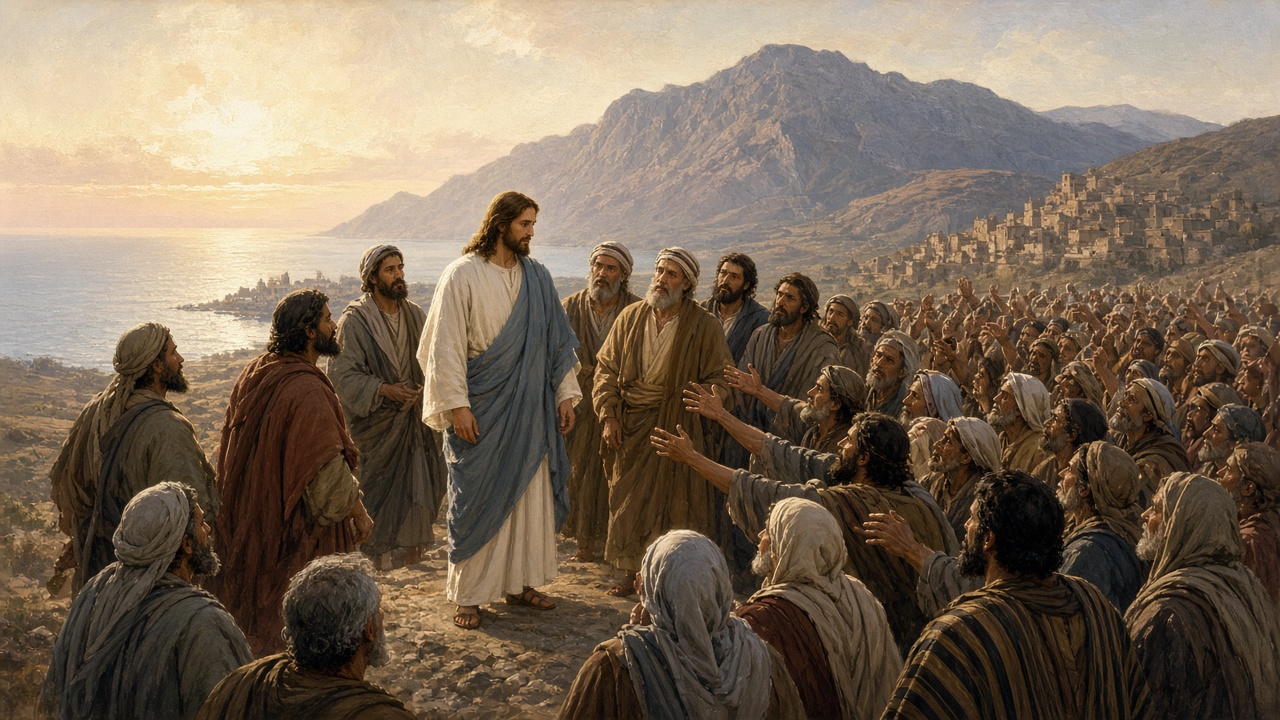
- Jesus desceu com eles e parou num lugar plano, onde havia gente da Judeia, de Jerusalém e do litoral de Tiro e Sidom para ouvi-lo e ser curada. Tiro e Sidom eram antigas cidades fenícias no Mediterrâneo; Sidom, a mais antiga, ficava a cerca de vinte e cinco milhas ao norte de Tiro. Uma cronologia data esse ensinamento em 28 d.C. e o intitula Sermão da Montanha, embora a narrativa coloque Jesus em terreno plano depois de descer do monte.Fontes: o próprio texto bíblico · Tyre · Sidon · Sermon on the Mount
Notas escritas com auxílio de IA a partir de fontes abertas (Theographic Bible Metadata, CC BY-SA 4.0; Easton’s Bible Dictionary, domínio público) e revisadas antes de publicar.
Lugares deste capítulo
- Jerusalem · 31.777, 35.234 · versículo 17
- Judea · Hoje: Judea 1 · 31.777, 35.234 · versículo 17
- Sidon · Hoje: Sandikli archaeological site in Sidon · 33.561, 35.372 · versículo 17
- Tyre · 33.271, 35.196 · versículo 17
Só aparecem lugares com identificação de alta confiança (90% ou mais segundo as fontes acadêmicas reunidas pelo OpenBible). Mapa da época: DARE (Digital Atlas of the Roman Empire), CC BY 4.0; mapa atual: © colaboradores do OpenStreetMap; lugares: OpenBible.info (CC BY 4.0).
Créditos e licença desta tradução
Handr Taara
The New Testament in the Borna Language of Ethiopia (Handr Taara)
copyright © 2018 The Word for the World International
Language: Borni (Borna)
Contributor: The Word for the World Southern Africa
Handr Taara
The New Testament in Borna in Latin version
The Word for the World
This translation is made available to you under the terms of the
Creative Commons Attribution license 4.0.
You may share and redistribute this Bible translation or extracts from it in any format, provided that:
You include the above copyright and source information.
If you make any changes to the text, you must indicate that you did so in a way that makes it clear that the original licensor is not necessarily endorsing your changes.
Pictures included with Scriptures and other documents on this site are licensed just for use with those Scriptures and documents.
For other uses, please contact the respective copyright owners.
Note that in addition to the rules above, revising and adapting God's Word involves a great responsibility to be true to God's Word. See Revelation 22:18-19.
2023-04-08
Fonte: http://ebible.org/bwo/ · eBible.org