Luke 6
Handr Taara · Tap a verse to see its cross-references.
Sanbati jango aatets aato
1Sanbati aawon Iyesus taari taalon b́beshefere b́ danifwots sndyi motso k'ut'dek't bokishon shik'dek't moo dek' botuwi, 2Ferisawino eteefwotsitse ik ikuwots b́danifwotssh, «Sanbati aawon k'alosh geyiraw keewo it k'alir eegoshe?» bo eti.
3Iyesuswere hank'o ett boosh bí aaniy, «Bínat bínton fa'a ashuwotsn bo k'ak'or Dawit b́k'altsok'o nababeratsteya? 4Kahniwotsiyere okoon konwor b́marawok'owa ett baziyetso, bí Ik'i moots kinddek't Ik'osh t'ints misho k'a'ú dek't b́ máá, bínton fa'uwotssho bí ími.»
5Manats dab́t Iyesus, «Ash na'o sanbatushor b doonziye,» bí eti.
Ash kish duro Iyesus b́kashitsok'o
6Sanbati aaw k'oshots Iyesus ayhudiyots Ik' k'oni moots kind dek't b́ danifera b́ tesh, manokno b́ kish dúr ash iko fa'e b́ tesh. 7Muse nemo danifwotsnat ferisawino etefwotsen Iyesusi bín bos'aamit k'uur keewo bo geyefera botesh, «Sanbati aawon ashaan kashitwek'úna aab s'iilone» ett bín kot bodek'i. 8Iyesusmó bo gawirwo dank'rat kish durosh «Tuur taalots ned'de'e!» bí et. Duronwere tuut taalots need' b́dek'. 9Manór Iyesus ashuwotssh, «Aab́ itn aatuna, arikon aab sanbati aawots finore eteetso gond finemo doo fine? ash kash úd'emó ash kash oriyee,» bí eti. 10Iyesus bín gúúr dek't beyiru ash jamwots maants b́s'ili hakon kish durosh «N kisho jargwe!» bíet. Bíwere b́kisho b́jargtsok'on kashutsat b́ kish k'oshokok'o jeen wotb́wtsi.
11Muse nemo daniyfwotsnat ferisawiwotsmó ayidek' nibok'únt, Iyesusi bo k'alitwok'o shiye bowtsi.
Tatse git woshetswotsi Iyesus gal b́ dek'tsoko
12Ik aaw Iyesus Ik' k'onosh guri abaats kesh b́dek'i, manoknowere t'ú jamo Ik'omand k'onron b́ gatsi 13Datso b́gatstsok'ono b́ danifwotsi b́ maants b́ seeg, boyitsnowere tatse gitwotsi galdek't «Woshetswotsi.» ett boshútso b́ kishi, 14Boshútsonwere, P'et'rosi ett b́ s'eegetso Sm'onnat bíeshu Indriyasi, Yak'obnat Yohansn, Flip'osnat Bertelemyosi, 15Matiyosnat Tomasn, Ilfyos naay Yak'bnat «Okooretska» ett s'eegefo Sm'oni, 16Yak'ob naay Yhudnat Iyesusi beshidek't imtso Ask'rottso Yhudne.
Iyesus ay asho b́ danitsok'onat b́kashitsokon
17Iyesus bík woshetsnton guri abaatse oot't juwanots ned'b́dek', b́ danifwotsitse aywotswere manoke fa'ano botesh, anynwere b́ keewirwo k'eboshat boshodotse kasho geeyat wááts ay dek't ayts ash ashuwotswere fa'ano botesh. Bowere bowóóko Yhud datsatse, Iyerusalem kitotse, aatsk'ari ganoke fa'uwots T'irosnat Sidon kitwotsitsikno botesh. 18Kim shayiron detseyat kic'efetst teshts ash ashuwotswere waat kashefno. 19Kashiyi angonwere bí atsotse kesht bo únetsi b́kashiyiruwotse kakuwets ash jamo Iyesus atsats bodosh bo geefoni.
Geneeúwonat shiyani jango
20Iyesus dambaan kááwdek't b́ danifwots maants s'iilfetst hank'o b́ et,
«Ik'i mengstu itk bwottsotse, It t'owwots derek itne!
21It and k'ak'irwots, ayts it mishetwotse derek itne!
And epiruwots it, ayts it mis'etwotse derek itne,
22T jangatse, ash na'o atse tuutson ash ashuwots iti bo shit'or,
Bogalor, bo aatsniyononat it shútso bo t'afiyor derek itne!
23«Darotse it daatsit k'awntso een b́wottsotse jaman itats b́ bodor derek itne! manór gene'on t'olar k'afore, shin shin bo nihotswor Ik'i ashuwotsats hank'o gond fina finat boteshi.
24«Gaaletswots itmó it beyi sheengosh wotitwo andon it datstsotse
Indowe itsha!
25And wortswots it,
Ayits it k'ak'itwotse indowe itna
It and mis'irwots,
Ayits it shiyanituwonat it eepetwotse
Indowe itnsha!
26Ash ashuwots it jangosh sheengo bokeewor indowe itsha!
Bonihotswor kootets nebiyiwotssh mank'o k'altniye boteshi.»
Balangaro shunere
27«T keew k'ebirwotssh itshmó hank'o etirwe, it balangarwotsi shunere, iti shit'irwotssh sheeng keewo finore, 28Iti c'ashirwotsi deerwore, itn p'ek'irwotsish Ik'o k'onuwere, 29N malal iko jabitwosh, dabr ikmandtso aani de'er ime, n shemi nat'alo dek'irwosh n kitonor dabde'er ime, 30Niyatse k'oniru jamosh ime, n detstso niatse dek'iru asho bí aanitwok'o aatk'aye. 31Ashuwots itsh bok'alitwok'o itgeyirwo itwoor mank'o boosh k'alwore.
32«Iti shunirwots mec'ro it shunal, deero it dek'et aawushe? Morretswotswor boon shunirwotsi shunfneree, 33Itsh sheeng fintswots mec'rosh itwere sheengo it finiyal eegoshe bogo daatso it faliti! morretswotswor mank'ó k'alfnosha, 34‹Noosh aniyitune› etaat it gawiru ashuwotssh it gushiyal awuneya bogo it datsiti? Bogushitsman aani dek'osh morretswotswor morretswotssh gushifnee. 35Itmó it balangarwotsi shunere! sheeng keewonowere boosh finore, No gusho aniytune it erawon gushiwere, mank'o itk'liyal it k'awntso eena b́wotiti, jamoniyere damb bogts Ik'o nana'uwotsno wotitute, bí werigondetswotsnat úderaw gondwotsshor dowe. 36It nih dartso maac' k'ewetsi b́ wottsok'o itwoor bíkok'o maac' k'eewtswotsi wotoore.
K'oshwotsats angsho b́geyrawok'o
37«Itats angsherawok'o konatsor angshk'ayere, itats angshratse, ash k'oshwotsi k'efk'ayere, itnowere k'eferatse, orowe erere, itwere orowe eto daatsitute, 38Imere, itshowere imetuwe, it tatsit tatsi k'ac'ots itsho tatsetwe, dab sheeng tatsi k'ac'otse mirde'er tuc'etso s'eenr kud' kud' ettso itsh imetwe.» 39Manats dabt Iyesus aridek't han boosh b́keewi, «Dogo dogo jishosh falitwá? Mank'o k'alitwe bíetalmó bo gitetswor desheyar gohots dihni bowtsiti. 40Daniru na'o bín daniyrwoniyere bowatse, ernmó daniru na'o sheengeshde'er danbdek'al bín danyrwok'o wotituwe. 41N ááwotsi gindo nbe'aawo eegoshe n eshu aawitsi kimúwu n s'iliri? 42Ando ni'ááwotse fa'a gindo nbe'aawo nieshush ‹Ti eshuwo, n aawitsi fiishani aab neesh kishuna› eto aawuk'oneya nfaliti? Nee git alberetsono, shin shino ni'aawitsi gindo kishuwe, maniyere il nieshu aawotse fa'a fiisho s'ayintsde'er s'iilo falitune.»
Mito b́shuwatse b́daneefok'o
43«Miti sheengo gond shuwo shuurake, ando mank'o miti gondo shwi sheengo shuurake. 44Mit jamo b́shuwona b́ danefo, angitsotse belesiya eteef miti shuwo mec'eraka, mank'o angitsi atatse woyiniya eteef miti shuwo mec'eraka. 45Ash sheengo b́ nibi s'aynotse sheeng keewo kishitwe, gond ashonwere b́ god nibotse gond keewo kishituwe. Ashoniye b́ maac'otse s'eentsoniye b́nonon b́ keewfoni.»
S'alats wee shíyats ageets moowwots eeg bo artsok'o
46«Taa t keewirwono fineratstere, eshe eegoshe, ‹t doonzo! t doonzo! etaat taan it s'eegiri?› 47T maants waar t aap'tso k'ew de'er finats jitsitwo koni bí artsok'o itsh keewna, 48B́ gop'o dashan wokidek't isht b́ moo kup' s'alats need'idek't detsits ashoni bí ariye, di'onwere waat maaman b́ gifniy, ernmó kup'ts s'alats b́ detsetsotse giwsho falratse. 49Ti aap'o k'ebt finats jitsrawonmó b́ moo dashan b́gop'irawo shawats agts asho arefee; di'o waat b́gifniytsok'on manoor dihb́wtsi, b́ dih dihonwe ayi dek't dhi een wotb́wtsi.» bí et.
Did you know?
The Sabbath, the Twelve, and the Plain
- On a Sabbath, as Jesus passed through the grainfields, his disciples picked heads of grain, rubbed them in their hands, and ate them, and some Pharisees called this unlawful. Jesus recalled that David and his hungry companions ate consecrated bread from the house of God, bread lawful only for the priests, and said that the Son of Man is Lord of the Sabbath. On another Sabbath he restored a man’s withered right hand in the synagogue while scribes and Pharisees watched for a reason to accuse him; a chronology dates both episodes to AD 28.Sources: the Bible text itself · Corn on the Sabbath · Healing a Withered Hand
- After spending the night in prayer on the mountain, Jesus called his disciples and chose twelve, whom he designated apostles. Among them were Simon, whom he named Peter, and Peter’s brother Andrew, fishermen from Bethsaida on the western coast of the Sea of Galilee, and Matthew, a tax collector at Capernaum who had formerly been known as Levi.Sources: the Bible text itself · Simon Peter · Andrew · Matthew
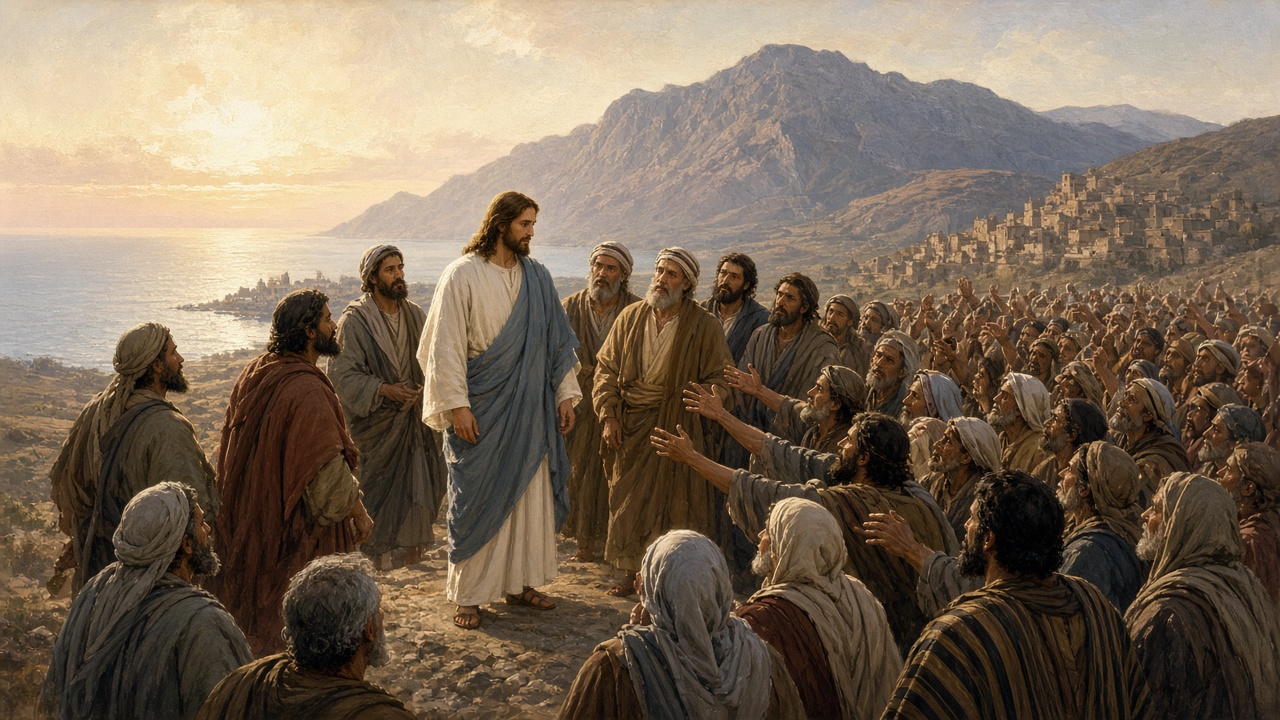
- Jesus came down with them and stood on a level place, where people from Judea, Jerusalem, and the sea coast of Tyre and Sidon had gathered to hear him and to be healed. Tyre and Sidon were ancient Phoenician cities on the Mediterranean; Sidon, the older city, lay about twenty-five miles north of Tyre. A chronology dates this teaching to AD 28 and titles it the Sermon on the Mount, though the narrative places Jesus on level ground after he came down from the mountain.Sources: the Bible text itself · Tyre · Sidon · Sermon on the Mount
Notes written with AI assistance from open sources (Theographic Bible Metadata, CC BY-SA 4.0; Easton’s Bible Dictionary, public domain) and reviewed before publishing.
Places in this chapter
- Jerusalem · 31.777, 35.234 · verse 17
- Judea · Today: Judea 1 · 31.777, 35.234 · verse 17
- Sidon · Today: Sandikli archaeological site in Sidon · 33.561, 35.372 · verse 17
- Tyre · 33.271, 35.196 · verse 17
Only places identified with high confidence are shown (90% or more according to the scholarly sources compiled by OpenBible). Period map: DARE (Digital Atlas of the Roman Empire), CC BY 4.0; modern map: © OpenStreetMap contributors; places: OpenBible.info (CC BY 4.0).
Credits and license for this translation
Handr Taara
The New Testament in the Borna Language of Ethiopia (Handr Taara)
copyright © 2018 The Word for the World International
Language: Borni (Borna)
Contributor: The Word for the World Southern Africa
Handr Taara
The New Testament in Borna in Latin version
The Word for the World
This translation is made available to you under the terms of the
Creative Commons Attribution license 4.0.
You may share and redistribute this Bible translation or extracts from it in any format, provided that:
You include the above copyright and source information.
If you make any changes to the text, you must indicate that you did so in a way that makes it clear that the original licensor is not necessarily endorsing your changes.
Pictures included with Scriptures and other documents on this site are licensed just for use with those Scriptures and documents.
For other uses, please contact the respective copyright owners.
Note that in addition to the rules above, revising and adapting God's Word involves a great responsibility to be true to God's Word. See Revelation 22:18-19.
2023-04-08
Source: http://ebible.org/bwo/ · eBible.org