Oseias 10
Luda yã takada kũ Bisã yão · Toque num versículo para ver as referências cruzadas.
Isirelibɑn bɑndɑ kpɑ
1Isirelin bweseru tɑ rɑɑ sɑ̃ɑwɑ nge resɛm geɑ
ye yɑ rɑ mɑ too.
Adɑmɑ nge mɛ bɑ dɑbiɑmɔ,
nge mɛyɑ bɑ bũu yenu dɑbiɑsiɑmɔ.
Nge mɛ ben tem mu kuurɑmɔ,
nge mɛyɑ bɑ bũu yenu sɔmmɔ kɑ kpee geenu.
2Tɔn be, bɑ sɑ̃ɑwɑ gɔ̃rusu yirugibu.
Bɑ koo yen ɑre sɔbe.
Yinni Gusunɔ u koo ben bũu yee ni kɑ nin kpee geenu kɔsuku.
3Bɑ koo tɛ̃ nɛɛ, yèn sɔ̃ sɑ ǹ Gusunɔ nɑsie,
yen sɔ̃nɑ sɑ ǹ sinɑ boko mɔ.
Adɑmɑ tɛ̃n wɑ̃ɑ te sɑ wɑ̃ɑ mini,
mbɑ sinɑ boko koo mɑɑ kpĩ u sun wunɑnɑ.
4Wee bɑ gɑri kɑm gerumɔ,
mɑ bɑ ɑrukɑwɑni bɔkumɔ kɑ bɔ̃ri weesugii.
Yen sɔ̃, siribu dɑbiɑmɔ nge yɑkɑ kɔ̃susu
si su rɑ kpi gbee te bɑ wukɑ sɔɔ.
5Kpɑ Sɑmɑrigii be bɑ nɑɑ buu wurɑguu sɑ̃ɑmɔ
ge ge wɑ̃ɑ Betɛli Afɛniɔ bu nɑndɑ
kpɑ bu gɔɔ sinɑ gen sɔ̃.
Gen yɑ̃ku kowobu bɑ koo diiri
bɑ̀ n wɑ gen bɛɛrɛ yɑ kpɑ.
6Domi bɑ koo kɑ gu dɑ Asiriɔ
bu gu ben sinɑ boko wɛ̃.
Isirelibɑ bɑ koo sekuru wɑ.
Bɑ koo nɑ̀ n dɑɑ yɛ̃ ko
ye bɑ kɑ bũu kuɑ ben suunu sɔɔ.
7Ǹ n Sɑmɑrin sɔ̃n nɑ, ye kpuro yɑ kpɑwɑ mi.
Domi bɑ koo kɑ yen sinɑ boko doonɑ
nge dɛkɑ ye nim mu kɑ doonɔ.
8Bɑ koo ben bũu yenu kpuro kɔsuku mi bɑ torɑ.
Kpɑ yɑkɑsu kɑ sɑ̃ki yi kpi mi.
Sɑɑ gɑɑ sisi yè sɔɔ bɑ koo guunu kɑ gungunu sɔ̃ bu nɛɛ,
i sun sɛ̃sikio i wukiri.
Isirelibɑ
bɑ koo gɛ̃ ye bɑ duurɑ
9Yinni Gusunɔ u nɛɛ,
sɑɑ dɔmɑ tèn di Isirelibɑ bɑ durum kuɑ Gibeɑɔ,
bɑ torɑmɔ bɑ dɔɔwɑ.
N ǹ weenɛ tɑbu bu tɔn kɔ̃so be wɔri mi?
10Nɛ, Yinni Gusunɔ kon bu sɛɛyɑsiɑ nge mɛ nɑ kĩ,
kpɑ bwesenu nu nɔɔ tiɑ ko nu bu wɔri ben torɑ bɑkɑnun sɔ̃.
11Isirelibɑ bɑ sɑ̃ɑwɑ nge nɑɑ kpɛmi yi yi rɑ dobi tɑɑku.
Adɑmɑ kon sugu doke ben wĩi burɑ ni sɔɔ.
Kon de Yudɑbɑ bu kɔrɔ ko,
kpɑ be, Yɑkɔbun bweseru bu tem kusɑnu kɔsuku.
12Yen sɔ̃ tɛ̃, bɛɛ Isirelibɑ i gbee kpɑɑru koowo i gem duure.
Kpɑ i durom gɛ̃.
Domi sɑɑ yɑ turɑ i kɑ gɔsirɑmɑ nɛ, Yinni Gusunɔn mi,
kpɑ n bɛɛ susi n bɛɛ geɑ kuɑ.
13Adɑmɑ bɛɛ, i kɔ̃sɑ duurɑ mɑ i kɔ̃sɑ gɑ̃.
Mɑ i bɛɛn weesun ɑre di.
I bɛɛn nɑɑnɛ doke bɛɛn tiin dɑm
kɑ tɑbu kowo dɑbi dɑbiru sɔɔ.
14Yen sɔ̃nɑ tɑbun wurenu koo nɔɔrɑ bɛɛn suunu sɔɔ.
Kpɑ bu bɛɛn gbɑ̃rɑnu kpuro kɔsuku
nge mɛ Sɑlumɑn sinɑ boko u Bɛti Aribɛli wɔri,
mɑ u bii mɛrobu kɑ ben bibu munkɑ.
15Bɛɛ Betɛligibu, wee ye kon bɛɛ kuɑ bɛɛn nuku kɔ̃surun sɔ̃.
Bururu yɑm sɑ̃reru yɑnde,
tɑbu sɔɔrɑ bɑ koo bɛɛn sinɑ boko go.
Você sabia?
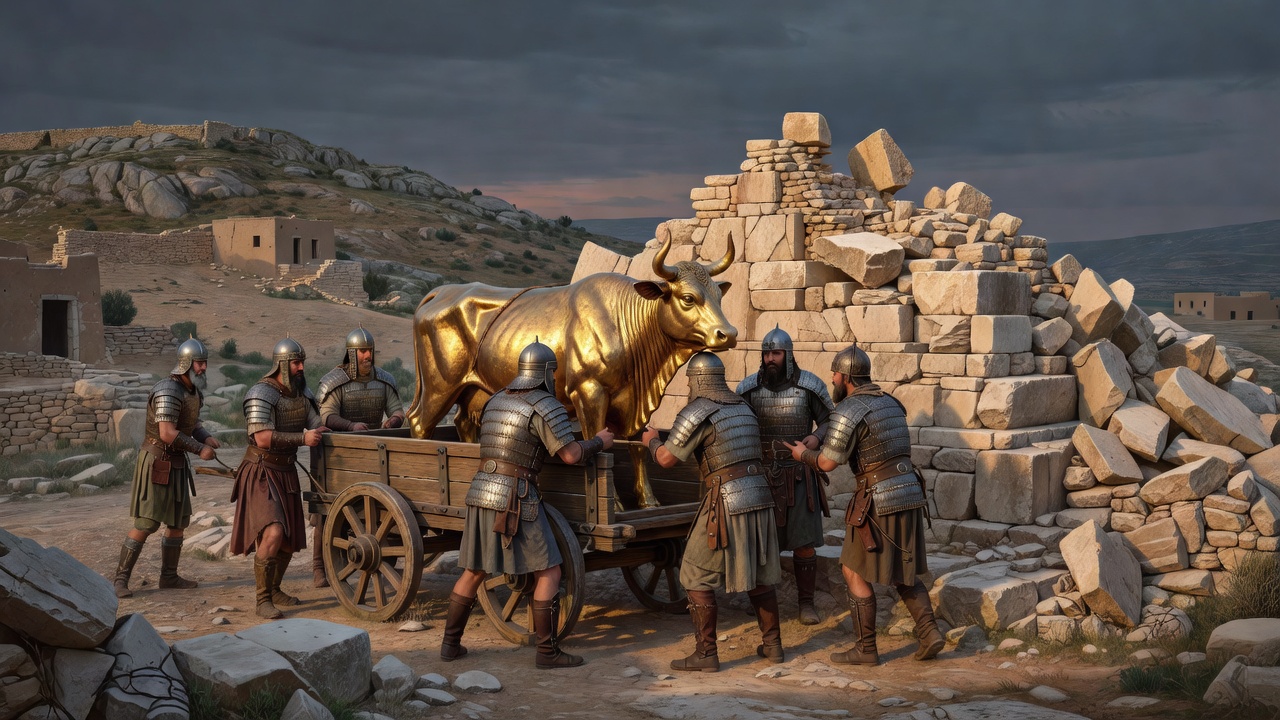
Juízo sobre os ídolos e altares destruídos
- O profeta se refere a Betel, que significa casa de Deus, pelo nome pejorativo de Bete-Áven, que significa casa de vaidade ou casa de ídolos. Esse trocadilho ressalta como o santuário do bezerro ali edificado transformou um local sagrado em um centro de idolatria, cujo ídolo seria levado como tributo para a Assíria.Fontes: Beth-aven · o próprio texto bíblico
- Oseias evoca os dias de Gibeá para lembrar a Israel de uma catastrófica crise moral registrada em Juízes 19 e 20, quando a violência hedionda na cidade de Gibeá desencadeou uma guerra civil devastadora contra a tribo de Benjamim.Fontes: Gibeah · o próprio texto bíblico
- O texto adverte sobre uma derrota militar iminente citando a destruição de Bete-Arbel por Salmã. Comumente, estudiosos identificam Salmã com o monarca assírio Salmaneser, cujas conquistas violentas serviam de alerta vívido para Israel.Fontes: Beth-arbel · Shalmaneser · o próprio texto bíblico
Notas escritas com auxílio de IA a partir de fontes abertas (Theographic Bible Metadata, CC BY-SA 4.0; Easton’s Bible Dictionary, domínio público) e revisadas antes de publicar.
Lugares deste capítulo
- Beth-aven · Hoje: Beitin · 31.923, 35.241 · versículo 5
- Samaria · 32.276, 35.195 · versículos 5, 7
- Assyria · 36.359, 43.153 · versículo 6
Só aparecem lugares com identificação de alta confiança (90% ou mais segundo as fontes acadêmicas reunidas pelo OpenBible). Mapa da época: DARE (Digital Atlas of the Roman Empire), CC BY 4.0; mapa atual: © colaboradores do OpenStreetMap; lugares: OpenBible.info (CC BY 4.0).
Créditos e licença desta tradução
Luda yã takada kũ Bisã yão
Portions of the Holy Bible in the Busa language of Nigeria
copyright © 2005 SIM International
Language: Bisã (Busa)
Translation by: SIM
This translation text is made available to you under the
terms of the Creative Commons License: Attribution-Noncommercial-No Derivative Works.
( http://creativecommons.org/licenses/by-nc-nd/3.0/ )
In addition, you have permission to port the text to different file formats, as long as you
do not change any of the text or punctuation of the Bible.
You may share, copy, distribute, transmit, and extract portions
or quotations from this work, provided that you include the above copyright
information:
You must give Attribution to the work.
You do not sell this work for a profit.
You do not make any derivative works that change any of the actual words or punctuation of the Scriptures.
Permissions beyond the scope of this license may be
available if you contact
us with your request.
This translation is made available to you under the terms of the
Creative Commons Attribution-Noncommercial-No Derivatives license 4.0.
You may share and redistribute this Bible translation or extracts from it in any format, provided that:
You include the above copyright and source information.
You do not sell this work for a profit.
You do not change any of the words or punctuation of the Scriptures.
Pictures included with Scriptures and other documents on this site are licensed just for use with those Scriptures and documents.
For other uses, please contact the respective copyright owners.
2014-10-10
Fonte: http://ebible.org/bqp/ · eBible.org