Êxodo 2
Luda yã takada kũ Bisã yão · Toque num versículo para ver as referências cruzadas.
Musa inaa
1Levi buri gↄ̃gbɛ̃ Levi buri nↄgbɛ̃ sɛ̀. 2Nↄ pìi nↄ̀ↄ sì à nɛ́ ì gↄ̃gbɛ̃ ũ. Kũ à è nɛ́ pì mana, akũ à a ùtɛ mↄ aakↄ̃. 3Kũ adi fↄ̃ à a ùtɛ doro, à kepu tãnko sɛ̀ à ↄ̀daa lɛ̀a de í sún gɛ̃ a gũnlo yãi. Akũ à nɛ́ pìi dàn à gɛ̀ɛ à dìtɛ Nili í lɛ́a kanda gũn. 4Nɛ́ pì dãre zɛ zã̀ dire, àtɛn gwa yã kũ ani a le.
5Akũ Firi'auna nɛ́nↄgbɛ̃ gɛ̀ɛ zú o swai, a gbɛ̃nↄ tɛn kure swa pì lɛ́a. À tãnko è ditɛna kandan, akũ à a zↄ̀nↄkpare zĩ̀ à gɛ̀ɛ à a sɛ̀. 6Kũ à wɛ̃̀, à è nɛ́ mɛ́ à dan, àtɛn ↄ́ↄ dↄ. À kɛ̀nɛ wɛ̃nda à pì: Eberu nɛ́gↄ̃gbɛ̃mɛ. 7Akũ nɛ́ pì dãre sù à pì Firi'auna nɛ́ pìinɛ: Ń ye mà gɛ́ mà Eberu nↄgbɛ̃ sísinnɛ àgↄ̃ yↄ̃ kpánnɛ nɛ́ pìian yá? 8À wèa à pì: Ǹ gɛ́! Akũ nɛ́nↄgbɛ̃ pìi gɛ̀ɛ à nɛ́ pì da sìsi. 9Firi'auna nɛ́nↄgbɛ̃ pìi pìnɛ: Ǹ nɛ́ pì sɛ́ ǹ tá kãao ǹgↄ̃ a gwamɛnɛ, manigↄ̃ fĩna bonnɛ. Akũ à nɛ́ pìi sɛ̀ à tà kãao, àtɛni a gwa. 10Kũ nɛ́ pì zↄ̃kↄ̃ kũ̀, à a sɛ̀ à gɛ̀ɛ kãao Firi'auna nɛ́nↄgbɛ̃ pìinɛ, akũ à a sì a nɛ́ ũ. À tↄ́ kpànɛ Musa, zaakũ à pì, a a bò í gũmmɛ.
Musa bàa lɛ́ à tana Midiã bùsun
11Zĩkea kũ Musa zↄ̃kↄ̃ kũ̀, à gɛ̀ɛ a buri Eberunↄ gwa, akũ à zĩ gbãna kũ òtɛn kɛ è. À è Misila gbɛ̃ tɛni a buri dake gbɛ̃. 12Kũ à gu gwàgwa, adi gbɛ̃ke ero, akũ à Misila gbɛ̃ pìi dɛ̀ à a ùtɛ bùsu'atɛ̃n.
13Kũ gu dↄ̀, à bò à Eberunↄ è gbɛ̃nↄn pla, òtɛn fìti kɛ. Akũ à gbɛ̃ kũ a yã nnaro là à pì: Bↄ́yãi ntɛni n gbɛ̃ndo gbɛ̃ɛ? 14À wèa à pì: Dí mɛ́ à n ditɛ kína yãgↄ̃gↄ̃ri ũwɛrɛɛ? Ń ye ǹ ma dɛ lákũ n Misila gbɛ̃ dɛ̀ nàn yá? Akũ vĩna Musa kũ̀ à pì: Ò yã kũ ma kɛ̀ɛ dↄ̃̀ fá!
15Kũ Firi'auna yã pìi mà, àtɛn wɛtɛ à Musa dɛ, akũ à bàa lɛ̀nɛ à tà Midiã bùsun, akũ à vùtɛ lↄ̀gↄↄ sarɛ gwe. 16Midiã sa'ori kun à nɛ́nↄgbɛ̃nↄ vĩ gbɛ̃nↄn suppla, akũ ò sù ò í tↄ̀ ò kà pↄ́kãdenↄ gó ímikin ń de pↄ́kãdenↄnɛ. 17Kũ sãdãri kenↄ sù òtɛn pɛ́ḿma, akũ Musa fùtɛ à yã sì kũńwo, akũ à í kpàńnɛ ń pↄ́kãdenↄa. 18Kũ ò tà ń de Ruɛli kĩnaa, à ń lá à pì: À kɛ̀ dera a su káaku lɛ gbãraa? 19Ò wèa ò pì: Misila gↄ̃gbɛ̃ ke mɛ́ à ó sí sãdãrinↄa. Àkũ mɛ́ se à í tↄ̀ à kpàwɛrɛ ó pↄ́kãdenↄa. 20Akũ à ń lá à pì: Ade pì kú máa? Bↄ́ yã mɛ́ à tò a gↄ̃gbɛ̃ pìi tò gwee? À a sísi à su à pↄ́ ble kũoo. 21Musa sù, akũ à wè à vùtɛ kũ gↄ̃gbɛ̃ pìio, akũ gↄ̃gbɛ̃ pì a nɛ́nↄgbɛ̃ Zipora kpàa nↄ ũ. 22Akũ Zipora nɛ́ ì gↄ̃gbɛ̃ ũ, akũ Musa tↄ́ kpànɛ Gɛsↄmu, à pì: Buri zĩ̀tↄↄn ma ũ gbɛ̃ pãndenↄ bùsun la.
23Kũ à gìi kɛ̀, akũ Misilanↄ kína gà. Isarailanↄ tɛni nda zↄ̀zĩ kũ òtɛn kɛ yãi, òtɛn wiki lɛ́, akũ ń wiki pìi kà Luda kĩnaa. 24À ń ndanaa mà, a bàka kũ à kú kũ Ibrahĩo kũ Isaakuo kũ Yakubuo dí sãaguro. 25Luda Isarailanↄ gwà, akũ ò kɛ̀nɛ wɛ̃nda.
Você sabia?
O nascimento e a fuga de Moisés
- A filha do faraó deu ao menino o nome de Moisés e explicou que o havia tirado da água. O Dicionário Bíblico de Easton (1897) liga o nome dele a “tirado”, ou à palavra egípcia mesu, “filho” — o elemento a partir do qual o dicionário também explica Ramsés como “filho real”.Fontes: o próprio texto bíblico · Moses
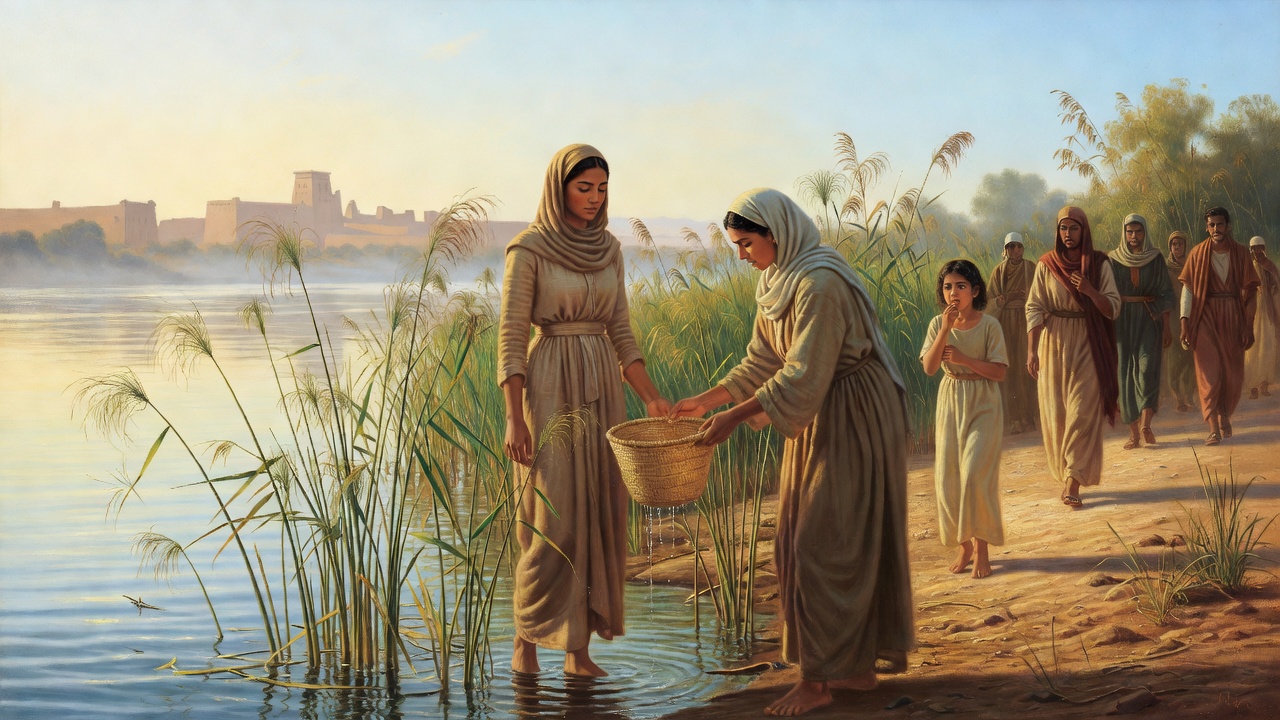
- Em Êxodo 2, uma filha de Levi esconde o filho por três meses, e a filha do faraó, ao achá-lo entre os juncos do Nilo, reconhece uma criança hebreia. O Dicionário Bíblico de Easton (1897) liga a aflição dos israelitas ao “novo rei que não conhecera a José”, por muito tempo tido como Aahmes I, chamado Amosis por Josefo, embora o dicionário, citando descobertas então recentes, o identifique como Seti. O sofrimento deles, diz a obra, começou depois que os hicsos, senhores do Egito por cerca de cinco séculos, foram expulsos e a antiga dinastia foi restaurada.Fontes: o próprio texto bíblico · Pharaoh
- Depois que o faraó procurou matá-lo, Moisés fugiu para Midiã e sentou-se junto a um poço; mais tarde casou-se com Zípora, uma das sete filhas do sacerdote de Midiã. Os midianitas eram árabes nômades, descendentes de Midiã, o quarto filho de Abraão com Quetura, e pastoreavam seus rebanhos na península do Sinai e no deserto ao norte da península Arábica. Neste capítulo o sacerdote se chama Reuel, a quem o Dicionário Bíblico de Easton (1897) chama Raguel, considerando essa forma seu nome pessoal e Jetro — “excelência” — um título oficial, caso os dois sejam identificados.Fontes: o próprio texto bíblico · Midian · Midian · Jethro
Notas escritas com auxílio de IA a partir de fontes abertas (Theographic Bible Metadata, CC BY-SA 4.0; Easton’s Bible Dictionary, domínio público) e revisadas antes de publicar.
Lugares deste capítulo
- Nile · Hoje: Nile River · 31.465, 30.367 · versículos 3, 5
- Midian · 28.495, 35.012 · versículos 15, 16
- Egypt · 30.129, 31.308 · versículo 23
Só aparecem lugares com identificação de alta confiança (90% ou mais segundo as fontes acadêmicas reunidas pelo OpenBible). Mapa da época: DARE (Digital Atlas of the Roman Empire), CC BY 4.0; mapa atual: © colaboradores do OpenStreetMap; lugares: OpenBible.info (CC BY 4.0).
Créditos e licença desta tradução
Luda yã takada kũ Bisã yão
Portions of the Holy Bible in the Busa language of Nigeria
copyright © 2005 SIM International
Language: Bisã (Busa)
Translation by: SIM
This translation text is made available to you under the
terms of the Creative Commons License: Attribution-Noncommercial-No Derivative Works.
( http://creativecommons.org/licenses/by-nc-nd/3.0/ )
In addition, you have permission to port the text to different file formats, as long as you
do not change any of the text or punctuation of the Bible.
You may share, copy, distribute, transmit, and extract portions
or quotations from this work, provided that you include the above copyright
information:
You must give Attribution to the work.
You do not sell this work for a profit.
You do not make any derivative works that change any of the actual words or punctuation of the Scriptures.
Permissions beyond the scope of this license may be
available if you contact
us with your request.
This translation is made available to you under the terms of the
Creative Commons Attribution-Noncommercial-No Derivatives license 4.0.
You may share and redistribute this Bible translation or extracts from it in any format, provided that:
You include the above copyright and source information.
You do not sell this work for a profit.
You do not change any of the words or punctuation of the Scriptures.
Pictures included with Scriptures and other documents on this site are licensed just for use with those Scriptures and documents.
For other uses, please contact the respective copyright owners.
2014-10-10
Fonte: http://ebible.org/bqp/ · eBible.org