Exodus 2
Luda yã takada kũ Bisã yão · Tap a verse to see its cross-references.
Musa inaa
1Levi buri gↄ̃gbɛ̃ Levi buri nↄgbɛ̃ sɛ̀. 2Nↄ pìi nↄ̀ↄ sì à nɛ́ ì gↄ̃gbɛ̃ ũ. Kũ à è nɛ́ pì mana, akũ à a ùtɛ mↄ aakↄ̃. 3Kũ adi fↄ̃ à a ùtɛ doro, à kepu tãnko sɛ̀ à ↄ̀daa lɛ̀a de í sún gɛ̃ a gũnlo yãi. Akũ à nɛ́ pìi dàn à gɛ̀ɛ à dìtɛ Nili í lɛ́a kanda gũn. 4Nɛ́ pì dãre zɛ zã̀ dire, àtɛn gwa yã kũ ani a le.
5Akũ Firi'auna nɛ́nↄgbɛ̃ gɛ̀ɛ zú o swai, a gbɛ̃nↄ tɛn kure swa pì lɛ́a. À tãnko è ditɛna kandan, akũ à a zↄ̀nↄkpare zĩ̀ à gɛ̀ɛ à a sɛ̀. 6Kũ à wɛ̃̀, à è nɛ́ mɛ́ à dan, àtɛn ↄ́ↄ dↄ. À kɛ̀nɛ wɛ̃nda à pì: Eberu nɛ́gↄ̃gbɛ̃mɛ. 7Akũ nɛ́ pì dãre sù à pì Firi'auna nɛ́ pìinɛ: Ń ye mà gɛ́ mà Eberu nↄgbɛ̃ sísinnɛ àgↄ̃ yↄ̃ kpánnɛ nɛ́ pìian yá? 8À wèa à pì: Ǹ gɛ́! Akũ nɛ́nↄgbɛ̃ pìi gɛ̀ɛ à nɛ́ pì da sìsi. 9Firi'auna nɛ́nↄgbɛ̃ pìi pìnɛ: Ǹ nɛ́ pì sɛ́ ǹ tá kãao ǹgↄ̃ a gwamɛnɛ, manigↄ̃ fĩna bonnɛ. Akũ à nɛ́ pìi sɛ̀ à tà kãao, àtɛni a gwa. 10Kũ nɛ́ pì zↄ̃kↄ̃ kũ̀, à a sɛ̀ à gɛ̀ɛ kãao Firi'auna nɛ́nↄgbɛ̃ pìinɛ, akũ à a sì a nɛ́ ũ. À tↄ́ kpànɛ Musa, zaakũ à pì, a a bò í gũmmɛ.
Musa bàa lɛ́ à tana Midiã bùsun
11Zĩkea kũ Musa zↄ̃kↄ̃ kũ̀, à gɛ̀ɛ a buri Eberunↄ gwa, akũ à zĩ gbãna kũ òtɛn kɛ è. À è Misila gbɛ̃ tɛni a buri dake gbɛ̃. 12Kũ à gu gwàgwa, adi gbɛ̃ke ero, akũ à Misila gbɛ̃ pìi dɛ̀ à a ùtɛ bùsu'atɛ̃n.
13Kũ gu dↄ̀, à bò à Eberunↄ è gbɛ̃nↄn pla, òtɛn fìti kɛ. Akũ à gbɛ̃ kũ a yã nnaro là à pì: Bↄ́yãi ntɛni n gbɛ̃ndo gbɛ̃ɛ? 14À wèa à pì: Dí mɛ́ à n ditɛ kína yãgↄ̃gↄ̃ri ũwɛrɛɛ? Ń ye ǹ ma dɛ lákũ n Misila gbɛ̃ dɛ̀ nàn yá? Akũ vĩna Musa kũ̀ à pì: Ò yã kũ ma kɛ̀ɛ dↄ̃̀ fá!
15Kũ Firi'auna yã pìi mà, àtɛn wɛtɛ à Musa dɛ, akũ à bàa lɛ̀nɛ à tà Midiã bùsun, akũ à vùtɛ lↄ̀gↄↄ sarɛ gwe. 16Midiã sa'ori kun à nɛ́nↄgbɛ̃nↄ vĩ gbɛ̃nↄn suppla, akũ ò sù ò í tↄ̀ ò kà pↄ́kãdenↄ gó ímikin ń de pↄ́kãdenↄnɛ. 17Kũ sãdãri kenↄ sù òtɛn pɛ́ḿma, akũ Musa fùtɛ à yã sì kũńwo, akũ à í kpàńnɛ ń pↄ́kãdenↄa. 18Kũ ò tà ń de Ruɛli kĩnaa, à ń lá à pì: À kɛ̀ dera a su káaku lɛ gbãraa? 19Ò wèa ò pì: Misila gↄ̃gbɛ̃ ke mɛ́ à ó sí sãdãrinↄa. Àkũ mɛ́ se à í tↄ̀ à kpàwɛrɛ ó pↄ́kãdenↄa. 20Akũ à ń lá à pì: Ade pì kú máa? Bↄ́ yã mɛ́ à tò a gↄ̃gbɛ̃ pìi tò gwee? À a sísi à su à pↄ́ ble kũoo. 21Musa sù, akũ à wè à vùtɛ kũ gↄ̃gbɛ̃ pìio, akũ gↄ̃gbɛ̃ pì a nɛ́nↄgbɛ̃ Zipora kpàa nↄ ũ. 22Akũ Zipora nɛ́ ì gↄ̃gbɛ̃ ũ, akũ Musa tↄ́ kpànɛ Gɛsↄmu, à pì: Buri zĩ̀tↄↄn ma ũ gbɛ̃ pãndenↄ bùsun la.
23Kũ à gìi kɛ̀, akũ Misilanↄ kína gà. Isarailanↄ tɛni nda zↄ̀zĩ kũ òtɛn kɛ yãi, òtɛn wiki lɛ́, akũ ń wiki pìi kà Luda kĩnaa. 24À ń ndanaa mà, a bàka kũ à kú kũ Ibrahĩo kũ Isaakuo kũ Yakubuo dí sãaguro. 25Luda Isarailanↄ gwà, akũ ò kɛ̀nɛ wɛ̃nda.
Did you know?
The birth and flight of Moses
- Pharaoh’s daughter named the child Moses, explaining that she had drawn him out of the water. Easton's Bible Dictionary (1897) links his name with “drawn,” or with the Egyptian word mesu, “son”—the element from which the dictionary also explains Rameses as “royal son.”Sources: the Bible text itself · Moses
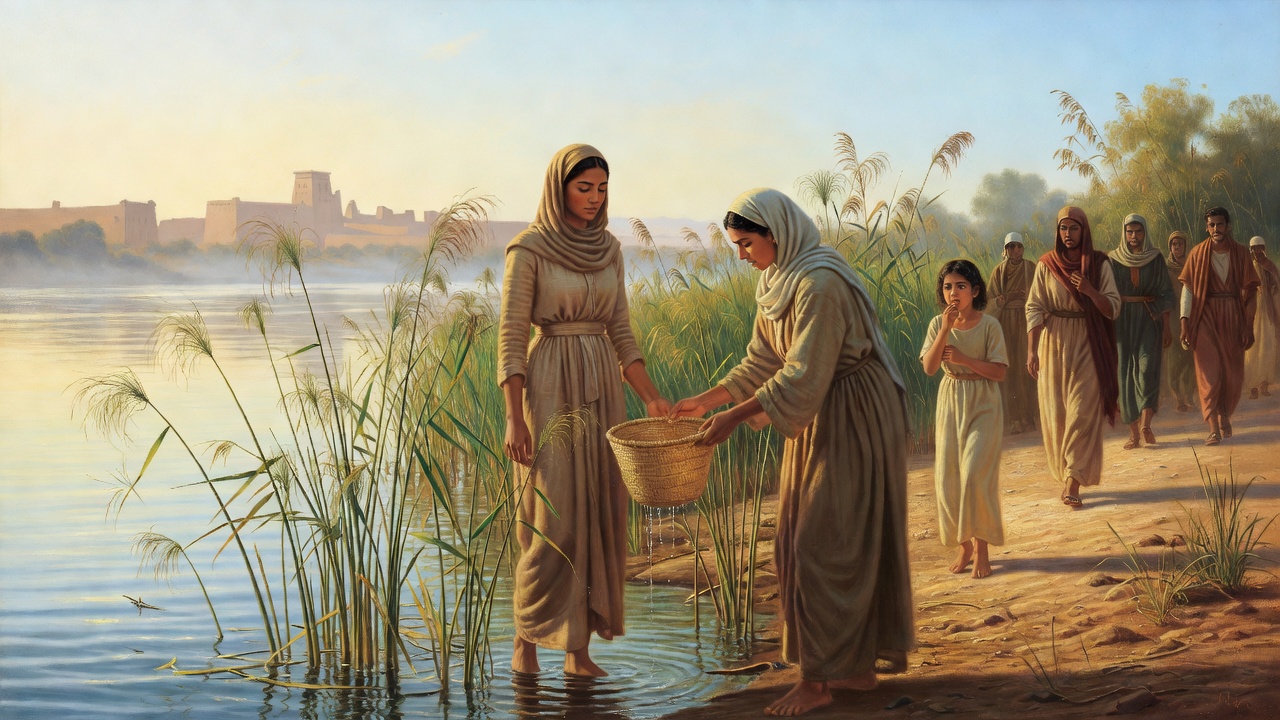
- In Exodus 2 a daughter of Levi hides her son for three months, and Pharaoh’s daughter, finding him among the Nile reeds, recognizes a Hebrew child. Easton's Bible Dictionary (1897) links the Israelites’ affliction to “the new king who knew not Joseph,” long supposed to be Aahmes I, called Amosis by Josephus, though the dictionary, citing discoveries then recent, names Seti instead. Their hardship, it says, began after the Hyksos, masters of Egypt for some five centuries, were driven out and the old dynasty restored.Sources: the Bible text itself · Pharaoh
- After Pharaoh sought to kill him, Moses fled to Midian and sat down beside a well; he later married Zipporah, one of the seven daughters of the priest of Midian. The Midianites were nomadic Arabians descended from Midian, Abraham’s fourth son by Keturah, and they pastured their flocks in the Sinai peninsula and in the desert north of the Arabian peninsula. This chapter calls the priest Reuel, whom Easton's Bible Dictionary (1897) names Raguel, regarding that form as his personal name and Jethro—“excellency”—as an official title if the two are identified.Sources: the Bible text itself · Midian · Midian · Jethro
Notes written with AI assistance from open sources (Theographic Bible Metadata, CC BY-SA 4.0; Easton’s Bible Dictionary, public domain) and reviewed before publishing.
Places in this chapter
- Nile · Today: Nile River · 31.465, 30.367 · verses 3, 5
- Midian · 28.495, 35.012 · verses 15, 16
- Egypt · 30.129, 31.308 · verse 23
Only places identified with high confidence are shown (90% or more according to the scholarly sources compiled by OpenBible). Period map: DARE (Digital Atlas of the Roman Empire), CC BY 4.0; modern map: © OpenStreetMap contributors; places: OpenBible.info (CC BY 4.0).
Credits and license for this translation
Luda yã takada kũ Bisã yão
Portions of the Holy Bible in the Busa language of Nigeria
copyright © 2005 SIM International
Language: Bisã (Busa)
Translation by: SIM
This translation text is made available to you under the
terms of the Creative Commons License: Attribution-Noncommercial-No Derivative Works.
( http://creativecommons.org/licenses/by-nc-nd/3.0/ )
In addition, you have permission to port the text to different file formats, as long as you
do not change any of the text or punctuation of the Bible.
You may share, copy, distribute, transmit, and extract portions
or quotations from this work, provided that you include the above copyright
information:
You must give Attribution to the work.
You do not sell this work for a profit.
You do not make any derivative works that change any of the actual words or punctuation of the Scriptures.
Permissions beyond the scope of this license may be
available if you contact
us with your request.
This translation is made available to you under the terms of the
Creative Commons Attribution-Noncommercial-No Derivatives license 4.0.
You may share and redistribute this Bible translation or extracts from it in any format, provided that:
You include the above copyright and source information.
You do not sell this work for a profit.
You do not change any of the words or punctuation of the Scriptures.
Pictures included with Scriptures and other documents on this site are licensed just for use with those Scriptures and documents.
For other uses, please contact the respective copyright owners.
2014-10-10
Source: http://ebible.org/bqp/ · eBible.org