Zacarias 4
Bibeli Luayãtaalá · Toque num versículo para ver as referências cruzadas.
Vua dau ń kuli mɛ̀n plaↄ
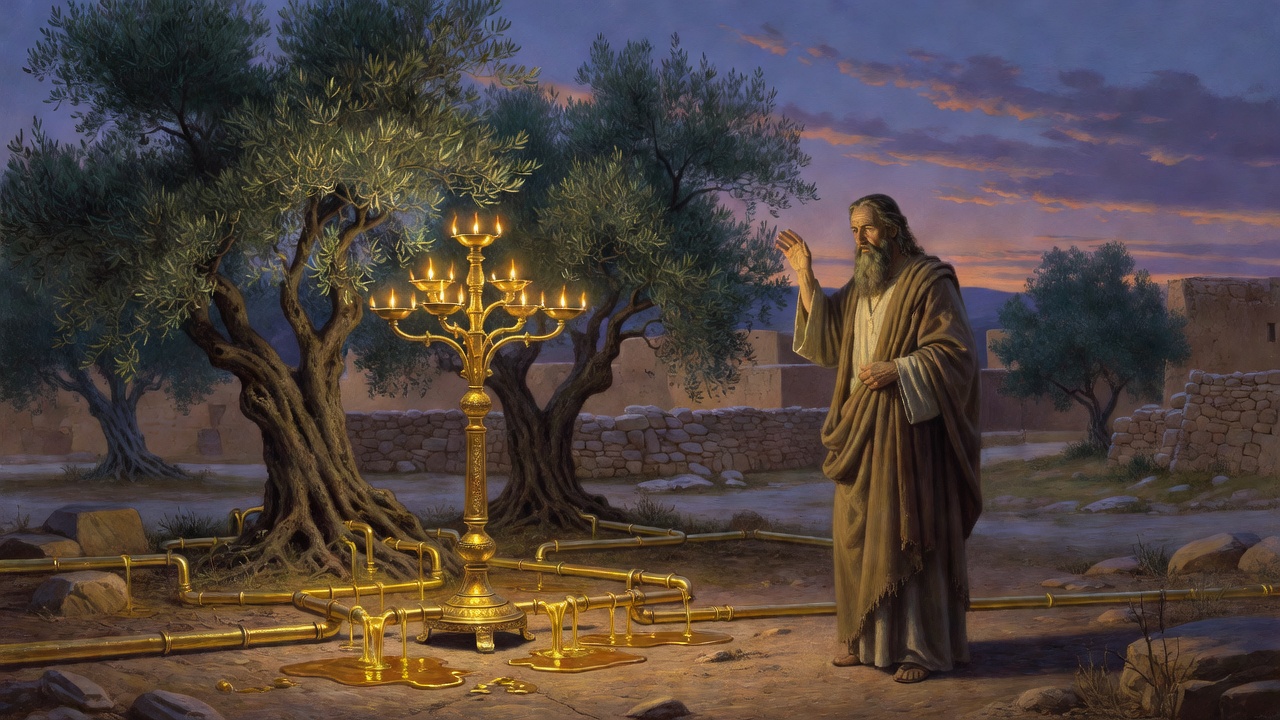
1Kɛ́ malaika pↄ́ lɛ́ yã'omanↄ ɛ̀a sù, à ma vu lá wì ń vu iuwa. 2Ɔ̃ à ma la à mɛ̀: Bↄ́ ń è wei? Má wèwà ma mɛ̀: Ma vua tɛ̃ɛtɛ̃ɛ dau è, a filia vĩ sopla, mɛ́ a nísikakĩi ku a musu. Filia mɛ̀n soplapiↄ, baade ń a nísi zɛ́o. 3Kuli mɛ̀n pla ku a saɛ, ado nísikakĩi ↄplaa oi, ado zɛɛ oi. 4Ɔ̃ ma malaika pↄ́ lɛ́ yã'omanↄ là: Baa, beeↄ dɛa ni? 5A wèa à mɛ̀: Ń dↄ̃ lá pↄ́piↄ dɛoa? Ma mɛ̀: Aawo, Baa! 6Ɔ̃ a òmɛɛ, yã́ pↄ́ Dii lɛ́ o Zolobabɛliɛn kɛ: Dii Zĩgↄ̃de mɛ̀, i kɛ ń gbãao ge ń ikoo no, sema a Nisĩna. 7Gbɛ̀sĩsĩ zↄ̃ↄ, bↄ́n n ũi? Ńyↄ̃ gↄ̃ Zolobabɛliɛ gudaaĩa ũɛ. Tó à bↄ̀ ń kpɛ́ midɛgbɛo, wa báaa kãaa.
8Ɔ̃ Dii yã'òmɛɛ à mɛ̀: 9Zolobabɛli ↄ mɛ́ kpɛ́pi ɛ̃ kpàlɛ, mɛ́ aà ↄ mɛ́ a a midɛ, íↄ dↄ̃ kɛ́ Dii Zĩgↄ̃de mɛ́ ma zĩwá. 10Gbɛ̃e su saka yã́ yↄↄna kɛgↄↄuo. Tó wà gĩsusugwabↄ è Zolobabɛli ↄzĩ, an pↄ́ a kɛ na.
Filia mɛ̀n soplapiↄ dɛ Dii wɛ́tɛa dṹniai ũɛ. 11Ɔ̃ ma malaikapi là: Kuli mɛ̀n pla pↄ́ kú dau ↄplaai ń zɛɛio dɛa ni? 12Ɔ̃ ma ɛa aà là lↄ ma mɛ̀: Kù ligↄ̃n pla pↄ́ kú nísi zɛ́ mɛ̀n pla pↄ́ wa pì ń vuaoↄ saɛ, àlɛ nísi pisi filiaↄwa dɛa ni? 13A wèa à mɛ̀: Ń dↄ̃ lá pↄ́piↄ dɛoa? Ɔ̃ má òɛ̀: Aawo, Baa! 14Ɔ̃ à mɛ̀: Gbɛ̃ↄn pla pↄ́ wà ń dílɛ aa zĩkɛ dṹnia bṹu Diiɛↄn we.
Você sabia?
O candelabro e Zorobabel
- Zorobabel liderou o primeiro grupo de exilados judeus que retornaram da Babilônia e lançou os alicerces do templo reconstruído. Nesta visão, o profeta recebe a garantia de que, apesar dos grandes obstáculos, Zorobabel completará o templo e colocará a pedra de remate com o prumo na mão.Fontes: Zerubbabel · o próprio texto bíblico
- A visão do candelabro de ouro maciço alimentado pelo azeite de duas oliveiras ilustra que a obra de Deus seria realizada não por força nem por poder, mas pelo seu Espírito. Os dois ramos de oliveira são identificados como dois ungidos que estão ao lado do Senhor de toda a terra.Fontes: o próprio texto bíblico
Notas escritas com auxílio de IA a partir de fontes abertas (Theographic Bible Metadata, CC BY-SA 4.0; Easton’s Bible Dictionary, domínio público) e revisadas antes de publicar.
Créditos e licença desta tradução
Bibeli Luayãtaalá
The Holy Bible in the Boko language spoken in Benin and Nigeria
copyright © 2010 SIM International
Language: Boko
Translation by: SIM International
Boko Bibeli Luayãtaala
This translation, published by the SIM au Benin, was published in 2010.
If you are interested in obtaining a printed copy, please contact the SIM at ECWA/SIM H.Q., P.M.B. 2009, Jos, Plateau State, NIGERIA.
This translation text is made available to you under the
terms of the Creative Commons License: Attribution-Noncommercial-No Derivative Works.
( http://creativecommons.org/licenses/by-nc-nd/3.0/ )
In addition, you have permission to port the text to different file formats, as long as you
do not change any of the text or punctuation of the Bible.
You may share, copy, distribute, transmit, and extract portions
or quotations from this work, provided that you include the above copyright
information:
You must give Attribution to the work.
You do not sell this work for a profit.
You do not make any derivative works that change any of the actual words or punctuation of the Scriptures.
Permissions beyond the scope of this license may be
available if you contact
us with your request.
This translation is made available to you under the terms of the
Creative Commons Attribution-Noncommercial-No Derivatives license 4.0.
You may share and redistribute this Bible translation or extracts from it in any format, provided that:
You include the above copyright and source information.
You do not sell this work for a profit.
You do not change any of the words or punctuation of the Scriptures.
Pictures included with Scriptures and other documents on this site are licensed just for use with those Scriptures and documents.
For other uses, please contact the respective copyright owners.
2014-09-25
Fonte: http://ebible.org/bqcsim/ · eBible.org