Zechariah 4
Bibeli Luayãtaalá · Tap a verse to see its cross-references.
Vua dau ń kuli mɛ̀n plaↄ
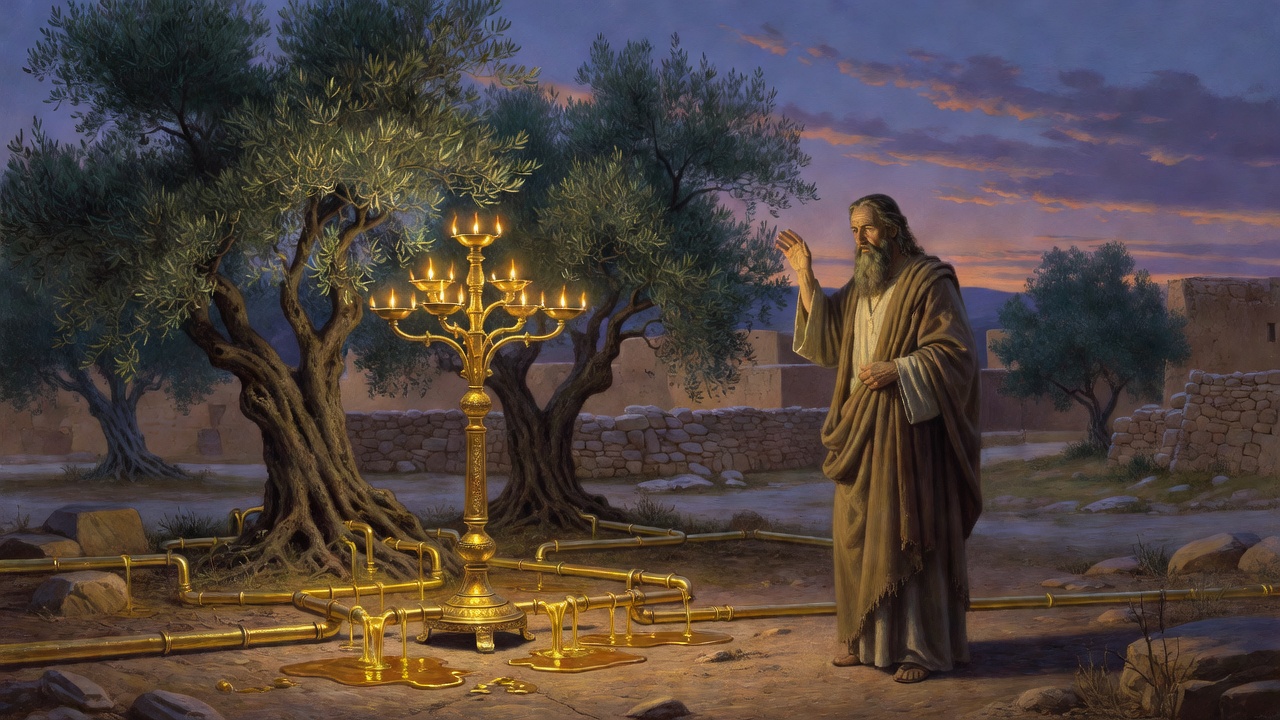
1Kɛ́ malaika pↄ́ lɛ́ yã'omanↄ ɛ̀a sù, à ma vu lá wì ń vu iuwa. 2Ɔ̃ à ma la à mɛ̀: Bↄ́ ń è wei? Má wèwà ma mɛ̀: Ma vua tɛ̃ɛtɛ̃ɛ dau è, a filia vĩ sopla, mɛ́ a nísikakĩi ku a musu. Filia mɛ̀n soplapiↄ, baade ń a nísi zɛ́o. 3Kuli mɛ̀n pla ku a saɛ, ado nísikakĩi ↄplaa oi, ado zɛɛ oi. 4Ɔ̃ ma malaika pↄ́ lɛ́ yã'omanↄ là: Baa, beeↄ dɛa ni? 5A wèa à mɛ̀: Ń dↄ̃ lá pↄ́piↄ dɛoa? Ma mɛ̀: Aawo, Baa! 6Ɔ̃ a òmɛɛ, yã́ pↄ́ Dii lɛ́ o Zolobabɛliɛn kɛ: Dii Zĩgↄ̃de mɛ̀, i kɛ ń gbãao ge ń ikoo no, sema a Nisĩna. 7Gbɛ̀sĩsĩ zↄ̃ↄ, bↄ́n n ũi? Ńyↄ̃ gↄ̃ Zolobabɛliɛ gudaaĩa ũɛ. Tó à bↄ̀ ń kpɛ́ midɛgbɛo, wa báaa kãaa.
8Ɔ̃ Dii yã'òmɛɛ à mɛ̀: 9Zolobabɛli ↄ mɛ́ kpɛ́pi ɛ̃ kpàlɛ, mɛ́ aà ↄ mɛ́ a a midɛ, íↄ dↄ̃ kɛ́ Dii Zĩgↄ̃de mɛ́ ma zĩwá. 10Gbɛ̃e su saka yã́ yↄↄna kɛgↄↄuo. Tó wà gĩsusugwabↄ è Zolobabɛli ↄzĩ, an pↄ́ a kɛ na.
Filia mɛ̀n soplapiↄ dɛ Dii wɛ́tɛa dṹniai ũɛ. 11Ɔ̃ ma malaikapi là: Kuli mɛ̀n pla pↄ́ kú dau ↄplaai ń zɛɛio dɛa ni? 12Ɔ̃ ma ɛa aà là lↄ ma mɛ̀: Kù ligↄ̃n pla pↄ́ kú nísi zɛ́ mɛ̀n pla pↄ́ wa pì ń vuaoↄ saɛ, àlɛ nísi pisi filiaↄwa dɛa ni? 13A wèa à mɛ̀: Ń dↄ̃ lá pↄ́piↄ dɛoa? Ɔ̃ má òɛ̀: Aawo, Baa! 14Ɔ̃ à mɛ̀: Gbɛ̃ↄn pla pↄ́ wà ń dílɛ aa zĩkɛ dṹnia bṹu Diiɛↄn we.
Did you know?
The Lampstand and Zerubbabel
- Zerubbabel led the first group of Jewish exiles returning from Babylon and laid the foundation for the rebuilt temple. In this vision, the prophet is assured that despite major obstacles, Zerubbabel will complete the temple and bring forth its capstone with a plumb line in hand.Sources: Zerubbabel · the Bible text itself
- The vision of the solid gold lampstand supplied with oil from two olive trees illustrates that God's work will be accomplished not by might nor by power, but by his Spirit. The two olive branches are identified as two anointed ones standing beside the Lord of all the earth.Sources: the Bible text itself
Notes written with AI assistance from open sources (Theographic Bible Metadata, CC BY-SA 4.0; Easton’s Bible Dictionary, public domain) and reviewed before publishing.
Credits and license for this translation
Bibeli Luayãtaalá
The Holy Bible in the Boko language spoken in Benin and Nigeria
copyright © 2010 SIM International
Language: Boko
Translation by: SIM International
Boko Bibeli Luayãtaala
This translation, published by the SIM au Benin, was published in 2010.
If you are interested in obtaining a printed copy, please contact the SIM at ECWA/SIM H.Q., P.M.B. 2009, Jos, Plateau State, NIGERIA.
This translation text is made available to you under the
terms of the Creative Commons License: Attribution-Noncommercial-No Derivative Works.
( http://creativecommons.org/licenses/by-nc-nd/3.0/ )
In addition, you have permission to port the text to different file formats, as long as you
do not change any of the text or punctuation of the Bible.
You may share, copy, distribute, transmit, and extract portions
or quotations from this work, provided that you include the above copyright
information:
You must give Attribution to the work.
You do not sell this work for a profit.
You do not make any derivative works that change any of the actual words or punctuation of the Scriptures.
Permissions beyond the scope of this license may be
available if you contact
us with your request.
This translation is made available to you under the terms of the
Creative Commons Attribution-Noncommercial-No Derivatives license 4.0.
You may share and redistribute this Bible translation or extracts from it in any format, provided that:
You include the above copyright and source information.
You do not sell this work for a profit.
You do not change any of the words or punctuation of the Scriptures.
Pictures included with Scriptures and other documents on this site are licensed just for use with those Scriptures and documents.
For other uses, please contact the respective copyright owners.
2014-09-25
Source: http://ebible.org/bqcsim/ · eBible.org