Gálatas 6
I tnalù dwata · Toque num versículo para ver as referências cruzadas.
I kastabeng
1Na dad flanekgu faglut, ku nun satu di gamu mtatek di salà, gamu dad nebe i Tulus Dwata, tnabengyu kenen samfulê di Dwata, fagu di kafganagyu i kafaglabatyu di kenen. Kabay too gamu fgeye, du fye là gamu tatek di salà salngad kenen. 2Too gamu gal stabeng di blat klidù nebe i dad demeyu, du ku ani nimòyu, dnohòyu flalò Krayst. 3Ku nun to man nawan mdatah kenen, bay di kaglutan ise kenen mdatah, fangawan i kton. 4Fye baling ku kat satu to nukuman kenen nimò. Na ku fye, fakay kenen flehew. Kabay nangan man kenen i fye to, alò mdà di kiten nimò i demen to. 5Du kat satu to tmimel kadang di Dwata gablà di kenen nimò.
6I dad to tamatdò Tnalù Dwata, fye moon ku mlé ale mdà di kdee fye knunla di to tamdò kenen.
I kafla
7Nangyu fangaw i ktoyu, du landè to gmagan mgaw Dwata, du gadean i kdee. Du balù tan fla i satu to, én sa i kantun. 8Na ku simto mla i sasè knayean, mdà di sasè knayean kantun i kalmo. Kabay ku simto mla i knayè i Tulus Dwata, mdà di Tulus Dwata kantun nawa landè sen. 9Taman fye ku là ito flungay mimò fye, du ku gamtayud ito di kimoito fye, nun duh kadang gamdawat ito i fye untung blé Dwata gito. 10Taman di kloito mnè fa di tanà ani, tooito fnadlug mimò fye nimò di kdee dad to, lumban di dad demeito faglut.
I gusen i man Fol
11Neyeyu i kalbong dalangu smulat di sulatgu ani.
12I dad to mayè mleges gamu ftulì, én alòla kayè ku flehewla i demela Dyu, na fye là ale maflayam mdà di katdòla gablà di kagalwà fagu di kfati Krayst di krus. 13Na balù dad to tatnulì ani, làla sa gimen i kdee flalò. Kabay mayè ale fa ku ftulì gamu, du fye dag i dad to ale mdà di kimenyu dale. 14Kabay deg, landè dademe daggu, alò i krus gumati Amuito Dyisas Krayst, du fagu di kfatin di krus gambet mati agu gagin kenen, taman talà agu mgikat di kdee sasè knayè i banwe, na i sasè knayè i banwe talà mebe deg. 15Là mabtas ku tnulì i satu to ku là, bay i too mabtas ku tafnalami Dwata nawan.
16Kayègu ku banlé Dwata ktanak nawa na kakdo di kdee dad to mlalò i tdògu ani, kel di kdee dad to Dwata.
17Na di gusenan, ani mangu di gamu. Fye landè to fkéng na agu dek Krayst Dyisas. Du fagu di dad laas di lawehgu mdà di dad to dmuen ku Dyisas, dilèyu agu satu fasakan. 18Na dad flanekgu faglut, kayègu ku blé Amuito Dyisas Krayst kafye di kdeeyu. Amén.
Você sabia?
Fardos, a colheita e a cruz
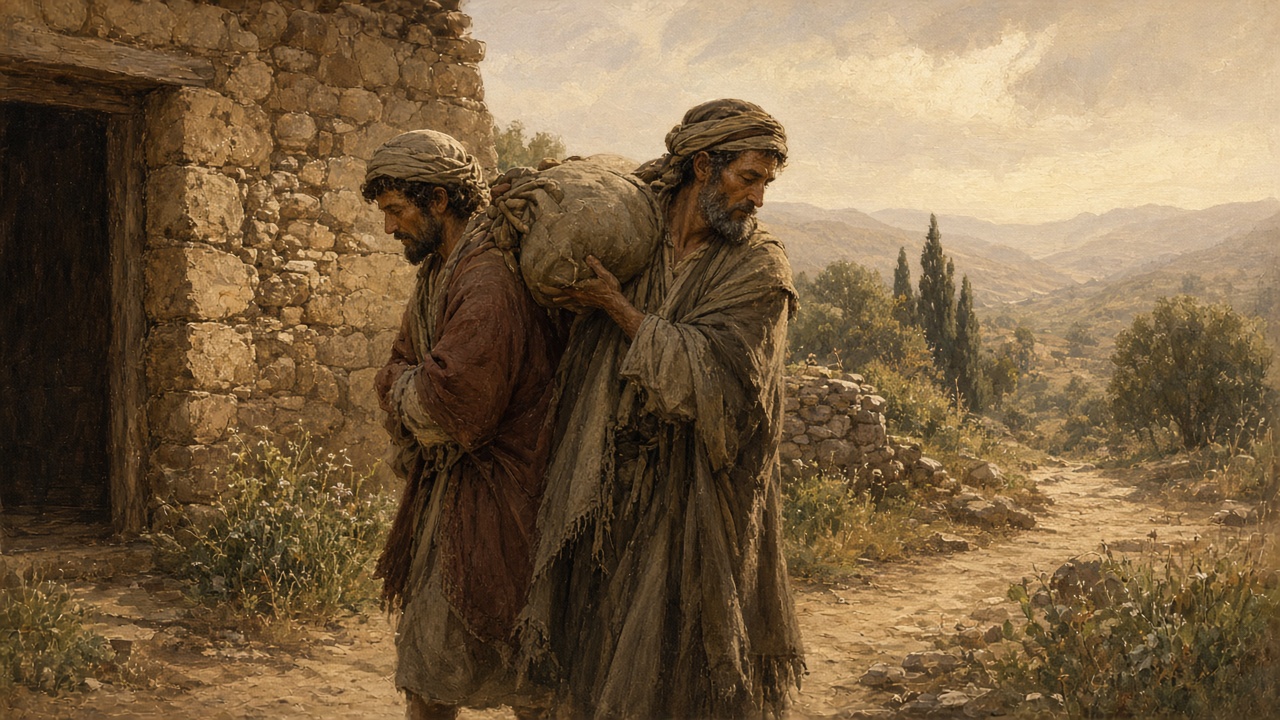
- O capítulo coloca dois deveres lado a lado. Os que são espirituais devem restaurar com mansidão quem for surpreendido numa transgressão e carregar os fardos uns dos outros, o que a carta chama de cumprir a lei de Cristo. Cada um, porém, deve examinar o próprio trabalho e carregar a sua própria carga, em vez de se julgar alguma coisa quando não é nada e se gloriar por comparação com outra pessoa.Fontes: o próprio texto bíblico
- O autor usa a imagem da semeadura e da colheita: Deus não se deixa zombar, e cada um colhe o que semeia. Quem semeia para agradar a carne, da carne colhe destruição; quem semeia para agradar o Espírito, do Espírito colhe a vida eterna. Os leitores são exortados a não se cansar de fazer o bem, pois no tempo devido colherão, se não desistirem, e a fazer o bem a todos, especialmente à família da fé.Fontes: o próprio texto bíblico
- O autor chama a atenção para as letras grandes que está usando ao escrever de próprio punho. Diz que alguns tentam impor a circuncisão para causar boa impressão exterior, evitar a perseguição por causa da cruz de Cristo e gloriar-se na carne dos outros, embora os circuncidados nem sequer guardem a lei. Ele pede para jamais se gloriar, a não ser na cruz de nosso Senhor Jesus Cristo, afirma que nem a circuncisão nem a incircuncisão significam coisa alguma e que o que importa é uma nova criação, e declara que traz no corpo as marcas de Jesus.Fontes: o próprio texto bíblico
Notas escritas com auxílio de IA a partir de fontes abertas (Theographic Bible Metadata, CC BY-SA 4.0; Easton’s Bible Dictionary, domínio público) e revisadas antes de publicar.
Créditos e licença desta tradução
I tnalù dwata
New Testament in Blaan, Sarangani
copyright © 1998 Wycliffe Bible Translators, Inc.
Language: Sarangani Blaan (Blaan, Sarangani)
Translation by: Wycliffe Bible Translators
Contributor: Wycliffe Bible Translators, Inc.
Copyright Information
© 1998, Wycliffe Bible Translators, Inc. All rights reserved.
This translation text is made available to you under the
terms of the Creative Commons License: Attribution-Noncommercial-No Derivative Works.
( http://creativecommons.org/licenses/by-nc-nd/3.0/ )
In addition, you have permission to port the text to different file formats, as long as you
do not change any of the text or punctuation of the Bible.
You may share, copy, distribute, transmit, and extract portions
or quotations from this work, provided that you include the above copyright
information:
You must give Attribution to the work.
You do not sell this work for a profit.
You do not make any derivative works that change any of the actual words or punctuation of the Scriptures.
Permissions beyond the scope of this license may be
available if you contact
us with your request.
The New Testament
in Blaan, Sarangani
© 1998, Wycliffe Bible Translators, Inc. All rights reserved.
This translation is made available to you under the terms of the
Creative Commons Attribution-Noncommercial-No Derivatives license 4.0.
You may share and redistribute this Bible translation or extracts from it in any format, provided that:
You include the above copyright and source information.
You do not sell this work for a profit.
You do not change any of the words or punctuation of the Scriptures.
Pictures included with Scriptures and other documents on this site are licensed just for use with those Scriptures and documents.
For other uses, please contact the respective copyright owners.
2015-03-17
Fonte: http://ebible.org/bps/ · eBible.org