Galatians 6
I tnalù dwata · Tap a verse to see its cross-references.
I kastabeng
1Na dad flanekgu faglut, ku nun satu di gamu mtatek di salà, gamu dad nebe i Tulus Dwata, tnabengyu kenen samfulê di Dwata, fagu di kafganagyu i kafaglabatyu di kenen. Kabay too gamu fgeye, du fye là gamu tatek di salà salngad kenen. 2Too gamu gal stabeng di blat klidù nebe i dad demeyu, du ku ani nimòyu, dnohòyu flalò Krayst. 3Ku nun to man nawan mdatah kenen, bay di kaglutan ise kenen mdatah, fangawan i kton. 4Fye baling ku kat satu to nukuman kenen nimò. Na ku fye, fakay kenen flehew. Kabay nangan man kenen i fye to, alò mdà di kiten nimò i demen to. 5Du kat satu to tmimel kadang di Dwata gablà di kenen nimò.
6I dad to tamatdò Tnalù Dwata, fye moon ku mlé ale mdà di kdee fye knunla di to tamdò kenen.
I kafla
7Nangyu fangaw i ktoyu, du landè to gmagan mgaw Dwata, du gadean i kdee. Du balù tan fla i satu to, én sa i kantun. 8Na ku simto mla i sasè knayean, mdà di sasè knayean kantun i kalmo. Kabay ku simto mla i knayè i Tulus Dwata, mdà di Tulus Dwata kantun nawa landè sen. 9Taman fye ku là ito flungay mimò fye, du ku gamtayud ito di kimoito fye, nun duh kadang gamdawat ito i fye untung blé Dwata gito. 10Taman di kloito mnè fa di tanà ani, tooito fnadlug mimò fye nimò di kdee dad to, lumban di dad demeito faglut.
I gusen i man Fol
11Neyeyu i kalbong dalangu smulat di sulatgu ani.
12I dad to mayè mleges gamu ftulì, én alòla kayè ku flehewla i demela Dyu, na fye là ale maflayam mdà di katdòla gablà di kagalwà fagu di kfati Krayst di krus. 13Na balù dad to tatnulì ani, làla sa gimen i kdee flalò. Kabay mayè ale fa ku ftulì gamu, du fye dag i dad to ale mdà di kimenyu dale. 14Kabay deg, landè dademe daggu, alò i krus gumati Amuito Dyisas Krayst, du fagu di kfatin di krus gambet mati agu gagin kenen, taman talà agu mgikat di kdee sasè knayè i banwe, na i sasè knayè i banwe talà mebe deg. 15Là mabtas ku tnulì i satu to ku là, bay i too mabtas ku tafnalami Dwata nawan.
16Kayègu ku banlé Dwata ktanak nawa na kakdo di kdee dad to mlalò i tdògu ani, kel di kdee dad to Dwata.
17Na di gusenan, ani mangu di gamu. Fye landè to fkéng na agu dek Krayst Dyisas. Du fagu di dad laas di lawehgu mdà di dad to dmuen ku Dyisas, dilèyu agu satu fasakan. 18Na dad flanekgu faglut, kayègu ku blé Amuito Dyisas Krayst kafye di kdeeyu. Amén.
Did you know?
Burdens, the Harvest, and the Cross
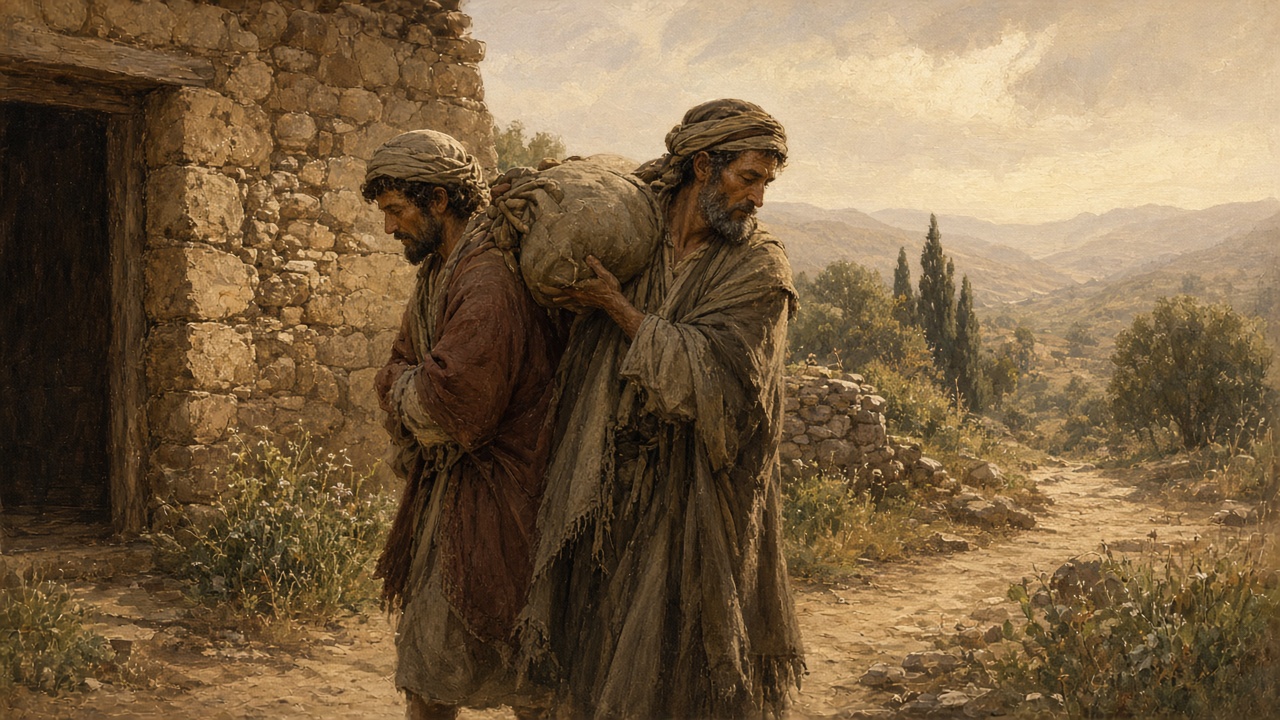
- The chapter sets two duties side by side. Those who are spiritual should restore with gentleness someone caught in a trespass, and carry one another's burdens, which the letter calls fulfilling the law of Christ. Each person, however, should test his own work and carry his own load, rather than think he is something when he is nothing and boast by comparing himself with someone else.Sources: the Bible text itself
- The writer uses the image of sowing and reaping: God is not to be mocked, and a person reaps what he sows. The one who sows to please the flesh reaps destruction from the flesh; the one who sows to please the Spirit reaps eternal life from the Spirit. Readers are urged not to grow weary in doing good, for in due time they will reap a harvest if they do not give up, and to do good to all, especially to the family of faith.Sources: the Bible text itself
- The writer calls attention to the large letters he is using as he writes with his own hand. He says that some try to compel circumcision in order to make a good outward impression, to avoid persecution for the cross of Christ, and to boast in the flesh of others, though the circumcised do not themselves keep the law. He asks never to boast except in the cross of our Lord Jesus Christ, says that neither circumcision nor uncircumcision means anything and that what counts is a new creation, and states that he bears on his body the marks of Jesus.Sources: the Bible text itself
Notes written with AI assistance from open sources (Theographic Bible Metadata, CC BY-SA 4.0; Easton’s Bible Dictionary, public domain) and reviewed before publishing.
Credits and license for this translation
I tnalù dwata
New Testament in Blaan, Sarangani
copyright © 1998 Wycliffe Bible Translators, Inc.
Language: Sarangani Blaan (Blaan, Sarangani)
Translation by: Wycliffe Bible Translators
Contributor: Wycliffe Bible Translators, Inc.
Copyright Information
© 1998, Wycliffe Bible Translators, Inc. All rights reserved.
This translation text is made available to you under the
terms of the Creative Commons License: Attribution-Noncommercial-No Derivative Works.
( http://creativecommons.org/licenses/by-nc-nd/3.0/ )
In addition, you have permission to port the text to different file formats, as long as you
do not change any of the text or punctuation of the Bible.
You may share, copy, distribute, transmit, and extract portions
or quotations from this work, provided that you include the above copyright
information:
You must give Attribution to the work.
You do not sell this work for a profit.
You do not make any derivative works that change any of the actual words or punctuation of the Scriptures.
Permissions beyond the scope of this license may be
available if you contact
us with your request.
The New Testament
in Blaan, Sarangani
© 1998, Wycliffe Bible Translators, Inc. All rights reserved.
This translation is made available to you under the terms of the
Creative Commons Attribution-Noncommercial-No Derivatives license 4.0.
You may share and redistribute this Bible translation or extracts from it in any format, provided that:
You include the above copyright and source information.
You do not sell this work for a profit.
You do not change any of the words or punctuation of the Scriptures.
Pictures included with Scriptures and other documents on this site are licensed just for use with those Scriptures and documents.
For other uses, please contact the respective copyright owners.
2015-03-17
Source: http://ebible.org/bps/ · eBible.org