Êxodo 3
I tnalù dwata · Toque num versículo para ver as referências cruzadas.
I katlo Dwata ku Mosis
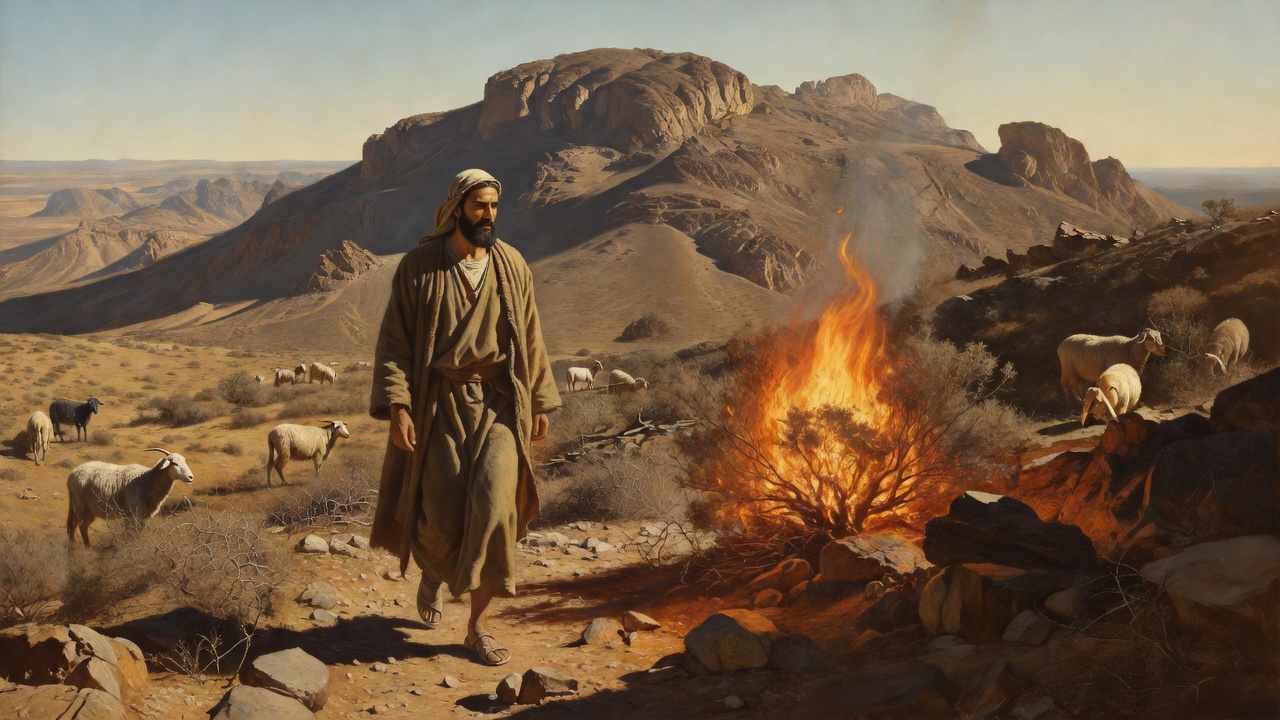
1Na satu duh, klo Mosis mifat i dad bilibili, na dad kambing i tewen Dyétro, i satu bà di Dwata di banwe Midyan, neben i dad lmanaf di faltù di banwe gulandè to, na kel ditù di bulul Sinay, dnagit bulul Dwata. 2Na ditù, gumsut i kasaligan Dwata i Amu di ku Mosis di lam i lifoh too dminè. Na teen Mosis i lifoh ani di lam i tukay kayu. Na dminè i kayu, bay laan sa sakuf. 3Taman, manan di nawan, “Kan ku là sakuf i kayu ani? Fdadong agu sa kun, du neyegu i bong gamtikeng ani.”
4Kabay teen Dwata i Amu, i kafdadongan. Taman tamlo Dwata kenen mdà di lam i kayu ani, manan, “E, Mosis!”
Na tnimel Mosis, manan, “Hae, dini agu.”
5Na man Dwata, “Nang ge too fdadong dini. Na nlusam i talumfaam, du fitem i kafeam deg, du dini agu di gutadagam. 6Agu sa Dwata, i Dwata fnangamfù dad gutambulam, i Dwata Abraham, Isaak, na Dyékob.” Di kaklinge Mosis ani, snafangan i bawehan, du likò meye di Dwata.
7Na kafnge én, man Dwata i Amu, “Tateengu i kaflayam i dad togu, i dad bel Israél, ditù di banwe Idyif. Na talingegu i dalongla, na i kafnila di dagu tabeng, du fye galwà ale di falel i dad to guglifanla. Gadègu too ale maflayam, na too mlidù i nawagu dale. 8Taman fdanà agu salu dini, du falwàgu ale di falel i dad to Idyif, na mebe dale ditù di satu too fye na too mabal tanà. Nebegu ale di banwe nun too mabù tanà. Di bang ani i banwe ani nanè i dad to di Kanaan, dad to Hiti, dad to Amori, dad to Férisi, dad to Hibiti, na dad to Dyébusi. 9Hae, talingegu i dalong i dad togu, i dad bel Israél, na teengu i kibò dad to Idyif mkut dale. 10Taman ani dekta ge di ku Faraon di Idyif, du fye gebem dad togu lamwà di banwe én.” Én man Dwata.
11Kabay man Mosis di Dwata, “E, Amugu tabyà, simto agu kè, i dekam salu di ku Faraon du fye nebegu dad bel Israél lamwà di banwe Idyif? Ise agu i to fakay mebe i dad to.”
12Na tnimel kenen i Dwata, manan, “Magin agu ge, na di kebem i dad to lamwà di Idyif, fnangamfùyu agu dini di bulul ani, du ani i ilè i kaglut na agu mdek ge.”
13Man Mosis, “Ku salu agu di dad bel Israél na mangu dale, i Dwata fnangamfù dad gutambulla i mdek deg di dale, na ku smalek ale deg, manla, ‘Simto kè i dagitan?’, na tan sa i timelgu dale?”
14Na lêman talù Dwata di ku Mosis, manan, “Agu sa Dwata, i landè gutambùgu, na landè gusengu. Tulenam dale agu i mdek ge di dale.
15“Manam di dad bel Israél, Dwata i Amu, i Dwata fnangamfù dad gutambulla Abraham, Isaak, na Dyékob, i mdek ge di dale. Ani i dagitgu kel di atuan landè sen. Ani i dagit là glifet i kdee dad fulé bel i dad to.
16“Na ditù ge na santifunam i dad tua di dad bel Israél, na tnulenam ale, agu Dwata i Amu, i Dwata fnangamfù dad gutambulla Abraham, Isaak, na Dyékob tamsut di ge. Na manam di dale tagadègu na tateengu kibò i dad to Idyif mlayam dale. 17Too ale maflayam, taman ani i fakanggu dale, falwàgu ale mdà di kaglifanla di Idyif. Na nebegu ale di banwe nun too mabù tanà, ditù di banwe nanè i dad to Kanaan, dad to Hiti, dad to Amori, dad to Férisi, dad to Hibiti, na dad to Dyébusi.”
18Fadlug talù Dwata di ku Mosis, manan, “Di kaklinge i dad ulu i dad bel Israél i manam, too ale kadang flinge ge. Kafnge én, faginam ale kadang salu di harì di Idyif. Na ani i manyu kenen kadang, manyu, ‘Dwata i Amu, i Dwata fnangamfù dad Hibru, tamsut di gami. Na tabyà, faloham gami beg salu di banwe gulandè to, i tlu butang nagu, du damsù gami di kenen.’ Én manyu kadang di ku Faraon. 19Kabay gadègu là gamu faloh i harì lamwà di Idyif, silang ku toogu kenen nleges. 20Taman mdà di bong gnagangu fanlayamgu kadang i dad to di Idyif fagu di dad tnikeng i nimògu. Kafnge én, falohan gamu lamwà.
21“Mimò agu kfagu, fye nafè gamu i dad to Idyif, du fye di kalwàyu nun bléla gamu, du fye là gamu magu i landè gebeyu. 22Na kat satu libun di bel Israél, mni ale kadang di dad demela saldan na di dademe libun di Idyif i mnè di dale, i dad kas, salafì, blawen, na dad klaweh. Na falsakla kadang i dad ngàla dee ani. Na ani kfaguyu mebe knun i dad to Idyif.” Én gman Dwata di ku Mosis.
Você sabia?
O chamado de Moisés na sarça ardente
- Moisés está pastoreando em Midiã quando este capítulo começa. Os midianitas eram uma tribo árabe nômade, descendente de Midiã, o quarto filho de Abraão com Quetura, cujo nome se explica como contenda. Viviam sobretudo no deserto ao norte da Arábia, e a península do Sinai era pasto para seus rebanhos; foi ali, depois de fugir do Egito, que Moisés se tornou servo e, em seguida, genro do sacerdote.Fontes: o próprio texto bíblico · Midian · Midian
- Seu sogro é Jetro, chamado sacerdote de Midiã. O Dicionário Bíblico de Easton (1897) identifica esse sacerdote com Raguel e diz que, se os dois nomes pertencem ao mesmo homem, Raguel pode ser considerado seu nome pessoal e Jetro, que significa excelência, um título oficial.Fontes: o próprio texto bíblico · Jethro
- Moisés conduz o rebanho até Horebe, o monte de Deus. O nome é explicado como deserto, ou monte, do chão ressecado, um termo geral para toda a cordilheira da qual o Sinai era um dos cumes; o Dicionário Bíblico de Easton (1897) dá à cordilheira o nome moderno de Jebel Musa e a descreve como um enorme bloco de cerca de duas milhas de comprimento por cerca de uma milha de largura, com uma planície muito ampla chamada Er Rahah na extremidade nordeste, onde os israelitas depois acamparam por quase um ano.Fontes: o próprio texto bíblico · Horeb
Notas escritas com auxílio de IA a partir de fontes abertas (Theographic Bible Metadata, CC BY-SA 4.0; Easton’s Bible Dictionary, domínio público) e revisadas antes de publicar.
Lugares deste capítulo
- Midian · 28.495, 35.012 · versículo 1
- Mount Horeb · Hoje: Jebel Musa · 28.540, 33.973 · versículo 1
- Egypt · 30.129, 31.308 · versículos 7, 8, 10, 11, 12, 16, 17, 18, 19, 20, 22
Só aparecem lugares com identificação de alta confiança (90% ou mais segundo as fontes acadêmicas reunidas pelo OpenBible). Mapa da época: DARE (Digital Atlas of the Roman Empire), CC BY 4.0; mapa atual: © colaboradores do OpenStreetMap; lugares: OpenBible.info (CC BY 4.0).
Créditos e licença desta tradução
I tnalù dwata
New Testament in Blaan, Sarangani
copyright © 1998 Wycliffe Bible Translators, Inc.
Language: Sarangani Blaan (Blaan, Sarangani)
Translation by: Wycliffe Bible Translators
Contributor: Wycliffe Bible Translators, Inc.
Copyright Information
© 1998, Wycliffe Bible Translators, Inc. All rights reserved.
This translation text is made available to you under the
terms of the Creative Commons License: Attribution-Noncommercial-No Derivative Works.
( http://creativecommons.org/licenses/by-nc-nd/3.0/ )
In addition, you have permission to port the text to different file formats, as long as you
do not change any of the text or punctuation of the Bible.
You may share, copy, distribute, transmit, and extract portions
or quotations from this work, provided that you include the above copyright
information:
You must give Attribution to the work.
You do not sell this work for a profit.
You do not make any derivative works that change any of the actual words or punctuation of the Scriptures.
Permissions beyond the scope of this license may be
available if you contact
us with your request.
The New Testament
in Blaan, Sarangani
© 1998, Wycliffe Bible Translators, Inc. All rights reserved.
This translation is made available to you under the terms of the
Creative Commons Attribution-Noncommercial-No Derivatives license 4.0.
You may share and redistribute this Bible translation or extracts from it in any format, provided that:
You include the above copyright and source information.
You do not sell this work for a profit.
You do not change any of the words or punctuation of the Scriptures.
Pictures included with Scriptures and other documents on this site are licensed just for use with those Scriptures and documents.
For other uses, please contact the respective copyright owners.
2015-03-17
Fonte: http://ebible.org/bps/ · eBible.org