Éxodo 3
I tnalù dwata · Toca un versículo para ver sus referencias cruzadas.
I katlo Dwata ku Mosis
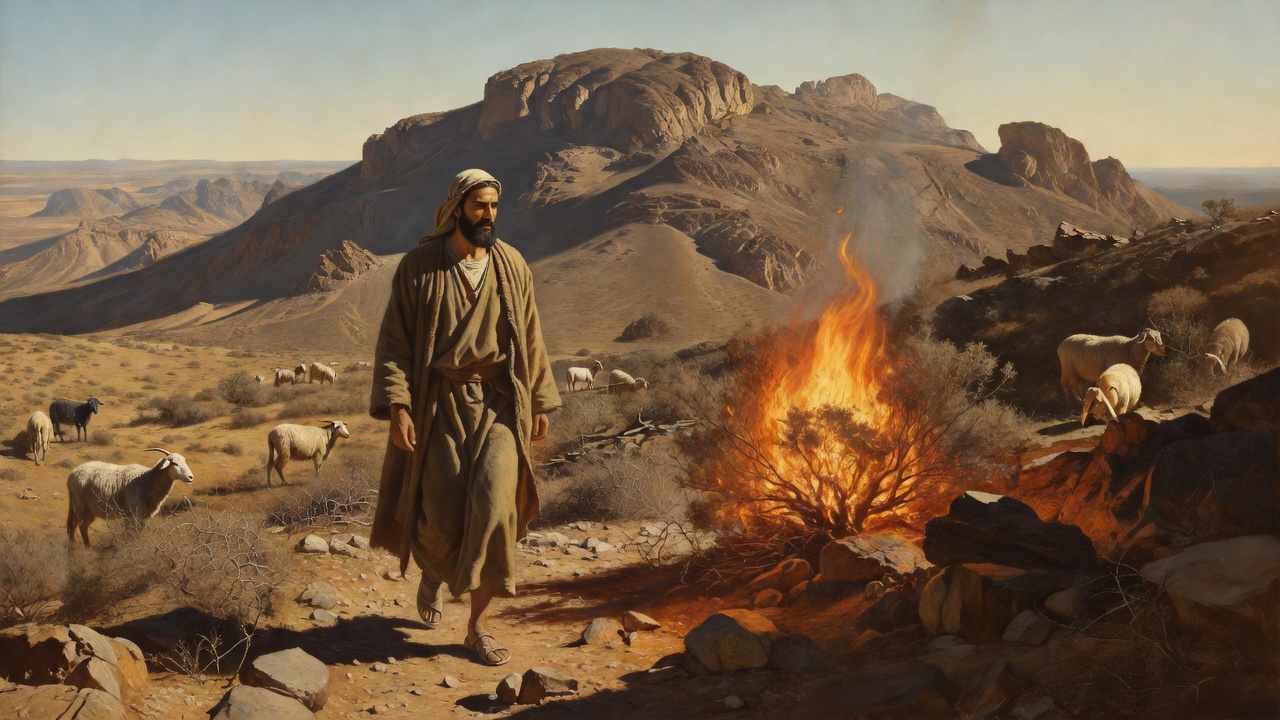
1Na satu duh, klo Mosis mifat i dad bilibili, na dad kambing i tewen Dyétro, i satu bà di Dwata di banwe Midyan, neben i dad lmanaf di faltù di banwe gulandè to, na kel ditù di bulul Sinay, dnagit bulul Dwata. 2Na ditù, gumsut i kasaligan Dwata i Amu di ku Mosis di lam i lifoh too dminè. Na teen Mosis i lifoh ani di lam i tukay kayu. Na dminè i kayu, bay laan sa sakuf. 3Taman, manan di nawan, “Kan ku là sakuf i kayu ani? Fdadong agu sa kun, du neyegu i bong gamtikeng ani.”
4Kabay teen Dwata i Amu, i kafdadongan. Taman tamlo Dwata kenen mdà di lam i kayu ani, manan, “E, Mosis!”
Na tnimel Mosis, manan, “Hae, dini agu.”
5Na man Dwata, “Nang ge too fdadong dini. Na nlusam i talumfaam, du fitem i kafeam deg, du dini agu di gutadagam. 6Agu sa Dwata, i Dwata fnangamfù dad gutambulam, i Dwata Abraham, Isaak, na Dyékob.” Di kaklinge Mosis ani, snafangan i bawehan, du likò meye di Dwata.
7Na kafnge én, man Dwata i Amu, “Tateengu i kaflayam i dad togu, i dad bel Israél, ditù di banwe Idyif. Na talingegu i dalongla, na i kafnila di dagu tabeng, du fye galwà ale di falel i dad to guglifanla. Gadègu too ale maflayam, na too mlidù i nawagu dale. 8Taman fdanà agu salu dini, du falwàgu ale di falel i dad to Idyif, na mebe dale ditù di satu too fye na too mabal tanà. Nebegu ale di banwe nun too mabù tanà. Di bang ani i banwe ani nanè i dad to di Kanaan, dad to Hiti, dad to Amori, dad to Férisi, dad to Hibiti, na dad to Dyébusi. 9Hae, talingegu i dalong i dad togu, i dad bel Israél, na teengu i kibò dad to Idyif mkut dale. 10Taman ani dekta ge di ku Faraon di Idyif, du fye gebem dad togu lamwà di banwe én.” Én man Dwata.
11Kabay man Mosis di Dwata, “E, Amugu tabyà, simto agu kè, i dekam salu di ku Faraon du fye nebegu dad bel Israél lamwà di banwe Idyif? Ise agu i to fakay mebe i dad to.”
12Na tnimel kenen i Dwata, manan, “Magin agu ge, na di kebem i dad to lamwà di Idyif, fnangamfùyu agu dini di bulul ani, du ani i ilè i kaglut na agu mdek ge.”
13Man Mosis, “Ku salu agu di dad bel Israél na mangu dale, i Dwata fnangamfù dad gutambulla i mdek deg di dale, na ku smalek ale deg, manla, ‘Simto kè i dagitan?’, na tan sa i timelgu dale?”
14Na lêman talù Dwata di ku Mosis, manan, “Agu sa Dwata, i landè gutambùgu, na landè gusengu. Tulenam dale agu i mdek ge di dale.
15“Manam di dad bel Israél, Dwata i Amu, i Dwata fnangamfù dad gutambulla Abraham, Isaak, na Dyékob, i mdek ge di dale. Ani i dagitgu kel di atuan landè sen. Ani i dagit là glifet i kdee dad fulé bel i dad to.
16“Na ditù ge na santifunam i dad tua di dad bel Israél, na tnulenam ale, agu Dwata i Amu, i Dwata fnangamfù dad gutambulla Abraham, Isaak, na Dyékob tamsut di ge. Na manam di dale tagadègu na tateengu kibò i dad to Idyif mlayam dale. 17Too ale maflayam, taman ani i fakanggu dale, falwàgu ale mdà di kaglifanla di Idyif. Na nebegu ale di banwe nun too mabù tanà, ditù di banwe nanè i dad to Kanaan, dad to Hiti, dad to Amori, dad to Férisi, dad to Hibiti, na dad to Dyébusi.”
18Fadlug talù Dwata di ku Mosis, manan, “Di kaklinge i dad ulu i dad bel Israél i manam, too ale kadang flinge ge. Kafnge én, faginam ale kadang salu di harì di Idyif. Na ani i manyu kenen kadang, manyu, ‘Dwata i Amu, i Dwata fnangamfù dad Hibru, tamsut di gami. Na tabyà, faloham gami beg salu di banwe gulandè to, i tlu butang nagu, du damsù gami di kenen.’ Én manyu kadang di ku Faraon. 19Kabay gadègu là gamu faloh i harì lamwà di Idyif, silang ku toogu kenen nleges. 20Taman mdà di bong gnagangu fanlayamgu kadang i dad to di Idyif fagu di dad tnikeng i nimògu. Kafnge én, falohan gamu lamwà.
21“Mimò agu kfagu, fye nafè gamu i dad to Idyif, du fye di kalwàyu nun bléla gamu, du fye là gamu magu i landè gebeyu. 22Na kat satu libun di bel Israél, mni ale kadang di dad demela saldan na di dademe libun di Idyif i mnè di dale, i dad kas, salafì, blawen, na dad klaweh. Na falsakla kadang i dad ngàla dee ani. Na ani kfaguyu mebe knun i dad to Idyif.” Én gman Dwata di ku Mosis.
¿Sabías que…?
El llamado de Moisés en la zarza ardente
- Moisés está pastoreando en Madián cuando comienza este capítulo. Los madianitas eran una tribu árabe nómada, descendiente de Madián, el cuarto hijo de Abraham con Cetura, cuyo nombre se explica como contienda. Vivían sobre todo en el desierto al norte de Arabia, y la península del Sinaí era tierra de pastoreo para sus rebaños; allí, tras huir de Egipto, Moisés llegó a ser siervo y luego yerno del sacerdote.Fuentes: el propio texto bíblico · Midian · Midian
- Su suegro es Jetro, llamado sacerdote de Madián. El Diccionario Bíblico de Easton (1897) identifica a ese sacerdote con Raguel y dice que, si los dos nombres corresponden a un mismo hombre, Raguel puede considerarse su nombre personal y Jetro, que significa excelencia, un título oficial.Fuentes: el propio texto bíblico · Jethro
- Moisés lleva el rebaño hasta Horeb, el monte de Dios. El nombre se explica como desierto, o monte, del suelo reseco, un término general para toda la cordillera de la cual el Sinaí era una de las cumbres; el Diccionario Bíblico de Easton (1897) da a la cordillera el nombre moderno de Jebel Musa y la describe como un enorme bloque de unas dos millas de largo por cerca de una milla de ancho, con una llanura muy espaciosa llamada Er Rahah en su extremo noreste, donde los israelitas acamparon después durante casi un año.Fuentes: el propio texto bíblico · Horeb
Notas escritas con ayuda de IA a partir de fuentes abiertas (Theographic Bible Metadata, CC BY-SA 4.0; Easton’s Bible Dictionary, dominio público) y revisadas antes de publicarse.
Lugares de este capítulo
- Midian · 28.495, 35.012 · versículo 1
- Mount Horeb · Hoy: Jebel Musa · 28.540, 33.973 · versículo 1
- Egypt · 30.129, 31.308 · versículos 7, 8, 10, 11, 12, 16, 17, 18, 19, 20, 22
Solo aparecen lugares identificados con alta confianza (90 % o más según las fuentes académicas reunidas por OpenBible). Mapa de la época: DARE (Digital Atlas of the Roman Empire), CC BY 4.0; mapa actual: © colaboradores de OpenStreetMap; lugares: OpenBible.info (CC BY 4.0).
Créditos y licencia de esta traducción
I tnalù dwata
New Testament in Blaan, Sarangani
copyright © 1998 Wycliffe Bible Translators, Inc.
Language: Sarangani Blaan (Blaan, Sarangani)
Translation by: Wycliffe Bible Translators
Contributor: Wycliffe Bible Translators, Inc.
Copyright Information
© 1998, Wycliffe Bible Translators, Inc. All rights reserved.
This translation text is made available to you under the
terms of the Creative Commons License: Attribution-Noncommercial-No Derivative Works.
( http://creativecommons.org/licenses/by-nc-nd/3.0/ )
In addition, you have permission to port the text to different file formats, as long as you
do not change any of the text or punctuation of the Bible.
You may share, copy, distribute, transmit, and extract portions
or quotations from this work, provided that you include the above copyright
information:
You must give Attribution to the work.
You do not sell this work for a profit.
You do not make any derivative works that change any of the actual words or punctuation of the Scriptures.
Permissions beyond the scope of this license may be
available if you contact
us with your request.
The New Testament
in Blaan, Sarangani
© 1998, Wycliffe Bible Translators, Inc. All rights reserved.
This translation is made available to you under the terms of the
Creative Commons Attribution-Noncommercial-No Derivatives license 4.0.
You may share and redistribute this Bible translation or extracts from it in any format, provided that:
You include the above copyright and source information.
You do not sell this work for a profit.
You do not change any of the words or punctuation of the Scriptures.
Pictures included with Scriptures and other documents on this site are licensed just for use with those Scriptures and documents.
For other uses, please contact the respective copyright owners.
2015-03-17
Fuente: http://ebible.org/bps/ · eBible.org