Apocalipse 21
Ebe-No-Pfuasẹ Ishobọ Onogbọ · Toque num versículo para ver as referências cruzadas.
IJerusalẹmu Onogbọ
1Ighọ mhi li mẹ iloghie onogbọ ali ekẹ agbọ onogbọ. Iloghie onododẹ ali ekẹ agbọ onododẹ e she kala-a, ighọ li khi okẹ oniẹmhi. 2Mhi mẹ oni ẹoli ni o pfuasẹ ikhi oni iJerusalẹmu onogbọ khi o rọte idane e tiemhile rọte obọ oyi Ẹshinẹgba, abi ọmueshi ni a khuẹsẹ somhotse ẹ ghi ọdọ li. 3Ighọ mhi suọ ukpokpomhi uruli khi o rọte oni eghiele e liẹ, “A ghe khẹ! Ẹshinẹgba ọ ri apfẹ oyọli tiemhile deba ẹgbọ, eri ọ ke ya nu ẹgbọ ngeli kugbe, eni ẹgbọ e ya khi ẹgbọ eyọli, Ẹshinẹgba ọ ya nu wẹ la kugbe. 4Ọ ya shishi wẹ ameviẹ alo-a, eghuli ọa ke ya laọ, wẹkhi eri a kẹ ke viẹ wẹkhi asha o ke ya ke to ọgbọ, irari khi emini ediọ e she dọsẹ.”
5Ọni ọ shitọ oni ukpẹkhomhi oghie ọọ li, “Ghe khẹ, Mhi ri emhikpa a mele enegbọ-a!” Ighọ ọọ, “Kẹkẹ emhi enana shi ekẹ irari khi ingmemhi ni a ri egbe ẹ da ni e khi igẹsikia e khi.”
6Ọọ mhẹ, “A she li ọli. Mhẹmhẹ mhi Aafa ali Omega, mhẹmhẹ mhi khi igbaekẹle ni mhi khi ọzukhomhi. Ọni okiamẹ ọọ gbe, mhi ya rọte okẹ ni ọọ chọchọ amẹ, ni o ri agbọ a na ọgbọ na li da afuẹ. 7Ọni ọ da mu ọ le ne, ọ ya mhọli ikhivọsẹ ona, ni, Mhẹmhẹ mhi ya khi Ẹshinẹgba oyọli, lọli o khi omimhẹ. 8Ama ẹgbọ ni e khi enulishi ali eni ẹa ya lama miesuọ, ena angeli ichimhi ali egbugbeli, ali ena itsẹbọ eni e mu imhẹsẹ ogbhọ ali eni ega ikhumhi, ali e lo ẹgbhọli nya, okiẹmhi oyẹwẹ o ya khi erali ilimhi iriẹriẹ ni ofulu la to kua yala. Onana khi eghuli onuzi-eva.”
9Agẹni ọghuo eni oshilua ni ọ mhọli italabi ishilua ni e vọ anasẹmhẹ ishilua ni e kpe ukhokho, ọ bhale ya liẹ mhẹ, “Bhale, mhi ya ri ọni ọmueshi ọnọgbọ khasẹ, ni ọ khi ughuẹ ọni Omi Osumha.” 10Elemhi oni ayẹmhẹ, ọni agẹni ọ tsua mhẹ nga ukhomhi ute oniẹmhi ni o yagha, ọ rẹmhẹ khasẹ oni Ẹoli-No-pfuasẹ ikhi iJerusalẹmu, khi o rọte idane te obọ oyi Ẹshinẹgba a tiemhile. 11O ri ufumhi oyi Ẹshinẹgba gẹ nyanyanya. Ugẹmhi oyọli o li abi ẹchẹli ni o somhi otse ni a lu iJasipa ni o li abi ughegbe. 12O mhọli ukpokpomhi ugbe ni o yagha ni o mhọli odẹ inuẹkpẹ igbẹva. Eni odẹ inuẹkpẹ, igẹni ogbava e la ọ. Eni odẹ inuẹkpẹ igbẹva ena a kẹkẹ eva eyi ẹdẹli igbẹva eyi iZirẹni shi ọ. 13Odẹ inuẹkpẹ esesẹ e la obọ-ugbe enenene oyi oni ugbe. Esẹ e la ukiẹkiẹ obini ovọ o te ẹ ngale oyọli, esẹ e la ukiẹkiẹ obita, esẹ e la ukiẹkiẹ ọgobọ, esẹ e li la ukiẹkiẹ obini ovọ o te ẹ lo eko. 14Oni ugbe ni o gasẹ oni ẹoli o mhọli echẹ irọgbekẹ igbẹva. Eni echẹ irọgbekẹ ena, a kẹkẹ eva eyi ighiusomhi na kẹẹ ogbava eyi ọni Omi Osumha shi ọ.
15Ọni ọ nu mhẹ ẹ ngme, o mhọli ukpokpo ni a rọọ mhẹsẹ emhi ni o khi igolu ni ọ rọ ya mhẹsẹ oni ẹoli ali eni odẹ inuẹkpẹ ali igbe eyọli. 16Oni ẹoli o zẹ abọ igbe ene, ni iyagha ali inuata ali uẹmhi eyọli e li abizize. Ọ mhẹsẹ oni ẹoli, o ya khi ikuku emhi ẹa la imali agbẹlẹ ali egbhuẹshe ashi ishe (1,500), unuẹmhi ali uẹmhi eyi eni abọ igbe ali iyagha eyọli e khi abizize. 17Ọni agẹni ọ li mhẹsẹ ugbe oyọli, e ya khi ẹtẹ-awẹ egbhuẹgbe. Abi awa liẹ mhẹsẹ ekẹ. 18Ugbe oyọli, echẹ ijasipa a rọ ma li, oni ẹoli o khi egbegbi igolu ni a te ẹ mẹ ekẹ abi ughegbe. 19Irọgbekẹ oyi igbe ni a ma gasẹ oni ẹoli e ya khi echẹ ni e ghalẹ ọdọda. Onododẹ o khi ijasipa, onuzi-eva o khi isafaya, onuzi-esẹ o khi ikalisẹdoni, onuzi-ene o khi ẹmẹradi, 20onuzi-ishe o khi isadonizi, onuzi-esesa o khi ikanẹliani, onuzi-ishilua o khi ikirisolati, onuzi-elele o khi ibẹrili, onuzi-itili o khi itopazi, onuzi-igbe o khi ikirisopirazi, onuzi-igbaghuo o khi ijasiti, onuzi-igbẹva o khi ametisiti. 21Eni odẹ inuẹkpẹ igbẹva e ya khi ifẹfẹ. Odẹ unuẹkpẹ ọgbọgbọ a ri ufẹfẹ oyọli riẹlẹ ọli. Odẹ agbala ni o la oni ẹoli, egbegbi igolu ni a te ẹ mẹ ekẹ abi ughegbe a rọ ku ọli.
22Mhi aa mẹ Owa ugamhi okhọghuo oni ẹoli, irari khi Ẹshinẹgba Ọnọmhuẹ Nọfunẹ nya ali Ọni Omi Osumha wẹwẹ e khi Owa Ugamhi ni e la aghọ. 23Oni ẹoli ọa ke mhọli emini o ri ugẹmhi oyi ovọ wẹkhi oyi uki ya li. Irari khi ugẹmhi oyi Ẹshinẹgba lọli o khi ákpá ni o la aghọ, ọni Omi Osumha ọ khi ákpá ni o la aghọ. 24Ẹgbọ na agbọ nya e ya ri oni ákpá ke kia, ighie ni e la agbọ e ya tsua ẹpfue eyẹwẹ bhale aghọ. 25Ọgbọ ọa ya tigbe khukhu odẹ inuẹkpẹ ni e lo oni ẹoli le ghue, itobọ khi ọgbọ ọa ya mẹ ẹliyọsẹ aghọ. 26A ya tsua ẹpfue ali ufumhi eyi ishishi lo oni ẹoli le. 27Ama, emini e ri ichimhi ẹ mu ọa ya tigbe lo aghọ le, wẹkhi ọgbọ ni ọọ gbe ikanya omama ali ni ọ riẹlẹ emhi ẹgbhuẹ, sẹ khi ẹgbọ ni eva oyẹwẹ o la ebe ni a kẹkẹ eva oyi eni e ya mhọli agbọ na agbọagbọ shi oyi ọni Omi Osumha.
Você sabia?
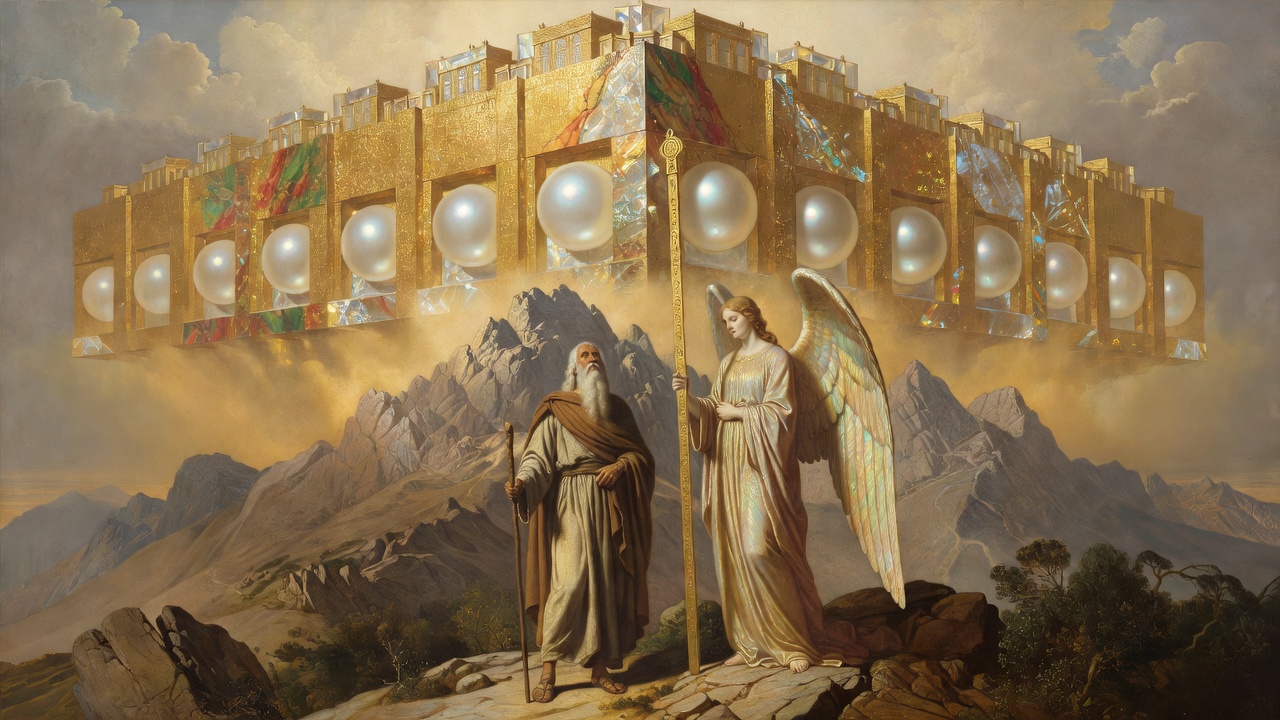
A nova Jerusalém
- Nesta visão, a cidade que desce do céu é chamada de cidade santa, a nova Jerusalém. Jerusalém também era conhecida como a cidade santa e a cidade de Deus, e em árabe é el-Khuds, que significa a santa. O nome está numa forma dual e significa posse da paz ou fundamento da paz.Fontes: o próprio texto bíblico · Jerusalem
- O vidente é levado no Espírito a um monte grande e alto e vê essa cidade santa descendo. Jerusalém é descrita como uma cidade de montanha entronizada numa fortaleza de montanha, e a forma dual do nome provavelmente se refere aos dois montes sobre os quais foi construída, Sião e Moriá, ou, como alguns supõem, à cidade alta e à cidade baixa.Fontes: o próprio texto bíblico · Jerusalem
- A muralha da cidade tem doze portas, três de cada lado, inscritas com os nomes das doze tribos de Israel. Israel é outro nome de Jacó, explicado como aquele que segue os calcanhares de outro, ou como um suplantador.Fontes: o próprio texto bíblico · Jacob (Israel)
Notas escritas com auxílio de IA a partir de fontes abertas (Theographic Bible Metadata, CC BY-SA 4.0; Easton’s Bible Dictionary, domínio público) e revisadas antes de publicar.
Lugares deste capítulo
Só aparecem lugares com identificação de alta confiança (90% ou mais segundo as fontes acadêmicas reunidas pelo OpenBible). Mapa da época: DARE (Digital Atlas of the Roman Empire), CC BY 4.0; mapa atual: © colaboradores do OpenStreetMap; lugares: OpenBible.info (CC BY 4.0).
Créditos e licença desta tradução
Ebe-No-Pfuasẹ Ishobọ Onogbọ
New Testament in Ivbie North-Okpela-Arhe (NI:atg:Ivbie North-Okpela-Arhe)
copyright © 2012 Wycliffe Bible Translators, Inc.
Language: Ivbie North-Okpela-Arhe
Translation by: Wycliffe Bible Translators, Inc.
Copyright Information
© 2012, Wycliffe Bible Translators, Inc. All rights reserved.
This translation text is made available to you under the
terms of the Creative Commons License: Attribution-Noncommercial-No Derivative Works.
( http://creativecommons.org/licenses/by-nc-nd/3.0/ )
In addition, you have permission to port the text to different file formats, as long as you
do not change any of the text or punctuation of the Bible.
You may share, copy, distribute, transmit, and extract portions
or quotations from this work, provided that you include the above copyright
information:
You must give Attribution to the work.
You do not sell this work for a profit.
You do not make any derivative works that change any of the actual words or punctuation of the Scriptures.
Permissions beyond the scope of this license may be
available if you contact
us with your request.
Printed book ISBN 9789789194797
The New Testament
in Ivbie North-Okpela-Arhe
© 2012, Wycliffe Bible Translators, Inc. All rights reserved.
This translation is made available to you under the terms of the
Creative Commons Attribution-Noncommercial-No Derivatives license 4.0.
You may share and redistribute this Bible translation or extracts from it in any format, provided that:
You include the above copyright and source information.
You do not sell this work for a profit.
You do not change any of the words or punctuation of the Scriptures.
Pictures included with Scriptures and other documents on this site are licensed just for use with those Scriptures and documents.
For other uses, please contact the respective copyright owners.
2019-08-09
Fonte: http://ebible.org/atgNT/ · eBible.org