Apocalipsis 21
Ebe-No-Pfuasẹ Ishobọ Onogbọ · Toca un versículo para ver sus referencias cruzadas.
IJerusalẹmu Onogbọ
1Ighọ mhi li mẹ iloghie onogbọ ali ekẹ agbọ onogbọ. Iloghie onododẹ ali ekẹ agbọ onododẹ e she kala-a, ighọ li khi okẹ oniẹmhi. 2Mhi mẹ oni ẹoli ni o pfuasẹ ikhi oni iJerusalẹmu onogbọ khi o rọte idane e tiemhile rọte obọ oyi Ẹshinẹgba, abi ọmueshi ni a khuẹsẹ somhotse ẹ ghi ọdọ li. 3Ighọ mhi suọ ukpokpomhi uruli khi o rọte oni eghiele e liẹ, “A ghe khẹ! Ẹshinẹgba ọ ri apfẹ oyọli tiemhile deba ẹgbọ, eri ọ ke ya nu ẹgbọ ngeli kugbe, eni ẹgbọ e ya khi ẹgbọ eyọli, Ẹshinẹgba ọ ya nu wẹ la kugbe. 4Ọ ya shishi wẹ ameviẹ alo-a, eghuli ọa ke ya laọ, wẹkhi eri a kẹ ke viẹ wẹkhi asha o ke ya ke to ọgbọ, irari khi emini ediọ e she dọsẹ.”
5Ọni ọ shitọ oni ukpẹkhomhi oghie ọọ li, “Ghe khẹ, Mhi ri emhikpa a mele enegbọ-a!” Ighọ ọọ, “Kẹkẹ emhi enana shi ekẹ irari khi ingmemhi ni a ri egbe ẹ da ni e khi igẹsikia e khi.”
6Ọọ mhẹ, “A she li ọli. Mhẹmhẹ mhi Aafa ali Omega, mhẹmhẹ mhi khi igbaekẹle ni mhi khi ọzukhomhi. Ọni okiamẹ ọọ gbe, mhi ya rọte okẹ ni ọọ chọchọ amẹ, ni o ri agbọ a na ọgbọ na li da afuẹ. 7Ọni ọ da mu ọ le ne, ọ ya mhọli ikhivọsẹ ona, ni, Mhẹmhẹ mhi ya khi Ẹshinẹgba oyọli, lọli o khi omimhẹ. 8Ama ẹgbọ ni e khi enulishi ali eni ẹa ya lama miesuọ, ena angeli ichimhi ali egbugbeli, ali ena itsẹbọ eni e mu imhẹsẹ ogbhọ ali eni ega ikhumhi, ali e lo ẹgbhọli nya, okiẹmhi oyẹwẹ o ya khi erali ilimhi iriẹriẹ ni ofulu la to kua yala. Onana khi eghuli onuzi-eva.”
9Agẹni ọghuo eni oshilua ni ọ mhọli italabi ishilua ni e vọ anasẹmhẹ ishilua ni e kpe ukhokho, ọ bhale ya liẹ mhẹ, “Bhale, mhi ya ri ọni ọmueshi ọnọgbọ khasẹ, ni ọ khi ughuẹ ọni Omi Osumha.” 10Elemhi oni ayẹmhẹ, ọni agẹni ọ tsua mhẹ nga ukhomhi ute oniẹmhi ni o yagha, ọ rẹmhẹ khasẹ oni Ẹoli-No-pfuasẹ ikhi iJerusalẹmu, khi o rọte idane te obọ oyi Ẹshinẹgba a tiemhile. 11O ri ufumhi oyi Ẹshinẹgba gẹ nyanyanya. Ugẹmhi oyọli o li abi ẹchẹli ni o somhi otse ni a lu iJasipa ni o li abi ughegbe. 12O mhọli ukpokpomhi ugbe ni o yagha ni o mhọli odẹ inuẹkpẹ igbẹva. Eni odẹ inuẹkpẹ, igẹni ogbava e la ọ. Eni odẹ inuẹkpẹ igbẹva ena a kẹkẹ eva eyi ẹdẹli igbẹva eyi iZirẹni shi ọ. 13Odẹ inuẹkpẹ esesẹ e la obọ-ugbe enenene oyi oni ugbe. Esẹ e la ukiẹkiẹ obini ovọ o te ẹ ngale oyọli, esẹ e la ukiẹkiẹ obita, esẹ e la ukiẹkiẹ ọgobọ, esẹ e li la ukiẹkiẹ obini ovọ o te ẹ lo eko. 14Oni ugbe ni o gasẹ oni ẹoli o mhọli echẹ irọgbekẹ igbẹva. Eni echẹ irọgbekẹ ena, a kẹkẹ eva eyi ighiusomhi na kẹẹ ogbava eyi ọni Omi Osumha shi ọ.
15Ọni ọ nu mhẹ ẹ ngme, o mhọli ukpokpo ni a rọọ mhẹsẹ emhi ni o khi igolu ni ọ rọ ya mhẹsẹ oni ẹoli ali eni odẹ inuẹkpẹ ali igbe eyọli. 16Oni ẹoli o zẹ abọ igbe ene, ni iyagha ali inuata ali uẹmhi eyọli e li abizize. Ọ mhẹsẹ oni ẹoli, o ya khi ikuku emhi ẹa la imali agbẹlẹ ali egbhuẹshe ashi ishe (1,500), unuẹmhi ali uẹmhi eyi eni abọ igbe ali iyagha eyọli e khi abizize. 17Ọni agẹni ọ li mhẹsẹ ugbe oyọli, e ya khi ẹtẹ-awẹ egbhuẹgbe. Abi awa liẹ mhẹsẹ ekẹ. 18Ugbe oyọli, echẹ ijasipa a rọ ma li, oni ẹoli o khi egbegbi igolu ni a te ẹ mẹ ekẹ abi ughegbe. 19Irọgbekẹ oyi igbe ni a ma gasẹ oni ẹoli e ya khi echẹ ni e ghalẹ ọdọda. Onododẹ o khi ijasipa, onuzi-eva o khi isafaya, onuzi-esẹ o khi ikalisẹdoni, onuzi-ene o khi ẹmẹradi, 20onuzi-ishe o khi isadonizi, onuzi-esesa o khi ikanẹliani, onuzi-ishilua o khi ikirisolati, onuzi-elele o khi ibẹrili, onuzi-itili o khi itopazi, onuzi-igbe o khi ikirisopirazi, onuzi-igbaghuo o khi ijasiti, onuzi-igbẹva o khi ametisiti. 21Eni odẹ inuẹkpẹ igbẹva e ya khi ifẹfẹ. Odẹ unuẹkpẹ ọgbọgbọ a ri ufẹfẹ oyọli riẹlẹ ọli. Odẹ agbala ni o la oni ẹoli, egbegbi igolu ni a te ẹ mẹ ekẹ abi ughegbe a rọ ku ọli.
22Mhi aa mẹ Owa ugamhi okhọghuo oni ẹoli, irari khi Ẹshinẹgba Ọnọmhuẹ Nọfunẹ nya ali Ọni Omi Osumha wẹwẹ e khi Owa Ugamhi ni e la aghọ. 23Oni ẹoli ọa ke mhọli emini o ri ugẹmhi oyi ovọ wẹkhi oyi uki ya li. Irari khi ugẹmhi oyi Ẹshinẹgba lọli o khi ákpá ni o la aghọ, ọni Omi Osumha ọ khi ákpá ni o la aghọ. 24Ẹgbọ na agbọ nya e ya ri oni ákpá ke kia, ighie ni e la agbọ e ya tsua ẹpfue eyẹwẹ bhale aghọ. 25Ọgbọ ọa ya tigbe khukhu odẹ inuẹkpẹ ni e lo oni ẹoli le ghue, itobọ khi ọgbọ ọa ya mẹ ẹliyọsẹ aghọ. 26A ya tsua ẹpfue ali ufumhi eyi ishishi lo oni ẹoli le. 27Ama, emini e ri ichimhi ẹ mu ọa ya tigbe lo aghọ le, wẹkhi ọgbọ ni ọọ gbe ikanya omama ali ni ọ riẹlẹ emhi ẹgbhuẹ, sẹ khi ẹgbọ ni eva oyẹwẹ o la ebe ni a kẹkẹ eva oyi eni e ya mhọli agbọ na agbọagbọ shi oyi ọni Omi Osumha.
¿Sabías que…?
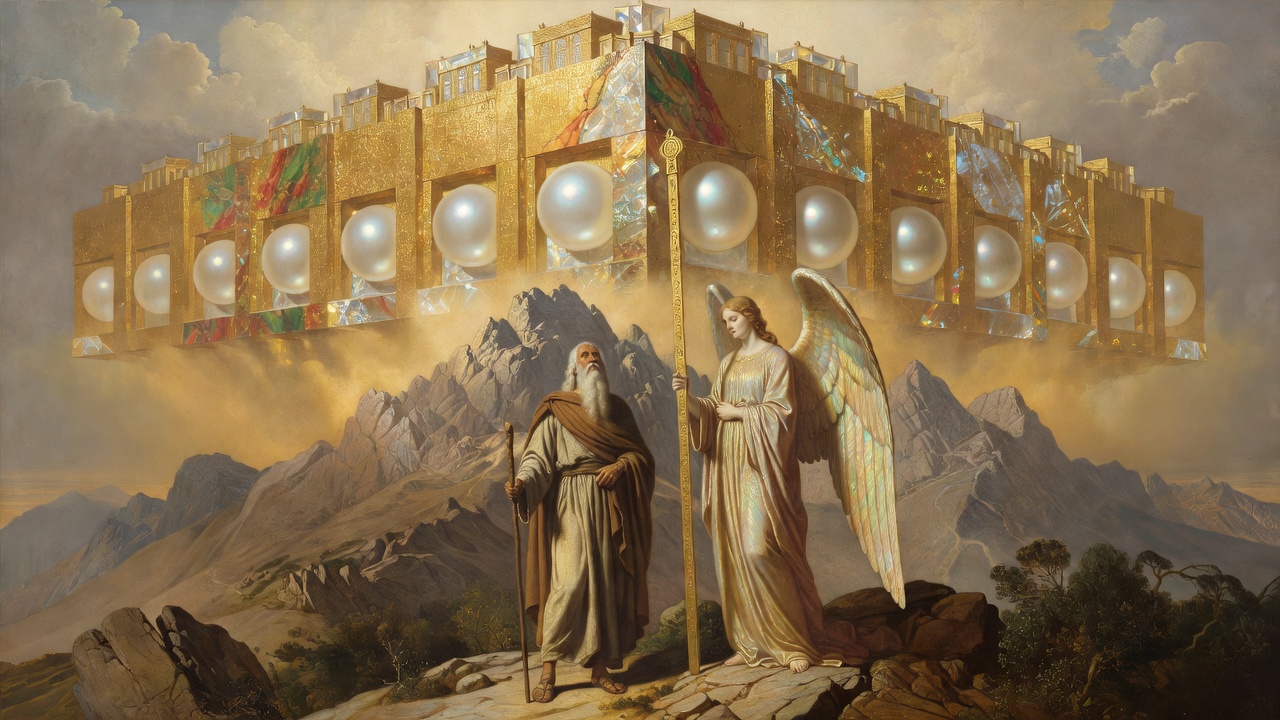
La nueva Jerusalén
- En esta visión, la ciudad que desciende del cielo es llamada la ciudad santa, la nueva Jerusalén. Jerusalén también era conocida como la ciudad santa y la ciudad de Dios, y en árabe es el-Khuds, que significa la santa. El nombre está en forma dual y significa posesión de paz o fundamento de paz.Fuentes: el propio texto bíblico · Jerusalem
- Al vidente lo llevan en el Espíritu a un monte grande y alto y le muestran esa ciudad santa que desciende. Jerusalén se describe como una ciudad de montaña entronizada en una fortaleza de montaña, y la forma dual del nombre probablemente se refiere a los dos montes sobre los que fue edificada, Sion y Moriah, o, como suponen algunos, a la ciudad alta y la ciudad baja.Fuentes: el propio texto bíblico · Jerusalem
- La muralla de la ciudad tiene doce puertas, tres a cada lado, inscritas con los nombres de las doce tribus de Israel. Israel es otro nombre de Jacob, explicado como el que sigue los talones de otro, o como un suplantador.Fuentes: el propio texto bíblico · Jacob (Israel)
Notas escritas con ayuda de IA a partir de fuentes abiertas (Theographic Bible Metadata, CC BY-SA 4.0; Easton’s Bible Dictionary, dominio público) y revisadas antes de publicarse.
Lugares de este capítulo
Solo aparecen lugares identificados con alta confianza (90 % o más según las fuentes académicas reunidas por OpenBible). Mapa de la época: DARE (Digital Atlas of the Roman Empire), CC BY 4.0; mapa actual: © colaboradores de OpenStreetMap; lugares: OpenBible.info (CC BY 4.0).
Créditos y licencia de esta traducción
Ebe-No-Pfuasẹ Ishobọ Onogbọ
New Testament in Ivbie North-Okpela-Arhe (NI:atg:Ivbie North-Okpela-Arhe)
copyright © 2012 Wycliffe Bible Translators, Inc.
Language: Ivbie North-Okpela-Arhe
Translation by: Wycliffe Bible Translators, Inc.
Copyright Information
© 2012, Wycliffe Bible Translators, Inc. All rights reserved.
This translation text is made available to you under the
terms of the Creative Commons License: Attribution-Noncommercial-No Derivative Works.
( http://creativecommons.org/licenses/by-nc-nd/3.0/ )
In addition, you have permission to port the text to different file formats, as long as you
do not change any of the text or punctuation of the Bible.
You may share, copy, distribute, transmit, and extract portions
or quotations from this work, provided that you include the above copyright
information:
You must give Attribution to the work.
You do not sell this work for a profit.
You do not make any derivative works that change any of the actual words or punctuation of the Scriptures.
Permissions beyond the scope of this license may be
available if you contact
us with your request.
Printed book ISBN 9789789194797
The New Testament
in Ivbie North-Okpela-Arhe
© 2012, Wycliffe Bible Translators, Inc. All rights reserved.
This translation is made available to you under the terms of the
Creative Commons Attribution-Noncommercial-No Derivatives license 4.0.
You may share and redistribute this Bible translation or extracts from it in any format, provided that:
You include the above copyright and source information.
You do not sell this work for a profit.
You do not change any of the words or punctuation of the Scriptures.
Pictures included with Scriptures and other documents on this site are licensed just for use with those Scriptures and documents.
For other uses, please contact the respective copyright owners.
2019-08-09
Fuente: http://ebible.org/atgNT/ · eBible.org