Levítico 1
Yi Antiw Bible / Yi Ac'aj Testament · Toque num versículo para ver as referências cruzadas.
Sobre este livro
Sobre Levítico
- O Dicionário Bíblico de Easton (1897) apresenta Levítico como o terceiro livro do Pentateuco e como o terceiro livro de Moisés. O nome, usado na Vulgata seguindo a LXX, reflete o assunto principal do livro: o serviço levítico.Fontes: Easton: Leviticus
- Easton afirma que todas as ordenanças do livro foram entregues no espaço de um mês, o primeiro mês do segundo ano depois do Êxodo. No verbete sobre o Sinai, também chamado Horebe, diz que os hebreus chegaram a essa região montanhosa no terceiro mês após o Êxodo e permaneceram acampados cerca de um ano inteiro, e que todo o Levítico registra o que ocorreu ali.Fontes: Easton: Leviticus · Mount Sinai
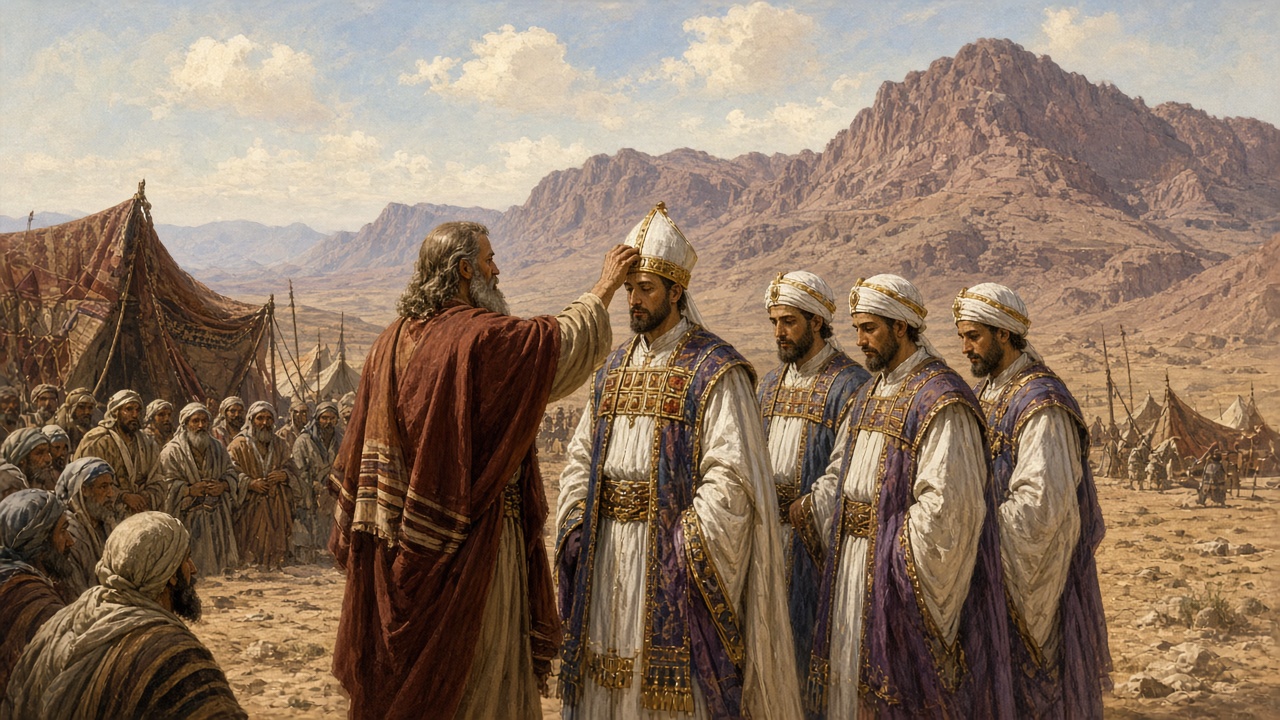
- Os capítulos 1 a 7 trazem leis sobre holocaustos, ofertas de manjares e ofertas de ação de graças, depois sobre ofertas pelo pecado e ofertas pela culpa, e sobre os deveres dos sacerdotes ao oferecer sacrifícios. Os capítulos 8 a 10 relatam a consagração de Arão e de seus filhos, a primeira oferta de Arão por si mesmo e pelo povo, e a morte de Nadabe e Abiú, feridos de morte e sepultados fora do acampamento depois de oferecerem fogo estranho, isto é, fogo comum não tomado do grande altar de bronze. Os capítulos 11 a 16 tratam da pureza e dos sacrifícios e ordenanças para afastar a impureza.Fontes: Easton: Leviticus · Nadab · Abihu
- Easton descreve os capítulos 17 a 20 como leis que marcam a separação entre Israel e os outros povos. Outras leis tratam da pureza pessoal dos sacerdotes e do consumo das coisas sagradas, das ofertas sem defeito e da devida celebração das grandes festas nos capítulos 23 e 25. Seguem-se promessas e advertências sobre a obediência, o livro termina com uma seção sobre votos, e Easton observa que Deus é quem fala diretamente em quase todo o livro.Fontes: Easton: Leviticus
- Nos ritos do capítulo 16, um bode está associado a Azazel, termo que a Authorized Version traduz por scapegoat e que a Revised Version mantém como Azazel. Easton relata que alguns intérpretes judeus o entendem como um lugar no deserto, cerca de doze milhas a leste de Jerusalém, enquanto outros o tomam como um espírito maligno ou até Satanás, e registra também o sentido de raiz: separação.Fontes: Azazel
Notas escritas com auxílio de IA a partir de fontes abertas (Theographic Bible Metadata, CC BY-SA 4.0; Easton’s Bible Dictionary, domínio público) e revisadas antes de publicar.
Yi tx'ixwatz yi na pat-xij cyakil yi wankil
1Itzun bantz, nintzun jilon tzaj Kataj Ryos tetz Moisés, tul yi mantial tetz molbil ib tu Kataj. Itzun taltz: 2“Chamwe' cu'n cyakil yi e' atanum, yi e' xonl Israel, nin alaj yi xtxolbile'j scyetz:
”Cyakil axwok yil cxu'l wok tan toye'n itx'ixwatz tzinwutz, tajwe'n cu'n yi cho'n tz'el tzaj ita'n ẍchixo'l wacẍ nka ẍchixo'l cne'r.
3”Ko at jun yi na taj toy jun wacẍ tetz xtx'ixwatz, yi spat-xok tircu'n, tajwe'n cu'n yi mam, nin yi qui'c mu'ẍ tal yana'sil. Nin tajwe'n yil toy swetz tetz cu'n talma'. Nin cho'n tz'opon ita'n swutz yi puertil yi pe'mil yi mantial tetz molbil ibaj. 4Tajwe'n yil tak'e'n yi aj oyinl yi k'ab twi' yi wacẍ yi spat-xok, bantz incuyul paj yi jun aj oyinla'tz. 5Ej, nin te yi nsken wi't je' tk'ol yi k'ab twi' yi wacẍa'tz, ba'n tzun tz'oc jak' kultz ta'n.
”Ma yi e' xonl Aarón yi e' cu'n pale', ba'n cho'c tan suke'n nin yi ẍch'el swetz, nin tan kojle'n nin tibaj nin xlajak yi patbil tx'ixwatz, yi cho'n at nicy'al yi wutzk'anil yi mantial tetz molbil ibaj. 6Ej, ba'n tzun tz'oc yi aj oyinla'tz tan telse'n cyakil yi stz'uml yi tetz xtx'ixwatz, nin tan ẍek'le'n cu'n yi wankil yi txuca'tz. 7Inti yi e' pale', ba'n lcyak'e'n k'ak' wi yi altar, yi patbil tx'ixwatz, nin ba'n chinuque'n yi si' tibaj yi k'ak'a'tz. 8Kalena's tzun lje' txoli'n yi e'chk piẍa'l yi wacẍa'tz yi nsken ẍek'xij tibaj yi si'. Ncha'tz sbne' yi wi' tuml cyakil yi ẍepu'il, ba'n lje' tak'le'n wi k'ak'. 9Ma te yi ntaxk oc wi k'ak', tajwe'n yil tz'oc yi aj oyinl tan xtx'ajle'n te'j yi lasu' tu yi cux yi wacẍ. Kalena's tzun tz'oc yi pale'-tz tan pate'n tircu'n, yi jun oya'tz. Na ni'cu'n chi i'tzk jun cumir yi na oylij swetz yi wi'nin c'o'cal tzinwutz, nin yi wi'nin na chintzatzin te'j.
10”Ma kol tz'eltzaj yi tx'ixwatz ita'n ẍchixo'l cne'r, nka ẍchixo'l chiw, tajwe'n yi i'tz jun mam yi qui'c mu'ẍ tal yana'sil. 11Ej nin cho'n tz'oc jak' kul, tzinwutz yi in Jehová yi iRyosil, te yi jalaj xlaj yi altar yi na xmayinin je'n tzi'n. Tajwe'n tzun yil cho'c yi e' pale', tan xtxitle'n nin yi ẍch'el yi jun oya'tz wi yi patbil tx'ixwatz nin ncha'tz xlajak. 12Kalena's tzun tz'oc piẍe'n cu'ntz. Nin tajwe'n tz'oc yi pale' tan nuc'leje'n yi chi'baja'tz tibaj yi si' yi at wi altar. Nin ncha'tz sbne' i' te yi wi', tuml until yi lasu'. Tircu'n jepon nuq'uij wi altar. 13Te yi ntaxk je' wi altar, tajwe'n yil tz'oc yi aj oyinl, tan xtx'ajle'n yi lasu' tuml yi cux yi jun oya'tz. Tz'ocopon tzun jun pale'-tz tan tocse'n k'a'kl tircu'n, tetz jun oy yi wi'nin c'o'cal tzinwutz, nin yi wi'nin na chintzatzin te'j.
14”Ma jalu', ko i'tz jun tal ch'u'l yi spat-xok tetz oy, tajwe'n cu'n yil xcon jun tal xmucuy, nka jun tal ne'ẍ slu'k. 15Nin tajwe'n yi cho'n tz'oc yi pale' tan banle'n yi munl swutz yi patbil tx'ixwatz. Tajwe'n bajx skinlen wi' yi tal txuca'tz, kalena's tzun lyutz'nin yi ẍch'el le jalaj xlaj yi patbil tx'ixwatz. Ba'n tzun tz'octz tan pate'n yi tal txuca'tz wi altar. 16Poro te yi ntaxk oc yi pale' tan pate'n, tajwe'n yil tz'el yi xpatzqui'y ta'n, tuml cyakil yi at le c'u'l, nin cho'n mben tcy'al xlaj len yi patbil tx'ixwatz, kale na molxe't yi tza'j. 17Ncha'tz, ba'n che' stz'ame'n yi xicy' tan katzle'n yi tal txuca'tz. Poro qui'c cuj tan cwe'n cobsal junawes. Kalena's tzun tz'octz tan pate'n tibaj yi si' yi at wi yi patbil tx'ixwatz, tetz jun oy yi wi'nin c'o'cal tzinwutz, nin yi wi'nin na chintzatzin te'j.
Você sabia?
O Holocausto
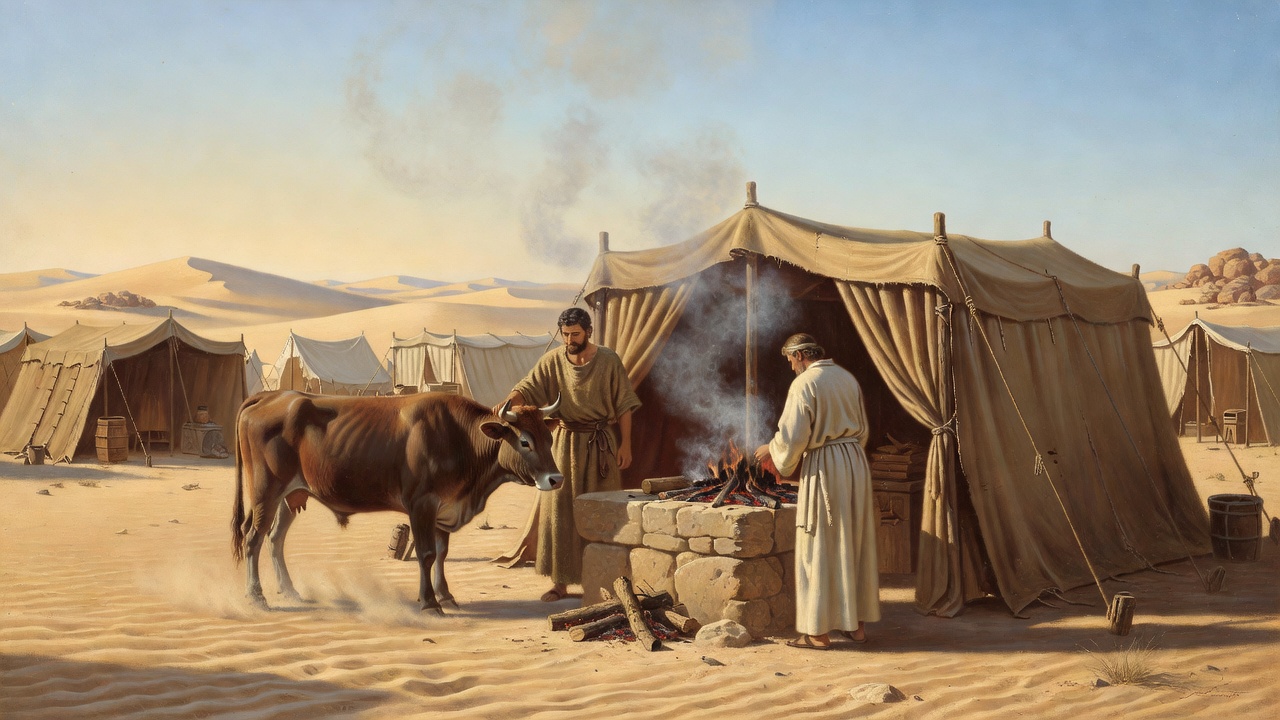
- As instruções para o holocausto previam diferentes condições materiais, permitindo ofertas do gado, do rebanho (ovelhas ou cabras) ou aves (rolinhas ou pombinhos). Para o gado e o rebanho, exigia-se um macho sem defeito.Fontes: o próprio texto bíblico
- O ritual estabelecia uma divisão clara de tarefas entre o adorador e os sacerdotes. O ofertante trazia o animal, colocava a mão sobre sua cabeça para expiação, abatia-o, esfolava-o e lavava suas partes internas, enquanto os filhos de Arão aspergiam o sangue e queimavam toda a oferta sobre o altar.Fontes: o próprio texto bíblico · Aaron
Notas escritas com auxílio de IA a partir de fontes abertas (Theographic Bible Metadata, CC BY-SA 4.0; Easton’s Bible Dictionary, domínio público) e revisadas antes de publicar.
Créditos e licença desta tradução
Yi Antiw Bible / Yi Ac'aj Testament
Bible in Aguacateco (GT:agu:Aguacateco)
copyright © 2011 Wycliffe Bible Translators, Inc.
Language: Aguacateco
Translation by: Wycliffe Bible Translators, Inc.
Copyright Information
© 2011-02-18, Wycliffe Bible Translators, Inc. All rights reserved.
This translation text is made available to you under the
terms of the Creative Commons License: Attribution-Noncommercial-No Derivative Works.
( http://creativecommons.org/licenses/by-nc-nd/3.0/ )
In addition, you have permission to port the text to different file formats, as long as you
do not change any of the text or punctuation of the Bible.
You may share, copy, distribute, transmit, and extract portions
or quotations from this work, provided that you include the above copyright
information:
You must give Attribution to the work.
You do not sell this work for a profit.
You do not make any derivative works that change any of the actual words or punctuation of the Scriptures.
Permissions beyond the scope of this license may be
available if you contact
us with your request.
The Bible
in Aguacateco
© 2011-02-18, Wycliffe Bible Translators, Inc. All rights reserved.
This translation is made available to you under the terms of the
Creative Commons Attribution-Noncommercial-No Derivatives license 4.0.
You may share and redistribute this Bible translation or extracts from it in any format, provided that:
You include the above copyright and source information.
You do not sell this work for a profit.
You do not change any of the words or punctuation of the Scriptures.
Pictures included with Scriptures and other documents on this site are licensed just for use with those Scriptures and documents.
For other uses, please contact the respective copyright owners.
2014-04-21
Fonte: http://ebible.org/aguBl/ · eBible.org