Levítico 1
Yi Antiw Bible / Yi Ac'aj Testament · Toca un versículo para ver sus referencias cruzadas.
Acerca de este libro
Sobre Levítico
- El Diccionario Bíblico de Easton (1897) presenta Levítico como el tercer libro del Pentateuco y como el tercer libro de Moisés. El nombre, usado en la Vulgata siguiendo la LXX, refleja el tema principal del libro: el servicio levítico.Fuentes: Easton: Leviticus
- Easton afirma que todas las ordenanzas del libro fueron entregadas en el espacio de un mes, el primer mes del segundo año después del Éxodo. En la entrada sobre el Sinaí, llamado también Horeb, dice que los hebreos llegaron a esa región montañosa en el tercer mes después del Éxodo y permanecieron acampados cerca de un año entero, y que todo Levítico registra lo que ocurrió allí.Fuentes: Easton: Leviticus · Mount Sinai
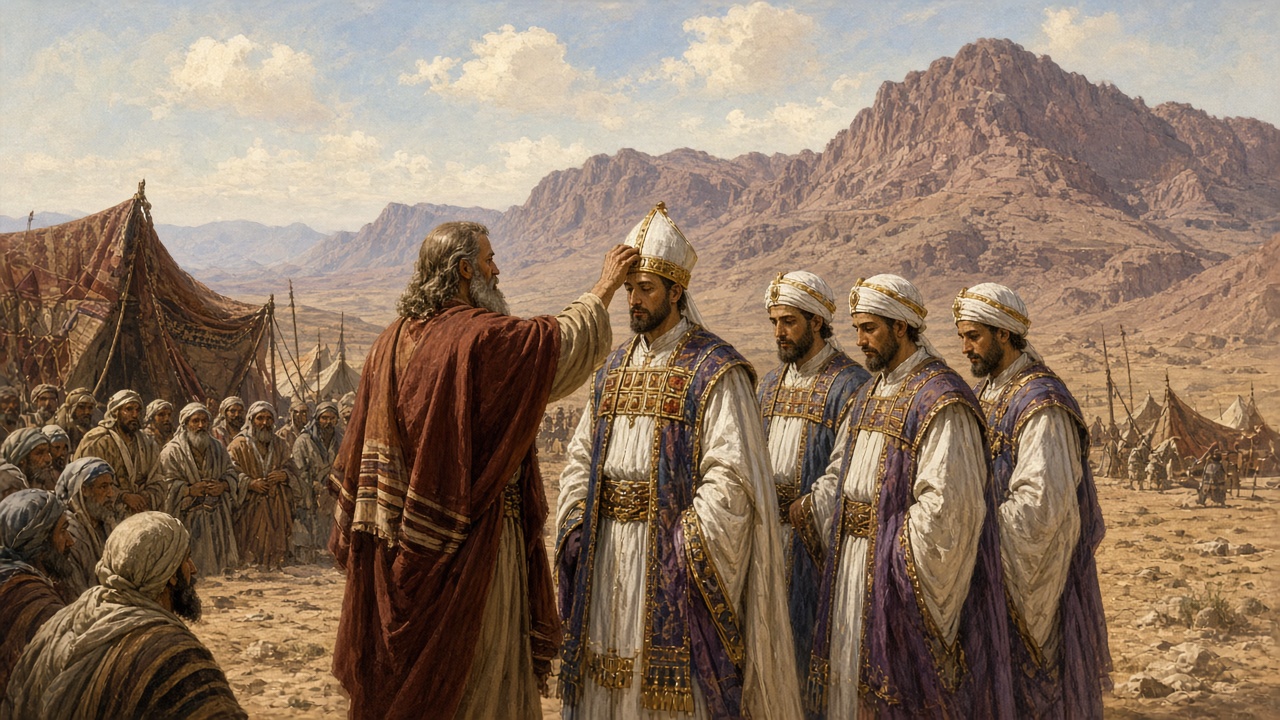
- Los capítulos 1 a 7 dan leyes sobre holocaustos, ofrendas de cereales y ofrendas de acción de gracias, luego sobre ofrendas por el pecado y ofrendas por la culpa, y sobre los deberes de los sacerdotes al ofrecer sacrificios. Los capítulos 8 a 10 relatan la consagración de Aarón y de sus hijos, la primera ofrenda de Aarón por sí mismo y por el pueblo, y la muerte de Nadab y Abiú, que fueron heridos de muerte y enterrados fuera del campamento tras ofrecer fuego extraño, es decir, fuego común no tomado del gran altar de bronce. Los capítulos 11 a 16 tratan de la pureza y de los sacrificios y ordenanzas para apartar la impureza.Fuentes: Easton: Leviticus · Nadab · Abihu
- Easton describe los capítulos 17 a 20 como leyes que marcan la separación entre Israel y los demás pueblos. Otras leyes tratan de la pureza personal de los sacerdotes y de su consumo de las cosas santas, de las ofrendas sin defecto y de la debida celebración de las grandes fiestas en los capítulos 23 y 25. Siguen promesas y advertencias acerca de la obediencia, el libro cierra con una sección sobre votos, y Easton observa que Dios es quien habla de manera directa en casi todo el libro.Fuentes: Easton: Leviticus
- En los ritos del capítulo 16, un macho cabrío queda asociado con Azazel, término que la Authorized Version traduce como scapegoat y que la Revised Version deja como Azazel. Easton informa que algunos intérpretes judíos lo toman como un lugar en el desierto, a unas doce millas al este de Jerusalén, mientras otros lo toman como un espíritu maligno o incluso Satanás, y también señala un significado de raíz: separación.Fuentes: Azazel
Notas escritas con ayuda de IA a partir de fuentes abiertas (Theographic Bible Metadata, CC BY-SA 4.0; Easton’s Bible Dictionary, dominio público) y revisadas antes de publicarse.
Yi tx'ixwatz yi na pat-xij cyakil yi wankil
1Itzun bantz, nintzun jilon tzaj Kataj Ryos tetz Moisés, tul yi mantial tetz molbil ib tu Kataj. Itzun taltz: 2“Chamwe' cu'n cyakil yi e' atanum, yi e' xonl Israel, nin alaj yi xtxolbile'j scyetz:
”Cyakil axwok yil cxu'l wok tan toye'n itx'ixwatz tzinwutz, tajwe'n cu'n yi cho'n tz'el tzaj ita'n ẍchixo'l wacẍ nka ẍchixo'l cne'r.
3”Ko at jun yi na taj toy jun wacẍ tetz xtx'ixwatz, yi spat-xok tircu'n, tajwe'n cu'n yi mam, nin yi qui'c mu'ẍ tal yana'sil. Nin tajwe'n yil toy swetz tetz cu'n talma'. Nin cho'n tz'opon ita'n swutz yi puertil yi pe'mil yi mantial tetz molbil ibaj. 4Tajwe'n yil tak'e'n yi aj oyinl yi k'ab twi' yi wacẍ yi spat-xok, bantz incuyul paj yi jun aj oyinla'tz. 5Ej, nin te yi nsken wi't je' tk'ol yi k'ab twi' yi wacẍa'tz, ba'n tzun tz'oc jak' kultz ta'n.
”Ma yi e' xonl Aarón yi e' cu'n pale', ba'n cho'c tan suke'n nin yi ẍch'el swetz, nin tan kojle'n nin tibaj nin xlajak yi patbil tx'ixwatz, yi cho'n at nicy'al yi wutzk'anil yi mantial tetz molbil ibaj. 6Ej, ba'n tzun tz'oc yi aj oyinla'tz tan telse'n cyakil yi stz'uml yi tetz xtx'ixwatz, nin tan ẍek'le'n cu'n yi wankil yi txuca'tz. 7Inti yi e' pale', ba'n lcyak'e'n k'ak' wi yi altar, yi patbil tx'ixwatz, nin ba'n chinuque'n yi si' tibaj yi k'ak'a'tz. 8Kalena's tzun lje' txoli'n yi e'chk piẍa'l yi wacẍa'tz yi nsken ẍek'xij tibaj yi si'. Ncha'tz sbne' yi wi' tuml cyakil yi ẍepu'il, ba'n lje' tak'le'n wi k'ak'. 9Ma te yi ntaxk oc wi k'ak', tajwe'n yil tz'oc yi aj oyinl tan xtx'ajle'n te'j yi lasu' tu yi cux yi wacẍ. Kalena's tzun tz'oc yi pale'-tz tan pate'n tircu'n, yi jun oya'tz. Na ni'cu'n chi i'tzk jun cumir yi na oylij swetz yi wi'nin c'o'cal tzinwutz, nin yi wi'nin na chintzatzin te'j.
10”Ma kol tz'eltzaj yi tx'ixwatz ita'n ẍchixo'l cne'r, nka ẍchixo'l chiw, tajwe'n yi i'tz jun mam yi qui'c mu'ẍ tal yana'sil. 11Ej nin cho'n tz'oc jak' kul, tzinwutz yi in Jehová yi iRyosil, te yi jalaj xlaj yi altar yi na xmayinin je'n tzi'n. Tajwe'n tzun yil cho'c yi e' pale', tan xtxitle'n nin yi ẍch'el yi jun oya'tz wi yi patbil tx'ixwatz nin ncha'tz xlajak. 12Kalena's tzun tz'oc piẍe'n cu'ntz. Nin tajwe'n tz'oc yi pale' tan nuc'leje'n yi chi'baja'tz tibaj yi si' yi at wi altar. Nin ncha'tz sbne' i' te yi wi', tuml until yi lasu'. Tircu'n jepon nuq'uij wi altar. 13Te yi ntaxk je' wi altar, tajwe'n yil tz'oc yi aj oyinl, tan xtx'ajle'n yi lasu' tuml yi cux yi jun oya'tz. Tz'ocopon tzun jun pale'-tz tan tocse'n k'a'kl tircu'n, tetz jun oy yi wi'nin c'o'cal tzinwutz, nin yi wi'nin na chintzatzin te'j.
14”Ma jalu', ko i'tz jun tal ch'u'l yi spat-xok tetz oy, tajwe'n cu'n yil xcon jun tal xmucuy, nka jun tal ne'ẍ slu'k. 15Nin tajwe'n yi cho'n tz'oc yi pale' tan banle'n yi munl swutz yi patbil tx'ixwatz. Tajwe'n bajx skinlen wi' yi tal txuca'tz, kalena's tzun lyutz'nin yi ẍch'el le jalaj xlaj yi patbil tx'ixwatz. Ba'n tzun tz'octz tan pate'n yi tal txuca'tz wi altar. 16Poro te yi ntaxk oc yi pale' tan pate'n, tajwe'n yil tz'el yi xpatzqui'y ta'n, tuml cyakil yi at le c'u'l, nin cho'n mben tcy'al xlaj len yi patbil tx'ixwatz, kale na molxe't yi tza'j. 17Ncha'tz, ba'n che' stz'ame'n yi xicy' tan katzle'n yi tal txuca'tz. Poro qui'c cuj tan cwe'n cobsal junawes. Kalena's tzun tz'octz tan pate'n tibaj yi si' yi at wi yi patbil tx'ixwatz, tetz jun oy yi wi'nin c'o'cal tzinwutz, nin yi wi'nin na chintzatzin te'j.
¿Sabías que…?
El Holocausto
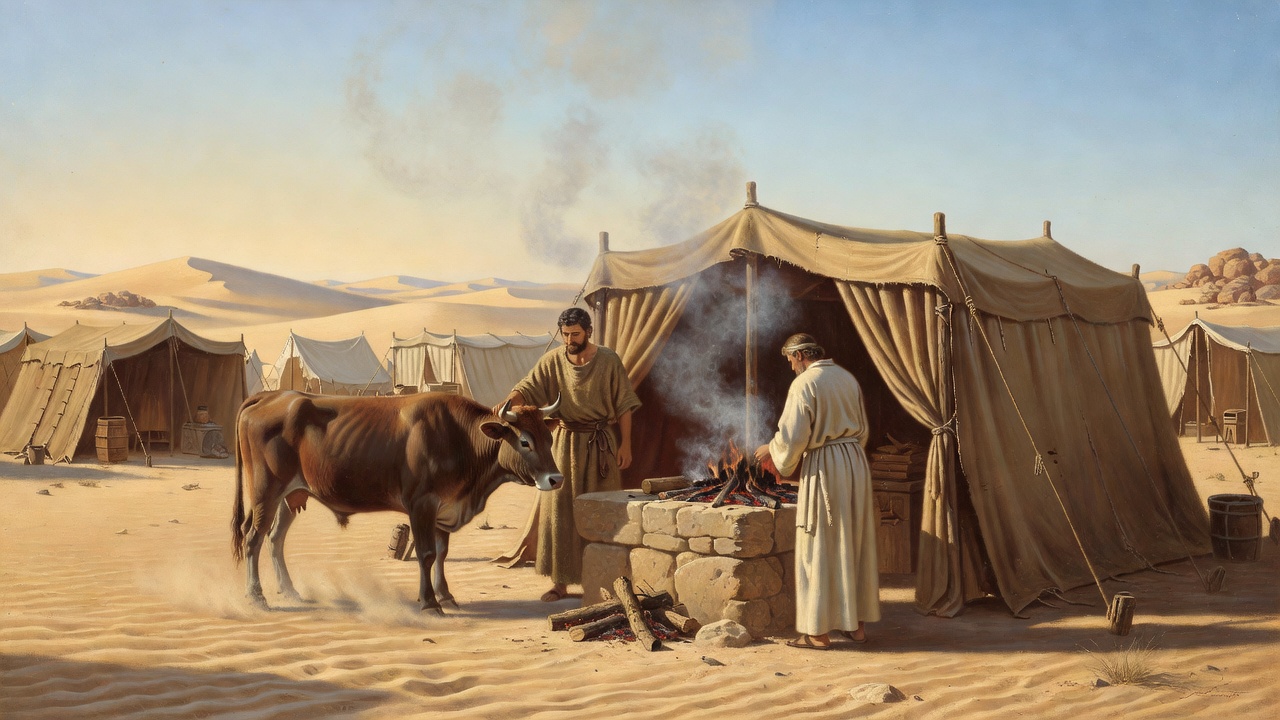
- Las instrucciones para el holocausto se adaptaban a distintas capacidades materiales, permitiendo ofrendas del ganado vacuno, del rebaño (ovejas o cabras) o de aves (tórtolas o pichones). En el caso del ganado y del rebaño, se requería un macho sin defecto.Fuentes: el propio texto bíblico
- El ritual establecía una clara división de funciones entre el oferente y los sacerdotes. El adorador presentaba el animal, ponía su mano sobre la cabeza de este para expiación, lo degollaba, lo desollaba y lavaba sus partes internas, mientras que los hijos de Aarón rociaban la sangre y quemaban toda la ofrenda sobre el altar.Fuentes: el propio texto bíblico · Aaron
Notas escritas con ayuda de IA a partir de fuentes abiertas (Theographic Bible Metadata, CC BY-SA 4.0; Easton’s Bible Dictionary, dominio público) y revisadas antes de publicarse.
Créditos y licencia de esta traducción
Yi Antiw Bible / Yi Ac'aj Testament
Bible in Aguacateco (GT:agu:Aguacateco)
copyright © 2011 Wycliffe Bible Translators, Inc.
Language: Aguacateco
Translation by: Wycliffe Bible Translators, Inc.
Copyright Information
© 2011-02-18, Wycliffe Bible Translators, Inc. All rights reserved.
This translation text is made available to you under the
terms of the Creative Commons License: Attribution-Noncommercial-No Derivative Works.
( http://creativecommons.org/licenses/by-nc-nd/3.0/ )
In addition, you have permission to port the text to different file formats, as long as you
do not change any of the text or punctuation of the Bible.
You may share, copy, distribute, transmit, and extract portions
or quotations from this work, provided that you include the above copyright
information:
You must give Attribution to the work.
You do not sell this work for a profit.
You do not make any derivative works that change any of the actual words or punctuation of the Scriptures.
Permissions beyond the scope of this license may be
available if you contact
us with your request.
The Bible
in Aguacateco
© 2011-02-18, Wycliffe Bible Translators, Inc. All rights reserved.
This translation is made available to you under the terms of the
Creative Commons Attribution-Noncommercial-No Derivatives license 4.0.
You may share and redistribute this Bible translation or extracts from it in any format, provided that:
You include the above copyright and source information.
You do not sell this work for a profit.
You do not change any of the words or punctuation of the Scriptures.
Pictures included with Scriptures and other documents on this site are licensed just for use with those Scriptures and documents.
For other uses, please contact the respective copyright owners.
2014-04-21
Fuente: http://ebible.org/aguBl/ · eBible.org