João 17
I 'utz laj tzij re i dios · Toque num versículo para ver as referências cruzadas.
I u tzʼonbal i Jesus che i Dios piquiwi u tijoxelab
1I Jesus, are xu qʼuis u bixquil ile chique, are ʼuri xtaken ʼan chicaj; queje iri xu bij:
—Ta, ya xu rik i ʼor. Cha ʼalijinsaj chique i winak wach i nim laj u ʼij Awacʼal. Xak queje ile, yin chi in Awacʼal, quin ʼalijinsaj wach i nim laj a ʼij yet. 2A yom i ʼatbal tzij pinʼab piquiwi conojel i winak. Queje ile a ʼanom man quin yabej-re i cʼaslemal chique niʼpa i je a yom chwe; are i cʼaslemal chi n-ca qʼuis ta chic. 3Are usucʼ i cʼaslemal-le are iri: are i retamaxic a wach yet, chi xui yet at sakil Dios, xak i retamaxic u wach i Jesucrísto chi a takom li yet.
4Yin in cojom a ʼij waral chuwach i jyub taʼaj, xak ya xin qʼuis i chac chi xin a tak chu ʼonquil. 5Woʼor, Ta, cha ʼana nim in ʼij chwe, chila awuʼ, pacha u nimal in ʼij are in ʼo awuʼ chu xebal ʼij sak, are maja ʼo u wach i jyub taʼaj.
6Are i xe a cha yet chiquixol i winak, y xe a ya pinʼab, in cʼutum chique at pachin yet. Lic chu xebal lok je awe yet, y yet xat ʼanaw chique chi quiqui cuba qui cʼux chwe yin, y je we yin; xak je cojon-nak che a tzij. 7Woʼor quetaʼam chic chi niʼpa i xa ya chwe, awuʼ yet petnak wi. 8Man, i tzij chi xa bij yet chwe, yin in bim chique, xak ique xqui cʼam i tzij-le pa qui cʼux. Xquetamaj ʼut chi lic katzij, awuʼ yet in petnak wi; xak xqui cojo chi yet xin a tak lok.
9Woʼor quin tzʼonoj chawe, che a to ique; n-are ta quin tzʼonoj piquiwi i winak chi toʼ je re u wach i jyub taʼaj. Are, quin tzʼonoj piquiwi ique chi xe a ya pinʼab, man je awe yet. 10Niʼpa tak i we yin, xak awe yet; niʼpa tak i awe yet, xak we yin. Ique quiqui ʼalijinsaj in ʼij yin (xak quiqui ʼalijinsaj a ʼij yet).
11Woʼor quin upon awuʼ, n-quin canaj ta waral chuwach i jyub taʼaj; xui ique que canaj chuwach i jyub taʼaj. Loʼlaj in Kajaw, quin tzʼonoj chawe chi che a chajij ruʼ a choʼab conojel niʼpa i xe a ya chwe. Yin awuʼ, xak jun ka wach; cwaj yin xak queje ique, xak jun qui wach. 12Tzʼakat xin qʼuiji cuʼ ique chuwach i jyub taʼaj, xe wucʼaj rumal a choʼab yet. Niʼpa i xe a ya pinʼab, xe in chajij. Rumal-i n-ta jun chique xtzak puʼab itzel, xui xtzak i jun chique, chi bital ujer chi ca tzakic, man queʼelok pacha i tzʼibtal can cumal i ajbil a tzij ujer.
13Yin ya quin upon awuʼ chila pa at ʼo wi, péro quin bij i tzij-i, quiqui tabej-re ique tzʼakat in ʼo chuwach i jyub taʼaj. Man cwaj yin ʼo na qui quicotemal pacha i quicotemal quin na yin. 14Yin in bim a tzij chique, y xqui cojo. I winak chi toʼ je re u wach i jyub taʼaj, tzel que quilo man ne te cachiʼil chic ique, pacha yin, chi n-in ta cachiʼil i winak chi toʼ je re u wach i jyub taʼaj. 15Yin, n-are ta quin tzʼonoj chawe chi que awesaj chuwach i jyub taʼaj; xa are quin tzʼonoj chawe chi que a to chuwach itzel. 16Queje pacha in ʼanom yin, n-in ta re u wach i jyub taʼaj, xak queje qui ʼanom ique ne te re u wach i jyub taʼaj. 17Cha ʼana chique chi lic je awe yet rumal i sak laj tzij chi quiqui ta. Are i a tzij yet are i sak laj tzij. 18Pacha i xa ʼan yet chwe yin, xin a tak li chi, chiquixol i winak chuwach i jyub taʼaj, xak queje quin ʼan yin chique ique, que in tak bi chiquixol i winak chuwach i jyub taʼaj. 19Yin, cumal ique, quin jach in cʼaslemal pa ʼab, man xak ique queʼelok lic je awe yet, rumal i sak laj tzij chi ca pe awuʼ.
20N-xui ta piquiwi ique quin tzʼonoj iri chawe; xak quin tzʼonoj chawe piquiwi niʼpa i quiqui cuba ni qui cʼux chwe coʼon panok, are quiqui ta ni qui tzij ique-ri. 21Quin tzʼonoj chawe, Ta, chi conojel ique xak junam ni qui wach. Xak quin tzʼonoj chawe chi ique, junam ni qui wach kuʼ yoj, pacha yet wuʼ yin, xak jun ka wach awuʼ yet. Queje ile, i winak chuwach i jyub taʼaj quiqui coj na chi yet xin a tak lok. 22I a ʼij a chomal chi a yom yet chwe, xak in yom yin chique ique. Queje ile xin ʼan chique man cwaj yin xak jun qui wach, pacha ka ʼanom yoj awuʼ, xak jun ka wach. 23Yin in ʼo na chique ique, pacha yet at ʼo chwe yin; queje ile queʼel ni ique lic xak jun qui wach, man ʼutz quiquil i winak chuwach i jyub taʼaj chi yet xin a tak lok, xak quiquilo chi cʼax que a naʼo pacha ca ʼan chwe yin, cʼax quin a naʼo.
24Ta, yet xe a ya chwe; cwaj yin que qʼuiji na wuʼ chila pa i quin qʼuiji wi yin; man ʼutz quiquil in chomal a yom chwe. I chomal-le a yom chwe man cʼax xin a naʼo chu xebal ʼij sak, are maja ʼo i u wach i jyub taʼaj. 25Yet Ta, chi lic sucʼul i ca ʼano, i winak chuwach i jyub taʼaj n-quetaʼam ti a wach, péro yin lic wetaʼam a wach; i achiab-i (chi je a yom chwe) quetaʼam chic chi yet xin a tak lok. 26Xin cʼut chique at pachin yet; xak n-quin mayij tu bixquil at pachin yet, man cwaj yin, pacha i cʼaxnabal we xa ʼano, xak ʼo chique ique, xak yin in ʼo na chique ique —xu bij i Jesus che i Ta chicaj.
Você sabia?
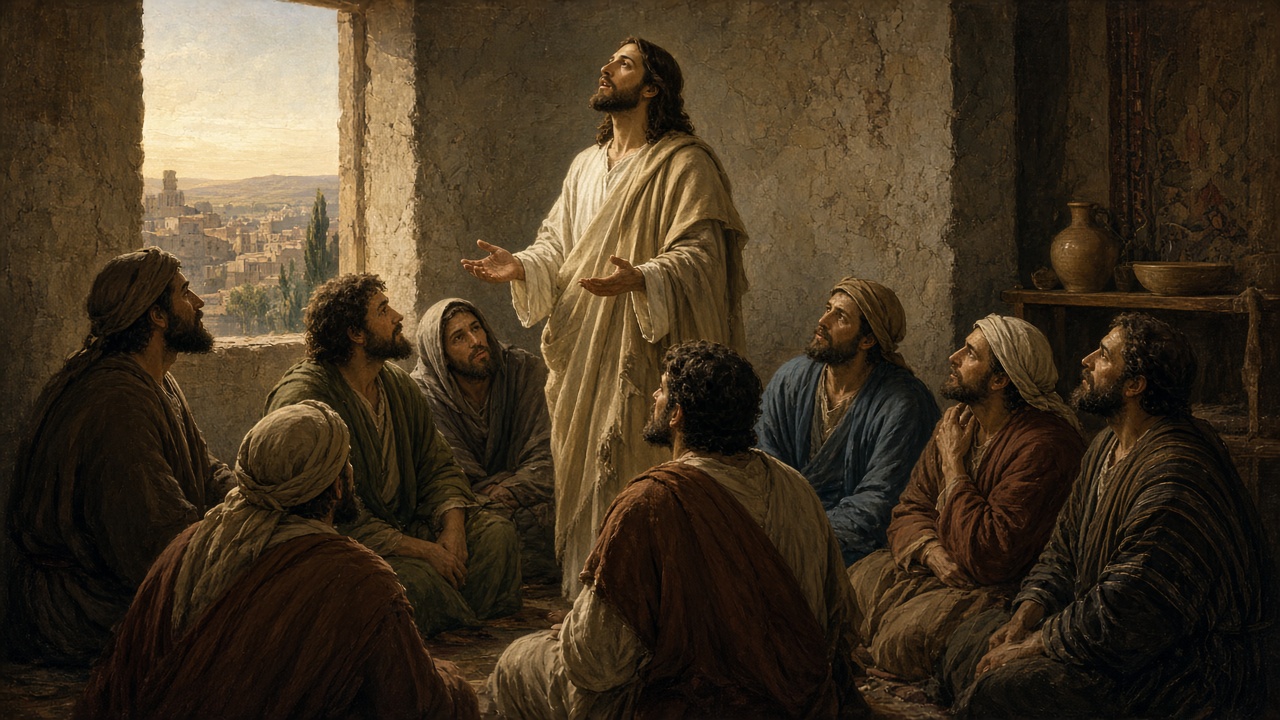
João 17: a hora chegou
- A oração começa quando Jesus, depois de ter dito essas coisas, ergue os olhos ao céu e diz que a hora chegou. Ela está associada ao Discurso do Cenáculo, indicado como um dia, e à Semana Santa, indicada como oito dias.Fontes: o próprio texto bíblico · Upper Room Discourse · Holy Week
- Aqui a vida eterna é conhecer o único Deus verdadeiro e Jesus Cristo, a quem o Pai enviou. Jesus também fala da glória que tinha com o Pai antes de o mundo existir e do amor do Pai por ele antes da fundação do mundo.Fontes: o próprio texto bíblico
- Ele ora por aqueles que o Pai lhe deu do mundo, os que guardaram a palavra, e também por quem crerá por meio da mensagem deles, pedindo que sejam um. Não pede que sejam tirados do mundo, mas que sejam guardados do maligno e santificados pela verdade, que ele identifica como a palavra do Pai.Fontes: o próprio texto bíblico
Notas escritas com auxílio de IA a partir de fontes abertas (Theographic Bible Metadata, CC BY-SA 4.0; Easton’s Bible Dictionary, domínio público) e revisadas antes de publicar.
Créditos e licença desta tradução
I 'utz laj tzij re i dios
New Testament in Achi (I 'utz laj tzij re i dios)
copyright © 2009 Wycliffe Bible Translators, Inc.
Language: Achi
Dialect: Cubulco
Translation by: Wycliffe Bible Translators, Inc.
Achi, Cubulco
Achi' is a Mayan language very
closely related to K'iche' (Quiché in the older orthography). It is spoken by the
Achi people, primarily in the area of Baja Verapaz in Guatemala. There are two Achi'
dialects. Cubulco Achi' is spoken by approximately 48,000 people in the Cubulco area
west of Rabinal area. Rabinal Achi' is spoken by approximately 37,000 people in the
Rabinal area.
El Nuevo Testamento
en el idioma Achí de Cubulco de
Guatemala
Ediciones anteriores
Segunda edición
©2009, Wycliffe Bible
Translators
Primera edición
Publicado por
©1984, Sociedad Bíblica
Internacional
Copyright Information
© 2009, Wycliffe Inc. All rights reserved.
This translation text is made available to you under the terms of the Creative
Commons License: Attribution-Noncommercial-No Derivative Works. ( http://creativecommons.org/licenses/by-nc-nd/3.0/ ) In addition, you have
permission to port the text to different file formats, as long as you do not change
any of the text or punctuation of the Bible.
You may share, copy, distribute, transmit, and extract portions or quotations from
this work, provided that you include the above copyright information:
You must give Attribution to the work.
You do not sell this work for a profit.
You do not make any derivative works that change any of the actual words or
punctuation of the Scriptures.
Permissions beyond the scope of this license may be available if you contact us
with your request. If you want to revise a translation, use a translation in an
adaptation, or use a translation commercially, we will consider your request.
NT:segunda edición
The New Testament
in Achi
© 2009, Wycliffe Inc. All rights reserved.
This translation is made available to you under the terms of the
Creative Commons Attribution-Noncommercial-No Derivatives license 4.0.
You may share and redistribute this Bible translation or extracts from it in any format, provided that:
You include the above copyright and source information.
You do not sell this work for a profit.
You do not change any of the words or punctuation of the Scriptures.
Pictures included with Scriptures and other documents on this site are licensed just for use with those Scriptures and documents.
For other uses, please contact the respective copyright owners.
2013-01-05
Fonte: http://ebible.org/acr-acc/ · eBible.org