João 16
I 'utz laj tzij re i dios · Toque num versículo para ver as referências cruzadas.
1Xin bij i tzij-i chiwe man n-qui sach tu cubibal i cʼux chwe are quiwil tak iri. 2Yix qui tij na chi n-quix cʼulax ta chic pa molbalʼib que aj Israel winak. Xak cu rik ni ʼij chi quiqui bij ni winak chi jun utzil chomal quiqui ʼan che i Dios we quix qui camsaj. 3Queje ile quiqui ʼan na, man mi xa ta jubiʼ quetaʼam u wach in Kajaw, xak n-quetaʼam ti in wach yin. 4Xin bij iri chiwe, man we xu rik i ʼor quiwil ile, are ʼuri ca cʼun chi cʼux chi ya in bim chic chiwe.
Wach coʼon i u Tewal i Dios are ca cʼunic
N-xin bij ti iri chiwe are xoj jekan wi lok, man in ʼo chi iwuʼ. 5Xui-ri, woʼor quin tzalij chic ruʼ i Ta chi xin takaw lok; quin bisoj man mi jun chiwe cu tzʼonoj chwe pa i quin ʼe wi. 6Rumal i tzij in bim chiwe, xa xoc i bis pi cʼux. 7Péro yin, sak laj tzij i quin bij chiwe, ʼutz queʼel chiwe yix we xin ʼec. Man yin, we n-quin ʼe taj, n-ca cʼun ta ʼuri i u Tewal i Dios chi quix rucʼaj; xui-ri, we xin ʼec, quin tak li iwuʼ. 8Ire, we xcʼun chi chuwach i jyub taʼaj, mas i cu sakij na chique i winak (chuwach tak i quin ʼan yin chique, man ire coc cʼa piqui cʼux, xak piqui nojbal). Queje ile, cu ʼalijinsaj na chique i winak chi lic je sachnak chupam i qui mac. Xak cu ʼalijinsaj na chique wach i ʼutz, sucʼulic chuwach i Dios; xak cu ʼalijinsaj na chique chi Dios cu ʼan i ʼatbal tzij piquiwi, wach tak quiqui ʼano. 9I u Tewal i Dios cu ʼalijinsaj chique chi je sachnak chupam i qui mac man n-que cojon ta chwe yin. 10Ire (pin qʼuexel yin), cu ʼalijinsaj wach i ʼutz, sucʼulic chuwach i Dios, man yin quin ʼe ruʼ i Ta chicaj y n-ca ʼiltaj ta chic in wach. 11Cu ʼalijinsaj wach u ʼatic tzij cu ʼan i Dios, man i Dios ya u ʼatom chic tzij puwi itzel, chi ʼo piquiwi i winak waral chuwach i jyub taʼaj.
12Cʼo u qʼuial tzij cwaj quin bij chiwe, péro n-quin bij taj, man n-quix tiqui ta chu tayic u be. 13Xui-ri, i u Tewal i Dios are aj cʼutunel re i sak laj tzij. Are ca cʼun ire iwuʼ, cu ʼalijinsaj chiwe ronojel i sak laj tzij. Man ire, niʼpa i cu bij, nu nojbal ti ire, man ʼis are cu bij niʼpa i ca bix che. Xak cu bij chiwe wach i ca ʼani na coʼon panok. 14Ire cu coj ni in ʼij yin, man cu ʼalijinsaj na chiwe wach cwaj u bixquil yin chiwe. 15Ronojel i ʼo ruʼ i Ta chicaj, xak we yin; rumal-i xin bij chiwe chi u Tewal i Dios cu ʼalijinsaj na chiwe wach i cwaj yin.
I Jesus xu bij u pactajic i bis que u tijoxelab
16Xa ruʼ jubiʼ chic n-quiwil ta chic in wach, péro jubiʼ panok, quiwil tan chic in wach, man ruʼ i Ta chicaj quin ʼe wi —xu bij i Jesus chique.
17Are ʼuri ʼo jujun chique u tijoxelab xqui tzʼonoj chiquiwach, xqui bij:
—¿Wach usucʼ ile xu bij? “Xa ruʼ jubiʼ chic n-quiwil ta chic in wach, péro jubiʼ panok, quiwil tan chic in wach, man ruʼ i Ta chicaj quin ʼe wi,” xcha. 18¿Wach craj u bixquil ile chake chi “jubiʼ panok” xu bij? N-caka ta tu be wach craj cu bij chake —xqui bij chiquiwach.
19I Jesus xril u be chi ʼo cacaj quiqui tzʼonoj che; are ʼuri xu bij chique:
—Are i tzij xin bij chiwe, “Xa ruʼ jubiʼ chic n-quiwil ta chic in wach, péro jubiʼ panok, quiwil tan chic in wach,” ¿are i tzij-le chi qui tzucuj usucʼ chiwach? 20Sak laj tzij i quin bij chiwe: yix qui tij na quix bisonic, xak qui tij ni oʼej; xui-ri i winak re u wach i jyub taʼaj xa que quicotic. Péro yix, we qui tij na quix bisonic, coʼon panok ca pactaj i bis-le, teʼuri quix quicot tan chic. 21Queje qui ʼano, pacha jun ixok ca bisonic are cu rik i ʼor ca qʼuiji jun racʼal, man retaʼam cu tij ni cʼax. Xui-ri we ya xqʼuiji i acʼal, teʼuri ca quicot tan chic, xak n-ca cʼun ta chic chu cʼux wach i cʼax xu tijo; ca quicot ʼut rumal i ral acʼal chi xalaxic. 22Queje ile yix woʼor, quix bisonic, xui-ri cakil tan chic kib, teʼuri lic quix quicot tan chic. I quicotemal-le, n-ta jun ca majaw chiwe. 23We xu rik i ʼij-le, ya n-ta chic u chac qui tzʼonoj chwe wach usucʼ in tzij in bim chiwe.
Sak laj tzij i quin bij chiwe: i Ta chicaj, wach i qui tzʼonoj che pin bi yin, cu ya na chiwe. 24Cʼa are ʼo wi woʼor, n-ta i tzʼonom che pin bi yin; woʼor chi tzʼonoj ʼut, y ca yataj na chiwe, man mas quix quicot na rumal.
I Jesucrísto resam u choʼab i n-ʼus taj re u wach i jyub taʼaj
25Niʼpa in cʼutum chiwe, in junamsam ruʼ wach tak iwetaʼam u wach waral chuwach i jyub taʼaj. Xui-ri, cu rik ni ʼij n-ta chic u chac quin junamsaj in cʼutunic chiwe ruʼ wach tak iwetaʼam u wach; lic sakil chic quin lap i Ta chiwe. 26We xu rik i ʼij-le, are chic yix qui tzʼonoj che i Dios, man queje ile quin ya piʼab qui ʼano. N-ta chic u chac chi yin quin tzʼonoj che i Ta pi qʼuexel yix, 27man xak i Ta cʼax quix u naʼo. Cʼax quix u naʼo man yix cʼax quin i na yin, xak xi cojo chi yin in petnak ruʼ i Dios. 28Xwoʼtaj can i Ta man xin cʼun waral chuwach i jyub taʼaj; xui-ri, woʼor cwoʼtaj can u wach i jyub taʼaj, y quin tzalij chic ruʼ i Ta chicaj —xu bij chique.
29Teʼuri xqui bij u tijoxelab che:
—Bay, woʼor lic sakil cat tijin chu bixquil; ya n-ca junamsaj ta chic a tzij ruʼ wach tak i ʼo waral chi ketaʼam u wach. 30Woʼor, xketamaj chi yet, ronojel ʼis awetaʼam. Yet awetaʼam chic wach cakaj caka tzʼonoj chawe are cʼa maja caka bij, rumal-i, n-tu chac we ʼo jun cu tzʼonoj chawe. Rumal ile, ketaʼam chi at petnak ruʼ i Dios —xqui bij.
31I Jesus xu bij chique:
—¿Lic i cojom woʼor? 32Ya cu rik i ʼij, y are chic i ʼij iri, iwonojel yix ca quichtaj nubi i wach, chi jujunal. Quin i canaj can intuquel. Xui-ri, n-intuquel taj quin canajic, man i Ta chicaj ʼo wuʼ. 33Ronojel iri quin bij chiwe, man cwaj cuxlan i cʼux wumal yin. Yix, waral chuwach i jyub taʼaj, qui tij ni cʼax; xui-ri chi cowij i cʼux, man yix ix ʼo pin ʼab yin, y yin in tiquinak che u choʼab niʼpa i n-ʼus taj chi ʼo chuwach i jyub taʼaj —xu bij chique.
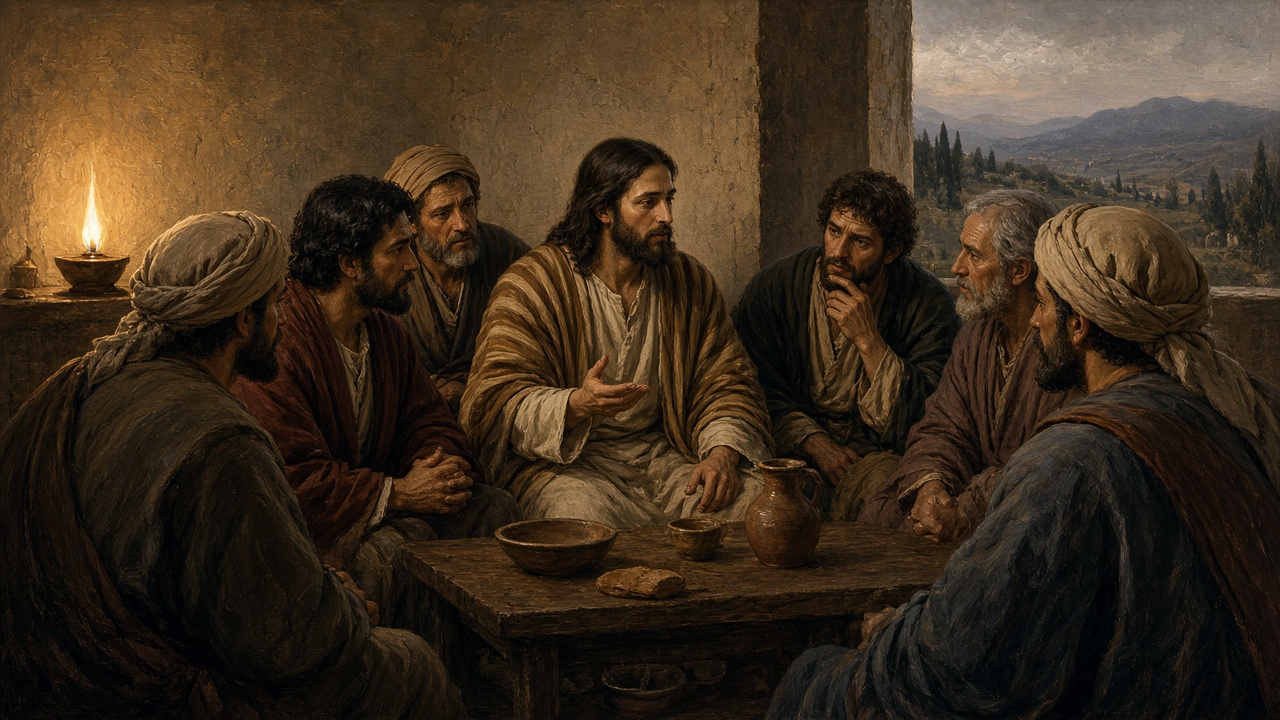
Você sabia?
A partida, o Advogado e a alegria após a tristeza
- As anotações dos eventos situam este capítulo no Discurso do Cenáculo, um episódio de um dia dentro da Semana Santa, que essas anotações indicam como um período de oito dias.Fontes: Upper Room Discourse · Holy Week
- Jesus diz aos discípulos que eles serão expulsos das sinagogas. Acrescenta que virá um tempo em que quem os matar pensará que está oferecendo um serviço a Deus, porque não conheceram o Pai nem a ele.Fontes: o próprio texto bíblico
- Ele diz que é para o bem deles que está indo embora, pois, se não partir, o Advogado não virá. Quando o Espírito da verdade vier, os guiará a toda a verdade, não falando por si mesmo, mas dizendo o que ouve e anunciando o que está por vir.Fontes: o próprio texto bíblico
Notas escritas com auxílio de IA a partir de fontes abertas (Theographic Bible Metadata, CC BY-SA 4.0; Easton’s Bible Dictionary, domínio público) e revisadas antes de publicar.
Créditos e licença desta tradução
I 'utz laj tzij re i dios
New Testament in Achi (I 'utz laj tzij re i dios)
copyright © 2009 Wycliffe Bible Translators, Inc.
Language: Achi
Dialect: Cubulco
Translation by: Wycliffe Bible Translators, Inc.
Achi, Cubulco
Achi' is a Mayan language very
closely related to K'iche' (Quiché in the older orthography). It is spoken by the
Achi people, primarily in the area of Baja Verapaz in Guatemala. There are two Achi'
dialects. Cubulco Achi' is spoken by approximately 48,000 people in the Cubulco area
west of Rabinal area. Rabinal Achi' is spoken by approximately 37,000 people in the
Rabinal area.
El Nuevo Testamento
en el idioma Achí de Cubulco de
Guatemala
Ediciones anteriores
Segunda edición
©2009, Wycliffe Bible
Translators
Primera edición
Publicado por
©1984, Sociedad Bíblica
Internacional
Copyright Information
© 2009, Wycliffe Inc. All rights reserved.
This translation text is made available to you under the terms of the Creative
Commons License: Attribution-Noncommercial-No Derivative Works. ( http://creativecommons.org/licenses/by-nc-nd/3.0/ ) In addition, you have
permission to port the text to different file formats, as long as you do not change
any of the text or punctuation of the Bible.
You may share, copy, distribute, transmit, and extract portions or quotations from
this work, provided that you include the above copyright information:
You must give Attribution to the work.
You do not sell this work for a profit.
You do not make any derivative works that change any of the actual words or
punctuation of the Scriptures.
Permissions beyond the scope of this license may be available if you contact us
with your request. If you want to revise a translation, use a translation in an
adaptation, or use a translation commercially, we will consider your request.
NT:segunda edición
The New Testament
in Achi
© 2009, Wycliffe Inc. All rights reserved.
This translation is made available to you under the terms of the
Creative Commons Attribution-Noncommercial-No Derivatives license 4.0.
You may share and redistribute this Bible translation or extracts from it in any format, provided that:
You include the above copyright and source information.
You do not sell this work for a profit.
You do not change any of the words or punctuation of the Scriptures.
Pictures included with Scriptures and other documents on this site are licensed just for use with those Scriptures and documents.
For other uses, please contact the respective copyright owners.
2013-01-05
Fonte: http://ebible.org/acr-acc/ · eBible.org