Apocalipsis 7
Tupã Je'ẽha · Toca un versículo para ver sus referencias cruzadas.
144.000 hetaha jundéu awa ta ke
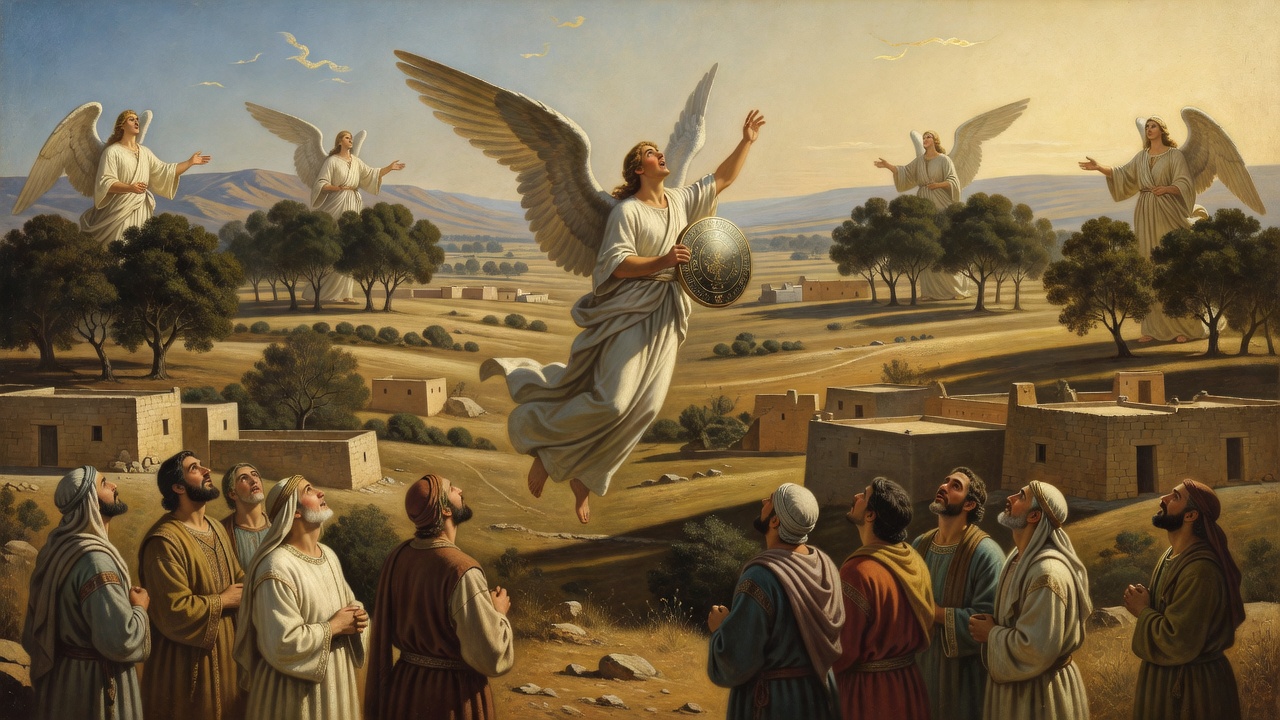
1Upa ame'ẽ rehe ihẽ asak. A'engi amõ ma'e ihẽ keraiha aja ihẽ asak tĩ. Kuja. Tumeme Tupã je'ẽha rahoha ta rehe ihẽ asak. Ihẽ Juã. Ame'ẽ Tupã je'ẽha rahoha ta amõ koty koty pu'am u'am. Warahy uhemiha koty peteĩ. Warahy u'ariha koty amõ pu'am u'am tĩ. Warahy jurukwã koty amõ tĩ. Amõ warahy jurukwã koty amõ tĩ. Ame'ẽ ta riki ywytu ke mupyta. A'erehe kome'ẽ ywy keruhũ rupi ywytu peju ym te. Y ramũi 'ar rupi peju ym te tĩ. Myra rehe peju ym te tĩ. 2Pe, amõ Tupã je'ẽha rahoha rehe ihẽ asak. Warahy uhemiha koty ngi a'e uwyr. Ipo pe ma'e ke namõ ixo. Awa riki Tupã kotyhar ke aja ukwaha ke namõ ixo. Ame'ẽ mangaha riki Tupãma'e ke. A'e riki ixuwe katu te hũ ame'ẽ ke a'e. Pe, ame'ẽ Tupã je'ẽha rahoha pandu. Tumeme Tupã je'ẽha rahoha ta pe pandu. Ame'ẽ ta pe Tupã pandu: “Ihẽ je'ẽha rupi kome'ẽ ywy keruhũ ke pemai peho. Y ramũi aja tĩ. Pemai tĩ.” Ame'ẽ Tupã je'ẽha rahoha ta pe amõ Tupã je'ẽha rahoha pandu. 3Kuja pandu:
—Tupãma'e miasu ta rehe ukwaha pemoĩ ym rahã we, kome'ẽ ywy keruhũ ke pemujaxer ym we rĩ. Y ramũi aja tĩ. Pemujaxer ym we rĩ. Myra aja tĩ. Pemujaxer ym we rĩ. Ipykã rehe ixotyhar ta ukwaha ke pemoĩ ym rahã we, ma'e ke pemujaxer ym we rĩ — aja riki pandu.
4Pe, ngã hetaha mangaha ke ihẽ pe a'e pandu. Kuja, 144.000 hetaha ta ke. Ame'ẽ ta pykã rehe ukwaha ke moĩ. Tupã kotyhar ta ke peme'ẽ ta, ame'ẽ ukwaha ke moĩ. Jundéu awa ta riki amõ koty koty jy'ar. Awa py mokõi hetaha ta jy'ariha. Ame'ẽ ta ngi amõ amõ ta jo'ok rahã, 144.000 hetaha ta uhyk.
5A'erehe Junda kotyhar ta ngi har 12.000 hetaha ta uhem oho.
Humẽ kotyhar ta ngi har 12.000 hetaha ta uhem oho tĩ.
Nga kotyhar ta ngi har 12.000 hetaha ta uhem oho tĩ.
Ase kotyhar ta ngi har 12.000 hetaha ta uhem oho tĩ.
Natari kotyhar ta ngi har 12.000 hetaha ta uhem oho tĩ.
Manase kotyhar ta ngi har 12.000 hetaha ta uhem oho tĩ.
Simeã kotyhar ta ngi har 12.000 hetaha ta uhem oho tĩ.
Rewi kotyhar ta ngi har 12.000 hetaha ta uhem oho tĩ.
Isakar kotyhar ta ngi har 12.000 hetaha ta uhem oho tĩ.
Semurõ kotyhar ta ngi har 12.000 hetaha ta uhem oho tĩ.
Jose kotyhar ta ngi har 12.000 hetaha ta uhem oho tĩ.
Menjamĩ kotyhar ta ngi har 12.000 hetaha ta uhem oho tĩ.
A'erehe johu upa ngã jy'ar rahã, 144.000 hetaha ta uhyk.
Heta te hũ ame'ẽ ta i'ãi
9A'engi ihẽ ama'ã rahã, heta te hũ ame'ẽ ta ixo. Marã ka ym amõ mangaha. Heta te hũ riki. Ka'a pe har ta ngi har pete'e ixo. Amõ amõ awa ta ngi har ta ixo tĩ. Amõ amõ ywy pe har ta ixo tĩ. Amõ amõ je'ẽha pandu ame'ẽ ta ixo tĩ. Wapyka ndutar koty ame'ẽ ta pu'am u'am. Arapuharan Ra'yr ndutar koty pu'am u'am tĩ. (Kirisutu a'e.) Ame'ẽ heta te hũ ame'ẽ ta mundeha ituwyr ame'ẽ namõ pame katu te ixo. Aja rahã, Tupã pandu: “Pehẽ katu te. Ma'e peka'u te'eha pema'eha ke nixói te pehẽ pe” aja ngã pe. Ngã po rehe pindo ro aja me'ẽ namõ ixo. (Aja rahã, ame'ẽ ta ke huwajan ta muputu'u ym aja mujekwa. Tupã rehe jurujar katuha ke hijar ym, aja mujekwa tĩ.) 10Ame'ẽ ta pukái:
—Tupã riki ngã ke muhã katu. A'e riki wapyka rehe wapyk uĩ. Kirisutu riki ngã ke muhã katu tĩ. A'e riki Arapuharan Ra'yr aja a'e — aja.
11Wapyka juramã rupi upa katu te Tupã je'ẽha rahoha ta pu'am u'am. Tamũi ta aja tĩ. Pu'am u'am tĩ. Tumeme ixuwe katu hũ ame'ẽ ta aja tĩ. Wapyka juramã rupi pu'am u'am tĩ. Pe, wapyka ndutar koty ame'ẽ ta u'ar oup. Upa katu te ame'ẽ ta huwa koty u'ar oup. Aja Tupã rehe ngã py'a ke ngã moĩ moĩ katu. 12Pe, ngã pandu:
—Amen! A'e tỹ!
Ne jõ riki katu te me'ẽ ke nde!
Nde riki erekwa katu te ame'ẽ ke nde tĩ!
Nde riki je'ẽha te nde erereko ame'ẽ ke nde tĩ!
Nde riki upa katu te nde eremujã, ame'ẽ ke nde eremondo mondo tĩ.
Nde riki pyrãtã te hũ ame'ẽ ke nde tĩ.
Upa aja te'e ta nde erexo. A'e tỹ! — aja Tupã pe ngã pandu.
13Pe, tamũi ta ngi har peteĩ ihẽ pe pandu:
—Peme'ẽ mundeha ituwyr ame'ẽ namõ pame katu te munde. Awa riki peme'ẽ ta my? My ngi uhyk my? — aja ihẽ pe.
14—Sa'e! Ihẽ akwa ym. Nde atu erekwa katu — aja ihẽ apandu ipe.
A'e pandu:
—Mupyraraha keruhũ ngi peme'ẽ ta uhem. Katu uhem. Arapuharan Ra'yr ruwy namõ ngãma'e mundeha kutuk, ame'ẽja saka, a'erehe ituwyr te. (Aja rahã, ngã py'a ke Tupã upa katu te juhyk, aja mujekwa.) Kirisutu riki ame'ẽ Arapuharan Ra'yr aja a'e. 15Ame'ẽ ruwy pe ngã py'a juhyk, a'erehe Tupãma'e wapyka ndutar koty a'eta pu'am u'am. A'e ixo, ame'ẽ renda riki Tupã rehe ngã jumu'eha renda keruhũ aja saka. A'ep tapijar te'e we Tupã rehe ngã py'a ke ngã moĩ moĩ katu. “Ne jõ riki katu te me'ẽ ke” aja pandu pandu Tupã pe. Putu'u ym panduha. A'ep Tupã ixo, a'erehe marã ka ym ngã ke amõ mahyha. Katu ixo. 16Kirisutu riki Arapuharan Ra'yr aja a'e. A'e riki katu te ame'ẽ ke, a'erehe johu pyter pe ixo. Ngã py'a juhyk ame'ẽ ta rehe a'e usak katu ta. Arapuharan ta usakiha aja ame'ẽ ta rehe a'e usak katu tĩ. Mundu pe ame'ẽ ta ke a'e raho ta tĩ. Ame'ẽ ngi y ke ame'ẽ ta u'u ta. Ame'ẽ y muxuwe katu hũ ta. (Aja rahã, aja te'e ta hury katu te ixo, aja mujekwa katu.) A'erehe ame'ẽ ta myahy ym te ta tĩ. Hyngwéi ym te ta tĩ. Warahy hakuha pyhyk ym te ta tĩ. Haku ym te ta tĩ. Pe, ngã reha ngi upa katu te eha rykwer ke Tupã mukanim ta. (Aja rahã, pyai ym te ta ngã. Jixi'u ym te ta tĩ.) Aja te'e ta hury katu te ixo — aja ihẽ pe tamũi pandu.
¿Sabías que…?
Las tribus selladas y la gran multitud
- Apocalipsis 7 presenta el número de los sellados como 144,000, doce mil de cada una de las tribus de Israel nombradas en el capítulo. Israel era otro nombre de Jacob, el segundo de los hijos gemelos de Isaac y Rebeca; el Easton's Bible Dictionary (1897) explica el nombre de Jacob como alguien que sigue los talones de otro, o un suplantador.Fuentes: el propio texto bíblico · Jacob (Israel)
- Aunque Rubén era el hijo mayor de Jacob y Lea, la lista de los sellados comienza con Judá y luego nombra a Rubén. La lista incluye también tanto a José como a Manasés; Manasés era el hijo mayor de José, y Jacob lo adoptó a él y a su hermano Efraín como hijos propios.Fuentes: el propio texto bíblico · Reuben · Manasseh (son of Joseph)
- Después del sellado, la visión muestra una multitud demasiado grande para contarse, de toda nación, tribu, pueblo y lengua, de pie ante el trono y el Cordero, con vestiduras blancas y ramas de palma en las manos. Uno de los ancianos dice que han salido de la gran tribulación y han lavado sus vestiduras, dejándolas blancas en la sangre del Cordero.Fuentes: el propio texto bíblico
Notas escritas con ayuda de IA a partir de fuentes abiertas (Theographic Bible Metadata, CC BY-SA 4.0; Easton’s Bible Dictionary, dominio público) y revisadas antes de publicarse.
Créditos y licencia de esta traducción
Tupã Je'ẽha
New Testament in Kaapor (BR:urb:Kaapor)
copyright © 2012 Wycliffe Bible Translators, Inc.
Language: Kaapor
Translation by: Wycliffe Bible Translators, Inc.
Copyright Information
© 2012, Wycliffe Bible Translators, Inc. All rights reserved.
This translation text is made available to you under the
terms of the Creative Commons License: Attribution-Noncommercial-No Derivative Works.
( http://creativecommons.org/licenses/by-nc-nd/3.0/ )
In addition, you have permission to port the text to different file formats, as long as you
do not change any of the text or punctuation of the Bible.
You may share, copy, distribute, transmit, and extract portions
or quotations from this work, provided that you include the above copyright
information:
You must give Attribution to the work.
You do not sell this work for a profit.
You do not make any derivative works that change any of the actual words or punctuation of the Scriptures.
Permissions beyond the scope of this license may be
available if you contact
us with your request.
The New Testament
in Kaapor
© 2012, Wycliffe Bible Translators, Inc. All rights reserved.
This translation is made available to you under the terms of the
Creative Commons Attribution-Noncommercial-No Derivatives license 4.0.
You may share and redistribute this Bible translation or extracts from it in any format, provided that:
You include the above copyright and source information.
You do not sell this work for a profit.
You do not change any of the words or punctuation of the Scriptures.
Pictures included with Scriptures and other documents on this site are licensed just for use with those Scriptures and documents.
For other uses, please contact the respective copyright owners.
2014-04-27
Fuente: http://ebible.org/urbNT/ · eBible.org