Hageo 2
Bibiri Kuyie Nnɑ́ɑǹtì Pɑ́tíri · Toca un versículo para ver sus referencias cruzadas.
Kuyie nyóó wɛ̃tɛ kɛ́duɔ́mmɛ̀ ku cĩ́ɛ̃̀tɛ̀ diyetìdiɛrì
1Okpɑ̀ɑ̀tì Dɑdiyuusi kpɑ̀tì benni dɛ́rì, otɑ̃̀nkù yiénwè kó diyiè sipísìdɛ́ nɛ̀ dimɑ́ɑ̀. Kɛ̀ ti Yiɛ̀ nKuyie nyíɛ́ kɛ́nɑ́kɛ́ ku pɑ̃ɑ̃nɑ́ɑǹtì nɑ́ɑǹtò Asee ò bo nɑ́kɛ́ tì bɛnìtìbɛ̀, 2kóò bɛ́innɛ̀ kɛ dɔ̀: Nɑ́kɛ́ Seditiɛri birɛ Sodobɑbɛɛdi Sudɑɑ kɔbɛ kóò kùmɑ̀ndɑ́ɑ̀ nɛ̀ Yotisɑdɑki birɛ Sosuwee ikuɔ́ nìùtì diɛwè nɛ̀ bɛnìtìbɛ̀ sɔmbɛ kɛ dɔ̀:
3Di miɛkɛ we ndo yɑ̀ n kpetì do dòmmɛ̀ n cĩ́ɛ̃̀tɛ̀ miɛkɛ?
Di nɛ́ tɛ̀ wùómmɛ̀ yíe, ntɛ̀ dòmmɛ?
Tɛ̀ í nɑɑ́ ndɛtetìrɑ̀ɑ̀?
4Fɔ̃́ nSodobɑbɛɛdi nɛ̀ Yotisɑdɑki birɛ Sosuwee ikuɔ́ nìùtì diɛwè yɑ́úkùnnɛ di kɔ̃̀ntì,
dihɛì kó bɛnìtìbɛ̀ bɛmɔu, yɑ́úkùnnɛ di kɔ̃̀ntì kɛ pĩ́ n tɔ̃mmú.
N di bonɛ̀mu. Mí nKuyie Mpɑkɛdɑɑ míì bɛ́i!
5N do tì ndi nɑ̀kɛ́mu di yɛtì dìì mɔ̀nnì Esibiti.
N kó Muyɑɑ́ ndi bonɛ̀mu, di bɑ́ nyĩɛ̃̀kù!
6Mí nKuyie Mpɑkɛdɑɑ míì bɛ́i nkɛ tú:
Dɛ̀ kpɑɑ́ sɑ́m̀pɔ́ nwe,
kɛ̀ n sɑ̃ntɛ̀ tiwɛtì nɛ̀ kɛtenkɛ̀ nɛ̀ dɑ̀mɛ́ɛ̀rì, kɛtenkɛ̀ kɛmɔu.
7M bo sɑ̃ntɛ̀ yɛbotɛ̀ kɛ̀ yɛ kpɑ̀tì timɔu cóúnní m borɛ̀,
kɛ̀ n wɛ̃tɛ kɛ́duɔ́ n cĩ́ɛ̃̀tɛ̀ tɛyetìdiɛrì.
Mí nKuyie Mpɑkɛdɑɑ míì bɛ́i!
8Míì te mɛsɔɔ nnɛ̀ timɑ́tì pɛ́ítì,
mí nKuyie Mpɑkɛdɑɑ míì bɛ́i!
9N cĩ́ɛ̃̀tɛ̀ yètìrì bo dɛukɛ kɛ́pɛ̃ɛ̃tɛ́ di do dòmmɛ̀
n yóó di duɔ́mmu mɛom̀pùmɛ̀,
mí nKuyie Mpɑkɛdɑɑ míì bɛ́i!
Wèè í yie nKuyie nyɛ̃ mmù ò dɔ̀ɔ̀ri dɛ̀ dɛmɔu ɔ̃ nsĩ̀mmu
10Dɑriyuusi kpɑ̀tì benni dɛ́rì otɑ̃̀nkù wɛínwè kó diyiè sipísìdɛ́ nɛ̀ dinɑɑnnì kɛ̀ ti Yiɛ̀ nKuyie mbɛ́innɛ̀ ku pɑ̃ɑ̃nɑ́ɑǹtì nɑ́ɑǹtò Asee kɛ dɔ̀: 11Mí nKuyie Mpɑkɛdɑɑ míì tu: Bekɛ́ ikuɔ́ nìùbɛ̀ kɛ̀ bɛ̀ dɑ nɑ́kɛ́ ikuɔ́ yɛ̃ mmù, 12bekɛ́ kɛ dɔ̀: Kɛ̀ dɛ̀ dò nyikuɔ́ nìùtì mɔù cũɔ̃́ imɑɑ bɛ̀ fèútɛ́ ì Kuyie nho yɑɑ̀yɔ̀rì miɛkɛ, kɛ̀ dì kɑ̀ɑ́kɛ́ pɛ̃́ɛ̃̀ yoo mudiì yoo mɛnɑɑ̀ nyoo mɛkùɔ̀, yoo tidiitì tɛtì mɑtì tì bo wenkɑɑ̀? Kòo bɛ̀ bekɛ. Kɛ̀ bɛ̀ɛ ò tɛ̃̀ńnɛ́ kɛ dɔ̀: Ɔ́ɔ̀! 13Kɛ̀ Asee sɔɔtɛ́ kɛ́bɛ́i nkɛ dɔ̀: Kòo nìtì nɛ́ kɑ̀ɑ́kɛ́ ocíì kɛ sĩ̀ntɛ, kɛ kɑ̀ɑ́kɛ́ dɛndɛ kó dɛ̀mɑrɛ̀ dɛ̀ɛ sĩntɑɑ̀, kɛ̀ dɛ̀ bɑ́ɑ́ sĩntɛ? Kɛ̀ bɛ̀ɛ ò tɛ̃̀ńnɛ́ kɛ dɔ̀: Dɛ̀ bo sĩntɛ. 14Dɛ mɔ̀nnì kɛ̀ Asee bɛ̀ nɑ̀kɛ́ kɛ dɔ̀:
Di kpɛrɛ mɛ ndò ndíndi ku mbotí
di kpɛrɛ mɛ ndò nti Yiɛ̀ nKuyie nyììkɛ̀,
di dɔɔri mùù tɔ̃mmú mɛ ndò,
di kù pɑ̃ɑ̃ ndɛ̀ɛ̀ kó dimɑ̀ɑ̀ sĩ̀mmu.
Wèè yie nKuyie o kpɛrɛ ɔ̃ nyíémmɛ̀
15Kɛ̀ ti Yiɛ̀ nKuyie nyíɛ́ kɛ́ bɛ̀ bɛ́innɛ̀ kɛ dɔ̀:
yíe nnɛ̀ yɛwe yɛ̀ɛ̀ kpɑɑní,
totínɛ̀ di yɛ̀mmɛ̀ mɛsɑ̀ɑ̀ ntìì di tuɔ̀kùní ti ĩ́nkɛ̀.
Kɛ nɛ́ nɑ kɛ́pṹṹtɛ́ n cĩ́ɛ̃̀tɛ̀.
16Ɔ̃̀nti di tuɔ̀kùní?
Di ɔ̃ɔ̃ kɔ̃ṹ kùù pɑku kɛ́pɛ́tɛ́ mɛyòbii ntiyɔ̀tì tìdɛ́tì
Di ɔ̃ɔ̃ ku nkɔ̃ṹ di mmɔ̀nnì kɛ́pɛ́tɛ́ mɛyòbii nkuyɔ̀rìkù kùmɑ́ɑ̀
di ɔ̃ɔ̃ tɔ̃ũ kùù pɑku fínyĩ̀ kó yɛbɛ
kɛ́kuɔti mɛnɑɑ̀ nkɛ́píɛ ntɛcètɛ̀,
di ɔ̃ɔ̃ ku ntɔ̃ũ kɛ́kuɔti kɛ́utɛ́ tɛcètɛ̀ dikéè.
17Kɛ̀ n duɔ́ nkɛ̀ tidiitì fɑ̃ũ ndɛpɑɑ nkɛ pũ̀ũ̀ti.
Kɛ̀ yɛmɑ́tɑ̃́rɛ̀ cɑ̀ɑ̀ri dɛsɔnnɛ
kɛ̀ di ɔù dɛtetìrɛ̀,
bɑ́ nɛ̀ mɛmmɛ di í wɛ̃̀tɛní m borɛ̀.
18Totínɛ̀ di yɛ̀mmɛ̀ tìì yóó di tuɔkɛní nɛ̀ yɛwe yɛ̀ɛ̀ kpɑɑní yɛ kpɛ́í,
kɛ́túótɛ́ otɑ̃̀nkù wɛínwè yiè nkó diyiè sipísìdɛ́ nɛ̀ diwɛínnì yiè,
di pũ̀ṹtɛ́ dìì yiè n cĩ́ɛ̃̀tɛ̀,
19Dɛ̀mɑrɛ̀ kpɑɑ́ kɛ ɑ̃ di buɔ miɛkɑɑ̀?
Dɛtie mbɛ̀ tu dɛ̀ fínyĩ̀ nɛ̀ fìkíè
nɛ̀ kèdènɑ́tì nɛ̀ odìfíè dɛ̀ kpɑɑ́ pɛíɑ̀?
Kɛ túótɛ́ yíe nkó diyiè nɛ̀ yɛwe sɔnyoo
n yó ndi dɔɔrimu mɛsɑ̀ɑ̀.
Kuyie ndɔúnnɛ̀ dìì nùù Sodobɑbɛɛdi
20Weè tɑ̃̀nkù yiè sipísìdɛ́ nɛ̀ dinɑɑnnì yiè, kɛ̀ ti Yiɛ̀ nKuyie nyíɛ́ kɛ́bɛ́innɛ̀ Asee kɛ dɔ̀: 21Nɑ́kɛ́ Sodobɑbɛɛdi Sudɑɑ kɔbɛ kóò kùmɑ̀ndɑ́ɑ̀ kɛ dɔ̀: N tú n yóó yíɛ́ kɛ́sɑ̃ntɛ̀mu kɛĩ́nkɛ̀ nɛ̀ kɛtenkɛ̀.
22N yóó buɔ́mmu yɛkpɑ̀ɑ̀tìyɔ kó yɛkpɑ̀ɑ̀tìkɑ̀rɛ̀,
kɛ́dɛitɛ bɛkpɑ̀ɑ̀tìbɛ̀ kó muwɛ̃rímú.
N yóó buɔ́mmu sikpɑ̀rìnɑɑsɛ̃ĩ́ nɛ̀ si dèèbɛ̀,
kɛ́kuɔ bɛsɑ̃ndèèbɛ̀ nɛ̀ bɛ sɛ̃ĩ́.
N yóó duɔ́ mbɑ́ wè kòo kou weè ò kùɔ.
23Dɛ yiè m bo dɑ túótɛ́ fɔ̃́ nSeditiɛri birɛ
Sodobɑbɛɛdi n kóo tɔ̃ntì kɑ̀ɑ ndò n kó mumɑ́mɑ́ɑ́ mmɛcɑnnimɛ̀ kɔ̃mu yoo ò mmù ũ kɛ̀ mù ntú o kó mɛcɑnnimɛ̀ kòo dɔ́ kɛ́cɑnnɛ dɛ̀mɑrɛ̀ wèe mù ĩkú dɛ ĩ́nkɛ̀. Kòo wɑ̃̀ri dipɑ́tíri wèe mù ĩkú di ĩ́nkɛ̀ kɛ̀ dɛ̀ɛ bɛnkɛ weè dì wɑ̃̀rimɛ̀.
N tɑ̃ɑ̃tɛ́ fɔ̃́ nwe mí nKuyie Mpɑkɛdɑɑ míì bɛ́i!
¿Sabías que…?
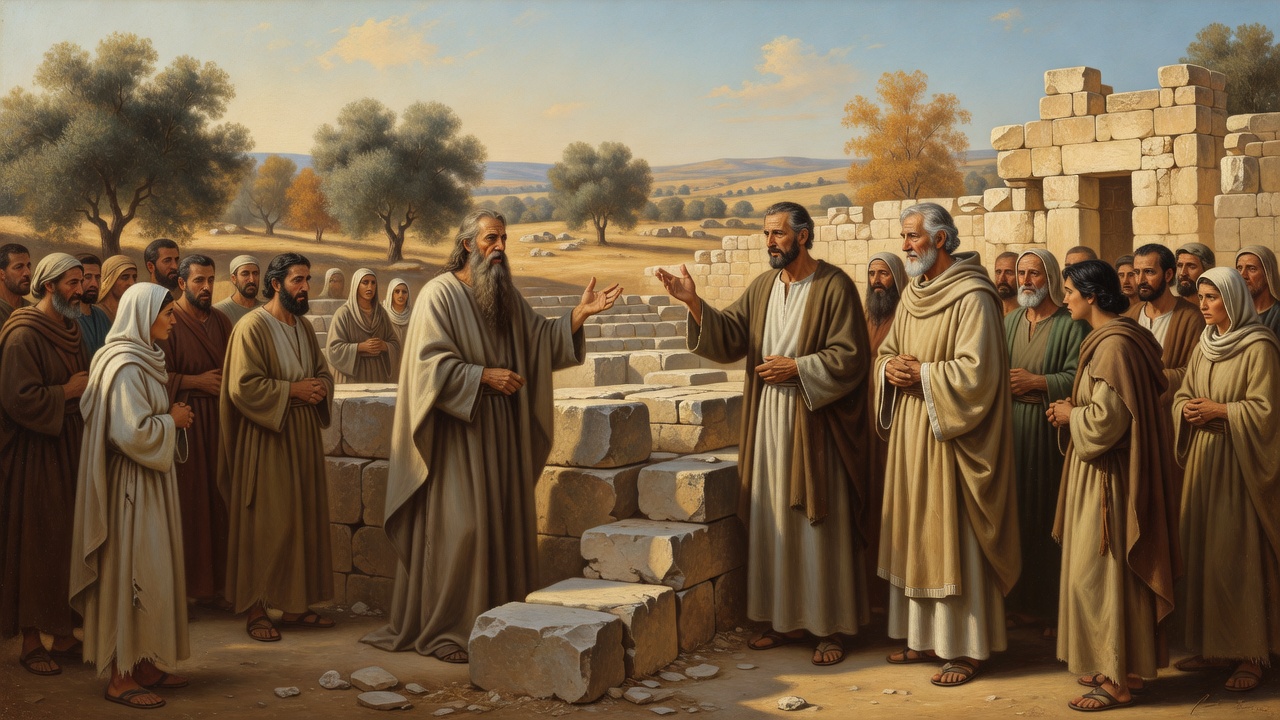
La Promesa de Gloria Futura
- Cuando se colocaron los cimientos del segundo templo tras el regreso de Babilonia, los ancianos de la comunidad aún recordaban la magnificencia del templo original destruido por Nabucodonosor. Ante el desánimo por la modesta nueva estructura, Hageo proclamó que la gloria futura de esa casa superaría su antiguo esplendor.Fuentes: el propio texto bíblico · Zerubbabel · Haggai
- Hageo consultó a los sacerdotes sobre normas rituales para ilustrar una enseñanza moral. Según los dictámenes sacerdotales, la santidad no se transfería por contacto indirecto, mientras que la impureza ceremonial —como la contraída al tocar un cadáver— se transmitía de inmediato, reflejando cómo su descuido previo había afectado sus ofrendas y cosechas.Fuentes: el propio texto bíblico
- La reconstrucción comunitaria estuvo encabezada por dos líderes clave: Zorobabel hijo de Salatiel, gobernador civil, y Josué hijo de Josadac, el sumo sacerdote. Al final del capítulo, Hageo se dirige a Zorobabel con la figura de un anillo de sellar, emblema de autoridad y elección divina.Fuentes: el propio texto bíblico · Zerubbabel · Joshua
Notas escritas con ayuda de IA a partir de fuentes abiertas (Theographic Bible Metadata, CC BY-SA 4.0; Easton’s Bible Dictionary, dominio público) y revisadas antes de publicarse.
Lugares de este capítulo
- Egypt · 30.129, 31.308 · versículo 5
Solo aparecen lugares identificados con alta confianza (90 % o más según las fuentes académicas reunidas por OpenBible). Mapa de la época: DARE (Digital Atlas of the Roman Empire), CC BY 4.0; mapa actual: © colaboradores de OpenStreetMap; lugares: OpenBible.info (CC BY 4.0).
Créditos y licencia de esta traducción
Bibiri Kuyie Nnɑ́ɑǹtì Pɑ́tíri
The Holy Bible in the Ditammari language of Benin
copyright © 2001 SIM International
Language: Ditammari
Translation by: SIM
This translation text is made available to you under the
terms of the Creative Commons License: Attribution-Noncommercial-No Derivative Works.
( http://creativecommons.org/licenses/by-nc-nd/3.0/ )
In addition, you have permission to port the text to different file formats, as long as you
do not change any of the text or punctuation of the Bible.
You may share, copy, distribute, transmit, and extract portions
or quotations from this work, provided that you include the above copyright
information:
You must give Attribution to the work.
You do not sell this work for a profit.
You do not make any derivative works that change any of the actual words or punctuation of the Scriptures.
Permissions beyond the scope of this license may be
available if you contact
us with your request.
This translation is made available to you under the terms of the
Creative Commons Attribution-No Derivatives license 4.0.
You may share and redistribute this Bible translation or extracts from it in any format, provided that:
You include the above copyright and source information.
You do not make any derivative works that change any of the actual words or punctuation of the Scriptures.
Pictures included with Scriptures and other documents on this site are licensed just for use with those Scriptures and documents.
For other uses, please contact the respective copyright owners.
2022-05-31
Fuente: http://ebible.org/tbzsim/ · eBible.org