Haggai 2
Bibiri Kuyie Nnɑ́ɑǹtì Pɑ́tíri · Tap a verse to see its cross-references.
Kuyie nyóó wɛ̃tɛ kɛ́duɔ́mmɛ̀ ku cĩ́ɛ̃̀tɛ̀ diyetìdiɛrì
1Okpɑ̀ɑ̀tì Dɑdiyuusi kpɑ̀tì benni dɛ́rì, otɑ̃̀nkù yiénwè kó diyiè sipísìdɛ́ nɛ̀ dimɑ́ɑ̀. Kɛ̀ ti Yiɛ̀ nKuyie nyíɛ́ kɛ́nɑ́kɛ́ ku pɑ̃ɑ̃nɑ́ɑǹtì nɑ́ɑǹtò Asee ò bo nɑ́kɛ́ tì bɛnìtìbɛ̀, 2kóò bɛ́innɛ̀ kɛ dɔ̀: Nɑ́kɛ́ Seditiɛri birɛ Sodobɑbɛɛdi Sudɑɑ kɔbɛ kóò kùmɑ̀ndɑ́ɑ̀ nɛ̀ Yotisɑdɑki birɛ Sosuwee ikuɔ́ nìùtì diɛwè nɛ̀ bɛnìtìbɛ̀ sɔmbɛ kɛ dɔ̀:
3Di miɛkɛ we ndo yɑ̀ n kpetì do dòmmɛ̀ n cĩ́ɛ̃̀tɛ̀ miɛkɛ?
Di nɛ́ tɛ̀ wùómmɛ̀ yíe, ntɛ̀ dòmmɛ?
Tɛ̀ í nɑɑ́ ndɛtetìrɑ̀ɑ̀?
4Fɔ̃́ nSodobɑbɛɛdi nɛ̀ Yotisɑdɑki birɛ Sosuwee ikuɔ́ nìùtì diɛwè yɑ́úkùnnɛ di kɔ̃̀ntì,
dihɛì kó bɛnìtìbɛ̀ bɛmɔu, yɑ́úkùnnɛ di kɔ̃̀ntì kɛ pĩ́ n tɔ̃mmú.
N di bonɛ̀mu. Mí nKuyie Mpɑkɛdɑɑ míì bɛ́i!
5N do tì ndi nɑ̀kɛ́mu di yɛtì dìì mɔ̀nnì Esibiti.
N kó Muyɑɑ́ ndi bonɛ̀mu, di bɑ́ nyĩɛ̃̀kù!
6Mí nKuyie Mpɑkɛdɑɑ míì bɛ́i nkɛ tú:
Dɛ̀ kpɑɑ́ sɑ́m̀pɔ́ nwe,
kɛ̀ n sɑ̃ntɛ̀ tiwɛtì nɛ̀ kɛtenkɛ̀ nɛ̀ dɑ̀mɛ́ɛ̀rì, kɛtenkɛ̀ kɛmɔu.
7M bo sɑ̃ntɛ̀ yɛbotɛ̀ kɛ̀ yɛ kpɑ̀tì timɔu cóúnní m borɛ̀,
kɛ̀ n wɛ̃tɛ kɛ́duɔ́ n cĩ́ɛ̃̀tɛ̀ tɛyetìdiɛrì.
Mí nKuyie Mpɑkɛdɑɑ míì bɛ́i!
8Míì te mɛsɔɔ nnɛ̀ timɑ́tì pɛ́ítì,
mí nKuyie Mpɑkɛdɑɑ míì bɛ́i!
9N cĩ́ɛ̃̀tɛ̀ yètìrì bo dɛukɛ kɛ́pɛ̃ɛ̃tɛ́ di do dòmmɛ̀
n yóó di duɔ́mmu mɛom̀pùmɛ̀,
mí nKuyie Mpɑkɛdɑɑ míì bɛ́i!
Wèè í yie nKuyie nyɛ̃ mmù ò dɔ̀ɔ̀ri dɛ̀ dɛmɔu ɔ̃ nsĩ̀mmu
10Dɑriyuusi kpɑ̀tì benni dɛ́rì otɑ̃̀nkù wɛínwè kó diyiè sipísìdɛ́ nɛ̀ dinɑɑnnì kɛ̀ ti Yiɛ̀ nKuyie mbɛ́innɛ̀ ku pɑ̃ɑ̃nɑ́ɑǹtì nɑ́ɑǹtò Asee kɛ dɔ̀: 11Mí nKuyie Mpɑkɛdɑɑ míì tu: Bekɛ́ ikuɔ́ nìùbɛ̀ kɛ̀ bɛ̀ dɑ nɑ́kɛ́ ikuɔ́ yɛ̃ mmù, 12bekɛ́ kɛ dɔ̀: Kɛ̀ dɛ̀ dò nyikuɔ́ nìùtì mɔù cũɔ̃́ imɑɑ bɛ̀ fèútɛ́ ì Kuyie nho yɑɑ̀yɔ̀rì miɛkɛ, kɛ̀ dì kɑ̀ɑ́kɛ́ pɛ̃́ɛ̃̀ yoo mudiì yoo mɛnɑɑ̀ nyoo mɛkùɔ̀, yoo tidiitì tɛtì mɑtì tì bo wenkɑɑ̀? Kòo bɛ̀ bekɛ. Kɛ̀ bɛ̀ɛ ò tɛ̃̀ńnɛ́ kɛ dɔ̀: Ɔ́ɔ̀! 13Kɛ̀ Asee sɔɔtɛ́ kɛ́bɛ́i nkɛ dɔ̀: Kòo nìtì nɛ́ kɑ̀ɑ́kɛ́ ocíì kɛ sĩ̀ntɛ, kɛ kɑ̀ɑ́kɛ́ dɛndɛ kó dɛ̀mɑrɛ̀ dɛ̀ɛ sĩntɑɑ̀, kɛ̀ dɛ̀ bɑ́ɑ́ sĩntɛ? Kɛ̀ bɛ̀ɛ ò tɛ̃̀ńnɛ́ kɛ dɔ̀: Dɛ̀ bo sĩntɛ. 14Dɛ mɔ̀nnì kɛ̀ Asee bɛ̀ nɑ̀kɛ́ kɛ dɔ̀:
Di kpɛrɛ mɛ ndò ndíndi ku mbotí
di kpɛrɛ mɛ ndò nti Yiɛ̀ nKuyie nyììkɛ̀,
di dɔɔri mùù tɔ̃mmú mɛ ndò,
di kù pɑ̃ɑ̃ ndɛ̀ɛ̀ kó dimɑ̀ɑ̀ sĩ̀mmu.
Wèè yie nKuyie o kpɛrɛ ɔ̃ nyíémmɛ̀
15Kɛ̀ ti Yiɛ̀ nKuyie nyíɛ́ kɛ́ bɛ̀ bɛ́innɛ̀ kɛ dɔ̀:
yíe nnɛ̀ yɛwe yɛ̀ɛ̀ kpɑɑní,
totínɛ̀ di yɛ̀mmɛ̀ mɛsɑ̀ɑ̀ ntìì di tuɔ̀kùní ti ĩ́nkɛ̀.
Kɛ nɛ́ nɑ kɛ́pṹṹtɛ́ n cĩ́ɛ̃̀tɛ̀.
16Ɔ̃̀nti di tuɔ̀kùní?
Di ɔ̃ɔ̃ kɔ̃ṹ kùù pɑku kɛ́pɛ́tɛ́ mɛyòbii ntiyɔ̀tì tìdɛ́tì
Di ɔ̃ɔ̃ ku nkɔ̃ṹ di mmɔ̀nnì kɛ́pɛ́tɛ́ mɛyòbii nkuyɔ̀rìkù kùmɑ́ɑ̀
di ɔ̃ɔ̃ tɔ̃ũ kùù pɑku fínyĩ̀ kó yɛbɛ
kɛ́kuɔti mɛnɑɑ̀ nkɛ́píɛ ntɛcètɛ̀,
di ɔ̃ɔ̃ ku ntɔ̃ũ kɛ́kuɔti kɛ́utɛ́ tɛcètɛ̀ dikéè.
17Kɛ̀ n duɔ́ nkɛ̀ tidiitì fɑ̃ũ ndɛpɑɑ nkɛ pũ̀ũ̀ti.
Kɛ̀ yɛmɑ́tɑ̃́rɛ̀ cɑ̀ɑ̀ri dɛsɔnnɛ
kɛ̀ di ɔù dɛtetìrɛ̀,
bɑ́ nɛ̀ mɛmmɛ di í wɛ̃̀tɛní m borɛ̀.
18Totínɛ̀ di yɛ̀mmɛ̀ tìì yóó di tuɔkɛní nɛ̀ yɛwe yɛ̀ɛ̀ kpɑɑní yɛ kpɛ́í,
kɛ́túótɛ́ otɑ̃̀nkù wɛínwè yiè nkó diyiè sipísìdɛ́ nɛ̀ diwɛínnì yiè,
di pũ̀ṹtɛ́ dìì yiè n cĩ́ɛ̃̀tɛ̀,
19Dɛ̀mɑrɛ̀ kpɑɑ́ kɛ ɑ̃ di buɔ miɛkɑɑ̀?
Dɛtie mbɛ̀ tu dɛ̀ fínyĩ̀ nɛ̀ fìkíè
nɛ̀ kèdènɑ́tì nɛ̀ odìfíè dɛ̀ kpɑɑ́ pɛíɑ̀?
Kɛ túótɛ́ yíe nkó diyiè nɛ̀ yɛwe sɔnyoo
n yó ndi dɔɔrimu mɛsɑ̀ɑ̀.
Kuyie ndɔúnnɛ̀ dìì nùù Sodobɑbɛɛdi
20Weè tɑ̃̀nkù yiè sipísìdɛ́ nɛ̀ dinɑɑnnì yiè, kɛ̀ ti Yiɛ̀ nKuyie nyíɛ́ kɛ́bɛ́innɛ̀ Asee kɛ dɔ̀: 21Nɑ́kɛ́ Sodobɑbɛɛdi Sudɑɑ kɔbɛ kóò kùmɑ̀ndɑ́ɑ̀ kɛ dɔ̀: N tú n yóó yíɛ́ kɛ́sɑ̃ntɛ̀mu kɛĩ́nkɛ̀ nɛ̀ kɛtenkɛ̀.
22N yóó buɔ́mmu yɛkpɑ̀ɑ̀tìyɔ kó yɛkpɑ̀ɑ̀tìkɑ̀rɛ̀,
kɛ́dɛitɛ bɛkpɑ̀ɑ̀tìbɛ̀ kó muwɛ̃rímú.
N yóó buɔ́mmu sikpɑ̀rìnɑɑsɛ̃ĩ́ nɛ̀ si dèèbɛ̀,
kɛ́kuɔ bɛsɑ̃ndèèbɛ̀ nɛ̀ bɛ sɛ̃ĩ́.
N yóó duɔ́ mbɑ́ wè kòo kou weè ò kùɔ.
23Dɛ yiè m bo dɑ túótɛ́ fɔ̃́ nSeditiɛri birɛ
Sodobɑbɛɛdi n kóo tɔ̃ntì kɑ̀ɑ ndò n kó mumɑ́mɑ́ɑ́ mmɛcɑnnimɛ̀ kɔ̃mu yoo ò mmù ũ kɛ̀ mù ntú o kó mɛcɑnnimɛ̀ kòo dɔ́ kɛ́cɑnnɛ dɛ̀mɑrɛ̀ wèe mù ĩkú dɛ ĩ́nkɛ̀. Kòo wɑ̃̀ri dipɑ́tíri wèe mù ĩkú di ĩ́nkɛ̀ kɛ̀ dɛ̀ɛ bɛnkɛ weè dì wɑ̃̀rimɛ̀.
N tɑ̃ɑ̃tɛ́ fɔ̃́ nwe mí nKuyie Mpɑkɛdɑɑ míì bɛ́i!
Did you know?
The Promise of Future Glory
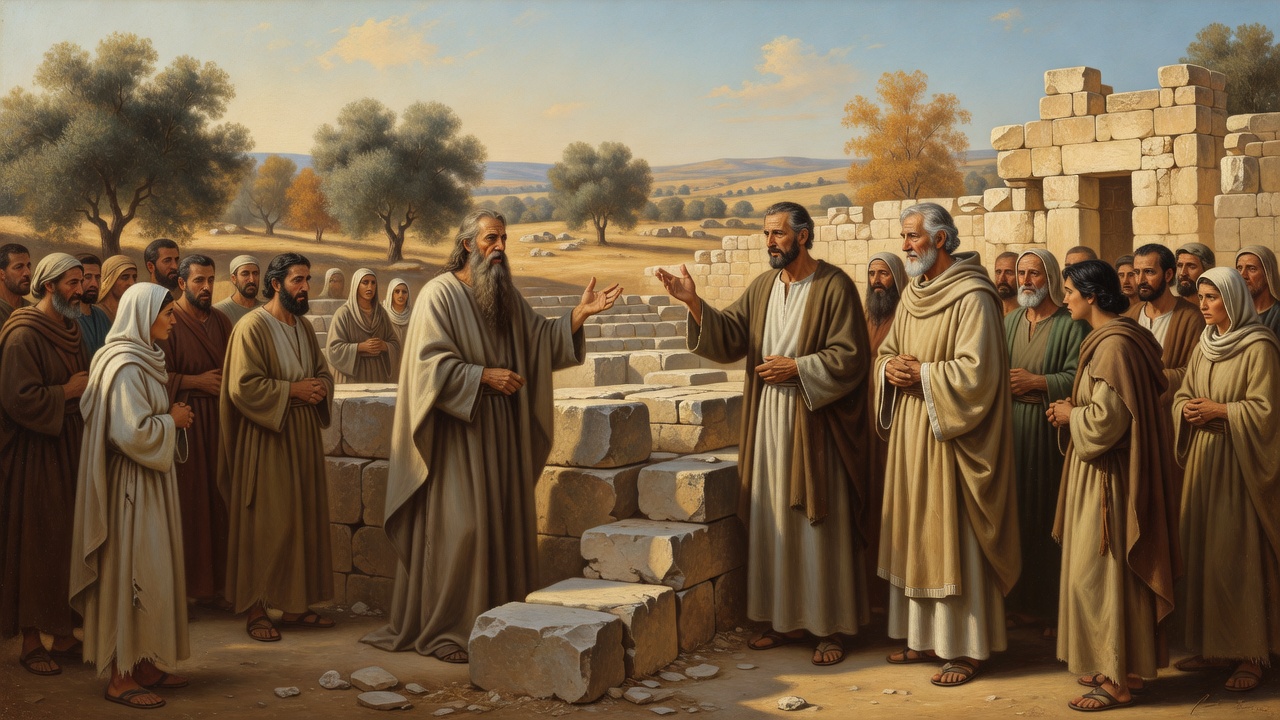
- When the foundation of the second temple was laid after the return from Babylon, older members of the community could still remember the magnificence of the original temple destroyed by Nebuchadnezzar. In response to their discouragement at the modest new structure, Haggai declared that the future glory of this house would surpass its former splendor.Sources: the Bible text itself · Zerubbabel · Haggai
- Haggai consulted the priests on questions of ritual law to illustrate a moral point. According to their rulings, holiness was not easily transmitted through indirect contact, whereas ceremonial defilement—such as from touching a corpse—spread immediately, mirroring how their past neglect had affected their offerings and harvests.Sources: the Bible text itself
- The restoration of the community was led by two key figures: Zerubbabel son of Shealtiel, who served as the civil governor, and Joshua son of Jehozadak, the high priest. At the end of the chapter, Haggai addresses Zerubbabel with the royal imagery of a signet ring, symbolizing divine authority and choice.Sources: the Bible text itself · Zerubbabel · Joshua
Notes written with AI assistance from open sources (Theographic Bible Metadata, CC BY-SA 4.0; Easton’s Bible Dictionary, public domain) and reviewed before publishing.
Places in this chapter
- Egypt · 30.129, 31.308 · verse 5
Only places identified with high confidence are shown (90% or more according to the scholarly sources compiled by OpenBible). Period map: DARE (Digital Atlas of the Roman Empire), CC BY 4.0; modern map: © OpenStreetMap contributors; places: OpenBible.info (CC BY 4.0).
Credits and license for this translation
Bibiri Kuyie Nnɑ́ɑǹtì Pɑ́tíri
The Holy Bible in the Ditammari language of Benin
copyright © 2001 SIM International
Language: Ditammari
Translation by: SIM
This translation text is made available to you under the
terms of the Creative Commons License: Attribution-Noncommercial-No Derivative Works.
( http://creativecommons.org/licenses/by-nc-nd/3.0/ )
In addition, you have permission to port the text to different file formats, as long as you
do not change any of the text or punctuation of the Bible.
You may share, copy, distribute, transmit, and extract portions
or quotations from this work, provided that you include the above copyright
information:
You must give Attribution to the work.
You do not sell this work for a profit.
You do not make any derivative works that change any of the actual words or punctuation of the Scriptures.
Permissions beyond the scope of this license may be
available if you contact
us with your request.
This translation is made available to you under the terms of the
Creative Commons Attribution-No Derivatives license 4.0.
You may share and redistribute this Bible translation or extracts from it in any format, provided that:
You include the above copyright and source information.
You do not make any derivative works that change any of the actual words or punctuation of the Scriptures.
Pictures included with Scriptures and other documents on this site are licensed just for use with those Scriptures and documents.
For other uses, please contact the respective copyright owners.
2022-05-31
Source: http://ebible.org/tbzsim/ · eBible.org