Malaquías 1
Na Rongorongo Uto nina Jesus Christ · Toca un versículo para ver sus referencias cruzadas.
Acerca de este libro
Sobre Malaquías
- El Easton's Bible Dictionary (1897) presenta a Malaquías, nombre que significa "mensajero" o "ángel", como el último de los profetas menores y el autor del último libro del canon del Antiguo Testamento. No se sabe nada de él más allá de lo que contiene su libro de profecías.Fuentes: Easton: Malachi · Malachi
- Algunos han supuesto que el nombre es simplemente un título para un mensajero de Jehová, y no un nombre propio. El Easton's Bible Dictionary (1897), sin embargo, concluye que hay razón para considerar que Malaquías era el nombre habitual del profeta.Fuentes: Easton: Malachi · Malachi
- El Easton's Bible Dictionary (1897) fecha las profecías hacia 420 a. C., después del segundo regreso de Nehemías desde Persia, o posiblemente antes de ese regreso. Como Esdras no lo menciona y él no habla de la restauración del templo, el diccionario infiere que profetizó después de Hageo y Zacarías.Fuentes: Easton: Malachi
- El Easton's Bible Dictionary (1897) trata a Malaquías como contemporáneo de Nehemías, al comparar Malaquías 2:8 con Nehemías 13:15 y Malaquías 2:10-16 con Nehemías 13:23. También señala que los servicios del templo aún existían, citando Malaquías 1:10, 3:1 y 3:10.Fuentes: Easton: Malachi
Notas escritas con ayuda de IA a partir de fuentes abiertas (Theographic Bible Metadata, CC BY-SA 4.0; Easton’s Bible Dictionary, dominio público) y revisadas antes de publicarse.
1Aeni nina rongorongo a Yahweh te vahea na prophet Malachi geke bosa vanira rana vure ni Israel.
A nina dolo Yahweh vanira rana vure Israel
2A Yahweh te ghaghua vanira nina vure, “Inau tu [dolovighau haia]/[mua luba na doloviamiu.]”
Hauva, ighau tau bosaoli vania, “?Ivei to nea na tateana nimua na dolo vaniamami?”
Ma Yahweh te bosa tugu, “A Esau ma Jacob toro tamahogoni, hauva mi nau tu dolovia Jacob maia rana vaivarina vamua [mu ku vilira.] 3Mu nia ghighirou Esau maia rana vaivarina. Mi nau tu taghalaghinia na ghotuna na bona sulena, mu taluolia nina na bona vanira rana kau/maumanu asi tara ghahara iga tana bona aroha keri.”
4Ge kara bosa rana vaivarina Esau, tara ghahara i Edom, mara ghaghua, “Ighai ke, ra durakei tua na komumami. Hauva, mi gevaa kai kisu olighi so.”
Ma Yahweh puku ni maana ke bosa oli [vanira,] “Ma ge kara kisu olighi ke, mi nau igeva ku ghoi durake olighi so. Ma rana vure kara vatura nia, ‘Na butonikomu dika,’ ma ‘Na kema eni, a Yahweh te rutu kasila vanira.’”
5Ma rana vure ni Israel kara vaevanea eni nia rana matadira heghedira, ge kara bosa ma kara ghaghua, “A Yahweh eni te rongoraghagha sughua me va taligutia i pari bebetena na butonikomu i Israel.”
A Yahweh tara mua talumava rana manesukaghi
6A Yahweh puku ni maana te ghaghua vanira rana manesukaghi, “Rana lei gari pile kara ghanaghana mavara rana tinamiu marana tamamiu, ma rana ghairau kara ghanaghana mavara rana habana. ?Mi nau vamua tu tamamiu, mi vei tea ge au mua ghanaghana mavau? ?Mi nau vamua tu habamiu, mi vei tea ge au mua talumavau? Au nia ghighirou na ahagu!
“Hauva mau bosa mau ghaghua, ‘?Ivei tai nea na ghighirouana na ahamu?’ 7Aeni te vagha, tau sukaghighi rana vanga tara meto mara tovongo ta nigua na belatabu ni sukagi.
“Ge au bosaa, ‘?Ivei tai nea na luba saniana na talumavaamu?’
Inau tu bosa vanighau, ‘Au mua talutatea nimiu na talumava vania nigua na belatabu ni sukaghi. 8?Tana bona tau lavira mai rana maumanu tara rorodo pa ra vahaghi pa ra labe, ge kau nighi sukaghi vaniu, au ghanaghana ighau ke, me taho siki totobo ke hahi igaa? Kau taboa vaa na heana na maumanu te vaghai rakiri vania na vunaghi haba! ?Ivei tea, geva ke nighau togotogo sule ngangata, pe ke va heghau siki holouto ke keha?
9“Keri ke, ighau rana manesukaghi kau tabotabo vaa na nongiana God, geke liouto vanighita. Ma geke mua bosa tughuni dida na lei kokolivuti ke, ma nimiu na hahi tua ighau.” 10A Yahweh puku ni maana, te ghaghua, ‘U ghanaghana ke me ke mua ghoi taho tua geva sakai tamiu ke vongotia mughua na mataulana na Valetabu, geke vaa pilupungisighau, ge kau bei tovongo kerua gea na lake ta nigua na belatabu ni sukaghi. Inau tu mua nighau togotogo. Muku mua lavipangotighi rana lei heveioli tau holai mai. 11Rana vure tana vuivunina na maramana me va sara tana sosokona tara talumavau. Ivei tua tara ghahara ke, kara kere ghaiuruuru vaniu, ma kara taludatoi na lei sukaghi tu holopangotighi. Eo, ma gaira udolu tara talumavau. 12Hauva mau mua talamavau, tana bona tau talutatea a nigua na belatabu te totobolee vamua, na pukuna tau nighi sukaghi rana vanga tau nighi sika. 13Ighau tau ghaghua, ‘Ighai tai nighi lugu tua na lei totobo raini,’ mau ririu kehai rana ihumiu vaniu. Tana bona tau taludatoi na lei sukaghi vaniu, ighau tau lavira vaniu mai rana maumanu tau gitoi, pa siki sakai te labe pe vahaghigha. ?Au ghanaghana ighau ke, mu ku holopangotighi na hava tau taludatoi vaniu? 14Inau ku vahea na totoro ahei te pegopegou. Gaia te nia baubahu geke vaheu na sheep te utoutoa, hauva me nia sukaghi vaniu na sheep te mua uto! Inau tu puku ni vunaghi haba, ma rana lei tinoni tana lei kema keha soko tara mataghunia na ahagu, hauva mau taho ighau!”
¿Sabías que…?
La honra a Dios y los sacrificios defectuosos
- El nombre Malaquías significa mensajero o ángel. Aunque algunos han sugerido que se trataba de un título en vez de un nombre propio, la tradición lo considera el nombre del profeta, ubicando su ministerio en la época de Nehemías, después de Hageo y Zacarías.Fuentes: Malachi
- El mensaje inicial evoca a los hermanos gemelos Jacob y Esaú, antepasados de Israel y Edom. El texto contrasta el amor del pacto con Israel frente a la desolación que sobrevendría sobre la región montañosa de Edom.Fuentes: Esau (Edom) · Jacob (Israel) · Edom · el propio texto bíblico
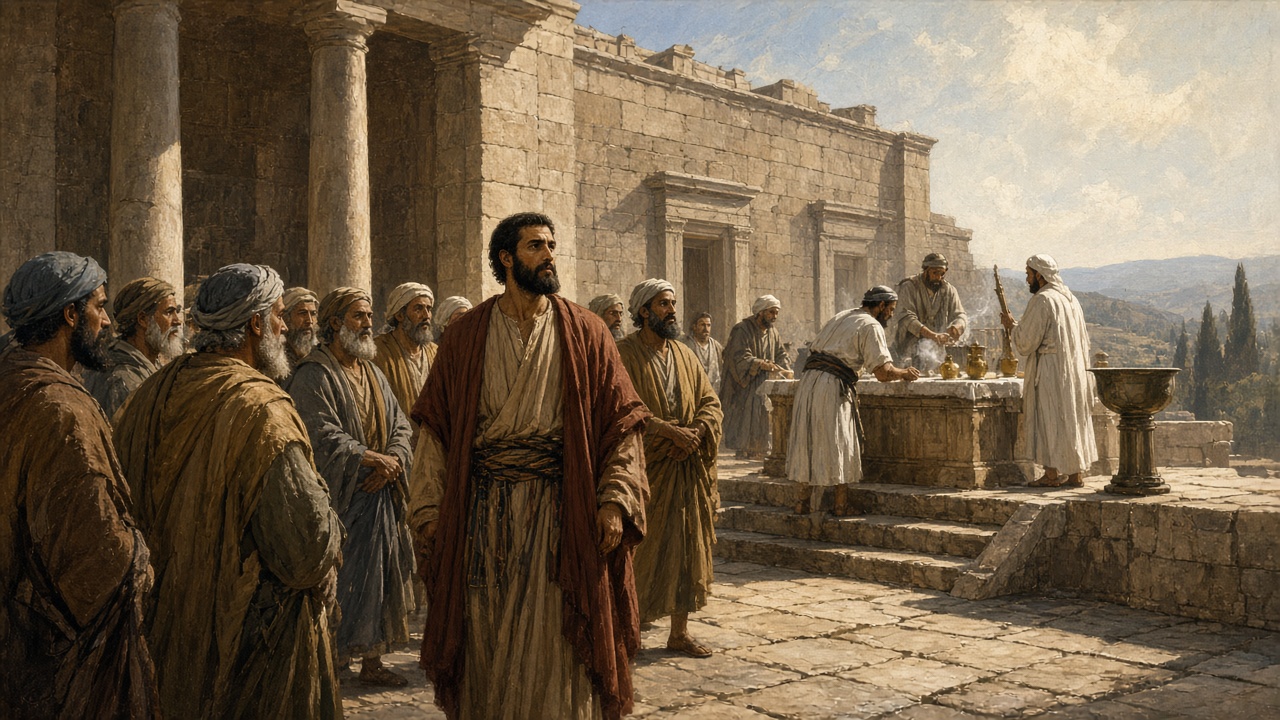
- Los sacerdotes son reprendidos por presentar sobre el altar animales ciegos, cojos y enfermos en lugar de animales sanos. Malaquías evidencia su falta de respeto preguntando si acaso un gobernador aceptaría tales ofrendas defectuosas.Fuentes: el propio texto bíblico
Notas escritas con ayuda de IA a partir de fuentes abiertas (Theographic Bible Metadata, CC BY-SA 4.0; Easton’s Bible Dictionary, dominio público) y revisadas antes de publicarse.
Lugares de este capítulo
- Edom · 30.746, 35.604 · versículo 4
Solo aparecen lugares identificados con alta confianza (90 % o más según las fuentes académicas reunidas por OpenBible). Mapa de la época: DARE (Digital Atlas of the Roman Empire), CC BY 4.0; mapa actual: © colaboradores de OpenStreetMap; lugares: OpenBible.info (CC BY 4.0).
Créditos y licencia de esta traducción
Na Rongorongo Uto nina Jesus Christ
Portions of the Holy Bible in the Gela language of the Solomon Islands
Baebol long langguis Gela
copyright © 2015 Wycliffe Bible Translators, Inc.
Language: Gela
This translation is made available to you under the terms of the
Creative Commons Attribution-Noncommercial-No Derivatives license 4.0.
You may share and redistribute this Bible translation or extracts from it in any format, provided that:
You include the above copyright and source information.
You do not sell this work for a profit.
You do not change any of the words or punctuation of the Scriptures.
Pictures included with Scriptures and other documents on this site are licensed just for use with those Scriptures and documents.
For other uses, please contact the respective copyright owners.
2021-11-30
Fuente: http://ebible.org/nlg/ · eBible.org