Malachi 1
Na Rongorongo Uto nina Jesus Christ · Tap a verse to see its cross-references.
About this book
About Malachi
- Easton's Bible Dictionary (1897) presents Malachi, a name meaning "messenger" or "angel," as the last of the minor prophets and the writer of the last book of the Old Testament canon. Nothing is known of him beyond what is contained in his book of prophecies.Sources: Easton: Malachi · Malachi
- Some have supposed that the name is simply a title for a messenger of Jehovah, not a proper name. Easton's Bible Dictionary (1897) concludes, however, that there is reason to regard Malachi as the prophet's ordinary name.Sources: Easton: Malachi · Malachi
- Easton's Bible Dictionary (1897) dates the prophecies to about 420 B.C., after Nehemiah's second return from Persia, or possibly before that return. Because Ezra does not mention him and he does not mention the restoration of the temple, the dictionary infers that he prophesied after Haggai and Zechariah.Sources: Easton: Malachi
- Easton's Bible Dictionary (1897) treats Malachi as a contemporary of Nehemiah, comparing Malachi 2:8 with Nehemiah 13:15 and Malachi 2:10-16 with Nehemiah 13:23. It also notes that the temple services were still in existence, citing Malachi 1:10, 3:1 and 3:10.Sources: Easton: Malachi
Notes written with AI assistance from open sources (Theographic Bible Metadata, CC BY-SA 4.0; Easton’s Bible Dictionary, public domain) and reviewed before publishing.
1Aeni nina rongorongo a Yahweh te vahea na prophet Malachi geke bosa vanira rana vure ni Israel.
A nina dolo Yahweh vanira rana vure Israel
2A Yahweh te ghaghua vanira nina vure, “Inau tu [dolovighau haia]/[mua luba na doloviamiu.]”
Hauva, ighau tau bosaoli vania, “?Ivei to nea na tateana nimua na dolo vaniamami?”
Ma Yahweh te bosa tugu, “A Esau ma Jacob toro tamahogoni, hauva mi nau tu dolovia Jacob maia rana vaivarina vamua [mu ku vilira.] 3Mu nia ghighirou Esau maia rana vaivarina. Mi nau tu taghalaghinia na ghotuna na bona sulena, mu taluolia nina na bona vanira rana kau/maumanu asi tara ghahara iga tana bona aroha keri.”
4Ge kara bosa rana vaivarina Esau, tara ghahara i Edom, mara ghaghua, “Ighai ke, ra durakei tua na komumami. Hauva, mi gevaa kai kisu olighi so.”
Ma Yahweh puku ni maana ke bosa oli [vanira,] “Ma ge kara kisu olighi ke, mi nau igeva ku ghoi durake olighi so. Ma rana vure kara vatura nia, ‘Na butonikomu dika,’ ma ‘Na kema eni, a Yahweh te rutu kasila vanira.’”
5Ma rana vure ni Israel kara vaevanea eni nia rana matadira heghedira, ge kara bosa ma kara ghaghua, “A Yahweh eni te rongoraghagha sughua me va taligutia i pari bebetena na butonikomu i Israel.”
A Yahweh tara mua talumava rana manesukaghi
6A Yahweh puku ni maana te ghaghua vanira rana manesukaghi, “Rana lei gari pile kara ghanaghana mavara rana tinamiu marana tamamiu, ma rana ghairau kara ghanaghana mavara rana habana. ?Mi nau vamua tu tamamiu, mi vei tea ge au mua ghanaghana mavau? ?Mi nau vamua tu habamiu, mi vei tea ge au mua talumavau? Au nia ghighirou na ahagu!
“Hauva mau bosa mau ghaghua, ‘?Ivei tai nea na ghighirouana na ahamu?’ 7Aeni te vagha, tau sukaghighi rana vanga tara meto mara tovongo ta nigua na belatabu ni sukagi.
“Ge au bosaa, ‘?Ivei tai nea na luba saniana na talumavaamu?’
Inau tu bosa vanighau, ‘Au mua talutatea nimiu na talumava vania nigua na belatabu ni sukaghi. 8?Tana bona tau lavira mai rana maumanu tara rorodo pa ra vahaghi pa ra labe, ge kau nighi sukaghi vaniu, au ghanaghana ighau ke, me taho siki totobo ke hahi igaa? Kau taboa vaa na heana na maumanu te vaghai rakiri vania na vunaghi haba! ?Ivei tea, geva ke nighau togotogo sule ngangata, pe ke va heghau siki holouto ke keha?
9“Keri ke, ighau rana manesukaghi kau tabotabo vaa na nongiana God, geke liouto vanighita. Ma geke mua bosa tughuni dida na lei kokolivuti ke, ma nimiu na hahi tua ighau.” 10A Yahweh puku ni maana, te ghaghua, ‘U ghanaghana ke me ke mua ghoi taho tua geva sakai tamiu ke vongotia mughua na mataulana na Valetabu, geke vaa pilupungisighau, ge kau bei tovongo kerua gea na lake ta nigua na belatabu ni sukaghi. Inau tu mua nighau togotogo. Muku mua lavipangotighi rana lei heveioli tau holai mai. 11Rana vure tana vuivunina na maramana me va sara tana sosokona tara talumavau. Ivei tua tara ghahara ke, kara kere ghaiuruuru vaniu, ma kara taludatoi na lei sukaghi tu holopangotighi. Eo, ma gaira udolu tara talumavau. 12Hauva mau mua talamavau, tana bona tau talutatea a nigua na belatabu te totobolee vamua, na pukuna tau nighi sukaghi rana vanga tau nighi sika. 13Ighau tau ghaghua, ‘Ighai tai nighi lugu tua na lei totobo raini,’ mau ririu kehai rana ihumiu vaniu. Tana bona tau taludatoi na lei sukaghi vaniu, ighau tau lavira vaniu mai rana maumanu tau gitoi, pa siki sakai te labe pe vahaghigha. ?Au ghanaghana ighau ke, mu ku holopangotighi na hava tau taludatoi vaniu? 14Inau ku vahea na totoro ahei te pegopegou. Gaia te nia baubahu geke vaheu na sheep te utoutoa, hauva me nia sukaghi vaniu na sheep te mua uto! Inau tu puku ni vunaghi haba, ma rana lei tinoni tana lei kema keha soko tara mataghunia na ahagu, hauva mau taho ighau!”
Did you know?
Honoring God and Defective Offerings
- The name Malachi means messenger or angel. While some have suggested it was a title rather than a proper name, scholars and traditions widely treat it as the prophet's personal name, placing his ministry during the period of Nehemiah, after Haggai and Zechariah.Sources: Malachi
- The opening dispute recalls the twin brothers Jacob and Esau, the ancestors of Israel and Edom. The text contrasts God's covenant love for Israel with the judgment and desolation coming upon the mountainous region of Edom.Sources: Esau (Edom) · Jacob (Israel) · Edom · the Bible text itself
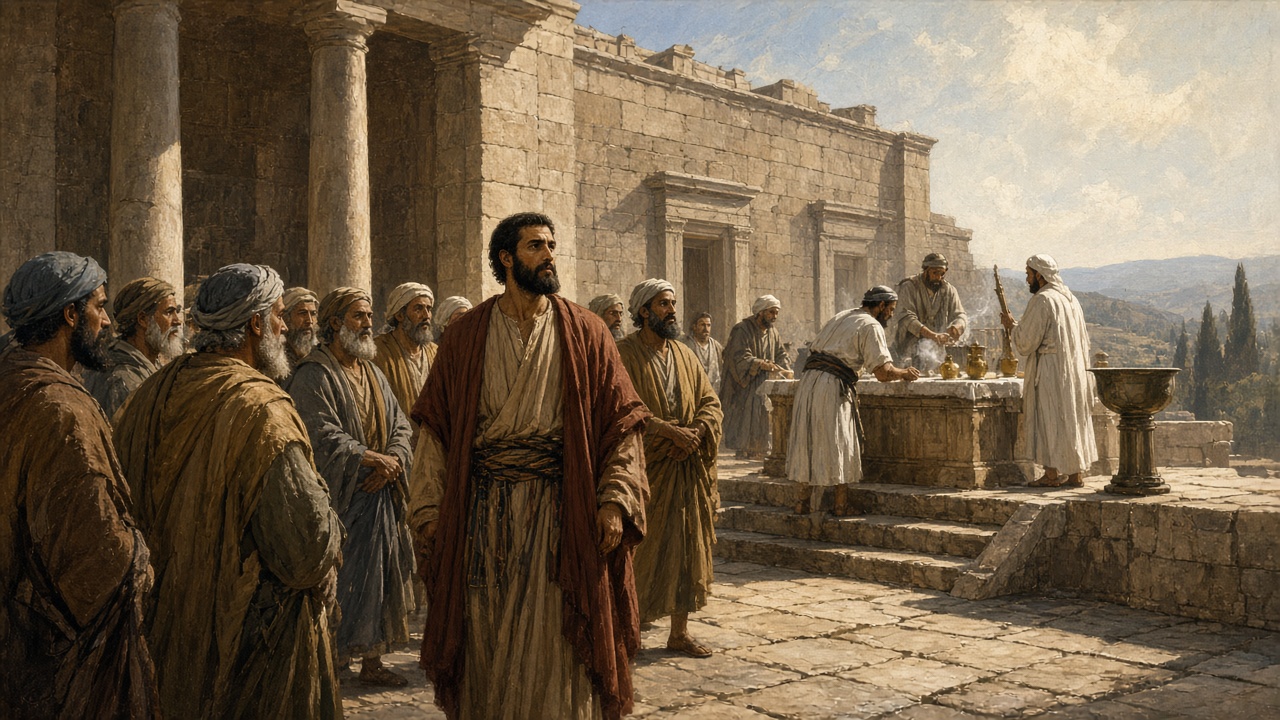
- The priests are rebuked for offering blind, lame, and diseased animals on the altar rather than unblemished livestock. Malachi exposes their disrespect by asking whether a civil governor would accept such inferior gifts.Sources: the Bible text itself
Notes written with AI assistance from open sources (Theographic Bible Metadata, CC BY-SA 4.0; Easton’s Bible Dictionary, public domain) and reviewed before publishing.
Places in this chapter
- Edom · 30.746, 35.604 · verse 4
Only places identified with high confidence are shown (90% or more according to the scholarly sources compiled by OpenBible). Period map: DARE (Digital Atlas of the Roman Empire), CC BY 4.0; modern map: © OpenStreetMap contributors; places: OpenBible.info (CC BY 4.0).
Credits and license for this translation
Na Rongorongo Uto nina Jesus Christ
Portions of the Holy Bible in the Gela language of the Solomon Islands
Baebol long langguis Gela
copyright © 2015 Wycliffe Bible Translators, Inc.
Language: Gela
This translation is made available to you under the terms of the
Creative Commons Attribution-Noncommercial-No Derivatives license 4.0.
You may share and redistribute this Bible translation or extracts from it in any format, provided that:
You include the above copyright and source information.
You do not sell this work for a profit.
You do not change any of the words or punctuation of the Scriptures.
Pictures included with Scriptures and other documents on this site are licensed just for use with those Scriptures and documents.
For other uses, please contact the respective copyright owners.
2021-11-30
Source: http://ebible.org/nlg/ · eBible.org