Cantares 8
De Heilige Schrift, Petrus Canisiusvertaling, 1939 · Toca un versículo para ver sus referencias cruzadas.
1Ach waart ge mijn broeder, Gezoogd aan de borst van mijn moeder: Vond ik u buiten, dan kon ik u kussen, En men zou er mij niet om verachten. 2Dan leidde ik u naar het huis van mijn moeder, Naar de kamer van haar, die mij baarde; Dan laafde ik u met geurige wijn, Met de most van granaten. 3Maar zijn linker moet rusten onder mijn hoofd Zijn rechter houde mij omstrengeld! 4“Ik bezweer u, Jerusalems dochters, Bij de gazellen en de hinden in het veld: Hoe hebt gij de liefde durven wekken en lokken, Voordat het haar lust?” 5Wie stijgt daar op uit de steppe Op haar beminde geleund? Onder de appelboom heb ik uw liefde gewekt: Daar, waar uw moeder u ontving, U baarde met smarten. 6Leg mij op uw hart als een zegel, Om uw arm als een band: Want sterk als de dood is de liefde! Onverbiddelijk als het graf is haar gloed, Zij laait op als het flitsende vuur, Haar vlammen zijn vlammen van Jahweh! 7Watergolven missen de kracht, Om de liefde te blussen, En stromen verzwelgen haar niet. Al bood iemand ook al zijn schatten, Zelfs zijn paleis voor de liefde, Smadelijk wees men hem af! 8Wij hadden een jeugdige zuster, Nog zonder borsten: Wat moesten we met onze zuster doen Wanneer men haar vroeg? 9Was zij een muur Dan konden we er een zilveren borstweer op bouwen; Was zij een poort, We sloten haar af met een cederbalk. 10Ja, ik wàs een muur, En torens waren mijn borsten: Juist daarom werd ik in zijn ogen Een toegang van vrede! 11Salomon heeft een wijngaard in Báal-Hamon, Hij heeft hem onder de hoede van wachters gesteld; Elk moet voor zijn vruchten Duizend zilveren sikkels betalen. 12Mijn wijngaard is van mij alleen, En zijn vrucht is voor mij! Die duizend, Salomon, gun ik u, En de wachters tweehonderd. 13O gij, die in de lusthof toeft: De vrienden luisteren; Laat mij horen uw stem, Uw wensen vernemen. 14Snel, mijn beminde, En doe zoals de gazel, Of het jong van het hert Op de balsembergen!
¿Sabías que…?
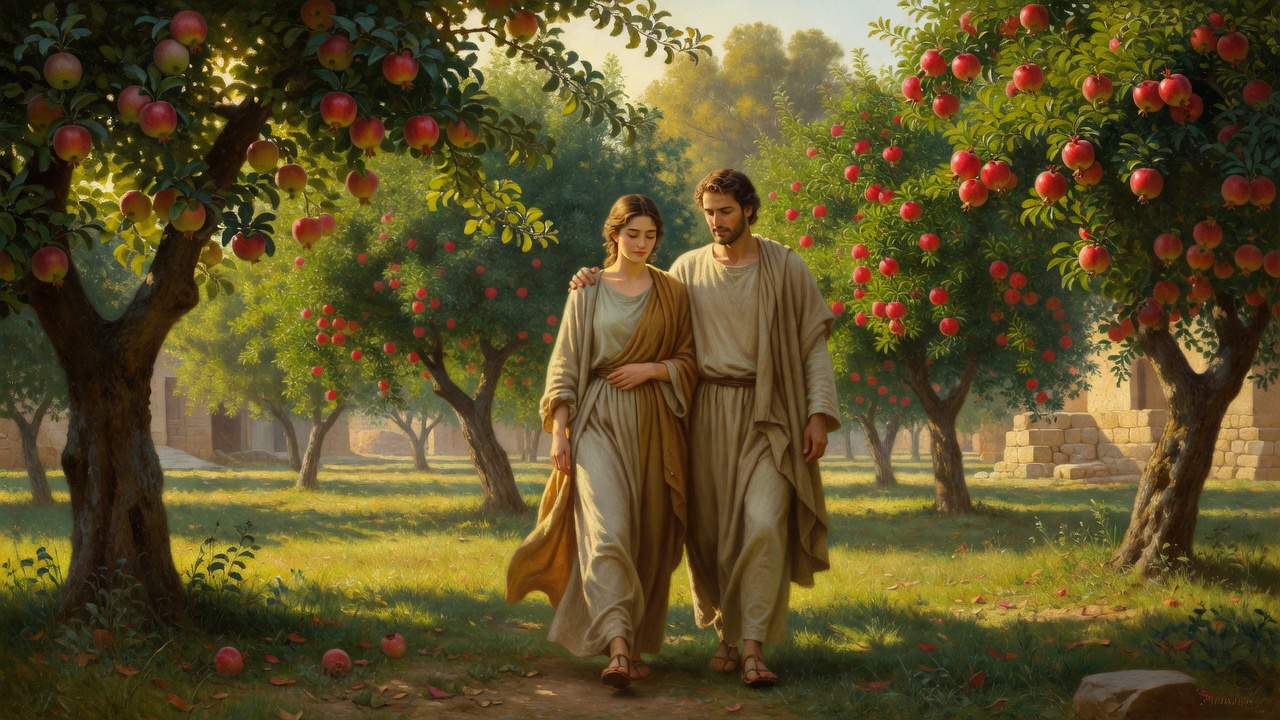
El amor invencible y las viñas reales
- Cantares 8:11 menciona una viña real en Baal-hamón, nombre que significa lugar de una multitud. Geógrafos y eruditos han propuesto diversas identificaciones para este sitio, tales como Hamón en el territorio tribal de Aser o Belamón cerca de Dotán.Fuentes: el propio texto bíblico · Baal-hamon · Solomon
- La petición de ser puesto como un sello sobre el corazón y el brazo del amado evoca la antigua costumbre de llevar sellos personales pegados al cuerpo, como símbolo de pertenencia perpetua, protección y leal afecto.Fuentes: el propio texto bíblico
- El capítulo celebra el amor como una fuerza invencible que no se puede comprar con todas las riquezas de una casa, describiendo su llama como ardiente e imposible de apagar incluso por ríos caudalosos y torrentes.Fuentes: el propio texto bíblico
Notas escritas con ayuda de IA a partir de fuentes abiertas (Theographic Bible Metadata, CC BY-SA 4.0; Easton’s Bible Dictionary, dominio público) y revisadas antes de publicarse.
Lugares de este capítulo
- Jerusalem · 31.777, 35.234 · versículo 4
Solo aparecen lugares identificados con alta confianza (90 % o más según las fuentes académicas reunidas por OpenBible). Mapa de la época: DARE (Digital Atlas of the Roman Empire), CC BY 4.0; mapa actual: © colaboradores de OpenStreetMap; lugares: OpenBible.info (CC BY 4.0).
Créditos y licencia de esta traducción
De Heilige Schrift, Petrus Canisiusvertaling, 1939
The Holy Bible in Dutch, Petrus Canisius translation, 1939
Public Domain
Language: Nederlandse taal (Dutch)
Eerste uitgave: Het Spectrum, Utrecht, Brussel, 1939
De Petrus Canisiusvertaling is een Nederlandse rooms-katholieke bijbelvertaling, waarvan de eerste complete uitgave verscheen in 1939. De volledige naam luidt: "De Heilige Schrift, vertaling uit de grondtekst met aantekeningen, in opdracht van de Apologetische Vereniging 'Petrus Canisius' ondernomen met goedkeuring van de hoogwaardige bisschoppen van Nederland". De Petrus Canisiusvertaling is de eerste Nederlandse katholieke vertaling die gebaseerd is op de grondteksten in hun oorspronkelijke taal. Andere vertalingen gingen uit van de Vulgaat. Het taalgebruik van de uitgave is naar hedendaagse normen licht archaïsch te noemen, maar nog steeds vlot verstaanbaar.
Verantwoording in verband met de auteursrechten
In verband met de auteursrechten is contact opgenomen met de oorspronkelijke uitgever (1), de Katholieke Vereniging voor Oecume (2) en de Katholieke Bijbelstichting (3) en werden geen bezwaren gevonden tegen deze publicatie. Rekening houdend met de wettelijke termijnen, kan deze uitgave beschouwd worden als vrij van auteursrechten.
First publication: Het Spectrum, Utrecht, Brussel, 1939
The translation "Petrus Canisius" is a dutch roman catholic bible translation, that was first published in 1939. Its full title is "The Holy Scripture, translation of the original texts with annotations, commissioned by the Apologetical Society 'Petrus Canisius' and executed with the approval of the most reverend bishops of the Netherlands". The translation "Petrus Canisius" is the first dutch catholic translation that was based on the scripture texts in their original language. Other translations were based on the Vulgate. The language of this edition is to current standards moderately archaic, but still easily understood.
Accountability in relation to copyright
Concerning the copyright contacts have been made with the original publisher (1), the Katholieke Vereniging voor Oecumene (Catholic Society for Ecumenism) (2) and the Katholieke Bijbelstichting (Catholic Bible Foundation) (3) and no objections have been found against this publication. Taking into account the legal terms, this edition can be considered to be in the public domain.
UITGEVERIJ UNIEBOEK|HET SPECTRUM BV, HOUTEN, THE NETHERLANDS
KATHOLIEKE VERENIGING VOOR OECUMENE, 'S HERTOGENBOSCH, THE NETHERLANDS
KBS, HOEVEN, THE NETHERLANDS
2024-08-06
Fuente: http://ebible.org/nld1939/ · eBible.org