Isaías 20
De Heilige Schrift, Petrus Canisiusvertaling, 1939 · Toca un versículo para ver sus referencias cruzadas.
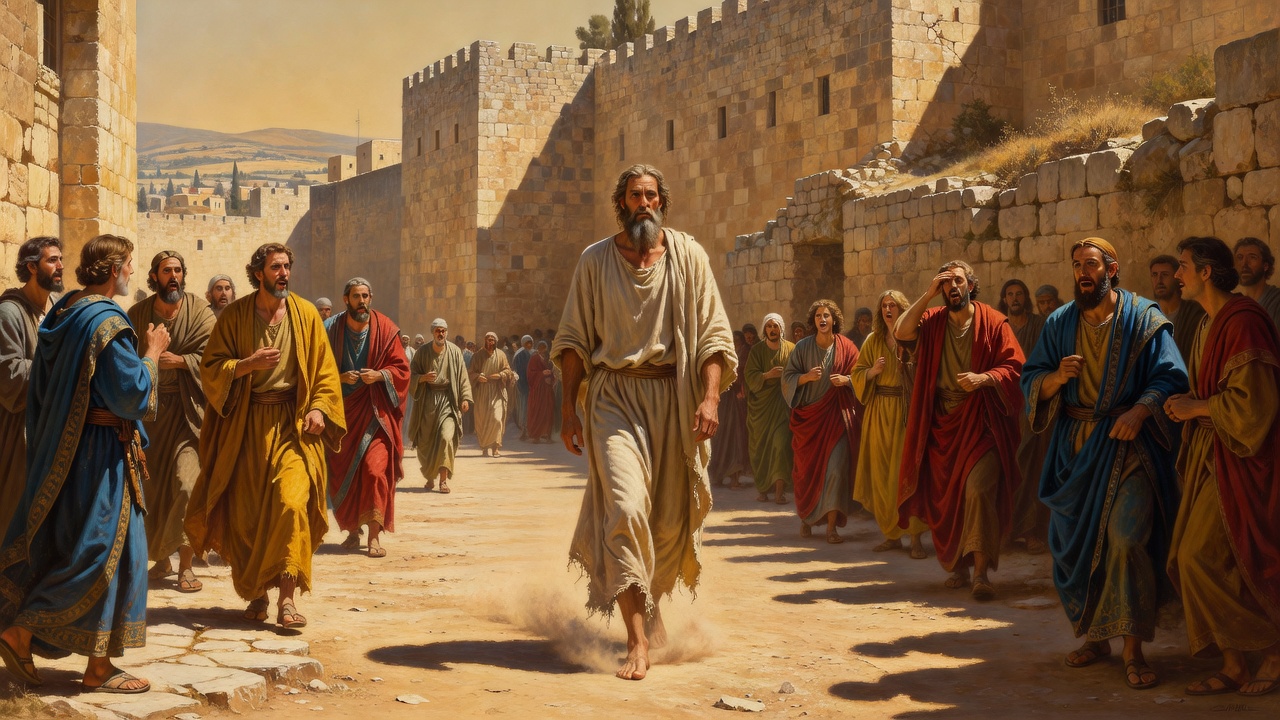
1In het jaar, dat de Tartan op last van Sargon, den koning van Assjoer, tegen Asjdod optrok, het belegerde en innam: 2in die tijd sprak Jahweh door Isaias, den zoon van Amos: Ga heen, maak de mantel los van uw lenden, en trek de schoenen van uw voeten. Hij deed het, en liep ontkleed en barrevoets rond. 3En Jahweh sprak: Zoals Isaias, mijn dienaar, rondloopt, Ontkleed en barrevoets, drie jaren lang, Als een teken en zinnebeeld Tegen Egypte en Koesj: 4Zo voert de koning van Assjoer Egypte’s gevangenen weg, Met de ballingen van Koesj, jong en oud; Naakt en barrevoets, het achterste ontbloot, Tot schande van Egypte! 5Dan zullen ze vol angst zich schamen Over Koesj, waarop ze vertrouwden, En over Egypte, waarmede ze pronkten. 6En die deze kusten bewonen zullen zeggen: Daar hebt ge ze nu, op wie wij vertrouwden, Bij wie wij een toevlucht hebben gezocht, Om hulp en bescherming tegen den koning van Assjoer! Hoe zullen wij zelf dan ontkomen!
¿Sabías que…?
Señal profética contra Egipto y Cus
- Asdod era una ciudad filistea fuertemente fortificada, ubicada en la ruta costera que conectaba Palestina con Egipto. El rey asirio Sargón envió a su comandante para sitiar y capturar la ciudad mientras el Imperio asirio se expandía hacia el sur.Fuentes: el propio texto bíblico · Ashdod
- Dios le ordenó a Isaías quitarse el cilicio exterior y las sandalias, caminando despojado y descalzo durante tres años. Este acto profético simbolizaba cómo Asiria conquistaría y llevaría cautivos a los pueblos de Egipto y Cus en humillación.Fuentes: el propio texto bíblico · Isaiah · Cush
Notas escritas con ayuda de IA a partir de fuentes abiertas (Theographic Bible Metadata, CC BY-SA 4.0; Easton’s Bible Dictionary, dominio público) y revisadas antes de publicarse.
Lugares de este capítulo
- Ashdod · Hoy: Tel Ashdod · 31.757, 34.658 · versículo 1
- Assyria · 36.359, 43.153 · versículos 1, 4, 6
- Cush · Hoy: Cush 1 · 16.935, 33.751 · versículos 3, 4, 5
- Egypt · 30.129, 31.308 · versículos 3, 4, 5, 6
Solo aparecen lugares identificados con alta confianza (90 % o más según las fuentes académicas reunidas por OpenBible). Mapa de la época: DARE (Digital Atlas of the Roman Empire), CC BY 4.0; mapa actual: © colaboradores de OpenStreetMap; lugares: OpenBible.info (CC BY 4.0).
Créditos y licencia de esta traducción
De Heilige Schrift, Petrus Canisiusvertaling, 1939
The Holy Bible in Dutch, Petrus Canisius translation, 1939
Public Domain
Language: Nederlandse taal (Dutch)
Eerste uitgave: Het Spectrum, Utrecht, Brussel, 1939
De Petrus Canisiusvertaling is een Nederlandse rooms-katholieke bijbelvertaling, waarvan de eerste complete uitgave verscheen in 1939. De volledige naam luidt: "De Heilige Schrift, vertaling uit de grondtekst met aantekeningen, in opdracht van de Apologetische Vereniging 'Petrus Canisius' ondernomen met goedkeuring van de hoogwaardige bisschoppen van Nederland". De Petrus Canisiusvertaling is de eerste Nederlandse katholieke vertaling die gebaseerd is op de grondteksten in hun oorspronkelijke taal. Andere vertalingen gingen uit van de Vulgaat. Het taalgebruik van de uitgave is naar hedendaagse normen licht archaïsch te noemen, maar nog steeds vlot verstaanbaar.
Verantwoording in verband met de auteursrechten
In verband met de auteursrechten is contact opgenomen met de oorspronkelijke uitgever (1), de Katholieke Vereniging voor Oecume (2) en de Katholieke Bijbelstichting (3) en werden geen bezwaren gevonden tegen deze publicatie. Rekening houdend met de wettelijke termijnen, kan deze uitgave beschouwd worden als vrij van auteursrechten.
First publication: Het Spectrum, Utrecht, Brussel, 1939
The translation "Petrus Canisius" is a dutch roman catholic bible translation, that was first published in 1939. Its full title is "The Holy Scripture, translation of the original texts with annotations, commissioned by the Apologetical Society 'Petrus Canisius' and executed with the approval of the most reverend bishops of the Netherlands". The translation "Petrus Canisius" is the first dutch catholic translation that was based on the scripture texts in their original language. Other translations were based on the Vulgate. The language of this edition is to current standards moderately archaic, but still easily understood.
Accountability in relation to copyright
Concerning the copyright contacts have been made with the original publisher (1), the Katholieke Vereniging voor Oecumene (Catholic Society for Ecumenism) (2) and the Katholieke Bijbelstichting (Catholic Bible Foundation) (3) and no objections have been found against this publication. Taking into account the legal terms, this edition can be considered to be in the public domain.
UITGEVERIJ UNIEBOEK|HET SPECTRUM BV, HOUTEN, THE NETHERLANDS
KATHOLIEKE VERENIGING VOOR OECUMENE, 'S HERTOGENBOSCH, THE NETHERLANDS
KBS, HOEVEN, THE NETHERLANDS
2024-08-06
Fuente: http://ebible.org/nld1939/ · eBible.org