Isaiah 20
De Heilige Schrift, Petrus Canisiusvertaling, 1939 · Tap a verse to see its cross-references.
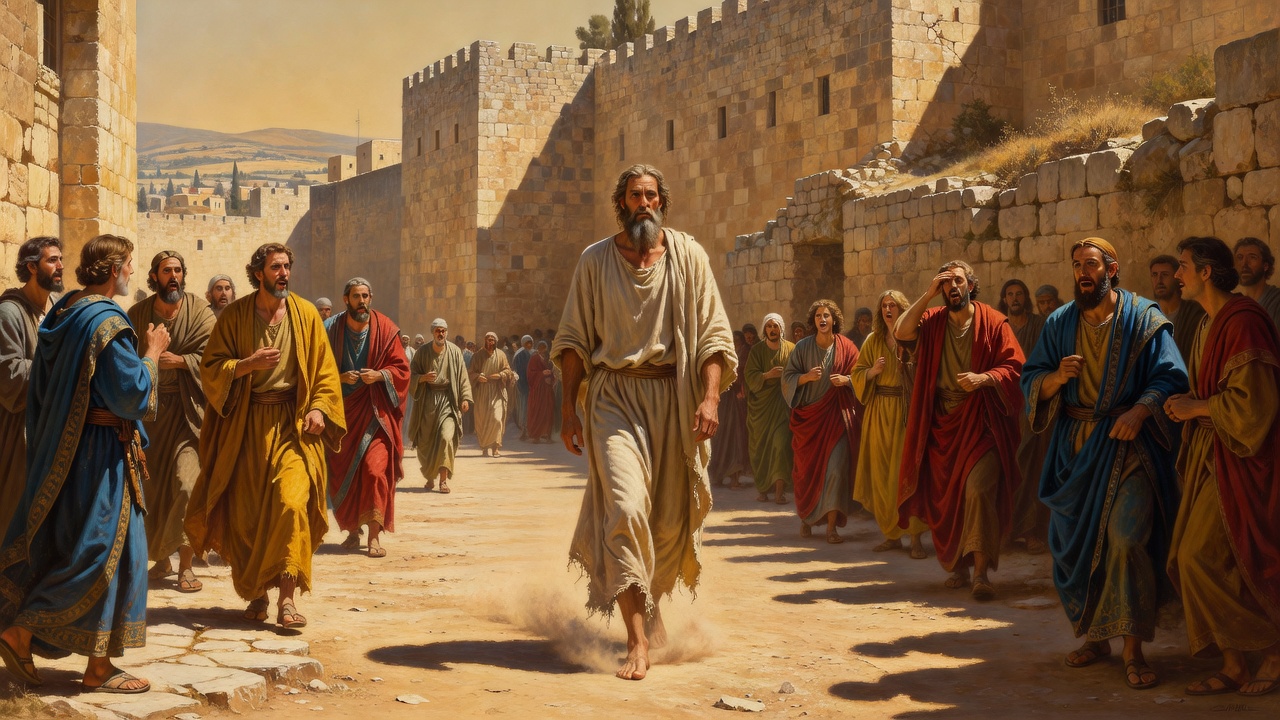
1In het jaar, dat de Tartan op last van Sargon, den koning van Assjoer, tegen Asjdod optrok, het belegerde en innam: 2in die tijd sprak Jahweh door Isaias, den zoon van Amos: Ga heen, maak de mantel los van uw lenden, en trek de schoenen van uw voeten. Hij deed het, en liep ontkleed en barrevoets rond. 3En Jahweh sprak: Zoals Isaias, mijn dienaar, rondloopt, Ontkleed en barrevoets, drie jaren lang, Als een teken en zinnebeeld Tegen Egypte en Koesj: 4Zo voert de koning van Assjoer Egypte’s gevangenen weg, Met de ballingen van Koesj, jong en oud; Naakt en barrevoets, het achterste ontbloot, Tot schande van Egypte! 5Dan zullen ze vol angst zich schamen Over Koesj, waarop ze vertrouwden, En over Egypte, waarmede ze pronkten. 6En die deze kusten bewonen zullen zeggen: Daar hebt ge ze nu, op wie wij vertrouwden, Bij wie wij een toevlucht hebben gezocht, Om hulp en bescherming tegen den koning van Assjoer! Hoe zullen wij zelf dan ontkomen!
Did you know?
Prophetic Sign Against Egypt and Cush
- Ashdod was a heavily fortified Philistine city situated along the coastal highway linking Palestine with Egypt. The Assyrian king Sargon sent his commander to besiege and capture the city as the Assyrian Empire expanded southward.Sources: the Bible text itself · Ashdod
- God commanded Isaiah to take off his outer sackcloth and sandals, walking stripped and barefoot for three years. This dramatic prophetic act symbolized how Assyria would conquer and lead away the captives of Egypt and Cush in humiliation.Sources: the Bible text itself · Isaiah · Cush
Notes written with AI assistance from open sources (Theographic Bible Metadata, CC BY-SA 4.0; Easton’s Bible Dictionary, public domain) and reviewed before publishing.
Places in this chapter
- Ashdod · Today: Tel Ashdod · 31.757, 34.658 · verse 1
- Assyria · 36.359, 43.153 · verses 1, 4, 6
- Cush · Today: Cush 1 · 16.935, 33.751 · verses 3, 4, 5
- Egypt · 30.129, 31.308 · verses 3, 4, 5, 6
Only places identified with high confidence are shown (90% or more according to the scholarly sources compiled by OpenBible). Period map: DARE (Digital Atlas of the Roman Empire), CC BY 4.0; modern map: © OpenStreetMap contributors; places: OpenBible.info (CC BY 4.0).
Credits and license for this translation
De Heilige Schrift, Petrus Canisiusvertaling, 1939
The Holy Bible in Dutch, Petrus Canisius translation, 1939
Public Domain
Language: Nederlandse taal (Dutch)
Eerste uitgave: Het Spectrum, Utrecht, Brussel, 1939
De Petrus Canisiusvertaling is een Nederlandse rooms-katholieke bijbelvertaling, waarvan de eerste complete uitgave verscheen in 1939. De volledige naam luidt: "De Heilige Schrift, vertaling uit de grondtekst met aantekeningen, in opdracht van de Apologetische Vereniging 'Petrus Canisius' ondernomen met goedkeuring van de hoogwaardige bisschoppen van Nederland". De Petrus Canisiusvertaling is de eerste Nederlandse katholieke vertaling die gebaseerd is op de grondteksten in hun oorspronkelijke taal. Andere vertalingen gingen uit van de Vulgaat. Het taalgebruik van de uitgave is naar hedendaagse normen licht archaïsch te noemen, maar nog steeds vlot verstaanbaar.
Verantwoording in verband met de auteursrechten
In verband met de auteursrechten is contact opgenomen met de oorspronkelijke uitgever (1), de Katholieke Vereniging voor Oecume (2) en de Katholieke Bijbelstichting (3) en werden geen bezwaren gevonden tegen deze publicatie. Rekening houdend met de wettelijke termijnen, kan deze uitgave beschouwd worden als vrij van auteursrechten.
First publication: Het Spectrum, Utrecht, Brussel, 1939
The translation "Petrus Canisius" is a dutch roman catholic bible translation, that was first published in 1939. Its full title is "The Holy Scripture, translation of the original texts with annotations, commissioned by the Apologetical Society 'Petrus Canisius' and executed with the approval of the most reverend bishops of the Netherlands". The translation "Petrus Canisius" is the first dutch catholic translation that was based on the scripture texts in their original language. Other translations were based on the Vulgate. The language of this edition is to current standards moderately archaic, but still easily understood.
Accountability in relation to copyright
Concerning the copyright contacts have been made with the original publisher (1), the Katholieke Vereniging voor Oecumene (Catholic Society for Ecumenism) (2) and the Katholieke Bijbelstichting (Catholic Bible Foundation) (3) and no objections have been found against this publication. Taking into account the legal terms, this edition can be considered to be in the public domain.
UITGEVERIJ UNIEBOEK|HET SPECTRUM BV, HOUTEN, THE NETHERLANDS
KATHOLIEKE VERENIGING VOOR OECUMENE, 'S HERTOGENBOSCH, THE NETHERLANDS
KBS, HOEVEN, THE NETHERLANDS
2024-08-06
Source: http://ebible.org/nld1939/ · eBible.org