Lucas 6
Biblica® Kiugo Gĩtheru Kĩa Ngai Kĩhingũre · Toca un versículo para ver sus referencias cruzadas.
Jesũ nĩwe Mwathani wa Thabatũ
1Mũthenya ũmwe wa Thabatũ, Jesũ akĩgerera mĩgũnda-inĩ ya ngano, nao arutwo ake makĩambĩrĩria gũtua ngira imwe cia ngano, magĩcirigitha na moko, makĩrĩa ngano. 2Afarisai amwe makĩmooria atĩrĩ, “Nĩ kĩĩ kĩratũma mwĩke ũrĩa gũtetĩkĩrĩtio nĩ watho mũthenya wa Thabatũ?”
3Jesũ akĩmacookeria atĩrĩ, “Kaĩ mũtathomete ũrĩa Daudi eekire, rĩrĩa we na arĩa maarĩ nake maarĩ ahũtu? 4Aatoonyire Nyũmba ya Ngai, akĩoya na akĩrĩa mĩgate ĩrĩa yamũrĩirwo Ngai, ĩrĩa ateetĩkĩrĩtio kũrĩa nĩ watho tiga no athĩnjĩri-Ngai meetĩkĩrĩtio kũmĩrĩa, na agĩcooka akĩhe arĩa maarĩ nake ĩmwe yayo.” 5Jesũ agĩcooka akĩmeera atĩrĩ, “Mũrũ wa Mũndũ nĩwe Mwathani wa Thabatũ.”
6Na rĩrĩ, mũthenya ũngĩ wa Thabatũ nĩathiire thunagogi-inĩ, akĩrutana, nakuo nĩ kwarĩ na mũndũ warĩ mwonju guoko gwake kwa ũrĩo. 7Nao Afarisai na arutani a watho nĩmacaragia ũndũ mangĩthitangĩra Jesũ, nĩ ũndũ ũcio makĩmũrora mũno, mone kana nĩekũhonania mũthenya wa Thabatũ. 8Nowe Jesũ, tondũ nĩamenyaga ũrĩa meeciiragia, akĩĩra mũndũ ũcio wonjete guoko atĩrĩ, “Ũkĩra ũrũgame mbere ya andũ othe.” Nĩ ũndũ ũcio agĩũkĩra akĩrũgama hau.
9Jesũ agĩcooka akĩmeera atĩrĩ, “Ngũmũũria atĩrĩ, nĩ ũndũ ũrĩkũ mwĩtĩkĩrie nĩ watho mũthenya wa Thabatũ: nĩ gwĩka wega kana nĩ gwĩka ũũru, nĩ kũhonokia muoyo kana nĩ kũũniina?”
10Akĩĩhũgũra, akĩmarora othe, agĩcooka akĩĩra mũndũ ũcio atĩrĩ, “Tambũrũkia guoko gwaku.” Nake agĩĩka o ro ũguo; nakuo guoko gwake gũkĩhonio biũ. 11Nao makĩrakara mũno, makĩambĩrĩria kũũrania ũrĩa mangĩĩka Jesũ.
Atũmwo arĩa Ikũmi na Eerĩ
12Mũthenya ũmwe Jesũ nĩoimagarire agĩthiĩ kĩrĩma-inĩ akahooe, akĩraara akĩhooya Ngai ũtukũ wothe. 13Gwakĩa-rĩ, agĩĩta arutwo ake moke harĩ we, agĩthuura andũ ikũmi na eerĩ ao, akĩmatua atũmwo, nao nĩ: 14Simoni (ũrĩa aatuire Petero), na Anderea mũrũ wa nyina, na Jakubu, na Johana, na Filipu, na Baritholomayo, 15na Mathayo, na Toma, na Jakubu wa Alufayo, na Simoni ũrĩa wetagwo Zelote, 16na Judasi wa Jakubu, na Judasi Mũisikariota ũrĩa wamũkunyanĩire.
Irathimo na Irumi
17Nake Jesũ agĩikũrũka hamwe nao, makĩrũgama handũ haarĩ haraganu. Gĩkundi kĩnene kĩa arutwo ake kĩarĩ ho, o na andũ aingĩ mũno kuuma Judea guothe, na Jerusalemu, o na kuuma ndeere-inĩ cia Turo na Sidoni, 18nao mookĩte nĩguo mamũigue na mahonio mĩrimũ yao. Nao arĩa maanyamaragio nĩ ngoma thũku makĩhonio, 19nao andũ othe makĩgeria kũmũhutia, tondũ hinya nĩwoimaga thĩinĩ wake na ũkamahonia othe.
20Nake akĩrora arutwo ake, akiuga atĩrĩ:
“Kũrathimwo-rĩ, nĩ inyuĩ athĩĩni,
nĩgũkorwo ũthamaki wa Ngai nĩ wanyu.
21Kũrathimwo-rĩ, nĩ inyuĩ mũhũũtaga rĩu,
nĩgũkorwo nĩmũkahũũnio.
Kũrathimwo-rĩ, nĩ inyuĩ mũrarĩra rĩu,
nĩgũkorwo nĩmũgatheka.
22Kũrathimwo-rĩ, nĩ inyuĩ hĩndĩ ĩrĩa andũ mekũmũmena,
na meyamũre kũrĩ inyuĩ, na mamũrume,
na mathũkĩrĩrie rĩĩtwa rĩanyu,
nĩ ũndũ wa Mũrũ wa Mũndũ.
23“Mũthenya ũcio nĩmũgakena na mũrũgarũge, tondũ mũcaara wanyu nĩ mũingĩ Igũrũ. Nĩgũkorwo ũguo noguo maithe mao meekire anabii.
24“No rĩrĩ, kaĩ mũrĩ na haaro inyuĩ itonga-ĩ,
nĩgũkorwo nĩmũrĩkĩtie kwamũkĩra kũnyamarũrwo kwanyu.
25Kaĩ mũrĩ na haaro inyuĩ arĩa mũhũũniĩ rĩu-ĩ,
nĩgũkorwo nĩmũkahũũta.
Kaĩ mũrĩ na haaro arĩa mũratheka rĩu-ĩ,
nĩgũkorwo nĩmũgacakaya na mũrĩre.
26Kaĩ mũrĩ na haaro inyuĩ hĩndĩ ĩrĩa andũ othe mekũmũgaathĩrĩria-ĩ,
nĩgũkorwo ũguo noguo maithe mao meekaga anabii a maheeni.
Kwenda Thũ
27“No ngũmwĩra atĩrĩ inyuĩ arĩa mũũthikĩrĩirie: endagai thũ cianyu, na mwĩkage wega arĩa mamũthũire, 28na ningĩ mũrathimage arĩa mamũrumaga, na mũhooyagĩre arĩa mamwĩkaga ũũru. 29Na rĩrĩ, mũndũ angĩkũgũtha rũthĩa rũmwe, mũhũgũkĩrie rũu rũngĩ o naruo. Na mũndũ angĩgũtunya igooti rĩaku, ndũkamũgirie kuoya o na kanjũ yaku. 30Mũndũ o wothe angĩkũhooya kĩndũ mũhe, na mũndũ o wothe angĩoya kĩndũ gĩaku, ndũkamwĩtie. 31Ĩkagai andũ arĩa angĩ o ũrĩa mũngĩenda mamwĩkage.
32“Rĩu-rĩ, angĩkorwo mwendete o arĩa mamwendete-rĩ, mwakĩĩguna na kĩ? O na ‘ehia’ nĩmendaga arĩa mamendete. 33Na mũngĩkorwo mwĩkaga wega o arĩa mamwĩkaga wega-rĩ, mwakĩĩguna na kĩ? Nĩgũkorwo ehia o nao nĩmekaga o ũguo. 34Na ningĩ mũngĩkorwo mũkombithagia o arĩa mwĩhokete nĩmakamũrĩha-rĩ, mwakĩĩguna na kĩ? O na ehia nĩmakombagĩra ehia arĩa angĩ, mehokete nĩmakarĩhwo ciothe. 35No rĩrĩ, endagai thũ cianyu, na mũciĩkage wega, o na mũkombithagie mũtekwĩhoka gũcookerio kĩndũ. Hĩndĩ ĩyo irĩhi rĩanyu nĩrĩkaneneha, na inyuĩ nĩmũgatuĩka ariũ a Ũrĩa-ũrĩ-Igũrũ-Mũno, nĩgũkorwo we nĩaiguagĩra arĩa matarĩ ngaatho tha o na arĩa aaganu. 36Iguanagĩrai tha, o ta ũrĩa Ithe wanyu aiguanagĩra tha.
Gũtuanĩra Ciira
37“Mũtigaciirithanagie nĩgeetha na inyuĩ mũtikanaciirithio. Mũtigatuanagĩre, nĩgeetha na inyuĩ mũtikanatuĩrwo. Rekanagĩrai, na inyuĩ nĩmũkarekerwo. 38Heanagai, na inyuĩ nĩmũrĩheagwo na gĩthimi kĩega, gĩkindĩrĩtwo, kĩinainĩtio na gĩgaitĩkĩrĩra, nĩkĩo mũgaitĩrĩrwo nakĩo nguo-inĩ. Nĩgũkorwo gĩthimi kĩrĩa mũthimanagĩra nakĩo, no kĩo mũrĩthimagĩrwo nakĩo.”
39Agĩcooka akĩmahe ngerekano ĩno, akĩmooria atĩrĩ, “Mũtumumu no atongorie mũtumumu ũrĩa ũngĩ? Githĩ eerĩ to magũe irima? 40Mũrutwo ti mũnene kũrĩ mũmũruti, no ũrĩa wothe mũrute wega, no atuĩke ta mũmũruti.
41“Nĩ kĩĩ gĩgũtũma wone kĩhuti kĩrĩa kĩrĩ riitho rĩa mũrũ wa thoguo, no ũkaaga kũrũmbũiya mũgogo ũrĩa ũrĩ riitho rĩaku we mwene? 42Wahota atĩa kwĩra mũrũ wa thoguo atĩrĩ, ‘Mũrũ wa baba, reke ngũrute kĩhuti kĩu kĩrĩ riitho rĩaku,’ o rĩrĩa wee wagĩte kuona mũgogo ũrĩa ũrĩ naguo riitho rĩaku? Wee hinga ĩno, amba ũrute mũgogo ũcio ũrĩ naguo riitho, nĩguo wone wega ũhote kũruta kĩhuti kĩrĩa kĩrĩ riitho rĩa mũrũ wa thoguo.
Mũtĩ na Maciaro maguo
43“Gũtirĩ mũtĩ mwega ũciaraga maciaro mooru, kana mũtĩ mũũru ũgaciara maciaro mega. 44O mũtĩ ũmenyekaga na maciaro maguo mwene. Andũ matituaga ngũyũ kuuma mĩtĩ-inĩ ya mĩigua, o na kana magatua thabibũ kuuma congʼe-inĩ. 45Mũndũ ũrĩa mwega aragia maũndũ mega kuuma mũthiithũ-inĩ wa ngoro yake, nake mũndũ ũrĩa mũũru aragia maũndũ mooru kuuma mũthiithũ-inĩ wa ngoro yake. Nĩgũkorwo kanua gake kaaragia o maũndũ marĩa maiyũrĩte ngoro yake.
Aaki arĩa Ogĩ, na arĩa Akĩĩgu
46“Atĩrĩrĩ, mũnjĩtaga ‘Mwathani, Mwathani,’ nĩkĩ, na mũtiĩkaga ũrĩa ndĩmwĩraga? 47Nĩngũmuonia ũrĩa mũndũ ũrĩa ũũkaga kũrĩ niĩ, na akaigua ciugo ciakwa, na ageeka ũrĩa ciugĩte ahaana. 48Ahaana ta mũndũ waakaga nyũmba, ũrĩa wenjire mũthingi, akĩũrikia na akĩwamba igũrũ rĩa ihiga. Hĩndĩ ĩrĩa kwagĩire mũiyũro wa maaĩ, kĩguũ gĩkĩgũtha nyũmba ĩyo na nditi, no gĩtiamĩenyenyirie, tondũ nĩyaakĩtwo wega. 49No mũndũ ũrĩa ũiguaga ciugo ciakwa, na ndekaga ũrĩa ciugĩte, ahaana ta mũndũ ũrĩa waakire nyũmba ĩtarĩ na mũthingi. Na rĩrĩa kĩguũ kĩagũthire nyũmba ĩyo, ĩkĩmomoka, naguo mwanangĩko wayo warĩ mũnene.”
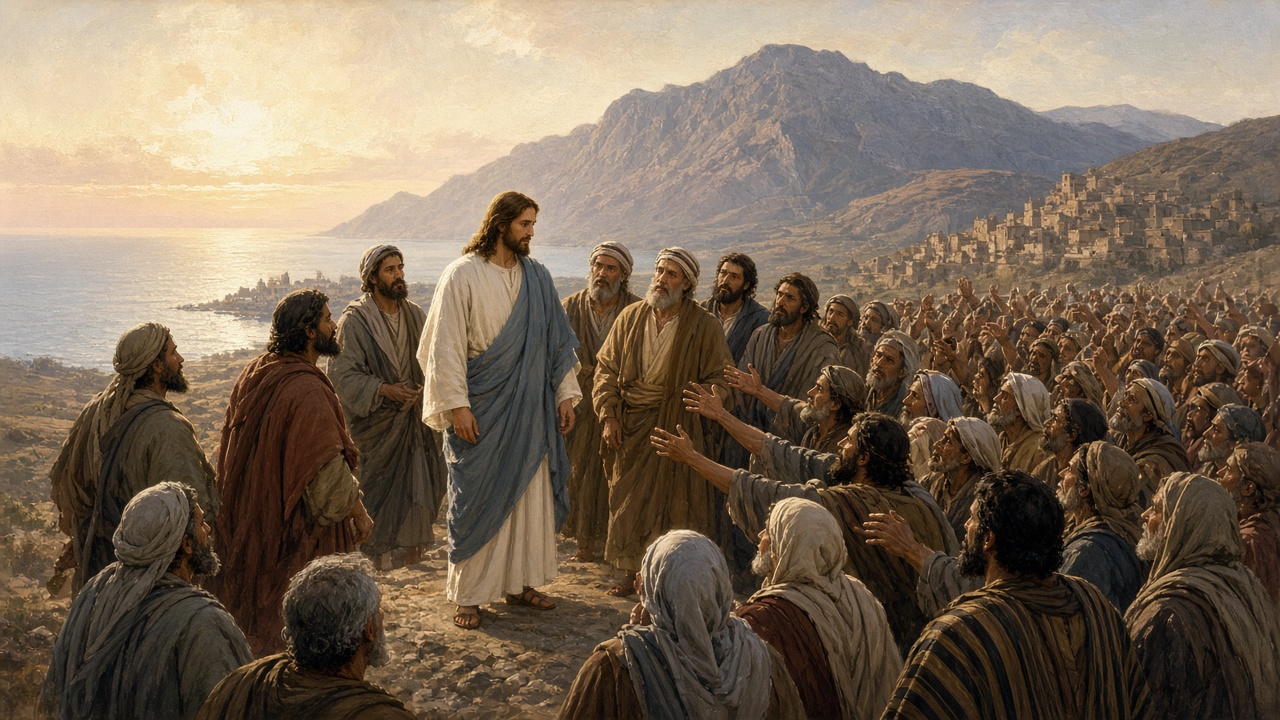
¿Sabías que…?
El sábado, los Doce y la llanura
- En un sábado, mientras Jesús pasaba por los sembrados, sus discípulos arrancaban espigas, las restregaban entre las manos y se las comían, y algunos fariseos dijeron que eso era ilícito. Jesús recordó que David y sus compañeros, con hambre, comieron el pan consagrado de la casa de Dios, lícito solo para los sacerdotes, y dijo que el Hijo del Hombre es Señor del sábado. En otro sábado, restauró en la sinagoga la mano derecha atrofiada de un hombre, mientras los escribas y fariseos lo observaban buscando un motivo para acusarlo; una cronología fecha ambos episodios en el año 28 d. C.Fuentes: el propio texto bíblico · Corn on the Sabbath · Healing a Withered Hand
- Después de pasar la noche en oración en el monte, Jesús llamó a sus discípulos y eligió a doce, a quienes designó apóstoles. Entre ellos estaban Simón, a quien llamó Pedro, y Andrés, hermano de Pedro, pescadores de Betsaida, en la costa occidental del mar de Galilea, y Mateo, recaudador de impuestos en Capernaúm, antes conocido como Leví.Fuentes: el propio texto bíblico · Simon Peter · Andrew · Matthew
- Jesús bajó con ellos y se detuvo en un lugar llano, donde se había reunido gente de Judea, de Jerusalén y de la costa de Tiro y Sidón para oírlo y ser sanada. Tiro y Sidón eran antiguas ciudades fenicias del Mediterráneo; Sidón, la más antigua, quedaba a unas veinticinco millas al norte de Tiro. Una cronología fecha esta enseñanza en el año 28 d. C. y la titula Sermón del Monte, aunque el relato sitúa a Jesús en terreno llano después de bajar del monte.Fuentes: el propio texto bíblico · Tyre · Sidon · Sermon on the Mount
Notas escritas con ayuda de IA a partir de fuentes abiertas (Theographic Bible Metadata, CC BY-SA 4.0; Easton’s Bible Dictionary, dominio público) y revisadas antes de publicarse.
Lugares de este capítulo
- Jerusalem · 31.777, 35.234 · versículo 17
- Judea · Hoy: Judea 1 · 31.777, 35.234 · versículo 17
- Sidon · Hoy: Sandikli archaeological site in Sidon · 33.561, 35.372 · versículo 17
- Tyre · 33.271, 35.196 · versículo 17
Solo aparecen lugares identificados con alta confianza (90 % o más según las fuentes académicas reunidas por OpenBible). Mapa de la época: DARE (Digital Atlas of the Roman Empire), CC BY 4.0; mapa actual: © colaboradores de OpenStreetMap; lugares: OpenBible.info (CC BY 4.0).
Créditos y licencia de esta traducción
Biblica® Kiugo Gĩtheru Kĩa Ngai Kĩhingũre Gikuyu: Biblica® Kiugo Gĩtheru Kĩa Ngai Kĩhingũre (Bible) of Kenya copyright © 2013 Biblica, Inc. Language: Kikuyu (Gikuyu) Contributor: Biblica, Inc. Wĩra ũyũ ũheanĩtwo na ũndũ wa rũtha rwa biacara rwa Creative Commons Attribution-ShareAlike 4.0 International License (CC BY-SA). Ũngĩenda kuona kobĩ ya rũtha rũrũ rwa biacara, rora rũrenda-inĩ rwa: http://creativecommons.org/licenses/by-sa/4.0, kana ũtũme marũa kũrĩ: Creative Commons, PO Box 1866, Mountain View, CA 94042, USA. Biblica® nĩ mũhũri wa biacara wandĩkithĩtio nĩ Biblica, Inc., kũhũthĩra mũhũri wa biacara wa Biblica® kũbataraga marũa ma gwĩtĩkĩrio kuuma kũrĩ Biblica, Inc. Kuumana na rũtha rwa biacara rwa CC BY-SA, no ũkobie kana ũtambie wĩra ũyũ ũtarĩ mũgarũre, ĩndĩ ndũkagarũre rũri rwa biacara rwa Biblica®. Ũngĩgarũra kana ũkobie wĩra ũyũ, na tondũ wa ũguo ũtuĩke nĩ wĩra mwerũ uumanĩte na ũcio-rĩ, no nginya weheria mũhũri wa biacara wa Biblica®. Wĩra-inĩ ũcio mwerũ no nginya wonanie nĩ maũndũ marĩkũ ũgarũrĩte, na ũtarĩrie wĩra-inĩ ũcio ta ũũ: “Wĩra wa kĩhumo warĩ wa Biblica, Inc. na ũheanĩtwo tũhũ ng’enda-inĩ cia www.biblica.com na open.bible.” Kĩmenyitha kia Mwene-wĩra no nginya kĩandĩkwo iratathi rĩa kĩongo kĩa wĩra kana rĩa ũhoro wa Mwene-wĩra ta ũũ: Biblica® Kiugo Gĩtheru Kĩa Ngai Kĩhingũre™ Kĩmenyithia kĩa Mwene-wĩra © 2013 nĩ Biblica, Inc. Biblica® Open Kikuyu Holy Word of God™ Copyright © 2013 by Biblica, Inc. “Biblica” nĩ mũhũri wa biacara wandĩkithĩtio wabici-inĩ ya United States Patent and Trademark Office nĩ Biblica, Inc. Ũhũthĩrĩtwo na rũtha. “Biblica” is a trademark registered in the United States Patent and Trademark Office by Biblica, Inc. Used with permission. No nginya wĩtĩkĩrie wĩra ũcio mwerũ ũgarũrĩte ũheanwo na ũndũ wa rũtha rwa biacara rũu rwa CC BY-SA. Ũngĩenda kũmenyithia Biblica, Inc. ũhoro wĩgiĩ ũtaũri waku wa wĩra ũyũ-rĩ, twandĩkĩre rũrenda-inĩ rwa: https://open.bible/contact-us. This work is made available under the Creative Commons Attribution-ShareAlike 4.0 International License (CC BY-SA). To view a copy of this license, visit http://creativecommons.org/licenses/by-sa/4.0 or send a letter to Creative Commons, PO Box 1866, Mountain View, CA 94042, USA. Biblica® is a trademark registered by Biblica, Inc., and use of the Biblica® trademark requires the written permission of Biblica, Inc. Under the terms of the CC BY-SA license, you may copy and redistribute this unmodified work as long as you keep the Biblica® trademark intact. If you modify a copy or translate this work, thereby creating a derivative work, you must remove the Biblica® trademark. On the derivative work, you must indicate what changes you have made and attribute the work as follows: “The original work by Biblica, Inc. is available for free at www.biblica.com and open.bible.” Notice of copyright must appear on the title or copyright page of the work as follows: Biblica® Kiugo Gĩtheru Kĩa Ngai Kĩhingũre™ Kĩmenyithia kĩa Mwene-wĩra © 2013 nĩ Biblica, Inc. Biblica® Open Kikuyu Holy Word of God™ Copyright © 2013 by Biblica, Inc. “Biblica” nĩ mũhũri wa biacara wandĩkithĩtio wabici-inĩ ya United States Patent and Trademark Office nĩ Biblica, Inc. Ũhũthĩrĩtwo na rũtha. “Biblica” is a trademark registered in the United States Patent and Trademark Office by Biblica, Inc. Used with permission. You must also make your derivative work available under the same license (CC BY-SA). If you would like to notify Biblica, Inc. regarding your translation of this work, please contact us at https://open.bible/contact-us. This translation is made available to you under the terms of the Creative Commons Attribution Share-Alike license 4.0. You have permission to share and redistribute this Bible translation in any format and to make reasonable revisions and adaptations of this translation, provided that: You include the above copyright and source information. If you make any changes to the text, you must indicate that you did so in a way that makes it clear that the original licensor is not necessarily endorsing your changes. If you redistribute this text, you must distribute your contributions under the same license as the original. Pictures included with Scriptures and other documents on this site are licensed just for use with those Scriptures and documents. For other uses, please contact the respective copyright owners. Note that in addition to the rules above, revising and adapting God's Word involves a great responsibility to be true to God's Word. See Revelation 22:18-19. 2025-05-07
Fuente: http://ebible.org/kik/ · eBible.org